
Selling inherited property steps: your 2026 NZ guide

TL;DR:Selling inherited property in New Zealand requires obtaining legal authority through probate or letters of administration before listing or selling. Preparing the property during the probate wait and choosing experienced professionals helps avoid delays and legal issues. Executors may consider quick cash options like Easysale for faster settlement without traditional market processes.
Selling inherited property is the legal and practical process of transferring and selling real estate that passes to you through a deceased person’s estate. Before you can list or sell the property, you must first obtain legal authority, either through probate (when a will exists) or letters of administration (when there is no will). Getting these selling inherited property steps right from the start protects you from personal liability, avoids costly delays, and keeps the sale on track. This guide walks you through every stage, from securing legal authority to completing settlement, with NZ-specific details that matter.
What legal authority do you need before selling inherited property?
Legal authority is the foundation of every inherited property sale. Without it, you cannot instruct a real estate agent, sign a sale and purchase agreement, or transfer title at Land Information New Zealand (LINZ). The two main forms of authority are a grant of probate (issued when the deceased left a valid will) and letters of administration (issued when there is no will or the named executor cannot act).
Real estate held solely by the deceased always requires a court grant, regardless of the estate’s value. This applies even after the statutory threshold for releasing other assets was raised to $40,000 in september 2025.
How title was held also determines what you need:
- Joint tenancy: The property passes automatically to the surviving owner by right of survivorship. No probate is needed for the title transfer.
- Tenancy in common or sole ownership: A grant of probate or letters of administration is required before you can deal with the property.
The High Court application process involves sworn affidavits, the original will (if one exists), and supporting documents. Any error in documentation can delay the grant and push back your sale timeline. The filing fee is $269, with probate typically processed in 1–2 weeks and letters of administration taking 2–4 weeks.
Pro Tip: Apply for probate as soon as possible after the death is registered. Every week you delay is a week added to your total sale timeline.
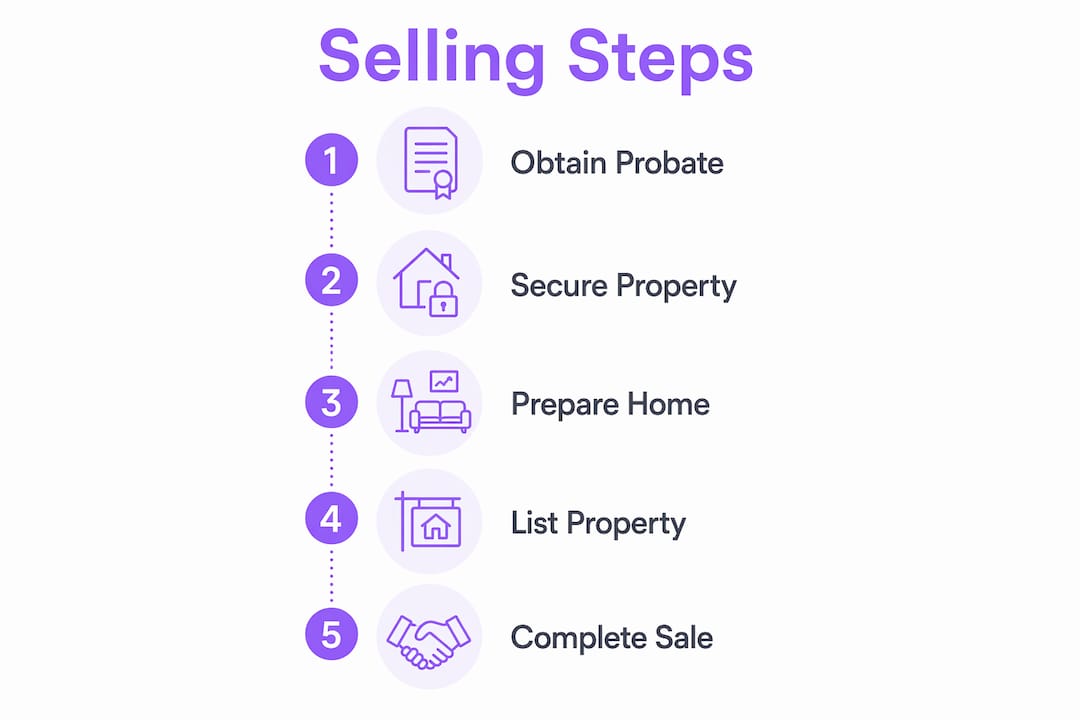
The most common pitfall executors face is attempting to sell before the grant is issued. Real estate agents, lawyers, and LINZ will all require sight of the grant before proceeding. Starting the process early is the single most effective way to avoid this problem.
How to prepare the inherited property for sale
The probate waiting period is not dead time. Preparing the property during this window reduces holding costs and means you can list within days of receiving the grant.
Secure the property first
Your first responsibility is protecting the asset. Contact the insurer immediately to notify them of the change in occupancy status, as standard home insurance policies often exclude vacant properties after a set period. Arrange for utilities to remain connected, set up a security check routine, and redirect mail if needed.

Clear and clean the home
Sorting a loved one’s belongings is emotionally demanding. Give yourself and other family members time to identify keepsakes before arranging removal of remaining items through donation, auction, or disposal. Once cleared, a professional clean and basic garden tidy lift the property’s presentation significantly. Minor repairs, such as fixing leaking taps, replacing broken light fittings, or touching up paintwork, cost little but improve buyer perception.
Here is a practical overview of preparatory tasks and their typical timeframes:
| Task | Who handles it | Typical timeframe |
|---|---|---|
| Notify insurer and update policy | Executor | Within 1 week of death |
| Secure property and redirect mail | Executor | Within 1–2 weeks |
| Sort and remove personal belongings | Family/executor | 2–6 weeks |
| Professional clean and minor repairs | Tradesperson | 1–2 weeks |
| Garden tidy and exterior presentation | Gardener/executor | 1 week |
| Agent appraisal and marketing prep | Real estate agent | During probate wait |
Pro Tip: Book your preferred real estate agent for an appraisal while probate is still processing. Agents experienced in deceased estates understand legal timelines and can prepare marketing materials in advance, so you hit the market the moment the grant arrives.
Choosing the right agent matters more than most people realise. An agent familiar with deceased estate sales understands that the executor, not a grieving homeowner, is making decisions, and they communicate accordingly with beneficiaries and lawyers.
What is the step-by-step process to sell inherited property in NZ?
Once the grant arrives, the inheritance property sale process moves into its active phase. Follow these steps in order to keep the sale clean and legally sound.
- Present the grant to relevant institutions. Take the grant of probate or letters of administration to the bank, LINZ, and any mortgage lender. This formally establishes your authority to deal with the property.
- Confirm the title is clear. Your lawyer will check for any caveats, mortgages, or encumbrances registered against the property. Outstanding debts secured against the property must be settled from sale proceeds before distribution.
- Engage your real estate agent and agree on a sale method. The three main options in New Zealand are auction, private treaty (asking price), and deadline sale (offers by a set date). Deceased estate properties often suit auction or deadline sale because they create competitive tension without requiring the executor to negotiate one-on-one.
- Market the property and accept an offer. Your agent manages open homes, advertising, and buyer enquiries. Once you receive an acceptable offer, your lawyer reviews the sale and purchase agreement before you sign.
- Complete settlement. Settlement typically occurs 20–40 working days after the agreement is signed. At settlement, the buyer pays the purchase price, the mortgage (if any) is discharged, and net proceeds transfer to the estate account.
- Settle estate debts and wait the statutory period. Pay all outstanding estate debts, taxes, and administration costs from the proceeds. Executors typically wait at least 6 months after the grant before distributing the balance to beneficiaries. This protects you from personal liability if a creditor or claimant comes forward.
- Distribute to beneficiaries. Once the hold period has passed and all claims are resolved, distribute the remaining proceeds according to the will or intestacy rules.
Here is a summary of the key stages, their typical durations, and what is required at each point:
| Stage | Typical duration | Key requirement |
|---|---|---|
| Probate/administration grant | 1–4 weeks | Court application, sworn affidavits |
| Property preparation | 2–6 weeks (during probate) | Insurance, clearance, repairs |
| Listing and marketing | 3–6 weeks | Agent agreement, grant in hand |
| Sale and settlement | 4–8 weeks | Signed agreement, clear title |
| Statutory hold before distribution | Minimum 6 months from grant | All debts paid, no pending claims |
Pro Tip: Check your inherited property sale timeline against the 12-month limitation period under the Family Protection Act 1955. Claims against the estate can arrive up to 12 months after the grant, so keep records of all distributions.
What are the common challenges when selling inherited property?
Most estate administration problems trace back to one root cause: misunderstanding the legal requirements before acting. Knowing the risks in advance lets you sidestep them.
- Selling before the grant is issued. This is the most frequent and costly mistake. Agents, lawyers, and LINZ will not proceed without the grant. Attempting to list property early creates legal complications that can take weeks to untangle.
- Distributing assets too soon. Executors are personally liable for estate debts if they distribute assets before the 6-month hold period expires. This liability is real and enforceable.
- Family disagreements. When multiple beneficiaries have different views on timing, sale price, or method, the process stalls. Document every decision in writing and circulate updates to all beneficiaries regularly.
- Property deterioration during probate. A vacant property that is not maintained loses value and can become a liability. Schedule regular inspections and address maintenance issues promptly.
- Documentation errors in the probate application. Missing affidavits or an unsigned will, can send the application back to square one. Have a probate lawyer review all documents before filing.
Clear communication with beneficiaries and well-documented estate administration protect executors from personal liability and disputes. Keep a written record of every decision, every expense, and every communication from the day you accept the executor role.
Pro Tip: If family disagreement is likely, appoint a neutral professional, such as a lawyer or estate consultant, to facilitate decisions. The cost is far less than the delay caused by a dispute.
Staying organised is the most effective protection you have. A simple spreadsheet tracking tasks, costs, and communications gives you a clear record if questions arise later. You can also use the selling inherited property checklist to make sure nothing falls through the cracks.
Key takeaways
Selling inherited property in New Zealand requires legal authority first, thorough preparation during the probate wait, and careful management of executor obligations before distributing proceeds.
| Point | Details |
|---|---|
| Legal authority is non-negotiable | You must hold a grant of probate or letters of administration before listing or selling. |
| Prepare during the probate wait | Use the 1–4 week processing period to clear, clean, and repair the property. |
| Choose the right agent | Select an agent experienced in deceased estates to handle legal timelines and beneficiary communication. |
| Observe the 6-month hold | Wait at least 6 months after the grant before distributing proceeds to protect yourself from personal liability. |
| Document everything | Written records of decisions, costs, and communications protect you if disputes or claims arise. |
What I have learned from watching executors get this wrong
The pattern I see most often is this: a well-meaning executor, wanting to act quickly for the family, starts talking to real estate agents before the probate application is even lodged. The agent is enthusiastic, the family is keen, and then everything stops the moment a lawyer points out that the grant has not arrived. Weeks of goodwill evaporate, and the family ends up more stressed than if they had waited.
My honest view is that the 6-month statutory hold period is actually a gift, not a burden. It gives you time to prepare the property properly, resolve any family disagreements about the sale, and make sure the price reflects the market rather than urgency. Executors who rush that period often leave money on the table or expose themselves to liability they did not see coming.
The emotional side of this process is real and should not be underestimated. Sorting through a parent’s or partner’s belongings while simultaneously managing legal paperwork and family expectations is genuinely hard. The executors who handle it best are the ones who separate the emotional work from the administrative work. They set aside specific times for each, and they ask for professional help early rather than trying to carry everything alone.
If you are an executor right now, my strongest recommendation is to engage a probate lawyer and an estate-experienced agent from day one. The fees are modest compared to the cost of a mistake. And if speed matters more than price, a cash buyer like Easysale removes the agent, the open homes, and the uncertainty entirely.
— Aaron
Easysale: a faster path for inherited property in NZ
Once you have legal authority in hand, you do not have to go through the full traditional sale process if your priority is speed and certainty.

Easysale buys inherited properties across New Zealand as-is, with no repairs required and no agent commissions to pay. You submit your property details, receive a no-obligation cash offer, and settle on a timeline that suits the estate. For executors managing ongoing holding costs or beneficiaries who simply want the estate resolved, this is a practical alternative to a drawn-out market campaign. Get a fast cash offer from Easysale today and find out what your inherited property is worth without the wait.
FAQ
Do you need probate to sell an inherited house in NZ?
Yes, in almost all cases. Real estate held solely by the deceased always requires a grant of probate or letters of administration before it can be sold or transferred, regardless of the estate’s total value.
How long does selling an inherited property take in NZ?
The full process typically takes 4–6 months from the date of death. Probate takes 1–4 weeks, property preparation and marketing take 5–12 weeks, and the statutory 6-month hold period runs concurrently with or after the sale.
Can beneficiaries force the sale of an inherited property?
Beneficiaries cannot unilaterally force a sale. The executor holds legal authority over the estate and makes sale decisions, though serious disputes may require court intervention to resolve.
What happens to a mortgage on an inherited property?
The mortgage remains secured against the property and must be repaid from sale proceeds at settlement. The estate is responsible for ongoing mortgage payments until the property is sold.
Can you sell an inherited property without using a real estate agent?
Yes. Executors can sell directly to a cash buyer like Easysale without engaging an agent, which removes commission costs and can significantly shorten the steps to sell the inherited home.
Recommended
