
Top alternatives to real estate agents for Kiwi sellers

The fastest realistic agent-free routes for Kiwi vendors are a direct cash buyer, a private sale (for-sale-by-owner, or FSBO) with a vetted buyer, and a sale to a property investor or developer. For sellers who need speed and certainty above all else, a direct cash buyer is the clear recommended route. You skip open homes, agent commissions, and conditional offers. Easysale operates exactly this way across New Zealand, buying properties in any condition with a straightforward three-step process.
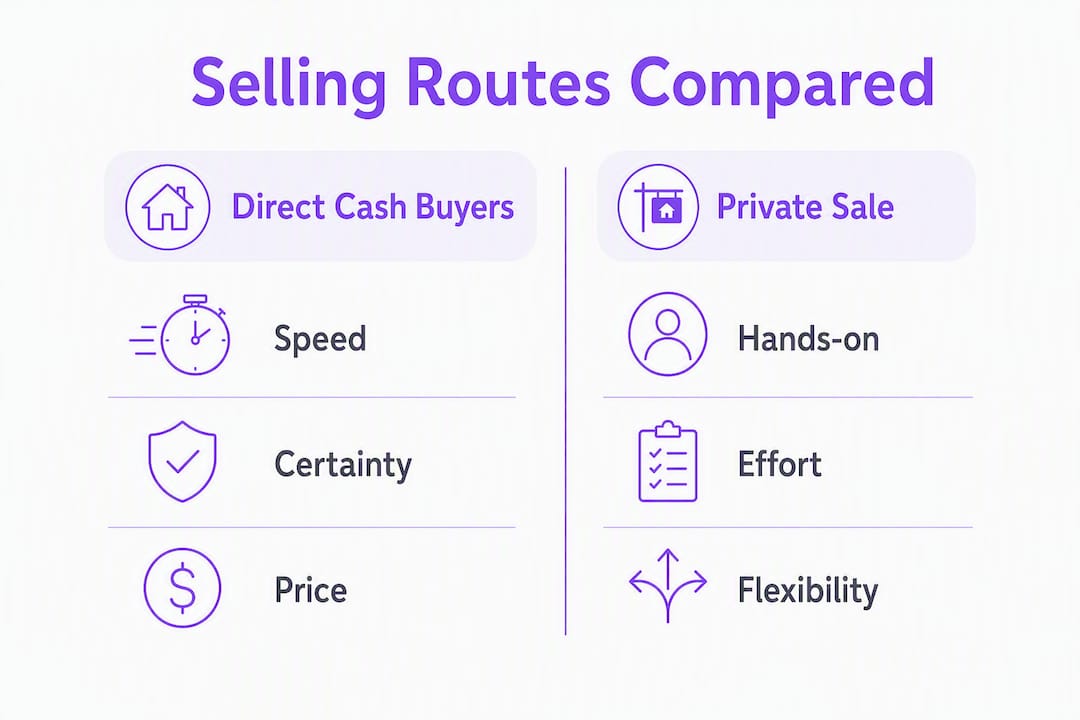
Here is a quick comparison of the main options:
- Direct cash buyer (e.g. Easysale): settlement can happen very fast; price is typically below market value in exchange for certainty and speed; no repairs needed; no agent fees.
- Private sale / FSBO: you sell without an agent and keep the commission, but you take on all buyer vetting, negotiation, and legal coordination yourself; timeline is 24–60 days or longer.
- Investor or developer purchase: fast when the buyer is motivated; price varies widely; suits properties needing significant work or with development potential.
According to Settled.govt.nz, selling privately saves on commission but shifts you from a delegated model to an active management model where you and your lawyer handle everything. That trade-off matters enormously when time is short.
Pro Tip: Before you choose any route, check whether you have a current or recently expired agency agreement. A ‘tail’ or protected-buyer clause can create commission liability even after the agreement ends.
Table of Contents
- What are the real agent-free options in New Zealand?
- How do you pick the right route for your situation?
- What does selling to a cash buyer actually look like, step by step?
- Legal must-dos for Kiwi vendors selling without an agent
- Pros and cons of each agent-free route at a glance
- Key takeaways
- Why the “just save the commission” logic misses the point
- Ready to get a cash offer with no agent involved?
- Useful NZ resources for private sellers
What are the real agent-free options in New Zealand?
Each route works differently, and the right one depends on your timeline, property condition, and how much hands-on work you are willing to do.

Direct cash buyer services like Easysale make a written as-is offer after a property assessment. There are no open homes, no conditional finance clauses, and no agent commissions. Settlement timing is flexible and agreed upfront. The trade-off is that the offer will generally sit below full market value, which is the price you pay for certainty and speed.
Private sale / FSBO means you list and market the property yourself, typically on platforms like TradeMe Property or RealEstate.co.nz. You manage all enquiries, negotiations, and paperwork. A conveyancer or lawyer can prepare the Sale and Purchase Agreement using standard ADLS/REANZ templates. This route can save a meaningful amount in commission, but it requires real time and effort.
Property investor or developer purchase suits homes needing substantial renovation or sites with development potential. Investors typically move quickly and buy as-is, though their offers reflect the work required. Prices vary widely depending on the buyer’s plans.
Sale by tender or online auction through private-seller platforms gives you some competitive tension without a traditional agent. These platforms charge listing fees rather than commission. Settlement timelines depend on buyer conditions and financing.
| Route | Speed | Price vs market | Condition accepted | Certainty | Legal effort |
|---|---|---|---|---|---|
| Direct cash buyer | Very fast | Below market | As-is | High (subject-free) | Low |
| Private sale / FSBO | 24–60+ days | Closer to market | Usually as-is | Medium (maybe conditional) | Medium to high |
| Investor / developer | Fast to medium | Below market | As-is | Medium | Medium |
| Tender / online auction | 24–60 days or longer | Variable | Usually as-is | Lower (conditional common) | Medium |
Regardless of the route, NZ vendors must meet statutory disclosure obligations covering weather-tightness, unconsented work, boundary issues, and natural hazard risks. Buyers commonly request a Land Information Memorandum (LIM), Certificate of Title, chattels list, and copies of any building consents.
How do you pick the right route for your situation?
Start with one question: do you need guaranteed fast cash, or do you want to maximise the sale price?
If speed and certainty are the priority, a direct cash buyer is the right fit. If you have time, the property is in good condition, and you are comfortable managing the process, a private sale can return more. Use this checklist to decide:
- Urgency: how many weeks can you realistically wait for settlement?
- Property condition: does the home need repairs that would put off most buyers?
- Mortgage status: is there a mortgage to discharge, and does your lender have specific requirements?
- Existing agency agreements: check for any tail or protected-buyer clauses before proceeding privately.
- Appetite for admin: are you prepared to handle enquiries, negotiations, and document coordination yourself?
Watch for these red flags when evaluating any buyer or offer:
- Inability to provide verifiable proof of funds.
- Pressure to sign or exchange without giving you time for lawyer review.
- Requests for upfront fees before any agreement is signed.
- Vague or shifting settlement timelines with no written commitment.
What does selling to a cash buyer actually look like, step by step?
Selling to a vetted cash buyer can be the fastest route when you prioritise certainty over top market price. Here is a realistic workflow:
- Submit your property details to the cash buyer (address, condition, any known issues, your preferred timeline).
- Property assessment: the buyer reviews photos, may arrange a brief inspection, and assesses the as-is value.
- Written offer: you receive a no-obligation written offer. Review it carefully and compare it against your financial position.
- Lawyer reviews the Sale and Purchase Agreement: this step is non-negotiable. The Sale and Purchase Agreement sets out chattels, settlement dates, and default compensation. Your lawyer confirms the terms protect you.
- Exchange and deposit: once both parties sign, the agreement is binding. A deposit may or may not apply depending on the terms.
- Settlement: funds transfer on the agreed date. Your lawyer discharges any mortgage and handles the title transfer.
Fast settlement promises depend heavily on how quickly your legal representative can move. Proactive preparation of your Certificate of Title, council compliance documents, and mortgage details is the practical bottleneck. Easysale asks sellers to have these documents ready, which is what makes fast offers and quick settlements achievable.
Pro Tip: Contact your lawyer before you accept any offer, not after. A lawyer who already has your file can turn around a reviewed agreement far faster than one starting from scratch.
Legal must-dos for Kiwi vendors selling without an agent
Selling without an agent does not reduce your legal obligations. It increases your personal exposure to them.
NZ vendors must disclose all relevant information to potential buyers. This includes weather-tightness issues (leaky homes), unconsented building work, boundary disputes, and natural hazard risks. Failure to disclose known issues can invalidate the sale or expose you to legal action after settlement.
Work through this checklist before accepting any offer:
- Engage a property lawyer or licensed conveyancer early, ideally before you list or approach buyers.
- Obtain your Certificate of Title and check for any encumbrances or caveats.
- Order a LIM report from your local council if you do not already have a current one.
- Confirm all building work has the required consents and code compliance certificates.
- Check any existing or recently expired agency agreement for tail clauses that could trigger commission liability.
- Have your lawyer prepare or review the Sale and Purchase Agreement using ADLS/REANZ templates.
The Law Society Property Law Section advises vendors to fully understand listing authorities and disclosure warranties before signing anything. Getting legal advice early is not a luxury; it is the step that keeps a fast sale from becoming a costly dispute.
Pros and cons of each agent-free route at a glance
- Direct cash buyer: fastest settlement, no repairs, no commission, subject-free offer. Price will be below market value. Best for urgent sellers, inherited properties, or homes needing significant work. See advantages of a no-agent sale for a fuller breakdown.
- Private sale / FSBO: saves commission, you control the process. Requires significant time and admin; legal responsibility sits entirely with you. Best for sellers with time, a well-presented property, and confidence managing negotiations.
- Investor / developer purchase: fast, as-is. Price reflects the buyer’s renovation or development margin. Best for properties with structural issues or development potential.
- Tender / online auction platform: some competitive tension without a full agent. Fees apply; outcomes depend on buyer pool and conditions. Best for sellers who want a structured process but not a traditional agent.
For sellers who need to move quickly and want certainty, a direct cash buyer remains the most practical choice.
Key takeaways
Selling your home without an agent in New Zealand is entirely achievable, but the route you choose determines whether you get speed, price, or simplicity.
| Point | Details |
|---|---|
| Fastest route for urgent sellers | A direct cash buyer offers subject-free, as-is settlement with no agent commission. |
| Lawyer review is non-negotiable | Have a property lawyer review the Sale and Purchase Agreement before you sign anything. |
| Disclosure obligations always apply | You must disclose relevant information regardless of sale method; non-disclosure can invalidate the sale. |
| Check past agency agreements | Tail or protected-buyer clauses can create commission liability even after an agreement expires. |
| Easysale for fast cash sales | Easysale buys NZ properties in any condition with a three-step process and flexible settlement timelines. |
Why the “just save the commission” logic misses the point
The conventional framing around agent-free sales focuses almost entirely on commission savings. That framing is incomplete. When you sell privately, you are not simply pocketing the agent’s fee. You are taking on buyer vetting, negotiation, legal coordination, and full disclosure liability. For a seller with time, a well-presented property, and a clear head for paperwork, that trade-off can work well. For a seller under financial pressure, facing a tight relocation deadline, or dealing with an inherited property in poor condition, it often does not.
The more useful question is not “how do I avoid the commission?” but “which route gives me the outcome I actually need?” For many Kiwi sellers, that outcome is a clean, fast, certain sale with no open homes and no conditional offers falling over at the last minute. A vetted cash buyer delivers exactly that, and the price difference is often smaller than sellers expect once you factor in marketing costs, holding costs during a prolonged campaign, and the time value of a delayed settlement.
Ready to get a cash offer with no agent involved?
Easysale is a direct cash buyer operating across New Zealand. You get a fair, no-obligation offer within 24 hours, with no agent fees, no open homes, and no repairs required before settlement. Whether your property is in perfect condition or needs significant work, Easysale will assess it and make a written offer.
To get an offer quickly, have these ready: Certificate of Title, LIM report (if available), a chattels list, details of any existing mortgage, and your lawyer or conveyancer’s contact details. The more complete your file, the faster the process moves.
Easysale’s process is three steps: submit your property details, receive a written cash offer, and settle on a timeline that works for you. Sellers across New Zealand have used this process to move quickly through relocation, financial pressure, and estate situations without the delays of a traditional sale. Get a fast cash offer and see what your property is worth today.
Useful NZ resources for private sellers
These official sources cover the legal and practical steps referenced throughout this article:
- Selling your house | New Zealand Government: covers disclosure obligations, the selling process, and your rights as a vendor.
- Settled.govt.nz — selling privately: practical guidance on FSBO steps, document responsibilities, and when to contact a lawyer.
- REA Sale and Purchase Agreement guide: explains every clause in the standard agreement and what sellers need to check before signing.
- NZ Law Society Property Law Section: guidance on listing authorities, vendor warranties, and disclosure duties for private vendors.
This article provides general information only and is not legal or financial advice. Confirm current rules and your specific obligations with a qualified property lawyer or conveyancer before proceeding with any sale.
Recommended
