
Why avoid traditional real estate in NZ: faster sale tips
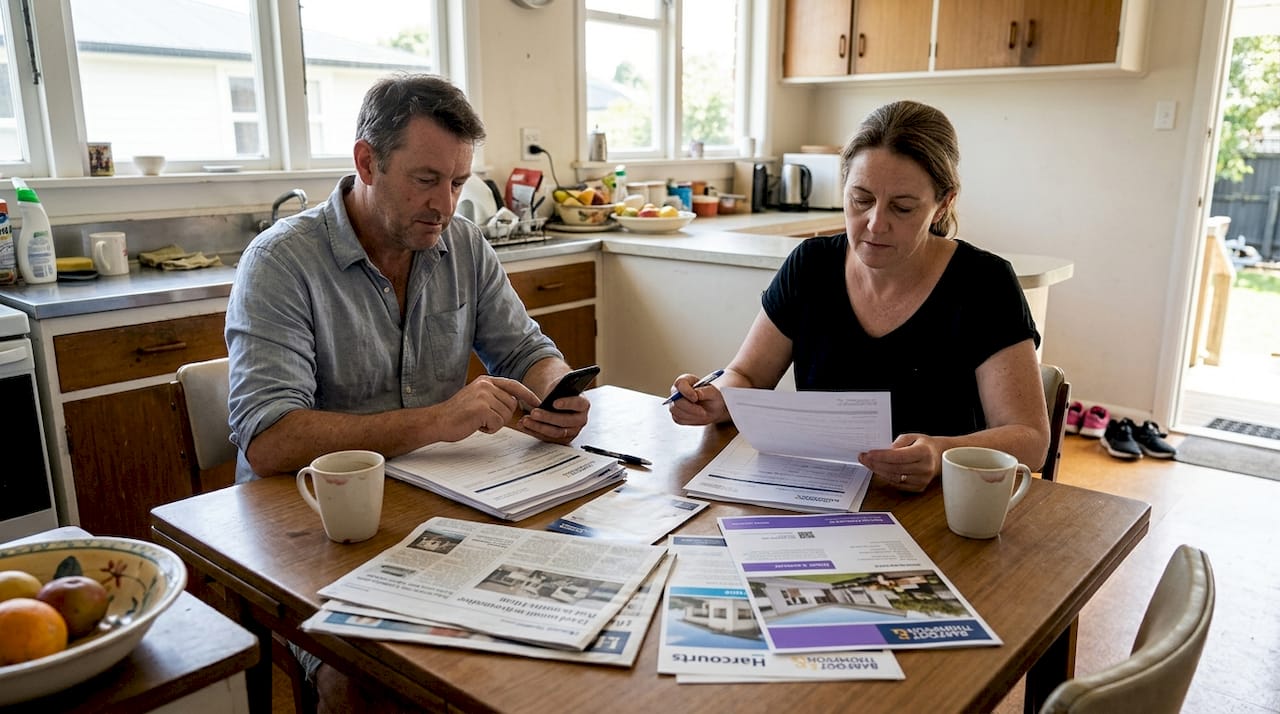
Many Kiwis assume selling a home through a real estate agent is a simple, predictable process. The reality is quite different. Traditional sales take 54-56 days on market alone, and when you add preparation, conditions, and settlement, the full process can stretch to three months or more. For homeowners facing financial pressure, a life change, or a property in difficult condition, that timeline is simply not workable. This guide explains what the traditional process actually involves, where it falls short, and what practical alternatives exist for sellers who need speed, certainty, and less stress.
Table of Contents
- What is the traditional real estate process in New Zealand?
- The hidden costs and financial pressures of selling with an agent
- Why the traditional process can be stressful and risky
- When and why the traditional route doesn’t suit everyone
- Smarter alternatives: How quick sale solutions work
- Take the next step: Explore stress-free sale options
- Frequently asked questions
Key Takeaways
| Point | Details |
|---|---|
| Traditional process is slow | Selling through an agent in NZ typically takes months from listing to settlement. |
| High costs reduce profit | Agent commissions and fees significantly cut into your final proceeds, especially for those under financial pressure. |
| Stress and risk are common | Open homes, repairs, and falling deals make the process draining and uncertain for many sellers. |
| Quick solutions offer certainty | Private and cash buyer routes provide speed, flexibility, and ‘as-is’ sales suited to urgent or complex needs. |
| Match the method to your needs | If you value certainty and speed over maximum price, alternatives to the traditional approach can be far more suitable. |
What is the traditional real estate process in New Zealand?
Having set the scene for why expectations and reality so often clash, let’s clarify what the traditional process actually looks like in practice.
Selling through an agent in New Zealand follows a well-worn path. Most sellers go through these key steps:
- Prepare the property for sale, including repairs, cleaning, and staging.
- Hire a real estate agent and sign a listing agreement.
- Market the property through online listings, signage, and print.
- Hold open homes and private viewings for prospective buyers.
- Receive and negotiate offers, often conditional on finance or building inspections.
- Satisfy conditions during a due diligence period, which can take one to three weeks.
- Settle the sale, typically 30 to 90 days after the offer is accepted.
Each step adds time. The median time on market in New Zealand sits at 54 to 56 days, based on REINZ data from early 2026. Add preparation before listing and settlement after acceptance, and you are realistically looking at three to four months from start to finish.
Did you know? Between 15 and 20% of house sales fall through due to finance or inspection issues, meaning sellers sometimes restart the entire process from scratch.
Beyond the timeline, the process involves real friction. Open homes mean strangers walking through your private space repeatedly. Conditional offers create uncertainty. Unexpected repair requests can derail negotiations. Understanding agent commissions explained is also essential before you commit, as the costs add up quickly.
The hidden costs and financial pressures of selling with an agent
With the main steps and timeline clear, the next factor is the money actually at stake for New Zealand homeowners when selling this way.
Agent commissions typically range from 2 to 4% plus GST, which equals roughly $19,750 on a $500,000 sale. That figure does not include marketing costs, home staging, or any repairs you make before listing. The total out-of-pocket expense can easily reach $25,000 to $35,000 on a mid-range property.
| Cost item | Typical range |
|---|---|
| Agent commission (2-4% + GST) | $11,500 to $23,000 |
| Marketing and advertising | $1,500 to $4,000 |
| Home staging | $1,500 to $5,000 |
| Pre-sale repairs and maintenance | $2,000 to $10,000+ |
| Legal and conveyancing fees | $1,500 to $2,500 |
For a homeowner in a stable financial position, these costs are manageable. For someone dealing with mortgage stress, a separation, a sudden relocation, or an inherited property they cannot afford to maintain, they can be genuinely damaging. The commission impact on your final proceeds is worth calculating carefully before you sign anything.
An RNZ analysis of agent value highlights that while agents can add value in competitive markets, the cost-benefit equation shifts significantly when a seller’s priority is speed rather than maximising price.
“For sellers already under financial pressure, every dollar paid in commission or repair costs is a dollar that could have gone toward resolving the underlying problem.”
Pro Tip: Before listing with an agent, calculate your estimated net proceeds after all fees and costs. Compare that figure against a direct cash offer. The gap is often smaller than you expect, especially once you factor in holding costs during a long campaign.
Why the traditional process can be stressful and risky
Beyond the dollars and cents, sellers often face challenges that affect their wellbeing and peace of mind.

The emotional toll of a traditional sale is real and often underestimated. Keeping your home in show-ready condition for weeks or months is exhausting, particularly if you have children, pets, or a busy schedule. You have little control over when buyers want to view, and every showing is an interruption to your daily life.
The most commonly reported stressors for NZ sellers include:
- Repeated open homes and private viewings with strangers in your home
- Staging and presentation pressure, including keeping the property immaculate at all times
- Conditional offers that leave you in limbo for weeks
- Repair requests from buyers after building inspections
- Uncertainty about settlement dates, making it hard to plan your next move
- Risk of the deal collapsing, which forces you to restart the process
According to research, 35% of NZ properties are sold under some form of time pressure, and privacy and stress reduction are cited as key reasons sellers seek alternatives. When you are already managing a difficult life situation, adding months of uncertainty and repeated intrusions into your home is a significant burden.
For sellers who need to move quickly, selling your house fast through a direct buyer removes most of these stressors entirely. There are no open homes, no conditional periods, and no risk of a deal falling through at the last moment.
When and why the traditional route doesn’t suit everyone
Not every seller is the same. Let’s see when the traditional method truly falls short.
The traditional process is designed for sellers who have time, money, and a property in good condition. It works well in a rising market where competition among buyers drives prices up. But for a significant number of New Zealand homeowners, those conditions simply do not apply.
The main scenarios where a traditional sale is impractical or harmful include:
- Urgent financial need, such as mortgage arrears or looming bankruptcy
- Divorce or separation, where both parties need a clean, fast resolution
- Relocation, especially when a job or family situation requires a quick move
- Deceased estates, where beneficiaries want to settle quickly without managing a property
- Damaged or problem properties, including weather damage, deferred maintenance, or structural issues
- Tenanted properties, where managing viewings around tenants is complicated and stressful
For these sellers, selling any condition home through a direct buyer is often the most practical path. As-is-where-is sales mean you do not need to spend money on repairs or presentation before selling.
| Factor | Traditional agent sale | Quick cash sale |
|---|---|---|
| Time to offer | 4 to 8 weeks | 24 to 48 hours |
| Settlement timeline | 30 to 90 days | 7 to 14 days |
| Repairs required | Often yes | No |
| Privacy | Low (open homes) | High |
| Certainty of sale | Moderate | High |
| Agent fees | Yes (2-4% + GST) | No |
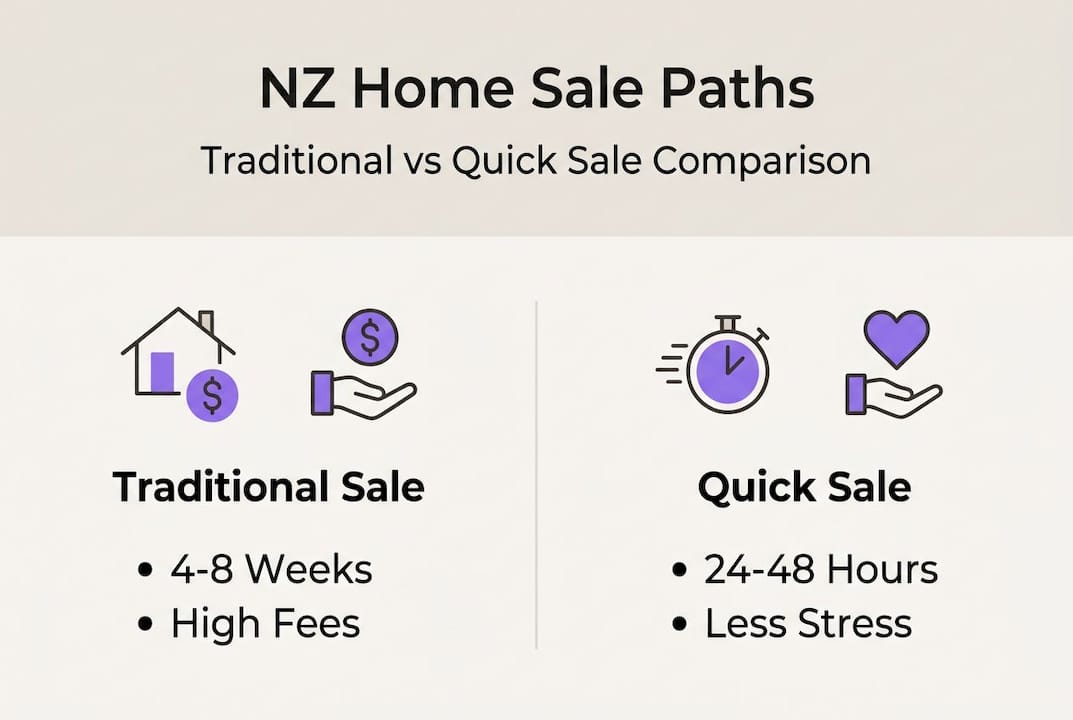
Pro Tip: If speed and certainty matter more to you than achieving the absolute highest price, a quick cash sale is worth serious consideration. The price difference is often offset by savings on fees, repairs, and holding costs.
Smarter alternatives: How quick sale solutions work
With context for why the old way doesn’t suit everyone, let’s see what a modern, fit-for-purpose sale alternative really looks like in NZ.
Cash buyers skip directly to a direct offer and settlement in days or weeks, with no contingencies, no open homes, and no agent involvement. The process is straightforward and designed around the seller’s needs.
Here is how a typical quick sale works in New Zealand:
- Submit your property details online or by phone. This takes a few minutes and requires basic information about your home.
- Receive a no-obligation cash offer within 24 to 48 hours. There is no pressure to accept.
- Review and accept the offer if it suits your needs. You are in control of the decision.
- Agree on a settlement date that works for your timeline, whether that is one week or several months away.
- Complete the sale without repairs, staging, open homes, or agent fees.
The key advantages are speed and certainty. You know exactly what you will receive and when. There are no conditional periods, no risk of a buyer pulling out due to finance, and no surprise repair requests after an inspection.
The main limitation is price. A cash buyer will typically offer below the top of the market, because they are taking on the risk and cost of any repairs or resale. However, when you factor in the benefits of fast sale services including saved fees, avoided repairs, and reduced holding costs, the net difference is often smaller than it first appears.
For sellers who need to sell quickly due to financial pressure or life circumstances, the trade-off is frequently worth it.
Pro Tip: Always request a written, no-obligation offer before making any decisions. A reputable cash buyer will provide one without requiring you to commit to anything upfront.
Take the next step: Explore stress-free sale options
If the traditional process feels too slow, too costly, or too uncertain for your current situation, there is a practical alternative worth exploring.
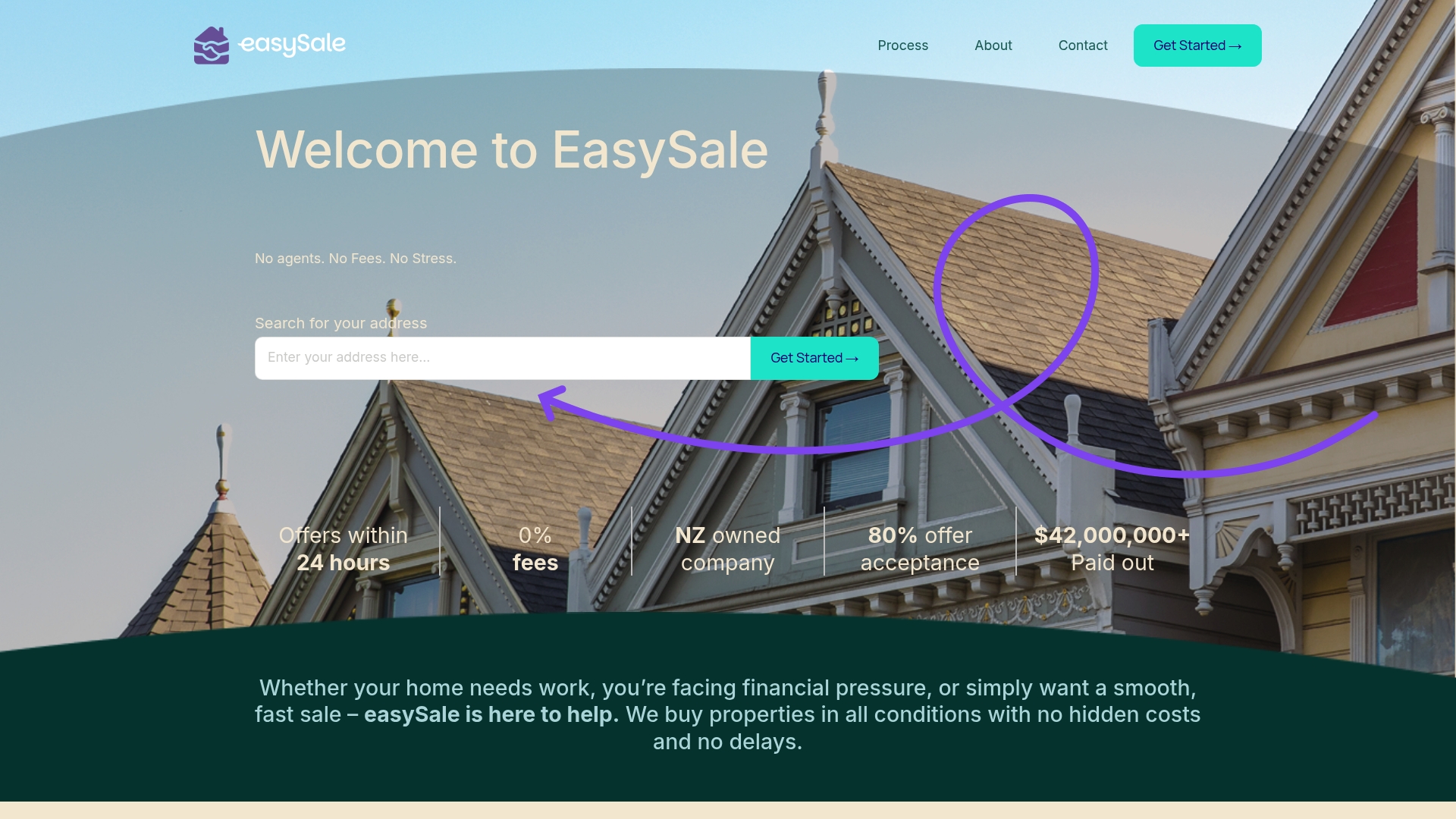
At easySale.co.nz, we buy residential properties across New Zealand in any condition, on any timeline. Whether you are facing financial difficulty, going through a separation, dealing with an inherited property, or simply need to move on quickly, we can provide a fair, obligation-free cash offer within 24 to 48 hours. There are no agent fees, no open homes, and no requirement to carry out repairs before selling. You can sell your house privately with full control over the process and timeline. If your property has damage or maintenance issues, we also buy damaged homes as-is, so you never need to spend money fixing a home you are ready to leave behind. Get in touch today to find out what your property is worth.
Frequently asked questions
How long does it take to sell a house through a traditional agent in New Zealand?
The median time on market is 54 to 56 days, and when you add preparation and settlement, the full process typically takes three to four months.
Why do homeowners in difficult situations avoid the traditional real estate process?
The traditional process is too slow, stressful, and costly for sellers who need urgent cash, certainty, or an as-is sale without repairs or open homes.
Is it cheaper to sell directly to a cash buyer instead of through an agent?
You avoid agent commissions of 2 to 4% plus GST and marketing costs, which means more of the sale price stays in your pocket, particularly valuable when finances are tight.
What types of properties benefit most from a quick or as-is sale?
Damaged, inherited, or tenanted properties benefit most, especially when the owner cannot afford repairs or needs to settle quickly without a lengthy campaign.
Are there risks to accepting a quick cash offer?
The main trade-off is a potentially lower sale price, but many sellers in urgent or difficult circumstances prioritise speed, privacy, and certainty over achieving the maximum possible price.
Recommended
