
Why choose unconditional sale in NZ property deals


An unconditional sale is a legally binding property agreement with no outstanding conditions. The moment both parties sign, you are fully committed to completing the transaction. No exit clauses, no cooling-off period, and no turning back without serious financial and legal consequences.
So why would anyone choose it? For sellers, it removes the risk of a deal collapsing over finance or inspection issues. For buyers, it signals strength in a competitive market and is the only option at auction. The trade-off is real: certainty on one side, concentrated risk on the other.
Why choose an unconditional sale in New Zealand?
The core appeal of an unconditional sale is certainty. Once a contract goes unconditional, both buyer and seller are locked in to settle on the agreed date. Sellers particularly value this because it eliminates the possibility that a buyer will pull out due to a failed finance application or an unfavourable building report.

In New Zealand, auction sales are always unconditional on the fall of the hammer. Outside of auctions, buyers sometimes choose to go unconditional in multi-offer situations to make their offer stand out. A seller facing two similar offers will almost always favour the one with no conditions attached, even if the price is slightly lower.

Here is a quick summary of the key advantages and disadvantages:
Advantages for sellers:
- Guaranteed sale with no risk of the buyer withdrawing
- Faster transaction with no waiting on condition deadlines
- Stronger negotiating position when multiple offers are on the table
- No need to renegotiate if inspections reveal issues
Advantages for buyers:
- Competitive edge in hot markets and multi-offer situations
- Required for auction purchases
- Faster settlement process once accepted
Disadvantages and risks:
- No cooling-off period in New Zealand residential transactions
- Buyer cannot exit if finance falls through or defects are discovered
- Deposit of 10% is typically paid within 2–3 working days of going unconditional and is at risk if settlement fails
- Seller may face compensation claims if they fail to complete after going unconditional
How does an unconditional sale differ from a conditional contract?
A conditional sale and purchase agreement includes one or more clauses that must be satisfied before the sale becomes binding. Common conditions in New Zealand include finance approval, a satisfactory builder’s report, a Land Information Memorandum (LIM) review, registered valuation, and solicitor’s approval. Each condition carries a deadline set by the agreement.
The fundamental difference is buyer protection. A conditional offer gives you a legal exit if something goes wrong during the due diligence period. If your bank declines the mortgage or a building inspection reveals serious structural problems, you can cancel and recover your deposit. An unconditional offer removes every one of those exit routes the moment it is accepted.
| Feature | Conditional offer | Unconditional offer |
|---|---|---|
| Buyer protection | Yes, conditions provide exit paths | None once accepted |
| Seller certainty | Lower, buyer may withdraw | High, sale is guaranteed |
| Competitive strength | Moderate | Strong, especially at auction |
| Deposit risk | Low, refundable if conditions not met | High, forfeited if you cannot settle |
| Typical use | Most residential purchases | Auctions, competitive markets, cash buyers |
| Condition timeframe | 5–15 working days per condition | Not applicable |
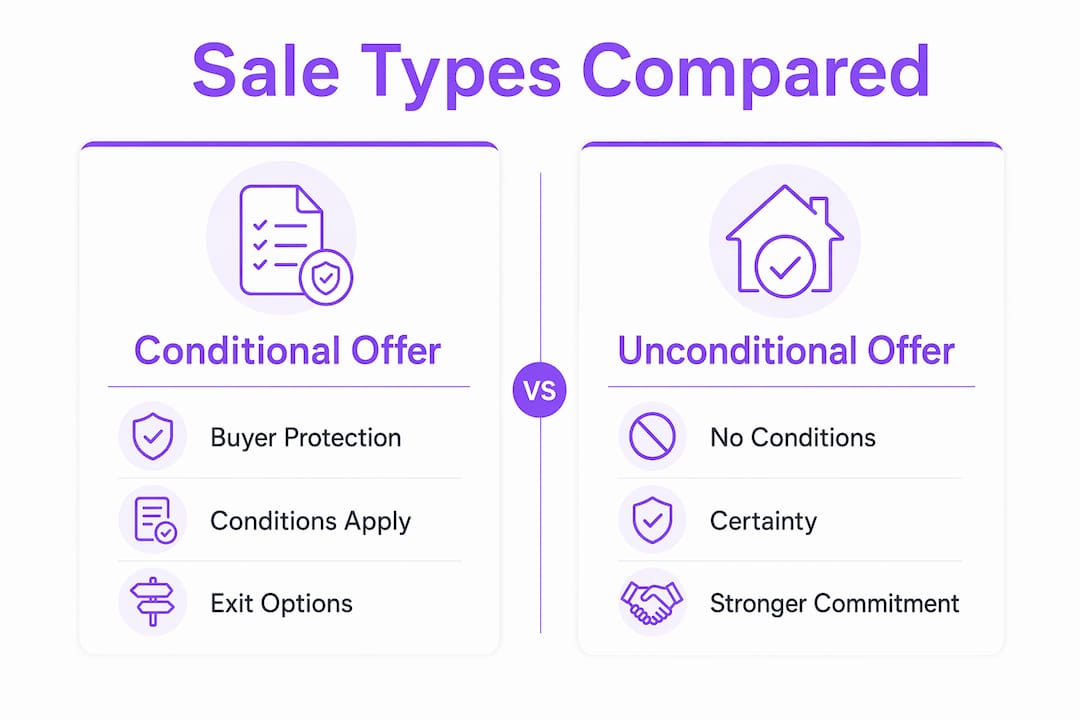
A conditional agreement becomes unconditional once all conditions are satisfied or formally waived. At that point, your lawyer sends written confirmation to the seller’s lawyer, and both parties are fully committed to settlement. The key distinction is timing: with a conditional offer, you complete your due diligence before that commitment locks in.
Pro Tip: If you are in a multi-offer situation and considering going unconditional, talk to your lawyer first. There may be alternative strategies, such as shorter condition periods, that give you a competitive edge without removing all your protections.
What are the real risks of going unconditional in New Zealand?
The risks are concentrated and, in some cases, irreversible. New Zealand residential property transactions have no cooling-off period, which means once you sign an unconditional agreement, there is no grace period to change your mind.
The New Zealand Law Society is direct on this point: do not sign an unconditional purchase agreement without first discussing it with your lawyer. Signing without legal review exposes you to irreversible financial commitments with no recourse.
The major risks buyers face include:
- Finance withdrawal: If your lender declines the loan after you go unconditional, you are still legally obligated to settle. You cannot use a declined mortgage as a reason to exit.
- Hidden defects: A building inspection after going unconditional is too late. Any structural issues, leaky building problems, or unconsented work become your responsibility.
- Title restrictions: Easements, covenants, or encumbrances discovered post-signature cannot be used to cancel the agreement.
- Insurance refusal: Some properties, particularly those with certain cladding types or in high-hazard zones, may be difficult to insure. Discovering this after going unconditional leaves you in a very difficult position.
- Deposit forfeiture and legal action: If you cannot settle after going unconditional, the seller can cancel the agreement, keep your deposit, and sue you for any additional losses, including resale costs.
Key risk: The standard deposit in New Zealand is 10% of the purchase price, paid within 2–3 working days of going unconditional. On a $750,000 property, that is $75,000 at risk if you cannot complete settlement.
Competitive markets create real pressure to waive conditions prematurely. Buyers who feel they might miss out on a property sometimes go unconditional before completing their checks. This is exactly the scenario where legal advice matters most. A lawyer can assess whether the specific risks on a given property are manageable or whether the conditions are genuinely protecting you from a costly mistake.
What due diligence do you need before going unconditional?
The most effective unconditional offers are made after a thorough pre-offer due diligence phase. Completing your checks before you sign means you can offer unconditionally with confidence, rather than hoping nothing goes wrong.
Essential documents and checks
- Builder’s report: Commission an independent building inspection from a qualified inspector. This covers structural integrity, moisture issues, and any visible defects. Do not rely solely on a report provided by the seller.
- LIM report: A Land Information Memorandum from the local council covers zoning, rates, consents, and known hazards. However, a LIM report does not cover structural integrity or contamination risks, so it must be combined with an independent building assessment.
- Title search: Your lawyer reviews the certificate of title for easements, covenants, caveats, or any restrictions that could affect your use of the property.
- Registered valuation: Confirms the property’s market value and protects you if the bank’s valuation comes in lower than your offer price.
- Legal review of the sale and purchase agreement: Your lawyer checks the contract terms, chattels list, settlement date, and any special conditions before you sign anything.
- Confirmed finance: Unconditional finance approval from your bank, not just pre-approval, is essential before you commit to an unconditional offer.
Steps from conditional to unconditional
- Sign a conditional sale and purchase agreement with your lawyer’s input.
- Complete all due diligence within the condition timeframes (typically 5–15 working days each).
- Once satisfied, your lawyer sends written notification to the seller’s lawyer confirming conditions are met.
- The agreement becomes unconditional. Pay the deposit, typically within 2–3 working days.
- Both parties work toward the agreed settlement date, usually 30–90 days from the agreement date.
- Conduct a pre-settlement inspection shortly before settlement to confirm the property’s condition matches what you agreed to buy.
- On settlement day, your solicitor transfers funds to the seller’s solicitor and the title transfers to you.
Practical tips for negotiating before going unconditional:
- Ask for realistic condition timeframes. Rushing due diligence to meet a tight deadline increases risk.
- If a building report reveals issues, use them to renegotiate the price or request repairs before waiving conditions.
- Never waive a finance condition until you have written, unconditional approval from your lender.
- If you need more time to complete checks, ask your lawyer to request an extension in writing before the deadline passes.
How Easysale makes unconditional property sales straightforward in New Zealand
For sellers who want the certainty of an unconditional sale without the complexity of a traditional listing, Easysale offers a direct path. Easysale is a nationally owned New Zealand property buying service that purchases homes in any condition, with no real estate agent fees and no commission.
The process works in three steps:
- Submit your property details online. No open homes, no agent appraisals, no waiting.
- Receive a no-obligation cash offer. Easysale provides a fast, fair offer based on your property’s details and condition.
- Choose your settlement timeline. You decide when you want to settle, giving you control over the process.
Easysale’s high acceptance rate and national reach mean sellers across New Zealand can access a fast unconditional sale regardless of their property’s condition or location. This is particularly useful for sellers facing financial pressure, property damage, or life changes that make a drawn-out traditional sale impractical.
The Easysale blog also provides clear, practical guidance on unconditional offers and New Zealand sale agreements, helping sellers understand their rights and obligations before committing to any contract.
Pro Tip: If you are considering selling a property that needs work or you need to settle quickly, Easysale’s as-is purchasing model means you do not need to spend money on repairs or wait months for a buyer. You can sell your property as-is and move on your own timeline.
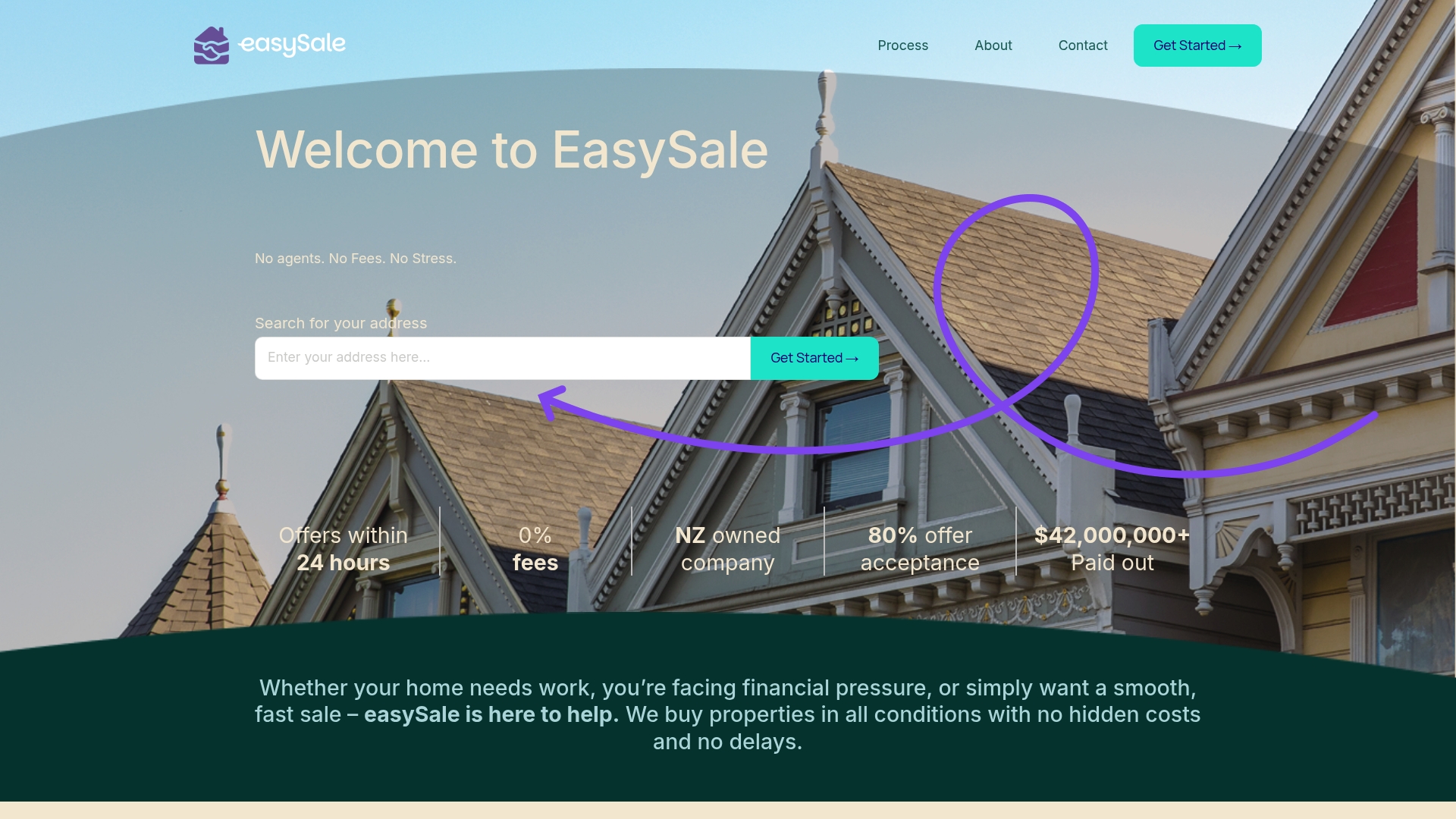
Easysale’s approach removes the uncertainty that makes unconditional sales stressful for sellers. You know who is buying, you know the price, and you control the settlement date. That combination of transparency and speed is what motivated sellers in New Zealand consistently find most valuable.
Key takeaways
An unconditional sale in New Zealand is the strongest form of property commitment available, offering sellers certainty and buyers a competitive edge, but only when backed by thorough due diligence and legal advice.
| Point | Details |
|---|---|
| Unconditional means fully binding | Once signed, both parties must settle. There is no cooling-off period in New Zealand. |
| Deposit is at risk | The standard deposit is 10% of the purchase price, paid within 2–3 working days of going unconditional. |
| Due diligence must come first | Complete your builder’s report, LIM, title search, and finance approval before signing unconditionally. |
| Legal advice is non-negotiable | The New Zealand Law Society advises never signing an unconditional agreement without prior legal review. |
| Easysale offers a direct path | Sellers can receive a fast, fair cash offer with no agent fees and choose their own settlement date. |


