
Do you need a realtor to sell your house in NZ?

You can legally sell your home yourself in New Zealand, but whether you should depends on your property’s complexity, how much buyer competition you can generate, and how much the agent’s commission would cost you versus what their marketing reach could add to your final price. For most Kiwi sellers, a licensed agent earns their fee. For a handful of situations, going private makes real sense.
The Real Estate Authority (REA) and Settled both provide clear guidance on both routes. Here is the short version of the trade-offs:
- Going private saves you commission but you lose access to an agent’s buyer database, their negotiation buffer, and the regulatory protections that come with REA oversight. You also take on full legal responsibility for the sale and purchase agreement, disclosures, and deposit handling.
- Using a licensed agent costs you commission (typically a tiered percentage plus GST) but gives you professional marketing, multi-offer competition, and a regulated professional who is accountable if something goes wrong.
Key takeaways
Using a licensed agent typically delivers the best financial outcome for most New Zealand sellers, but your specific situation — timeline, property condition, and whether you have a buyer ready — determines which route genuinely makes sense.
| Point | Details |
|---|---|
| You do not legally need an agent | Private sales are legal in NZ, but you take on full responsibility for contracts, disclosures, and deposit handling. |
| Agent commission is negotiable | Typical NZ structures run around 2.95%–3.95% on the first portion then ~2% on the balance, plus GST — always ask. |
| Legal fees apply regardless of route | Conveyancing costs of NZ$1,500–$3,000 are common whether you use an agent or sell privately. |
| Private sale risks are real | Limited reach, weaker negotiation, and potential commission tail claims can erode the savings you expected. |
| Easysale suits speed-first sellers | A direct cash offer from Easysale means no commission, no open homes, and settlement on your timeline. |
Table of Contents
- What a licensed real estate agent actually does for sellers in NZ
- Why using a realtor makes sense for most New Zealand sellers
- Why some Kiwis choose to sell privately and where it can work
- If you sell privately in New Zealand: the legal steps you cannot skip
- How selling privately can backfire — costs and risks sellers often miss
- How to decide: agent, private sale, or cash offer?
- Typical costs, commission ranges, and realistic timelines in NZ
- A practical checklist for selling your home privately in NZ
- Why many Kiwis still choose an agent, even when they could go private
- Easysale: a faster route for sellers who need certainty
- Sources
What a licensed real estate agent actually does for sellers in NZ
A licensed agent does far more than put a sign on your fence. Their core responsibilities cover the full arc of a sale: appraising your property, designing and running a marketing campaign, managing buyers through open homes, negotiating offers, and coordinating with your lawyer through to settlement.
Market appraisal and pricing Before listing, a licensed agent prepares a written appraisal based on comparable sales in your area. This is not just an opinion — the REA requires written appraisals and agency agreements as part of their professional standards. Getting the price right from the start matters; overpriced homes sit, and sitting homes attract lower offers.
Campaign design and marketing placements Agents have access to premium placements on Trade Me Property and OneRoof, plus their agency’s own buyer databases. A well-timed campaign on the right portals, with professional photography and a floor plan, reaches buyers who would never find a private listing.
Open homes and buyer screening Running open homes takes time and skill. An agent qualifies buyers, follows up on interest, and keeps the process moving without you having to field calls from tyre-kickers on your personal number.

Negotiating offers and managing conditions This is where an experienced agent often pays for themselves. They act as a buffer between you and the buyer, which removes the emotional pressure that can push private sellers into accepting the first offer. A competent agent’s offer-to-market choreography — timing, portal placement, and open home management — can create the competitive tension that materially lifts the final price in many Kiwi suburbs.
Liaison with lawyers and settlement Once an offer is accepted, there are conditions to manage, deadlines to track, and communication between lawyers on both sides. Your agent coordinates this so nothing slips through.
REA licence and Code of Conduct: Every licensed agent in New Zealand must hold a current licence issued by the REA and operate under the Real Estate Agents Act 2008 Code of Professional Conduct. This means sellers have a formal complaints and disciplinary process available if an agent breaches their obligations. You can verify any agent’s licence at rea.govt.nz before you sign anything.
Pro Tip: Before signing an agency agreement, ask the agent to show you their last five comparable sales in your suburb, including days on market and the difference between their initial appraisal and the final sale price.
Why using a realtor makes sense for most New Zealand sellers
The concrete benefits of hiring a licensed agent go beyond convenience. For most sellers in competitive or mid-to-high-value markets, the advantages tend to outweigh the commission cost:
- Access to major portals and buyer databases: Agents list on Trade Me Property and OneRoof with premium placement, reaching a far larger pool of active buyers than a private listing typically achieves.
- Multi-offer competition: A well-run campaign with multiple interested buyers creates competitive tension that can push the final price well above what a single-buyer negotiation would produce.
- Negotiation buffer: Agents negotiate on your behalf without the emotional attachment you have to the property, which helps avoid accepting low early offers.
- Time saved: Managing viewings, buyer enquiries, offer paperwork, and condition management is a part-time job. An agent handles all of it.
- Paperwork and AML checks: Agents manage anti-money laundering identity verification requirements and the administrative side of the sale, reducing your compliance burden.
- Advice on sale method: Auction, deadline sale, tender, or negotiation — each suits different properties and market conditions. An experienced local agent knows which method is likely to generate the best outcome for your specific home.
- Local market knowledge: Pricing strategy, seasonal timing, and suburb-level buyer behaviour are things a good agent reads daily. That knowledge is hard to replicate from a few online searches.
- REA oversight and recourse: If something goes wrong, you have a formal complaints process through the REA. Private sale disputes go straight to the courts.
Settled.govt.nz’s guidance reinforces that sellers who use a licensed agent benefit from professional accountability that simply does not exist in a private transaction.
Why some Kiwis choose to sell privately and where it can work
Selling privately — sometimes called FSBO (for sale by owner) — is a legitimate choice, and for certain sellers it is the right one. The savings on commission are real, and so is the control.
Common reasons sellers choose a private sale:
- Keep the agent commission: On a higher-value home, a tiered commission could cost a significant amount. That is a meaningful saving if you can generate sufficient buyer interest yourself.
- Direct control over viewings and negotiation: You set the open home times, choose who you negotiate with, and decide when to accept.
- Known buyer or family sale: If a neighbour, friend, or family member is already interested, an agent adds little value and costs a lot.
- Simple title and low-interest property: A straightforward property in a high-demand area may sell quickly regardless of marketing spend.
Pro Tip: A private sale works best when you already have a buyer in hand, the property has a clean title with no complex easements or consenting issues, and you are comfortable managing the legal and administrative steps yourself. If any of those conditions are absent, the risk-reward calculation shifts toward using an agent.
One thing to be clear about: selling privately saves commission but not legal fees. You still need a lawyer or conveyancer to prepare the sale and purchase agreement, hold the deposit in trust, and manage settlement. That cost is unavoidable regardless of which route you take.
If you sell privately in New Zealand: the legal steps you cannot skip
New Zealand law is clear: when you sell privately, you take on full responsibility for the sale process. Getting these steps wrong can lead to legal claims, sale collapse, or damages payable to the buyer.
- Engage a property lawyer or conveyancer before you market. They prepare the sale and purchase agreement, advise on your disclosure obligations, and hold the deposit in a trust account. Do this first, not after you find a buyer.
- Prepare a valid sale and purchase agreement. This is a legally binding contract. Use a lawyer-prepared document or the standard ADLS/REINZ form with legal advice — never a template downloaded without review.
- Handle the deposit correctly. Buyer deposits must be held in a solicitor’s trust account, not your personal bank account. This is a legal requirement, not a formality.
- Disclose all material property issues. Weather-tightness problems, unconsented building works, hazard damage, and any known defects must be disclosed to the buyer before they sign. Failure to disclose can lead to post-settlement legal claims and damages. A lawyer’s review of your disclosure obligations is worth every dollar.
- Manage conditions and settlement timelines. Finance conditions, building inspection periods, and settlement dates all have deadlines. Missing them can give the buyer grounds to cancel.
- Check any prior agency agreement for tail clauses. If you previously listed with an agent, their agreement may include a “tail” period during which they can still claim commission if they introduced the buyer. Review this carefully before accepting any offer privately.
Anti-money laundering (AML) identity verification obligations also apply to private sales. Your lawyer will guide you through the identity checks required under the Anti-Money Laundering and Countering Financing of Terrorism Act.
Disclosure warning: Non-disclosure of material property issues is one of the most common causes of post-settlement disputes in New Zealand. A buyer who discovers an undisclosed defect after settlement can pursue compensation through the courts. Get legal advice on your disclosure obligations before you market your property.
How selling privately can backfire — costs and risks sellers often miss
The commission saving looks attractive on paper. In practice, several factors can erode or eliminate it:
- Poor reach and low buyer competition: Without premium portal placement and an agent’s buyer database, you may attract fewer buyers, which reduces competitive tension and can result in a lower sale price.
- Weakened negotiation position: When you are personally attached to the property, it is harder to hold firm on price. Buyers know this and sometimes use it.
- Staging, photography, and portal costs: Professional photos, a floor plan, and a paid listing on Trade Me Property or OneRoof are costs you bear directly. These are not optional if you want serious buyer interest.
- Relisting with an agent later: Many sellers who start privately end up listing with an agent after limited buyer interest, effectively paying both the private sale costs and the agent’s commission. Industry commentary from Wise Up NZ notes this is a common pattern.
- Inadvertent commission claims: If an agent previously introduced a buyer to your property during a prior listing, that agent may still be entitled to commission under their agreement’s tail clause — even if you sell privately later.
- Legal liability for non-disclosure: As noted above, getting disclosures wrong exposes you to post-settlement claims regardless of whether you used an agent.
If you still prefer a private sale after weighing these risks, mitigate them: hire a professional photographer, pay for a premium portal listing, and have your lawyer review every document before you sign.
How to decide: agent, private sale, or cash offer?
Five dimensions determine which route suits your situation: cost, speed and certainty, vendor effort, marketing reach and multi-offer potential, and legal protection.
| Dimension | Licensed agent campaign | Private sale | Cash buyer (e.g. Easysale) |
|---|---|---|---|
| Net cost picture | Commission (tiered % + GST) + marketing; offset by higher sale price potential | No commission; legal fees + portal + photography still apply | No commission or agent fees; offer typically below market value |
| Typical timeline | 4–10 weeks campaign + 4–6 weeks to settlement | Variable; can be faster with a known buyer, slower without | Days to receive offer; settlement on seller’s preferred timeline |
| Vendor time required | Low — agent manages most tasks | High — seller manages all viewings, enquiries, paperwork | Very low — three-step process |
| Marketing reach / multi-offer | High — premium portals, buyer databases, open homes | Limited — depends on seller’s own reach | Not applicable — direct purchase |
| Legal protection / recourse | REA oversight, formal complaints process | Seller’s own legal team only | Seller’s own legal team; no agent regulation applies |
Questions to ask yourself before deciding:
- Do you need to sell within a specific timeframe, or can you wait for the right buyer?
- Do you already have a buyer in hand?
- Is the property in good condition and straightforward to market?
- How much would a 5–10% difference in sale price mean to you in dollar terms?
- Are you comfortable managing open homes, buyer enquiries, and legal paperwork?
Questions to ask an agent at appraisal:
- What comparable sales support your price estimate?
- What is your recommended sale method and why?
- What does the marketing package include, and what costs extra?
- What is the commission structure, and is it negotiable?
- What is the exclusivity period and the tail clause in your agency agreement?
Red flags in agency agreements: unusually long exclusivity periods (beyond 90 days), vague commission formulas, marketing costs that are not capped or itemised, and tail clauses that extend beyond 90 days after the agreement ends.
Typical costs, commission ranges, and realistic timelines in NZ
Every seller faces a similar checklist of costs, regardless of route: agent commission plus GST, marketing charges, legal fees, bank mortgage discharge or break fees, and presentation costs.
OneRoof’s guide reports that typical NZ agent commissions are structured as tiered percentages — commonly around 2.95%–3.95% on the first portion of the sale price, then approximately 2% on the balance, plus GST. These figures are illustrative; actual rates vary by agency and are negotiable.
All figures are illustrative and regionally variable. Confirm current rates with your agent, lawyer, and lender.
Calculate’s guide confirms that legal fees in the NZ$1,500–$3,000 range are commonly needed for a straightforward conveyancing transaction, whether or not you use an agent.
Typical timelines:
- Agent campaign: 3–6 weeks of active marketing, plus 4–6 weeks from accepted offer to settlement. Total: 8–14 weeks in a normal market, shorter in a hot one.
- Private sale with a known buyer: Can move faster — 2–4 weeks to contract, then standard settlement period.
- Direct cash sale: Offer within days; settlement on a timeline that suits the seller.
A practical checklist for selling your home privately in NZ
If you have decided a private sale is the right route, work through these steps in order:
- Engage a property lawyer before you do anything else. They prepare your sale and purchase agreement and advise on disclosures. This step cannot wait.
- Prepare your sale and purchase agreement. Use the standard ADLS/REINZ form with your lawyer’s input. Never use an unreviewed template.
- Get professional photography and a floor plan. Presentation quality directly affects buyer interest. This is not the place to cut costs.
- List on a paid portal and put up signage. Trade Me Property and OneRoof both offer private seller listings. Physical signage still drives local enquiries.
- Run scheduled open homes. Set fixed times rather than ad hoc viewings. It creates a sense of competition and protects your time.
- Collect all offers in writing. Never accept a verbal offer. Document every offer, counteroffer, and buyer communication.
- Confirm deposit is held in your lawyer’s trust account. This is a legal requirement and protects both parties.
Pro Tip: Keep a written record of every disclosure you make to buyers — email is ideal because it creates a timestamped audit trail. If a dispute arises after settlement, that documentation is your first line of defence.
Before accepting any offer, confirm with your lawyer that no prior agency agreement tail clause applies to the buyer you are dealing with. Missing this step can result in an unexpected commission claim.
For a detailed step-by-step walkthrough, the private sale guide on the Easysale blog covers the process from start to settlement.
Why many Kiwis still choose an agent, even when they could go private
There is a scenario most sellers recognise when they think honestly about it. You are juggling work, family, and the emotional weight of leaving a home you have lived in for years. The idea of running open homes on weekends, fielding calls from buyers, and negotiating face-to-face with someone who has done their homework on your property’s weaknesses is genuinely daunting.
An agent removes that pressure. They create distance between you and the negotiation, which is worth something real. A seller who is visibly attached to their home, or who is under time pressure, is a weaker negotiator than one who has a professional acting as a buffer. In suburbs where two or three serious buyers are competing, an agent who knows how to manage that tension can lift the final price by an amount that covers the commission and then some.
The decision is not about whether agents are worth it in the abstract. It is about whether they are worth it for your property, in your market, at this moment. A well-priced home in a high-demand suburb with a straightforward title is a different calculation from a property with deferred maintenance, complex title issues, or a thin local buyer pool. The decision framework in the section above is the right place to start.
Easysale: a faster route for sellers who need certainty
If speed and simplicity matter more to you than squeezing every dollar from the sale, Easysale offers a direct alternative to the agent route. There is no commission, no open homes, and no waiting for a buyer to get finance approved.
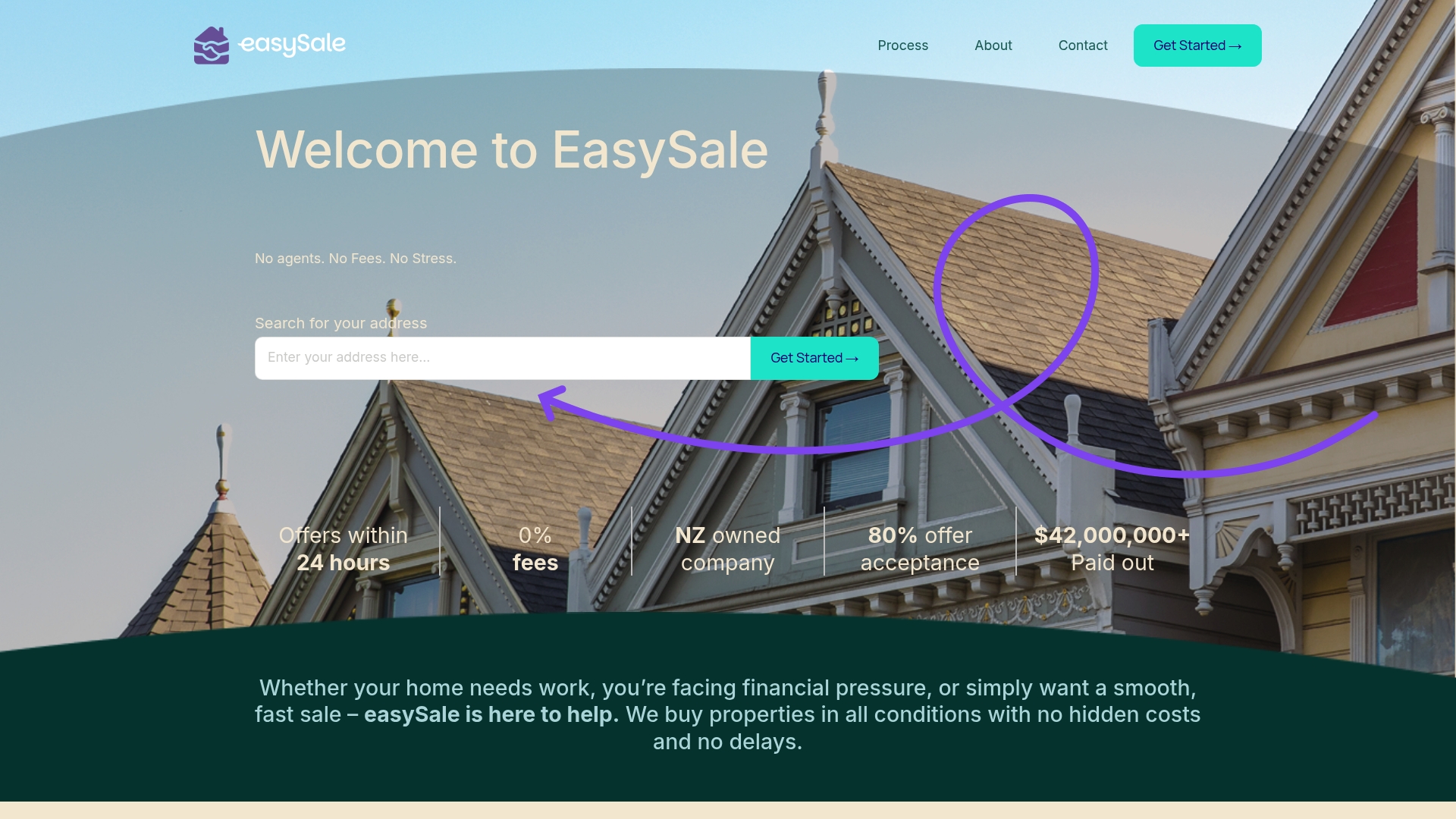
The process is straightforward: submit your property details, receive a no-obligation cash offer, and settle on a timeline that works for you. Easysale buys properties across New Zealand in any condition, which makes it a practical option for sellers who are relocating, facing financial pressure, or dealing with a property that needs significant work.
The honest trade-off is that a direct cash offer will typically be below what a well-run agent campaign might achieve in a strong market. That gap is the price of speed and certainty. Before accepting any offer, speak to a lawyer — that advice applies here just as it does in any sale.
If you are downsizing or selling for retirement, the retirement and downsizing service page covers how Easysale works for that situation. For properties in poor condition, the damaged property page explains the as-is purchase process. To get a no-obligation offer on your property, visit Easysale.
Sources
Before you make any decision, these official and reputable .nz resources are worth bookmarking:
- Selling your house | New Zealand Government
- Settled
- The sales process | Real Estate Authority
- Selling Privately vs an Agent - Learning Center | Calculate
- Home sellers guide: choosing a real estate agent to sell your house | OneRoof
To verify a specific agent’s licence, go to the REA’s public register at rea.govt.nz and search by name or licence number before you sign any agency agreement.
This article is general information, not a substitute for advice from a qualified financial advisor. Consult a qualified financial professional about your own circumstances before acting on anything here.


