
Why inheritance sales move quickly: a guide for Kiwi heirs

TL;DR:Inheritance sales in New Zealand often sell quickly due to legal responsibilities, financial pressures, and emotional strain on heirs. Executors must distribute estates promptly, and delaying sales increases costs from aged care fees, maintenance, and holding expenses, prompting faster liquidation. Family dynamics and market conditions further influence the speed, with cash buyers and realistic pricing helping to expedite the process.
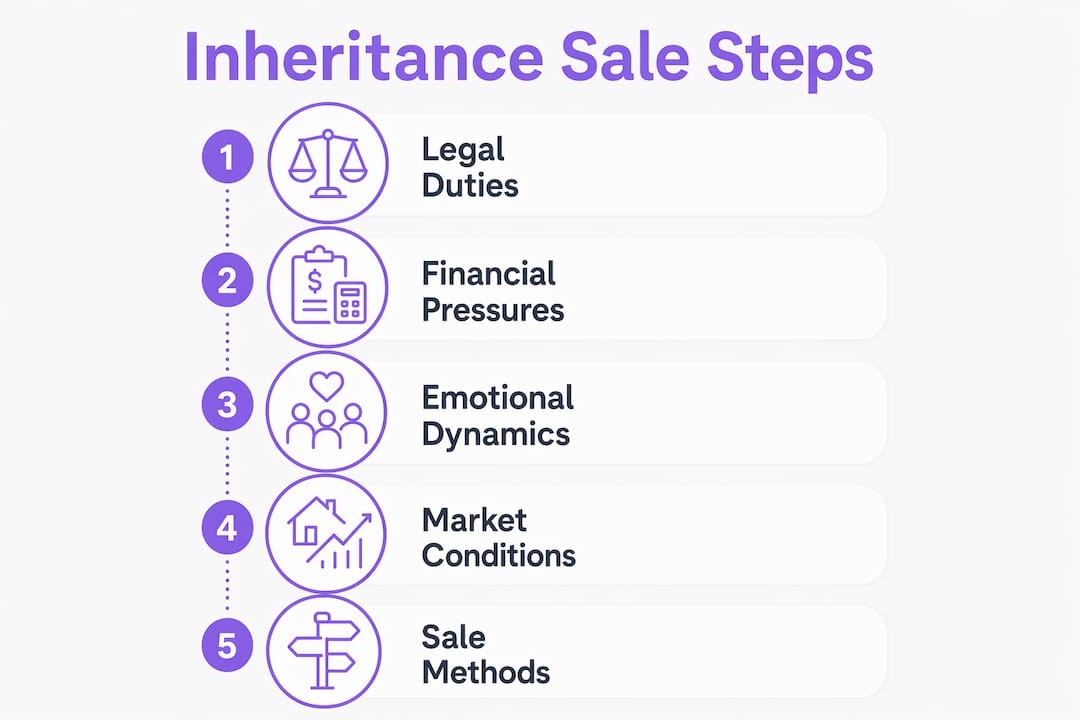
Inheritance sales move quickly because legal duties, financial pressures, emotional strain, and market conditions all push in the same direction at once. When you inherit a property in New Zealand, you are rarely starting from a neutral position. The executor has legal obligations to distribute the estate within a reasonable time, aged care costs can erode the estate’s value if you delay, and grief makes prolonged ownership feel unbearable. Understanding why estates sell fast gives you a clearer picture of what to expect and how to make decisions that serve your interests.
Why inheritance sales move quickly: the legal framework
Executor duties are the most direct reason inherited properties sell fast. Executors must distribute estate assets within a reasonable time to avoid legal liability and claims from beneficiaries. Sitting on a property for months without a clear plan exposes the executor to complaints and potential court action.
The legal process involves several steps that create a built-in sense of urgency:
- Apply for probate. Probate is the court-granted authority to deal with the estate. Without it, you cannot transfer the property title.
- Secure the property. The executor must protect the asset from damage, theft, or deterioration from the moment of death.
- Pay outstanding debts. Rates, mortgages, insurance premiums, and utility bills continue to accrue. Every week of delay costs the estate money.
- Distribute to beneficiaries. Once debts are cleared, the executor must move assets to the rightful heirs without unnecessary delay.
One practical detail many heirs miss: conditional sale agreements can be signed before probate is granted, as long as the settlement date allows enough time for probate to come through. This means marketing can begin almost immediately after death, which compresses the overall timeline considerably.
Executors also need to be careful about “intermeddling,” which means taking actions that legally bind the estate before probate is granted. Doing so can restrict your ability to renounce the executor role later if you change your mind. Getting legal advice early keeps your options open and the process moving.
How do aged care costs and financial pressure drive fast sales?
Financial pressure is the second major force behind the speed of selling inherited homes. The most significant and least understood driver is aged care costs.

New Zealand’s residential care subsidy has an asset threshold of $291,825. If the deceased was in residential care before passing, or if a surviving spouse enters care, the estate’s property value directly affects subsidy eligibility. Families that delay liquidating property can find aged care fees consuming a large portion of the inheritance before any distribution occurs.
Beyond aged care, holding costs accumulate quickly:
- Council rates continue regardless of whether anyone lives in the property.
- Insurance premiums on a vacant property are often higher than on an occupied one.
- Maintenance costs for an ageing or damaged property can escalate without regular attention.
- Mortgage repayments, if the property carried debt, must continue from estate funds.
Selling promptly preserves the estate’s value for beneficiaries. Every month of delay is a month of outgoings with no offsetting income, unless the property is tenanted. For most inherited homes, it is not.
The interaction with capital gains principles also matters. In New Zealand, the bright-line test applies to residential property sold within a set period of acquisition. Selling an inherited property early, particularly within the bright-line window, requires careful tax advice. An accountant familiar with estate sales can clarify your position before you commit to a timeline.
What emotional and family dynamics push heirs to sell quickly?
Grief and property ownership are a difficult combination. Research shows that grief causes anxiety and exhaustion that directly complicate decision-making about inherited properties. Many heirs describe the experience of managing a deceased parent’s home as one of the most draining things they have ever done.
The emotional drivers behind fast sales include:
- Desire for closure. Keeping the property means regularly confronting reminders of loss. Selling provides a clear endpoint.
- Decision paralysis. Grief makes it hard to think clearly. A quick sale removes the ongoing burden of decisions about maintenance, tenants, and renovations.
- Anxiety about responsibility. Being responsible for a property you did not choose to own, and may not want, creates persistent low-level stress.
- Exhaustion from prolonged ownership. Managing an inherited property from a distance, or while working full-time, wears people down quickly.
Family dynamics add another layer of pressure. When multiple beneficiaries are involved, a swift sale provides a clean financial split and reduces the stress of shared ownership. Disagreements about whether to sell, rent, or renovate can fracture family relationships. A market-determined sale price removes the argument about what the property is worth and gives everyone a clear, fair outcome.
Pro Tip: If family disagreements are slowing the process, consider engaging a neutral mediator or a solicitor experienced in estate disputes before the conflict escalates. Early intervention is far cheaper than litigation.
The emotional desire for resolution is real and valid. Choosing a fast sale is not a failure to honour the deceased. For many Kiwi families, it is the most practical and compassionate decision available.
How do market conditions and sale methods affect the speed of inherited property sales?
The method you choose to sell has as much impact on timing as any legal or emotional factor. Traditional agent sales in New Zealand typically take several weeks from listing to settlement. Cash buyer transactions can close in days to weeks, depending on the buyer’s process and your preferred settlement date.
Cash buyers bypass traditional marketing, staging, and agent negotiations entirely. There are no open homes, no waiting for mortgage approvals, and no risk of a buyer’s finance falling through at the last minute. For inherited properties that may need repairs or updating, this is particularly valuable. You sell the property as-is, without spending money on improvements that may not return their cost.
Property condition and pricing also determine how fast the market responds:
- Well-maintained properties in desirable suburbs typically sell within 3 to 4 weeks. Properties with significant maintenance issues take 50% to 90% longer.
- Overpricing is the most common mistake that delays sales. Homes priced above market value attract fewer serious buyers and often require price reductions that extend the sale period by 20% to 50%.
- Regional market conditions vary across New Zealand. Auckland and Wellington tend to move faster than provincial centres, though strong local demand can shift this in either direction.
Economic conditions in 2026 are working in sellers’ favour. Projected GDP growth and falling unemployment are improving buyer activity and reducing the time properties spend on the market. If you are selling now, the broader market is more supportive than it has been in recent years.
Auctions are another option worth considering for inherited properties. They create a defined sale date, generate competitive tension among buyers, and remove drawn-out negotiations. For a well-presented property in a strong market, an auction can produce both speed and a strong price.
Pro Tip: Before choosing a sale method, get a cash offer overview alongside a traditional agent appraisal. Comparing both gives you a real sense of the trade-off between speed and potential sale price.
What practical steps help beneficiaries manage fast inheritance sales?
Speed without preparation leads to mistakes. These steps help you move quickly while protecting your interests.
- Confirm your legal authority first. Before signing anything or engaging agents, confirm that probate has been applied for and that you have the authority to act. If you are not the executor, clarify your role with the executor before taking any steps.
- Engage professionals with estate experience. Not all real estate agents understand the specific requirements of inherited property sales. Choose one with a track record in this area. A solicitor experienced in estate law is equally important.
- Assess the property’s condition honestly. Get a building inspection report before listing. Knowing what you are dealing with helps you price correctly and decide whether a cash sale or traditional listing suits the property better.
- Communicate clearly among all beneficiaries. Agree on the sale method, pricing expectations, and timeline before engaging the market. Disagreements that surface mid-sale delay everything and cost money.
- Price realistically from the start. Overpricing is the single biggest avoidable delay. Base your asking price on comparable recent sales in the area, not on what you hope the property is worth.
- Plan for aged care financial implications early. If a surviving spouse or partner may need residential care, get financial advice before the sale settles. The timing and structure of the sale can affect subsidy eligibility.
The factors affecting sale speed in New Zealand are well documented. Pricing, condition, and method are the three levers you control. Get those right, and the market does the rest.
Key takeaways
Inheritance sales move quickly because legal duties, financial costs, emotional pressure, and market conditions all create urgency that is difficult to resist or delay.
| Point | Details |
|---|---|
| Executor duties create urgency | Executors must distribute estate assets promptly to avoid legal liability and beneficiary claims. |
| Aged care costs erode value fast | Delaying sale can allow aged care fees to consume a significant portion of the estate before distribution. |
| Emotional pressure is real | Grief, exhaustion, and family conflict motivate heirs to seek a fast, clean resolution through sale. |
| Sale method determines timeline | Cash buyers close in days to weeks; traditional agent sales take longer and depend on property condition and pricing. |
| Overpricing is the biggest avoidable delay | Realistic pricing from the start attracts serious buyers and prevents extended time on the market. |
What I have learned about inheritance sales after years of watching Kiwi families navigate them
The thing that surprises most people is how quickly the practical pressures arrive. You are still in the early stages of grief, and suddenly there are rates notices, insurance renewals, and family members asking what the plan is. The emotional and financial timelines do not wait for each other.
What I have seen consistently is that the families who fare best are the ones who separate the emotional decision from the financial one. Selling quickly is not a betrayal of the person who owned the home. It is often the most respectful thing you can do for everyone involved, including yourself.
The other thing worth saying plainly: professional advice is not optional in this situation. Estate law in New Zealand has specific rules around executor duties, probate timing, and title transfer that catch people out when they try to manage it alone. The cost of a solicitor is trivial compared to the cost of a mistake.
Quick sales are not always the right answer. But for most inherited properties, the combination of holding costs, family dynamics, and emotional strain means that a well-priced, well-timed sale serves beneficiaries better than a prolonged listing. Know your options, get the right people around you, and make the decision that fits your situation rather than the one that feels safest in the moment.
— Aaron
How Easysale helps Kiwi families sell inherited property with confidence
Inheriting a property is rarely straightforward. Easysale works directly with executors and beneficiaries across New Zealand to provide fast, fair cash offers on inherited homes, regardless of condition or location.

There are no agent commissions, no open homes, and no waiting on finance approvals. Easysale buys properties as-is, which means you do not need to spend money on repairs or staging before the sale. The process is clear: submit your property details, receive a no-obligation offer, and settle on a timeline that works for the estate. For families managing grief alongside legal and financial complexity, that kind of certainty matters. If you are ready to move forward, explore your options with Easysale today. You can also learn more about downsizing and life-change sales if the inherited property forms part of a broader estate transition.
FAQ
Why do inheritance sales often happen faster than regular sales?
Executor duties, ongoing holding costs, and emotional pressure from beneficiaries all create urgency that does not exist in a standard sale. Legal obligations to distribute the estate within a reasonable time mean delays carry real consequences.
Can you sell an inherited property before probate is granted?
Yes. You can sign a conditional sale agreement before probate is granted, as long as the settlement date is scheduled after probate is expected to come through. This allows marketing to begin almost immediately.
How does property condition affect the speed of an inherited sale?
Properties with significant maintenance issues take 50% to 90% longer to sell than well-maintained homes. A cash buyer removes this barrier by purchasing the property as-is, without requiring repairs or staging.
What is the biggest mistake that slows down an inherited property sale?
Overpricing is the most common cause of delay. Homes priced above market value attract fewer serious buyers and often require price reductions that extend the sale period by 20% to 50%.
How do aged care costs affect the urgency to sell an inherited property?
New Zealand’s residential care subsidy has an asset threshold of $291,825. If the estate holds property above this level, aged care fees can consume a significant portion of the inheritance if the sale is delayed. Selling promptly protects the estate’s value for beneficiaries.
Recommended
