
Sell Your Home Quietly in New Zealand: Cash Offers in 1–2 Weeks
Yes, you can sell your house discreetly. The fastest way to protect your privacy is a direct cash sale, though a carefully staged private sale can also work if you have time to manage it. Either way, disclosure duties and lawyer involvement stay compulsory, no matter how quiet you keep the process.
TL;DR:Discreet house sales involve private methods such as direct cash offers, pre-market campaigns, or owner-led listings, each with different exposure levels and privacy controls.Market testing is limited, so setting realistic prices based on comparable sales is crucial, especially since fewer buyers mean less competition and potentially lower final prices.Buyer vetting in private sales must be thorough, requiring proof of funds, identity verification, and confidentiality agreements, with direct cash options simplifying this process.Legal involvement is essential for drafting contracts, holding deposits in trust, and ensuring disclosure obligations are met, even in completely private transactions.Timelines vary widely, with direct cash deals often settling in one to two weeks, while owner-led or pre-market approaches may take several weeks to months depending on buyer availability.
Table of Contents
- What is a discreet house sale and why do Kiwi sellers choose it?
- Which discreet sale method actually suits your situation?
- How do you prepare documents without exposing your privacy?
- How do you price a house you’re selling quietly?
- How do you find and vet buyers safely?
- What role does your lawyer play in a private sale?
- What are the biggest risks in a discreet sale?
- How does easySale’s direct-buy option work as a private route?
- How long does a discreet sale actually take?
- What are the tax and financial considerations of a private sale?
- A practical checklist for selling quietly
- Ready for a private, fast sale? Request a confidential offer
- Where to go for further guidance
- Sources
What is a discreet house sale and why do Kiwi sellers choose it?
A discreet or off-market sale means selling without a public listing on Trade Me, realestate.co.nz, or a yard sign out front. Some sellers go “pre-market,” where an agent quietly shops the property to a short buyer list before it ever hits the open market. Others go fully private, dealing directly with a buyer with no agent at all.
Reasons for choosing this route vary, but a few come up constantly:
- Privacy during separation, bereavement, or financial hardship
- Tenanted properties where public listings disrupt tenants or breach lease terms
- High-profile owners who don’t want their address or sale price public
- Testing a price quietly before committing to a full campaign
- Wanting to avoid neighbours, colleagues, or family finding out
The trade-off is real. Fewer eyes on the property usually means fewer offers, and a smaller buyer pool can soften your final price. Discretion protects you, but it can cost you leverage if you’re not careful about how you run the process.
Which discreet sale method actually suits your situation?
Three practical routes exist in New Zealand, and each handles exposure differently.
Private owner-led sale. You market the home yourself, often through word of mouth, a private Trade Me listing, or a closed network. You control every detail of exposure, but you also carry the workload: staging, viewings, and vetting buyers alone. This suits confident, hands-on sellers with time up their sleeve.
Agent-led pre-market campaign. An agent shares your listing with a curated buyer database before any public advertising. You get professional negotiation support and some vetting, but your details still pass through the agency’s system, which isn’t as tightly controlled as a fully private sale.
Direct cash buyer. You skip marketing altogether. A buyer service like easySale assesses the property and makes an offer directly, with no photos published, no open homes, and no listing history left online. This is the tightest privacy control of the three, and it suits sellers under time pressure or those wanting a clean, quiet exit.
- Private sale: full control, more effort, moderate buyer reach
- Pre-market: professional support, some data exposure, wider reach
- Direct buyer: maximum privacy, fastest timeline, single-buyer negotiation
How do you prepare documents without exposing your privacy?
Buyers and lawyers both need proof before they’ll commit, so get your paperwork sorted early rather than scrambling once an offer lands.
- Certificate of title confirming legal ownership and any encumbrances
- LIM report from your council, covering consents, rates, and known issues
- Building consent records for any renovations or additions
- Insurance history showing claims, cover, and any declined applications
- A recent valuation or comparable sales evidence to support your price
Store these digitally in an encrypted folder and share access through a password-protected link rather than emailing attachments freely. Give full financial and structural detail to your lawyer immediately. Prospective buyers can see a summary first, with full documents released only once they’ve shown genuine intent, such as a signed confidentiality agreement or a conditional offer. Staged sharing reduces legal risk while keeping your information private.
Pro Tip: Keep one master folder with everything organised by category. When a serious buyer’s lawyer requests something at short notice, you’ll look prepared instead of scrambling, and that composure often translates into stronger negotiating position.

How do you price a house you’re selling quietly?
Without an open campaign to test the market, you need other ways to sanity-check your number. Pull comparable sales data from QV or Homes rather than relying on a single agent’s opinion or a guess based on what the neighbours think their place is worth.
Three pricing formats work well in private transactions:
- Firm price, useful when you’ve done your homework and want a clean, fast decision from buyers
- Price range, giving buyers room to negotiate while still anchoring expectations
- Private tender, where interested parties submit sealed offers by a set date, which can work surprisingly well even with a small buyer pool
Limited exposure changes your negotiating position. With fewer competing buyers, you lose the natural urgency that an open market creates, so your price needs to reflect realistic demand, not what you’d hope for in a bidding war. A SoloSale guide on private sales notes that private sellers who base pricing on genuine comparables, rather than wishful thinking, tend to close faster with less back and forth.
How do you find and vet buyers safely?
Discretion doesn’t mean skipping due diligence. If anything, private sales need tighter screening because there’s no agency layer double-checking who walks through your door.
- Use closed agent buyer lists, private property platforms, or referral networks rather than open advertising
- Ask for proof of funds or mortgage pre-approval before arranging any viewing
- Require photo ID for anyone entering the property, and match it against any pre-approval documents
- Get a signed confidentiality agreement before sharing detailed financials or full LIM reports
- Stage viewings by appointment only, never as open, unannounced walk-throughs
A direct cash buyer service removes much of this legwork, since the buyer identity and funding are typically confirmed upfront as part of their own process.
Pro Tip: Trust your gut on rushed buyers. Genuine purchasers expect to provide proof of funds and ID; anyone who resists basic verification while pushing for fast access is a red flag, not a bargain.
What role does your lawyer play in a private sale?
There’s no legal requirement to use a licensed real estate agent to sell your home in New Zealand, but engaging a solicitor or conveyancer is not optional. Your lawyer drafts or reviews the Sale and Purchase Agreement, holds the buyer’s deposit in a trust account until settlement (best explained by Property trust | EliteLegacyPlanning), and runs the anti-money laundering and identity checks now required for every property transaction.
Confidentiality clauses are common in discreet deals, restricting the buyer from discussing price or terms publicly until settlement, and sometimes beyond. Settlement terms should be spelled out clearly, including what happens if either party misses a deadline.
Most private sales run through a conditional period first, typically covering finance approval, a building inspection, or a LIM review, before becoming unconditional. Key things your lawyer should confirm before you sign anything:
- The deposit is held in trust, not paid directly to you or the buyer
- AML and identity checks are completed on the buyer before settlement
- Confidentiality terms are written into the agreement, not just verbally agreed
- Settlement date and conditions are realistic and clearly defined
A well-drafted sale and purchase agreement protects both sides and keeps a quiet sale from turning into a messy dispute later.
What are the biggest risks in a discreet sale?
Privacy never overrides disclosure. Sellers must tell buyers about known defects such as weather-tightness issues, unconsented work, or boundary disputes, and skipping this obligation can lead to costly claims well after settlement.
Watch for these specific risks:
- Non-disclosure claims. Hiding known issues, even in a private deal, exposes you to legal action after settlement
- Commission disputes. If an agent previously introduced a buyer, or your agency agreement is still active, you may owe commission even on a private sale you arranged yourself
- Payment fraud. Never accept funds outside your lawyer’s trust account, and be wary of buyers pushing for unusual payment arrangements or rushed settlement dates
Discretion protects your details, not your legal exposure. Regulator guidance is blunt on this point: selling privately still means disclosing material issues fully, and skipping that step is one of the most common ways private sales unravel after the fact.
How does easySale’s direct-buy option work as a private route?
For sellers who want the quietest possible exit, a direct cash buyer removes almost every public-facing step. The process runs in three stages: submit your property details, receive an obligation-free cash offer, then settle to a timeline that suits you.
Privacy benefits are built into the model:
- No public photos or floorplans published anywhere
- No open homes, no strangers walking through your home on a Sunday
- Minimal data footprint, since the sale never appears on public listing sites
This route fits sellers facing tight timelines, a property needing repairs they can’t fund upfront, or anyone who simply wants complete confidentiality without managing buyer enquiries themselves. easySale’s approach removes the marketing layer entirely, which is the single biggest privacy leak in a traditional sale.
How long does a discreet sale actually take?
Timelines in private sales swing more widely than in a public campaign, and that unpredictability catches a lot of sellers off guard. Without an open market creating pressure, negotiations with a single buyer can stretch on for weeks while finance or building conditions get sorted.
A private owner-led sale with a motivated buyer might settle within four to six weeks once terms are agreed, similar to a standard market sale. But if you’re relying on a small pool of contacts or a pre-market agent list, finding that one right buyer can take considerably longer, sometimes months, since you’re not casting a wide net.
Direct cash sales move fastest, often settling in as little as a week or two once you accept an offer, because there’s no finance condition to wait on and no chain of buyers to coordinate around. If speed matters more to you than testing every possible offer, this timeline difference is worth weighing carefully.
Expect a few common friction points regardless of method: buyers taking longer than promised to arrange finance, building inspections turning up issues that need renegotiation, or a private buyer simply changing their mind partway through. Build a buffer into your expectations rather than assuming everything will run to a tidy schedule. Being upfront with your lawyer about your ideal settlement date, and flexible about the actual one, keeps stress lower when things don’t go exactly to plan.
What are the tax and financial considerations of a private sale?
Selling privately doesn’t change your underlying tax position. If the property is your main home, the usual main home exclusion still applies in most cases, but investment properties or recent purchases may fall under the bright-line rules depending on when you bought and your intentions at purchase.
Because a private or discreet sale skips agent commission, that’s a direct saving worth factoring into your bottom line, often several thousand dollars depending on the sale price and what a full-service campaign would have charged. Weigh that saving against the value an agent’s wider marketing reach might have added to your final price. Sometimes the commission saved outweighs any pricing gap from a smaller buyer pool; sometimes it doesn’t, and that’s worth running the numbers on before committing to one path.
Legal and administrative costs stay largely the same as any sale: conveyancing fees, any outstanding rates adjustments at settlement, and potential costs for LIM reports or building reports if buyers request them. If you’re selling to a direct cash buyer, settlement costs are typically lower overall since there’s no marketing spend and often a faster close, reducing holding costs like insurance, rates, and mortgage repayments during the sale period. Speak with your accountant or lawyer early about your specific tax position, since bright-line timing and main home exclusions depend heavily on your individual circumstances.
A practical checklist for selling quietly
Before you commit to a method, get clear on your privacy goals: is it the address, the price, or the sale itself you want kept quiet? From there, assemble your documents, pick the method that matches your timeline and risk tolerance, and hire a lawyer before you need one, not after an offer lands.
Staying emotionally detached matters more in a private sale than a public one, since you’re often negotiating directly rather than through an agent buffer. Decide your walk-away price before the first conversation, and don’t let a single buyer’s urgency talk you below it.
— Aaron
Ready for a private, fast sale? Request a confidential offer
If everything above sounds like more process than you want to manage, there’s a simpler path. Easysale buys homes directly, in any condition, with no agent fees, no open homes, and no public listing history. You get an obligation-free cash offer and choose your own settlement date, whether that’s two weeks away or two months.
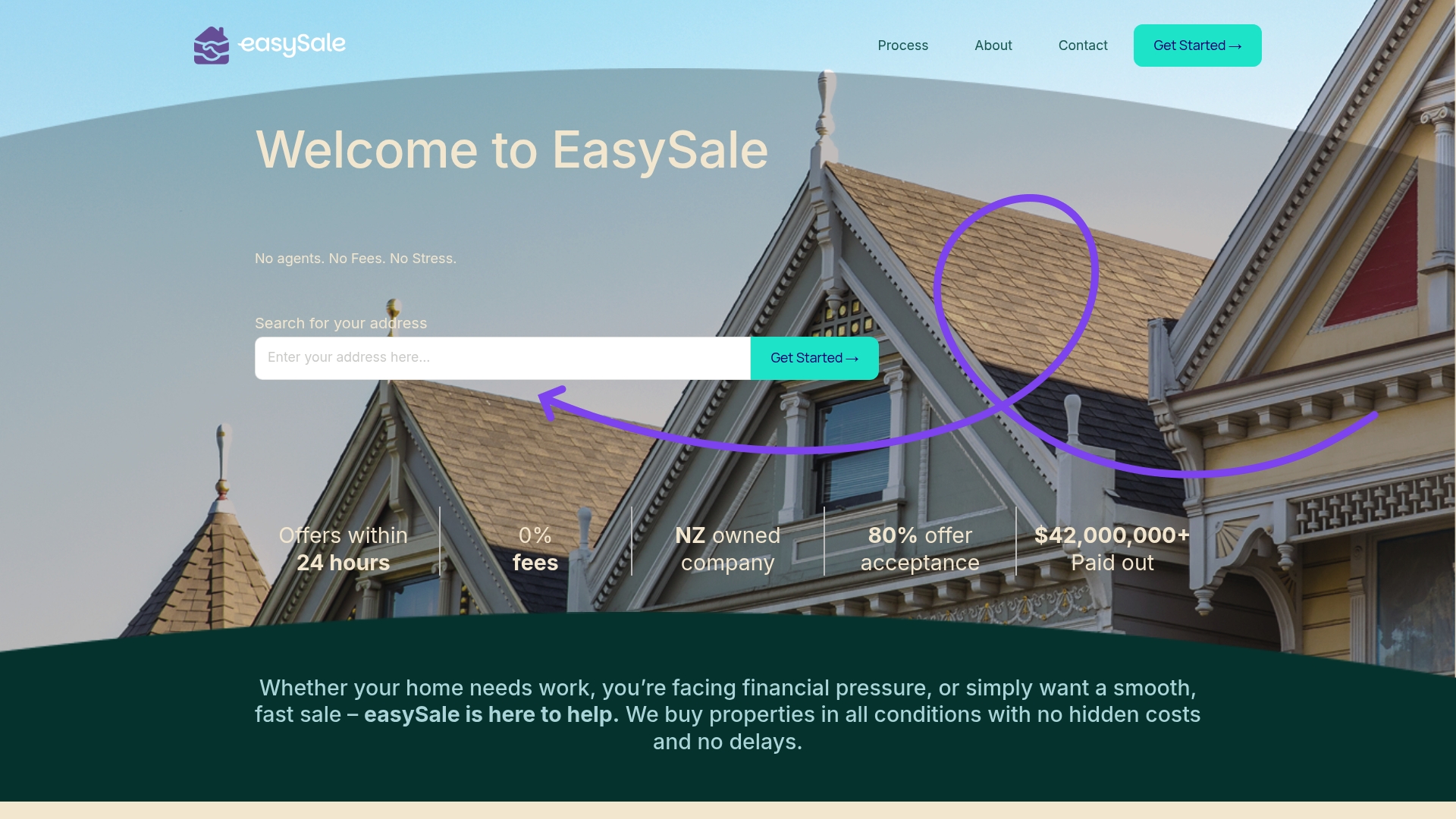
Before reaching out, have your address, a rough idea of the property’s condition, and your ideal timeline ready. Most sellers hear back with an offer within a couple of days. If a property in any condition and a quick, quiet exit sounds like what you need, request your confidential offer from easySale and see the number before you decide on anything else.
Where to go for further guidance
For legal steps, read Settled.govt.nz on selling privately and the Govt. For deeper practical steps, browse the easySale blog.
This article is general information, not a substitute for advice from a qualified lawyer. Consult a qualified legal professional about your own circumstances before acting on anything here.
Sources
Recommended
