
Landlord role in quick sales: 2026 NZ guide with legal tips

Selling a rental property quickly in New Zealand isn’t just about finding the right buyer. Many landlords mistakenly believe their role is minimal once they list the property, but legal obligations, tenant communication, and strategic decisions directly shape the success and speed of the sale. Understanding your responsibilities prevents delays, tribunal claims, and costly mistakes. This guide walks you through the landlord’s critical role in quick property sales, from legal compliance to practical strategies that protect both your interests and your tenants’ rights.
Table of Contents
- Understanding Legal Responsibilities For Landlords During Quick Sales
- Navigating Tenant Communication And Avoiding Unlawful Eviction
- Strategies Landlords Can Use To Facilitate Quick Sales
- Common Challenges And How To Avoid Setbacks In Quick Sales
- Explore Easysale Solutions For Fast, Hassle Free Property Sales
Key takeaways
| Point | Details | |-------|---------|| | Legal compliance is mandatory | Landlords must follow the Residential Tenancies Act 1986 when selling with tenants in place. | | Notice periods are strict | Provide 90 days written notice for periodic tenancies to avoid penalties and tribunal claims. | | Tenant communication matters | Respectful engagement prevents disputes, while unlawful eviction risks compensation payouts. | | Quick sales need strategy | Preparation, accurate valuation, and targeted marketing speed up sales without sacrificing legal duties. | | Professional help reduces risk | Real estate agents familiar with tenancy sales streamline compliance and negotiation. |
Understanding legal responsibilities for landlords during quick sales
Landlords in New Zealand operate within a strict legal framework when selling rental properties. The Residential Tenancies Act 1986 establishes clear obligations that protect tenant rights while allowing property sales to proceed. Ignoring these duties can trigger tribunal hearings, financial penalties, and compensation claims that derail quick sales.
When you decide to sell, you must inform your tenants about your intentions and provide proper notice. For periodic tenancies, landlords must give 90 days written notice before requiring tenants to vacate. Fixed term tenancies add complexity, as you generally cannot terminate early unless specific grounds exist or the lease includes a sale clause.
Tenants retain their right to quiet enjoyment throughout the sale process. This means restricting property viewings to reasonable times, providing adequate notice before inspections, and respecting tenant privacy. You cannot pressure tenants to leave early or make their living conditions uncomfortable to expedite the sale.
Non compliance carries real consequences. The Tenancy Tribunal can order compensation for breaches of tenant rights, impose exemplary damages for serious violations, and require landlords to pay legal costs. These penalties often exceed any time savings from cutting corners.
Key legal obligations include:
- Providing correct written notice periods based on tenancy type
- Maintaining all property standards and repairs during the sale
- Coordinating viewings with reasonable advance notice to tenants
- Ensuring any new owner honours existing tenancy agreements
- Protecting tenant security deposits and returning them appropriately
Pro Tip: Document all communications with tenants in writing. Emails and text messages create evidence trails that protect you if disputes arise later.
Understanding these legal considerations forms the foundation for a successful quick sale. Compliance isn’t optional, it’s the baseline that enables everything else to proceed smoothly.
Navigating tenant communication and avoiding unlawful eviction
How you communicate with tenants during a sale determines whether the process runs smoothly or descends into costly disputes. New Zealand law protects tenants from harassment and provides strong remedies when landlords overstep boundaries. Even well intentioned landlords can cross legal lines if they don’t understand these protections.
Unlawful eviction breaches tenants’ right to quiet enjoyment and triggers compensation claims. Common illegal practices include serving invalid termination notices, using trespass notices to force tenants out, and creating hostile conditions that pressure tenants to leave. Tribunal cases show awards ranging from hundreds to thousands of dollars for these violations.
Effective communication starts with transparency. Explain your sale timeline, how viewings will work, and what tenants can expect. Most tenants cooperate when they understand the process and feel respected. Rushing or hiding information breeds suspicion and resistance.
Schedule property viewings during reasonable hours, typically between 8am and 7pm on weekdays. Provide at least 24 hours notice before each viewing, and consider batching showings to minimise disruption. Some landlords offer small rent reductions or gift cards to thank tenants for their cooperation during the sale period.
Communication best practices:
- Send all important notices in writing via email or post
- Keep tone professional and respectful in all interactions
- Respond promptly to tenant questions or concerns
- Coordinate with your real estate agent to manage viewing schedules
- Never threaten, intimidate, or pressure tenants to vacate early
Pro Tip: Offer to provide excellent tenant references to their next landlord. This gesture builds goodwill and encourages cooperation during viewings.
If you’re selling a tenanted property and want to avoid these pitfalls, consider why some landlords choose to work with buyers who purchase properties with tenants in place. This approach eliminates tenant management issues entirely.
Strategies landlords can use to facilitate quick sales
Speed matters in property sales, but rushing without strategy backfires. Successful quick sales balance urgency with smart preparation, realistic pricing, and targeted marketing. Landlords who understand these elements consistently outperform those who simply list and hope.
Start with property preparation. Address obvious maintenance issues, clean common areas, and ensure the property presents well during viewings. You don’t need luxury upgrades, but functional repairs and cleanliness make properties more attractive. Obtain a current market valuation from multiple sources to set a realistic asking price.

Marketing tenanted properties requires different tactics than vacant ones. Highlight investment potential, current rental income, and tenant quality. Target investors who appreciate cashflow over owner occupiers who need immediate possession. Your real estate agent should emphasise these benefits in listings and communications.
Negotiation flexibility accelerates sales. Consider accepting slightly lower offers that close quickly rather than holding out for maximum price with uncertain timelines. Cash buyers often move faster than those requiring mortgage approval. Evaluate offers based on certainty and speed, not just dollar amounts.
Engaging real estate professionals who specialise in tenanted property sales streamlines the entire process. These agents understand tenancy law, communicate effectively with tenants, and market to appropriate buyer segments. Their expertise prevents legal mistakes and identifies serious buyers quickly.
| Quick sale approach | Pros | Cons |
|---|---|---|
| Traditional agent listing | Access to broad buyer networks, professional marketing | Commission fees, potentially slower timelines |
| Investor focused marketing | Targets buyers comfortable with tenants | Smaller buyer pool than owner occupier market |
| Cash buyer services | Fast settlements, no agent fees, buy as is | Typically lower prices than retail market |
| Auction campaigns | Creates urgency, competitive bidding | Costs upfront, risky if property doesn’t meet reserve |
Pro Tip: Prepare a tenant information package for prospective buyers. Include tenancy agreement details, rental payment history, and maintenance records to speed up due diligence.
Landlords looking for the fastest possible sale often explore how to sell property quickly through alternative channels. Understanding the quick sale process helps you choose the right approach for your situation.
Common challenges and how to avoid setbacks in quick sales
Even experienced landlords encounter obstacles during property sales. Anticipating these challenges and implementing preventative measures protects your timeline and financial outcome. Most setbacks stem from predictable issues that careful planning addresses.
Overvaluation kills quick sales faster than any other mistake. Landlords emotionally attached to properties or influenced by peak market memories often price unrealistically. Properties that sit on the market for months develop stigma, forcing eventual price reductions below where you should have started. Get independent valuations and price competitively from day one.
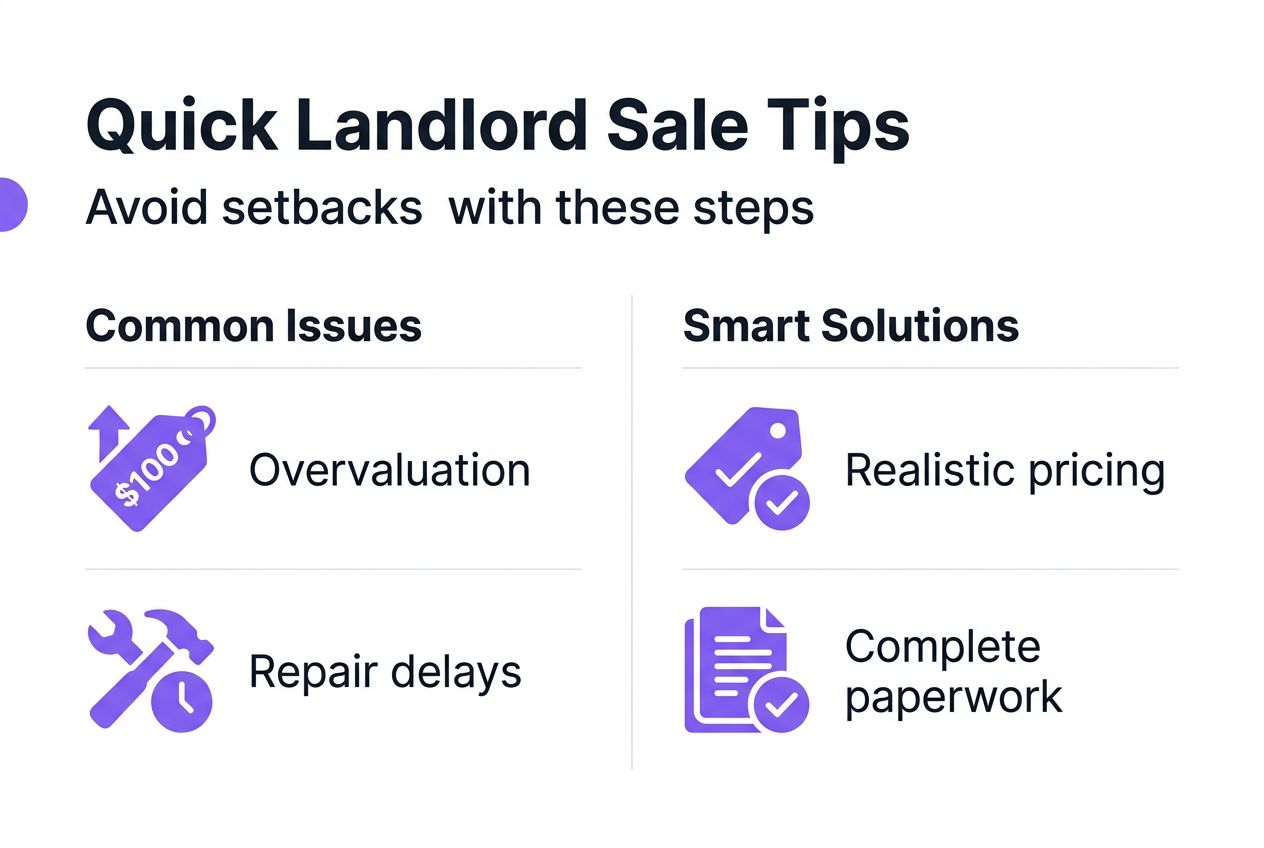
Underestimating repair costs erodes profits and delays settlements. What appears as minor maintenance during initial assessments often reveals bigger problems during buyer inspections. Budget conservatively for repairs and conduct thorough property assessments before listing. Surprise costs during due diligence give buyers leverage to renegotiate or walk away.
Due diligence failures create legal complications that stall or cancel sales. Missing building consents, unpermitted alterations, or unclear property boundaries emerge during buyer investigations. Tenancy Services highlights how common pitfalls include failing to conduct thorough due diligence before listing. Resolve these issues before marketing the property.
| Common mistake | Impact | Best practice |
|---|---|---|
| Overvaluing property | Fewer viewings, extended time on market, eventual price cuts | Get multiple independent valuations, price competitively |
| Underestimating repairs | Budget blowouts, delayed settlements, negotiation leverage for buyers | Conduct thorough inspections, budget 20% above estimates |
| Skipping due diligence | Legal complications, failed sales, buyer claims | Review consents, titles, and boundaries before listing |
| Poor tenant communication | Uncooperative tenants, difficult viewings, potential tribunal claims | Maintain transparency, respect rights, document everything |
| Ignoring market conditions | Unrealistic expectations, missed opportunities | Monitor recent comparable sales, adapt strategy to current market |
Preventative steps for landlords:
- Complete a comprehensive property inspection before listing
- Gather all relevant documentation including consents and certificates
- Review tenancy agreements to understand your obligations and constraints
- Set realistic price expectations based on current market data
- Build buffer time into your settlement timeline for unexpected issues
- Maintain open communication channels with all parties throughout the sale
Following these tips for hassle free sales positions you to avoid the most common pitfalls. Learning from others’ mistakes costs nothing but saves thousands.
Explore EasySale solutions for fast, hassle free property sales
Managing tenancies, coordinating viewings, and navigating legal requirements during property sales creates stress many landlords prefer to avoid. When you need a quick, straightforward sale without the complexity of traditional listings, alternative solutions exist.

EasySale specialises in purchasing properties directly from owners, including those with sitting tenants. We handle the complexities of tenanted sales, provide fair cash offers, and work within your timeline. Whether you’re dealing with retirement downsizing, properties needing repairs, or simply want to sell privately without agent fees, we create solutions tailored to your situation.
Our process eliminates the uncertainty of traditional sales. No open homes, no extended marketing periods, no buyer financing falling through at the last minute. We buy properties as is, meaning you avoid repair costs and preparation hassles. For landlords wanting to exit rental property ownership quickly while maintaining legal compliance throughout the process, this approach offers genuine peace of mind.
FAQ
Can landlords sell a property with tenants currently living there?
Yes, landlords can sell properties with tenants in residence. You must comply with the Residential Tenancies Act 1986, including providing proper notice and respecting tenant rights throughout the sale process. Many investors prefer purchasing tenanted properties for immediate rental income.
What notice periods must landlords provide tenants when selling?
Notice periods depend on your tenancy type. Periodic tenancies typically require 90 days written notice for termination. Fixed term agreements continue until expiry unless specific grounds exist or the lease includes a sale clause. Following the correct property selling process prevents legal penalties and tribunal claims.
How can landlords avoid disputes or compensation claims during quick sales?
Follow all legal notice requirements precisely and maintain respectful, transparent communication with tenants. Provide adequate notice before viewings, respect quiet enjoyment rights, and never use pressure tactics. Engaging professionals who understand legal considerations in property sales reduces risks substantially.
What happens to the tenancy agreement when the property sells?
Existing tenancy agreements transfer to the new owner automatically. The new landlord assumes all obligations under the current agreement, including bond holdings and notice requirements. Tenants retain all their rights regardless of ownership changes, ensuring continuity and legal protection throughout transitions.
Recommended
