
Motivated property sellers NZ: fast solutions in 2026

TL;DR:Motivated sellers in New Zealand often face common life events like divorce or job relocation, not just financial crises.Fast sale options include cash offers, deadline sales, and traditional methods, with cash sales being the quickest.Knowing how to signal urgency without distress labels helps sellers secure fair prices and avoid lowball offers.
Most homeowners assume that only people facing financial ruin qualify as “motivated sellers.” That assumption is wrong, and it may be costing you time, money, and peace of mind. The reality is that common triggers for NZ homeowners include mortgage arrears, divorce, job relocation, inheritance, major repairs, and long-term vacancy. These are everyday life events, not just financial crises. If you are facing any of these situations, you are likely a motivated seller, and there are fast, practical solutions available to you right now in New Zealand.
Table of Contents
- Who are motivated property sellers in New Zealand?
- Why do motivated home sales happen? Key triggers and trends in 2026
- The buyer and seller perspective: Risks, rewards, and unspoken tactics
- Fast solutions for motivated sellers: Cash buyers, as-is sales, and hassle-free options
- Our take: Realities of selling fast in 2026 NZ (and what most homeowners miss)
- Need a fast, hassle-free sale? Explore your best options
- Frequently asked questions
Key Takeaways
| Point | Details |
|---|---|
| Motivated seller definition | A motivated property seller is anyone needing a fast sale due to urgency, not just financial distress. |
| Common reasons for urgency | Mortgage arrears, job relocation, divorce, repairs, and vacancies are typical triggers for quick sales in New Zealand. |
| Multiple sale options | You can choose traditional agents, deadline sales, or as-is cash offers for a fast, hassle-free transaction. |
| Smart selling strategies | Avoid openly desperate language and seek reputable buyers for better outcomes. |
Who are motivated property sellers in New Zealand?
The term motivated seller simply means someone who wants or needs to sell their property within a defined timeframe, often sooner than the standard market process allows. It does not mean you are desperate or that you have made poor financial decisions. It means your circumstances have created urgency, and that urgency is actually very common.
In New Zealand, the triggers for fast sales are wide-ranging. Here are the most frequent situations that bring homeowners to this point:
- Mortgage arrears or pre-mortgagee pressure: Falling behind on repayments and needing to sell before the bank acts.
- Divorce or separation: When a shared property needs to be sold quickly to allow both parties to move forward.
- Job relocation: Accepting a role in another city or country and needing a settled sale before you leave.
- Inheritance or probate: Receiving a property you do not want to maintain or cannot afford to hold.
- Major repairs or damage: Facing a property that needs significant work you cannot fund.
- Tired landlords: Long-term rental owners who are exhausted by tenancy issues and rising compliance costs.
- Long vacancies: Properties sitting empty, costing money every month with no income coming in.
What most people miss is that motivated selling is often a practical decision, not a sign of failure. Many sellers simply want to move on cleanly and quickly without the drawn-out process of a traditional agent sale.
“Motivated selling is not about distress. It is about recognising that your time and circumstances have value, and choosing a sale method that respects both.”
It is also worth noting that not every motivated seller announces themselves as one. Many list their property through standard channels but signal urgency through pricing, flexible settlement terms, or quick decision-making. Buyers who understand these signals often move fast to secure a deal. As a seller, knowing how you are perceived in the market gives you a real advantage.
Why do motivated home sales happen? Key triggers and trends in 2026
Understanding who these sellers are, let’s dig into why homes are sold urgently and what is changing in 2026.
The data tells an interesting story. Mortgagee sales are rising, with figures moving from 6 in Q1 2025 to 20 in Q2 and 28 in Q3, representing a 25% year-on-year increase according to Trade Me data from December 2025. Yet despite this rise, 88% of resales in Q4 2025 remained profitable, with a median hold period of 10.1 years. This means most homeowners who sell urgently are not walking away at a loss.
| Metric | 2025 figure |
|---|---|
| Mortgagee sales Q1 2025 | 6 |
| Mortgagee sales Q3 2025 | 28 |
| YoY increase (Trade Me Dec) | 25% |
| Profitable resales Q4 2025 | 88% |
| Median hold period | 10.1 years |
The motives for quick sales in 2026 are shaped by a combination of economic pressure and personal life events. Key drivers include:
- Rising interest rates putting pressure on variable mortgage holders
- Increased compliance costs for rental property owners
- A softening market in some regions making long listings less attractive
- Growing awareness of fast-sale alternatives to traditional agent sales
- Life events such as relationship breakdowns and job changes that do not wait for market conditions
The key takeaway here is that urgency does not automatically mean a bad outcome. Most sellers who act quickly and choose the right method still walk away with a fair result. The problem is not urgency itself. The problem is not knowing your options before you commit to a path.
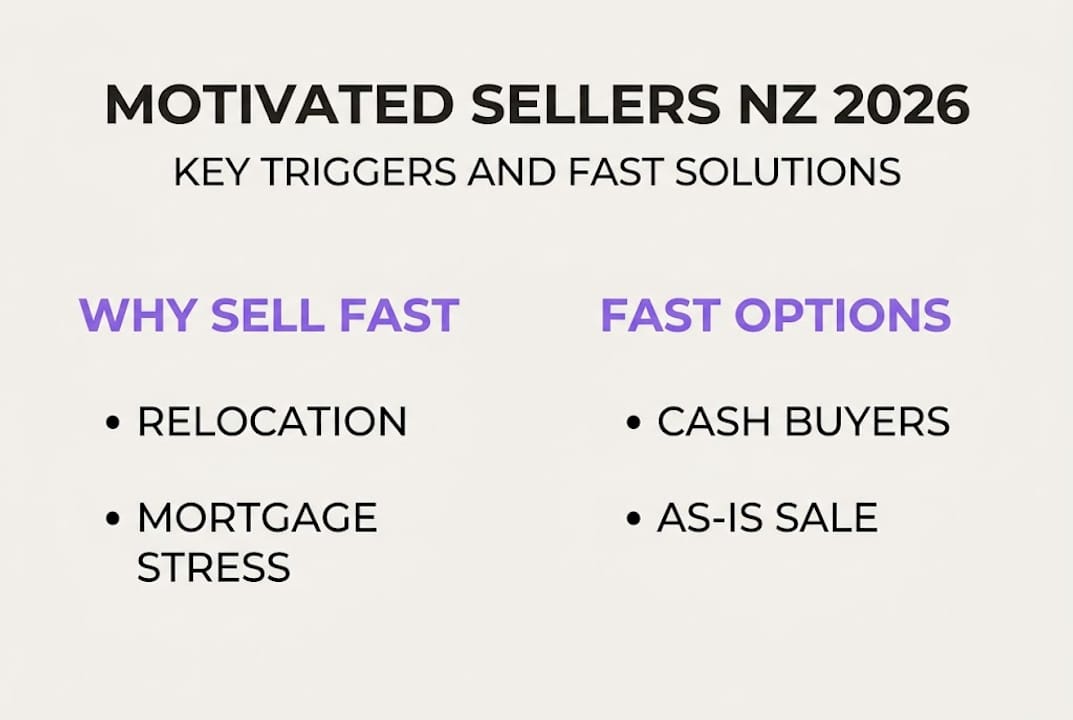
It is also worth understanding that mortgagee sales, while rising, are still low compared to the Global Financial Crisis period. The current environment is challenging but not catastrophic, and most homeowners have more options than they realise.
The buyer and seller perspective: Risks, rewards, and unspoken tactics
New data explains why sales happen, but now let us compare how buyers and sellers see these situations and what actually works best.
Buyers who target motivated sellers are looking for specific signals: tight settlement deadlines, below-market pricing, listings with language like “urgent sale” or “priced to sell,” and properties that have been sitting on the market longer than average. When buyers spot these signals, they often submit lower offers, expecting the seller to accept out of necessity.
| Perspective | What they see | Key risk |
|---|---|---|
| Buyer | Opportunity for a discount | Reduced legal protections in mortgagee sales |
| Seller | Need for speed and certainty | Being lowballed due to urgency signals |
For sellers, the biggest tactical mistake is labelling your sale as mortgagee when it does not have to be. Once that label is attached, buyers expect a significant discount and legal protections for you as the seller are reduced. Where possible, experienced sellers use subtle urgency signals instead, such as a fixed settlement date, a deadline sale format, or a tender process with a clear closing date.
Pro Tip: Instead of advertising “urgent sale,” try setting a firm settlement date in your listing. This creates urgency without flagging distress, and buyers respond to deadlines without automatically assuming they can lowball you.
For buyers, mortgagee sales carry real risks. There is no standard vendor warranty, and the property is sold as-is with limited recourse if issues arise after settlement. This is why many buyers who pursue these deals are experienced investors rather than first-home buyers.

If you are a seller considering an as-is property sale, understanding the buyer’s perspective helps you negotiate from a position of knowledge. You know what they want, and you can structure your sale to meet their needs without giving away more than necessary. Learning more about selling your house as is can help you frame your situation clearly before approaching any buyer.
Fast solutions for motivated sellers: Cash buyers, as-is sales, and hassle-free options
Since knowing the risks and rewards is vital, the next step is understanding your fastest, most stress-free solutions.
Not all fast-sale routes are equal. Here is a practical breakdown of your main options as a motivated seller in New Zealand:
- Traditional agent sale: The most familiar route, but often the slowest. Average time on market in NZ can stretch to 60 or more days, and agent commissions typically range from 2% to 4% of the sale price. This method suits sellers who have time and want maximum market exposure.
- Deadline or tender sale: A fixed-date process where buyers submit offers by a set deadline. This creates urgency without labelling the sale as distressed. It suits sellers who want a faster result but still want competitive bidding.
- As-is or cash buyer sale: NZ cash sale firms offer 7-day closes as-is, bypassing agents and repairs entirely. This is the fastest route and suits sellers who cannot afford repairs, need certainty, or want to avoid drawn-out negotiations.
When you work with cash buyers in NZ, the process is typically straightforward. You submit your property details, receive a no-obligation offer within a few days, and settle on a timeline that works for you. There are no open homes, no agent fees, and no requirement to fix anything before the sale.
If you want to sell your house in any condition, this route removes the usual barriers. You do not need a building report, a fresh coat of paint, or a landscaped garden. The buyer takes the property as it stands.
Pro Tip: Always compare at least two cash offers before accepting. Reputable buyers will give you a fair offer without pressure. If someone is pushing you to sign immediately, that is a warning sign worth taking seriously. Understanding the benefits of as-is sales helps you evaluate whether the offer you receive is genuinely fair.
Our take: Realities of selling fast in 2026 NZ (and what most homeowners miss)
You have seen the main solutions. Here is a straight-talking perspective from years of fast-sale experience.
Most homeowners who try to sell fast on their own end up in one of two situations. Either they accept a low offer out of panic, or they hold out too long waiting for a better price and miss the window entirely. Both outcomes come from the same root cause: not knowing what a fair fast-sale price actually looks like before entering the market.
Some fast-sale services overpromise. They advertise seven-day closes and then delay settlement, or they reduce the offer at the last minute once you are committed. Knowing how to identify a reputable buyer matters more than most sellers realise. Look for transparent processes, no-obligation offers, and clear settlement terms in writing before you agree to anything.
What Kiwi homeowners consistently say they wish they had known is simple: the sooner you explore all your options, the more control you have. Waiting until you are in genuine crisis narrows your choices significantly. If you are even considering a fast sale, now is the right time to get informed about selling your house for cash and what a fair process looks like. It is not about beating the market. It is about making a clear-headed decision with full knowledge of what is available to you.
Need a fast, hassle-free sale? Explore your best options
If you are facing urgency or uncertainty, it helps to know you are not alone and that specialist help is just a step away.
Dealing with an urgent property situation is stressful enough without having to navigate complex agent contracts, open homes, and uncertain timelines. That is where Easy Sale’s fast solutions make a genuine difference. easySale.co.nz works with New Zealand homeowners to provide fair, obligation-free cash offers with the option to sell your house fast in NZ in as little as seven days.
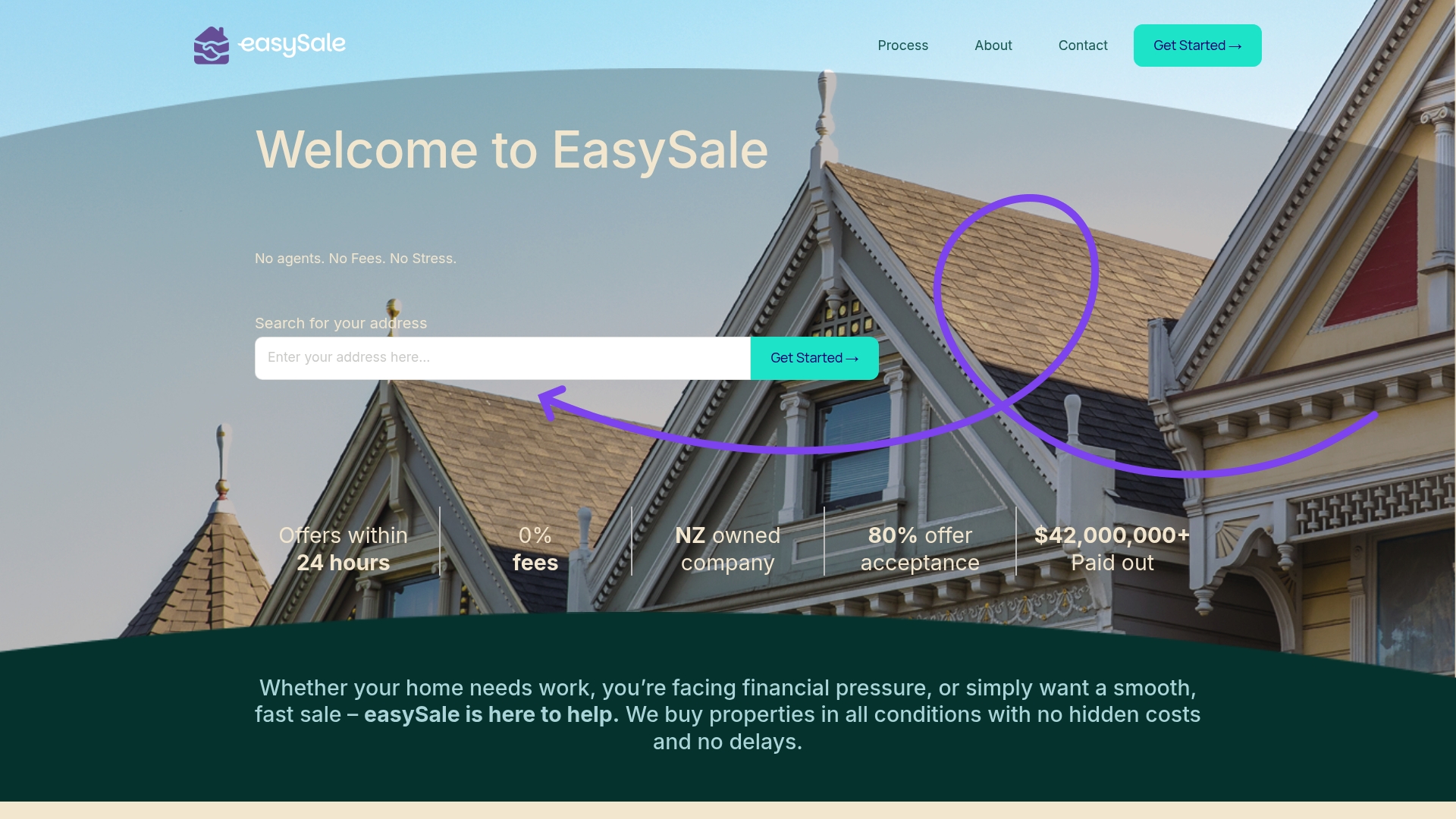
There are no agent fees, no repairs required, and no pressure to accept any offer. Whether you are dealing with mortgage stress, an inherited property, or simply need to move on quickly, the team at easySale.co.nz can give you a clear picture of your options and a fair offer you can evaluate at your own pace. Taking the first step costs nothing.
Frequently asked questions
What’s the difference between a motivated property seller and a distressed sale?
A motivated seller wants a quick sale for practical reasons such as relocation or divorce, while a distressed sale typically involves severe financial pressure like a pending mortgagee auction. Sellers often avoid the distressed label to protect their negotiating position.
Are mortgagee sales common in New Zealand in 2026?
Mortgagee sales are rising but remain relatively rare compared to the GFC period. 88% of resales in Q4 2025 were still profitable, which shows that urgency does not automatically mean a poor financial outcome.
Can I sell my house as-is for cash in New Zealand?
Yes. Cash sale firms offer seven-day closes on as-is properties, removing the need for repairs, open homes, or agent involvement entirely.
Do motivated sellers always have to accept a lower price?
Not necessarily. Using the right sale method and avoiding distress signals in your listing can protect your price. Subtle urgency tactics like deadline sales often produce competitive offers without triggering lowball bids.
Recommended
