
Property sale checklist 2025: your complete NZ guide
TL;DR:Preparing early and organizing documents can significantly reduce the property sale timeline in New Zealand. Conducting pre-listing inspections and making small repairs improve buyer confidence and avoid costly renegotiations. Using a detailed checklist ensures a smooth, well-timed sale regardless of whether you sell traditionally or through a direct cash buyer.
A property sale checklist is a structured list of every task, document, and decision a homeowner must complete to sell their property successfully. For New Zealand homeowners in 2025, having this checklist in hand is the difference between a smooth, well-timed sale and a drawn-out process full of costly surprises. The typical sale takes around 79 days from listing to closing. That timeline shrinks significantly when you prepare early, organise your paperwork, and present your home well. This guide walks you through every step, from pre-listing preparation to final handover.
1. What key preparations should you make before listing?
Preparation is the foundation of your property sale checklist 2025. Sellers who skip this stage often overprice their home, miss documents, or face last-minute repair surprises that delay settlement.

Start by researching recent sales in your area through platforms like Realestate.co.nz or by speaking with a local real estate agent. Understanding your local market helps you set a realistic asking price from day one. Pre-marketing strategies let you test pricing and gauge competition before you officially list, reducing the risk of overpricing and long market times.
Next, get your finances in order. Contact your bank or mortgage provider to understand any break fees or payout figures on your existing loan. Speak with your accountant or Inland Revenue NZ if you have questions about tax obligations on the sale.
Key preparation tasks:
- Research comparable sales in your suburb using Realestate.co.nz
- Get a property valuation from a registered valuer or your agent
- Confirm mortgage payout figures with your lender
- Identify your preferred sale method: auction, tender, or private treaty
- Decide whether to use a licensed real estate agent or a direct sale service
Pro Tip: Start gathering documents at least 4–6 weeks before your intended listing date. Early document readiness prevents legal delays that can push your settlement date back by weeks.
2. How to handle property inspections and repairs proactively
Waiting for a buyer to flag problems during their own inspection is one of the most common and costly mistakes NZ sellers make. Pre-listing inspections cut closing delays by addressing issues before they become negotiation points.
Hire a licensed building inspector before you list. The report gives you a clear picture of what needs attention and lets you fix issues on your own schedule and budget, rather than rushing under buyer pressure. Rushed repairs after a buyer’s inspection often cost more and look less professional.
Sell as-is vs. repair: a quick comparison
| Approach | Benefit | Risk |
|---|---|---|
| Repair before listing | Higher buyer confidence, fewer renegotiations | Upfront cost and time |
| Sell as-is | Faster listing, no repair spend | Lower offers, longer negotiation |
| Pre-listing inspection only | Informed pricing, transparent disclosure | Buyer may still request repairs |
Focus your repair budget on high-visibility, low-cost fixes. Leaking taps, scuffed walls, broken door handles, and cracked tiles are cheap to fix but signal neglect to buyers. Small pre-sale repairs deliver a 200–500% return on investment, while major renovations rarely recoup their full cost.
Pro Tip: Ask your building inspector to prioritise their findings by urgency and cost. Fix the top five items and disclose the rest honestly. Buyers respect transparency far more than a property that looks perfect but hides problems.
3. What are the best practices for enhancing your property’s appeal?
First impressions drive buyer decisions, and most buyers form an opinion within seconds of arriving at a property. Your goal is to create a space that feels welcoming, well-maintained, and easy for buyers to picture themselves living in.
Removing 30–50% of your personal belongings helps buyers visualise the home as their own rather than yours. This means packing away family photos, personal collections, and excess furniture before any viewings or photography. A neutral, uncluttered space photographs better and feels larger in person.
Steps to boost your property’s appeal:
- Declutter every room and remove at least half of all personal items
- Deep clean the entire property, including windows, carpets, and grout
- Repaint walls in neutral tones if current colours are bold or dated
- Tidy the garden, mow the lawn, and trim hedges for strong kerb appeal
- Repair or replace any damaged exterior elements such as fencing or letterboxes
- Hire a professional photographer for listing photos and consider a virtual tour
- Stage key rooms (lounge, master bedroom, kitchen) with clean, simple furnishings
Professional photography is non-negotiable in 2025. Most buyers in New Zealand begin their search online through Realestate.co.nz or Trade Me Property, and your listing photos are your first showing. Poor photos reduce enquiry rates regardless of how good the property is in person.
4. How to organise and manage documentation for a smooth sale
Documentation delays are one of the leading causes of settlement problems in New Zealand property sales. Organising your paperwork early removes this risk entirely.
The documents you need fall into three clear categories. Pre-listing documents include your certificate of title, any existing LIM (Land Information Memorandum) report, building consents, warranties for appliances or renovations, and utility bills. During the active contract phase, you will need the sale and purchase agreement, any special conditions, and correspondence with your solicitor. At closing, you will need settlement statements, transfer of title documents, and confirmation from Inland Revenue NZ of any tax obligations.
Core documents for NZ property sellers:
- Certificate of title (obtain from Land Information New Zealand)
- LIM report (ordered from your local council)
- Building consents and code compliance certificates for any work done
- Warranties and manuals for appliances, heatpumps, and systems
- Body corporate records if selling a unit or apartment
- Insurance details for the property
Organising these into a three-tier folder system covering pre-listing, active contract, and closing keeps everything accessible when your solicitor or the buyer’s solicitor requests it. Missing a single document can delay settlement by days or even weeks.
Pro Tip: Order your LIM report before listing rather than waiting for a buyer to request one. It shows buyers you have nothing to hide and speeds up due diligence.
5. What steps complete the sale and ensure successful closing?
The final stage of your home selling checklist 2025 covers everything from receiving offers to handing over the keys. This phase requires clear communication with your solicitor, your agent, and the buyer.
When offers arrive, review each one carefully with your agent. Price is important, but so are the conditions attached. A lower unconditional offer is often more reliable than a higher offer subject to finance or a building inspection. Your agent can help you negotiate terms that protect your interests without losing the buyer.
Closing checklist for NZ sellers:
- Review all offers with your solicitor before signing anything
- Confirm the settlement date suits your moving plans
- Complete any repairs agreed upon in the sale and purchase agreement
- Notify your bank to arrange mortgage discharge on settlement day
- Redirect mail and update your address with relevant organisations
- Arrange final meter readings for electricity and gas
- Hand over all keys, remotes, and alarm codes on settlement day
The average sale takes around 79 days from listing to closing. Breaking that down, listing to contract typically takes around 49 days, with a further 30–45 days from contract to settlement. Knowing this timeline helps you plan your move and avoid being caught off guard by the pace of the process.
For sellers who need to move faster, direct cash buyer options can significantly shorten this timeline by removing finance conditions and agent delays entirely.
Key takeaways
A well-executed property sale checklist 2025 reduces delays, protects your sale price, and gives you control over every stage of the process.
| Point | Details |
|---|---|
| Prepare early | Start document gathering and repairs at least 4–6 weeks before listing. |
| Inspect before listing | Pre-listing building inspections prevent costly renegotiations at closing. |
| Declutter thoroughly | Remove 30–50% of belongings so buyers can picture themselves in the space. |
| Organise documents in tiers | Use pre-listing, contract, and closing folders to keep paperwork accessible. |
| Know your timeline | The average NZ sale takes around 79 days; plan your move accordingly. |
My honest view on what most sellers get wrong
I have seen a lot of property sales go sideways, and the pattern is almost always the same. Sellers focus on the exciting parts, choosing a price, picking an agent, planning the open homes, and leave the unglamorous work until it becomes urgent.
The documentation piece catches people out more than anything else. A missing building consent from a renovation done ten years ago can hold up settlement for weeks while councils and solicitors chase paperwork. The sellers who sail through the process are the ones who treat the checklist as a genuine working document, not just a formality.
The other thing I would push back on is the instinct to spend big on renovations before selling. The data is clear: small repairs and presentation deliver far better returns than a new kitchen or bathroom. Buyers will repaint and renovate to their own taste anyway. Your job is to present a clean, well-maintained home, not a showroom.
If your situation means you cannot wait 79 days or spend money upfront on repairs and staging, a direct cash sale is worth serious consideration. It is not the right fit for everyone, but for sellers facing time pressure or financial stress, it removes almost every item from this checklist in one step. Check out these hassle-free selling tips if you want to explore that path further.
— Aaron
Sell your home faster with Easysale
If working through this checklist feels like more than you can manage right now, Easysale offers a straightforward alternative. Easysale is a New Zealand-owned direct cash buyer that purchases properties in any condition, with no real estate agent fees and no commission.
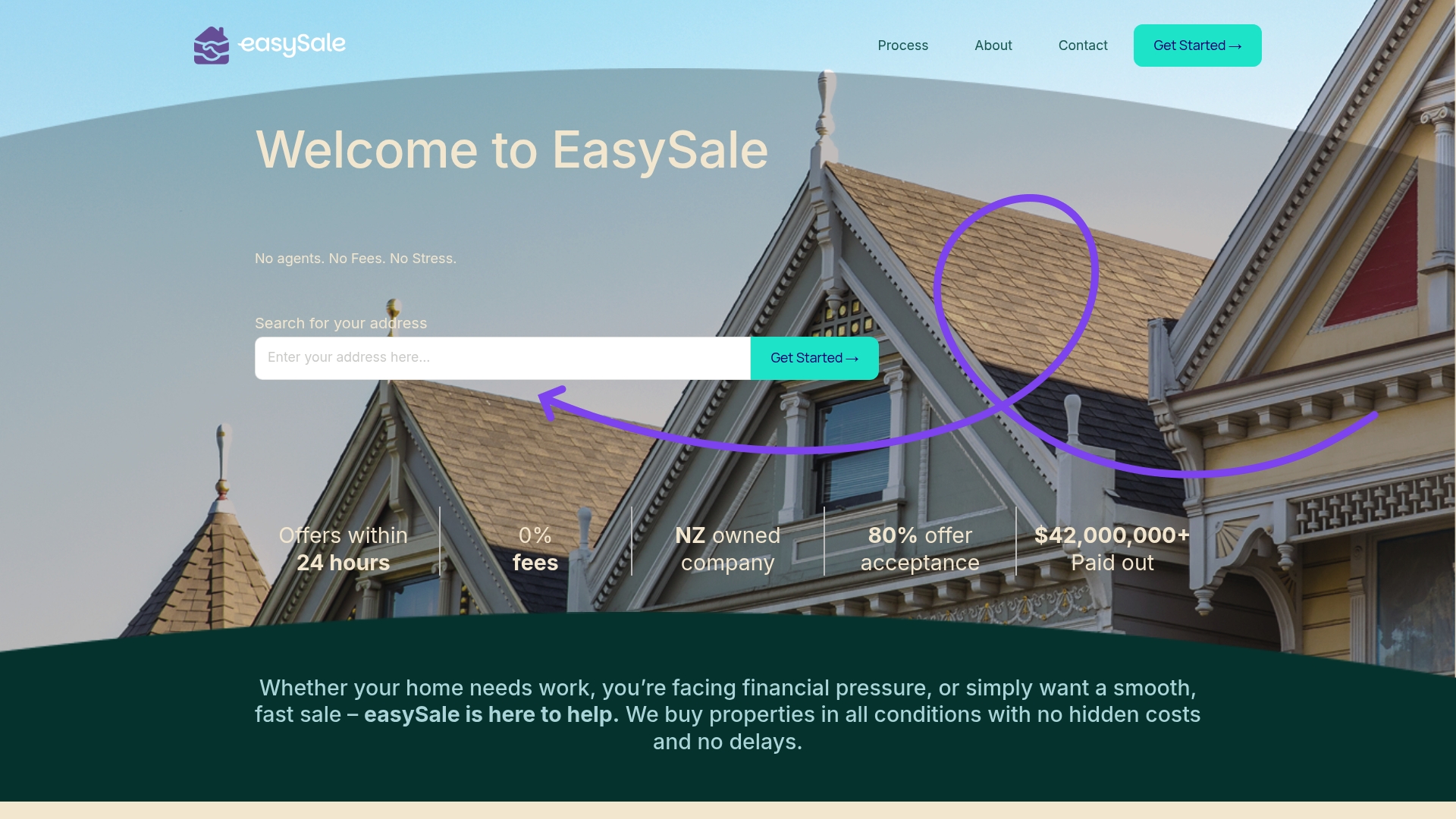
The process is simple: submit your property details, receive a fair cash offer within 24 hours, and settle on a timeline that suits you. There are no open homes to prepare for, no stressful negotiations, and no waiting on buyer finance approvals. Whether you are facing a life change, financial pressure, or simply want a faster result, selling your house privately with Easysale cuts through the complexity. Get in touch today and find out what your property is worth.
FAQ
How long does it take to sell a property in New Zealand in 2025?
The average sale takes around 79 days from listing to settlement. This includes roughly 49 days to find a buyer and a further 30–45 days to complete the closing process.
What documents do I need to sell my house in New Zealand?
You will need your certificate of title, a LIM report from your local council, building consents, warranties, and any body corporate records if applicable. Gathering these 4–6 weeks before listing prevents settlement delays.
Should I fix up my house before selling?
Focus on small, visible repairs rather than major renovations. Decluttering, fixing defects, and improving kerb appeal deliver the strongest returns and improve buyer confidence without large upfront costs.
What is a pre-listing inspection and do I need one?
A pre-listing inspection is a building report completed before you list your property. It identifies issues early, reduces the risk of renegotiations, and gives buyers confidence in the condition of your home.
Can I sell my house without a real estate agent in New Zealand?
Yes. You can sell privately through a direct cash buyer like Easysale or manage your own listing. This approach removes agent commission fees and can significantly speed up the sale process.
Recommended
