
Property sale negotiation tips 2025: a seller's guide

TL;DR:Proper preparation in property negotiations helps New Zealand sellers secure better deals in 2025.Ordering reports early, setting clear terms, and reviewing contracts with legal advice strengthen bargaining positions.
Effective property sale negotiation is the process of reaching agreed terms on price, conditions, and settlement through structured offers and counter-offers between a seller and buyer. For New Zealand homeowners selling in 2025, getting this process right separates a smooth, rewarding sale from a drawn-out, stressful one. Key tools in any NZ negotiation include the Sale and Purchase Agreement (SPA), agency contracts, and due diligence documents like Land Information Memorandum (LIM) reports. Initial offers in NZ private treaty sales typically sit 3–8% below the final agreed price, so treating the first offer as a starting point rather than a final answer is the right mindset from day one.
What key negotiation strategies should NZ property sellers use in 2025?
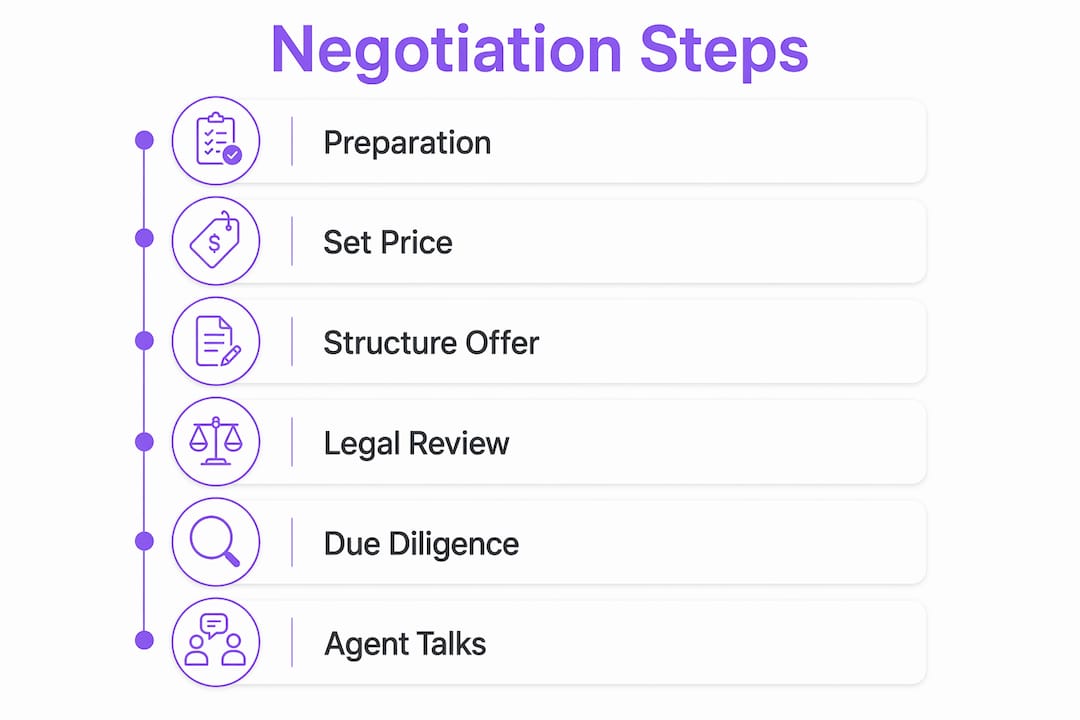
Preparation is the single biggest factor in negotiation success. Sellers who walk into negotiations knowing their walkaway price, their preferred settlement date, and which chattels they will include hold far more control than those who decide on the fly. Negotiation success depends on preparation, not luck, and knowledgeable negotiators understand both timing and psychology.
Set your price position before the first offer arrives
Define your minimum acceptable price before you list. This number stays private, but having it written down stops you from making emotional decisions under pressure. Work backwards from your target price and factor in agent commission, legal fees, and any repairs you have agreed to cover.
Think beyond price when structuring your position
Settlement date flexibility and chattel inclusions are two of the most effective tools a seller has to make an offer more attractive without dropping the price. A buyer who needs a quick settlement or wants the whiteware included may accept a higher price in exchange for those terms. This is real estate negotiation strategy at its most practical.
Key tactics to apply during negotiations:
- Offer settlement flexibility. Buyers with tight timelines will pay for convenience. Offering 30, 45, or 60 days gives you a genuine point of difference.
- Include or exclude chattels deliberately. Listing specific items like heat pumps, dishwashers, or curtains as inclusions adds perceived value without reducing your price.
- Respond to counter-offers as fresh starts. Each counter-offer resets all terms in NZ private treaty sales. Do not treat it as a simple price tweak. Review every condition before you respond.
- Use pauses strategically. Skilled negotiators use timing to their advantage. Taking 24 hours to respond signals confidence and avoids reactive decisions.
- Create urgency where it exists. If you have genuine buyer interest from multiple parties, your agent can communicate that without misrepresenting the situation.
Pro Tip: Write out your full counter-offer position, including price, settlement date, and chattel list, before you send anything. Incremental back-and-forth without a clear plan weakens your position over time.
Composure matters as much as tactics. Buyers and their agents read emotional reactions. Staying calm and measured, even when an offer feels low, keeps you in a stronger position throughout the process.
How do legal frameworks and contract reviews affect negotiation outcomes?
The Sale and Purchase Agreement is a legally binding contract the moment both parties sign it. This is not a document to skim. Every condition in the SPA, from the deposit amount to the settlement date to which chattels are included, is enforceable. Understanding NZ property sale agreements before you sign protects you from agreeing to terms you did not fully understand.
Early solicitor review of the SPA costs between $200 and $400 and is one of the most cost-effective steps a seller can take. A property lawyer will flag unfavourable clauses, clarify conditions precedent, and confirm that deposit handling and chattel lists reflect what you agreed verbally. Skipping this step to save money is a false economy.
Common legal issues that erode a seller’s negotiation position include:
- Vague chattel descriptions. If the SPA lists “curtains” without specifying which ones, disputes arise at settlement.
- Poorly worded conditions precedent. Finance and building report conditions with no clear timeframes give buyers extended leverage.
- Unsigned agency agreements. Your agent must supply a signed copy of the agency agreement within 48 hours. Reviewing this document before signing gives you room to negotiate commission and services.
- Deposit handling terms. Confirm where the deposit is held and under what conditions it is released.
Solving legal contract issues early prevents costly disputes. Experienced property lawyers provide clarity on enforceable terms and obligations that non-lawyers routinely miss. The legal considerations when selling property in NZ are specific enough that general legal advice is rarely sufficient.
What practical steps reduce buyer leverage during due diligence?
Due diligence is the phase where buyers gather information to confirm their purchase decision. The more conditions a buyer attaches to their offer, the more leverage they hold. Sellers who complete due diligence work before listing remove many of those conditions before they are ever raised.
The LIM report is the most common source of conditional delays in NZ. Wellington’s 28 working day LIM backlog is a clear example of how council processing times can stall a sale. A LIM in Wellington costs around $563.50. Ordering it before you list means buyers receive it upfront and have no reason to make their offer conditional on obtaining one.
Follow these steps to reduce buyer leverage through preparation:
- Order your LIM report early. Allow for council processing times and have the report ready before your first open home.
- Compile your property documents. Gather building consents, code compliance certificates, and any resource consent records. Buyers who receive these upfront ask fewer questions and attach fewer conditions.
- Complete outstanding repairs before listing. Visible maintenance issues give buyers grounds to negotiate price reductions at the pre-settlement inspection.
- Confirm your chattel list in writing. Agree on exactly what stays with the property and document it clearly in the SPA.
- Schedule the pre-settlement inspection correctly. Pre-settlement inspections should occur at least 2 working days before settlement. This gives both parties time to resolve any issues without delaying settlement.
Pro Tip: Walk through your property the week before settlement and check that every chattel listed in the SPA is present and in working order. A missing heat pump remote or a broken rangehood discovered on inspection day creates last-minute pressure to offer a rebate.
| Due diligence item | Recommended timing | Why it matters |
|---|---|---|
| LIM report | Before listing | Removes buyer’s conditional clause and avoids council delays |
| Building consents and CCC | Before listing | Reduces buyer uncertainty and conditional offers |
| Pre-settlement inspection | 2+ working days before settlement | Allows time to resolve issues without delaying settlement |
| Chattel confirmation | At SPA signing | Prevents disputes at settlement over inclusions |
How can negotiating with real estate agents influence your sale?
Your agent’s commission, services, and contract terms are all negotiable before you sign the agency agreement. Sellers have greater bargaining power before signing than at any point afterwards. Once the property is listed and the agent has invested time and marketing spend, that leverage disappears.

Get proposals from at least two or three agents before committing. Compare total cost, not just the headline commission rate. An agent charging a slightly higher commission but with a stronger track record in your suburb may net you a better final price than a cheaper agent with less local knowledge.
Key elements to negotiate in your agency agreement:
- Commission rate and structure. Flat fee versus percentage arrangements both have merit depending on your property’s price point.
- Marketing expenses. Understand exactly what is included and what you pay for separately, such as photography, online listings, and print advertising.
- Timeframe. A shorter exclusive agency period, such as 60 days rather than 90, protects you if the agent underperforms.
- Services included. Confirm open home frequency, buyer follow-up processes, and reporting intervals.
Skilled agents use psychological tactics like timing pauses and controlled information release to protect your position during buyer negotiations. This is a genuine skill, not a personality trait. When comparing agents, ask directly how they handle counter-offers and what their approach is when a buyer pushes back hard on price.
A well-negotiated agency agreement reduces friction throughout the sale. It also sets clear expectations so you are not surprised by costs or service gaps at a critical moment.
Key takeaways
Sellers who prepare their legal documents, due diligence materials, and negotiation position before listing hold the strongest possible hand in any NZ property sale.
| Point | Details |
|---|---|
| Treat first offers as starting points | Initial offers in NZ typically sit 3–8% below the final agreed price. |
| Counter-offers reset all terms | Plan your full position, including price and conditions, before responding to any counter-offer. |
| Review the SPA with a solicitor | A $200–$400 legal review prevents costly disputes over enforceable contract terms. |
| Order your LIM report early | Upfront due diligence removes buyer conditions and avoids council processing delays. |
| Negotiate agent terms before signing | Bargaining power over commission and services drops once the agency agreement is signed. |
What I have learned about negotiating property sales in New Zealand
After watching many NZ property transactions play out, the pattern I see most often is sellers who prepare well and those who wing it. The gap in outcomes between the two groups is significant, and it almost never comes down to market conditions.
The most common mistake I see is sellers treating the first offer as an insult rather than an opening. A buyer who offers 5% below your asking price is not being disrespectful. They are doing exactly what the NZ private treaty process is designed for. The sellers who respond calmly, with a clear counter-offer that includes their preferred settlement date and a firm but reasonable price, almost always end up closer to their target than those who react emotionally.
The second mistake is underestimating the value of good legal and agent advice. Some sellers try to save money by skipping the solicitor review or choosing the cheapest agent. Both decisions tend to cost more in the long run. A property lawyer who spots a poorly worded condition in the SPA earns their fee many times over. An agent with genuine negotiation skill, who knows how to use timing and urgency without overplaying their hand, is worth the extra commission.
My honest recommendation is to treat the 2025 NZ market as one where preparation is your competitive advantage. The 2025 property selling trends show increased transaction volumes, which means more buyers but also more competition among sellers. The properties that sell well are the ones where the seller has done the groundwork: clean title, LIM in hand, SPA reviewed, and a clear negotiation position defined before the first offer arrives.
Focus on the full transaction, not just the price. A sale that settles cleanly on your preferred date, with no last-minute disputes over chattels or repairs, is worth more than a marginally higher price that comes with three months of stress.
— Aaron
Easysale: a straightforward alternative for NZ sellers
Not every seller wants to go through the full negotiation process. If your property needs work, your timeline is tight, or you simply want certainty without the back-and-forth, Easysale offers a direct path.

Easysale buys residential properties across New Zealand in any condition, with no agent commissions and no drawn-out negotiations. You submit your property details, receive a fair cash offer, and settle on a timeline that suits you. For sellers dealing with property damage, financial pressure, or a life change that requires a fast exit, selling your house as-is removes the uncertainty that comes with traditional sales. Easysale is New Zealand owned and focused entirely on making the process straightforward for Kiwi homeowners.
FAQ
What is a fair starting offer in NZ property negotiations?
Initial offers in NZ private treaty sales typically come in 3–8% below the final agreed price. Sellers should define their walkaway price before responding to any offer.
How does a counter-offer work in NZ private treaty sales?
Each counter-offer in NZ resets all terms of the agreement, not just the price. Sellers should plan their full position, including settlement date and chattel inclusions, before issuing any counter-offer.
Do I need a solicitor to review my Sale and Purchase Agreement?
Yes. A solicitor review costs $200–$400 and protects you from unfavourable clauses, unclear conditions, and chattel disputes. It is one of the most cost-effective steps in any property sale.
When should I order a LIM report as a seller?
Order your LIM report before listing your property. Wellington’s council backlog runs to 28 working days, so early ordering prevents conditional delays and removes a common buyer bargaining point.
Can I negotiate real estate agent commission in New Zealand?
Yes. Commission rates, marketing expenses, and contract timeframes are all negotiable before you sign the agency agreement. Your bargaining power is highest before the property is listed.
Recommended
