
What is a property sale agreement in NZ?

TL;DR:A property sale agreement is a legally binding contract that details the terms, conditions, and obligations for transferring property ownership. Once signed by both parties, it becomes enforceable, making careful review essential to prevent costly disputes. Understanding contingencies, deposit rules, and legal requirements is crucial before completing any real estate transaction.
A property sale agreement is the legal document that turns a verbal understanding between a buyer and seller into a binding commitment. Yet many people treat it as routine paperwork, skimming through pages before signing. That approach carries real risk. Whether you are buying your first home, selling the family property, or downsizing after retirement, understanding what a property sale agreement actually contains and what it obliges you to do is one of the most useful things you can do before any real estate transaction.
Table of Contents
- Key takeaways
- What is a property sale agreement?
- Legal weight of a property sale agreement
- Contingencies and clauses explained
- How property sale agreements fit into the NZ process
- My take on understanding your sale agreement
- Sell with confidence using Easysale
- FAQ
Key takeaways
| Point | Details |
|---|---|
| Writing is mandatory | A property sale contract must be in writing to be legally enforceable in New Zealand. |
| Deposits carry real risk | Earnest money or deposits are held in escrow and can be forfeited if you back out without a valid contingency. |
| Contingencies protect you | Finance, inspection, and title contingencies give you the legal right to cancel without penalty if conditions are not met. |
| Signing creates obligations | Once both parties sign, the real estate sale agreement is binding and breach can result in legal action. |
| Professional review saves money | Having a solicitor review your agreement before signing can prevent costly disputes down the track. |
What is a property sale agreement?
A property sale agreement (also called a property purchase agreement or real estate sale agreement) is a written contract between a buyer and a seller that sets out the terms under which a property will transfer from one party to the other. It goes well beyond price. The document records every condition, obligation, and expectation that both parties have agreed to, making it the single most important piece of paper in any property transaction.
Understanding key property terms from the outset helps you read this document with confidence rather than confusion.
The core elements you will find
A well-drafted property sale agreement covers the following:
- Purchase price and payment terms. This records the agreed sale price and how it will be paid, including whether the buyer is using a mortgage, a cash payment, or a combination.
- Deposit (earnest money). In New Zealand, earnest money typically ranges from 1% to 3% of the purchase price, though it can reach 10% in competitive markets. This sum signals the buyer’s commitment and is held in a neutral trust account until settlement.
- Property description. A precise legal description of the land and improvements being sold. This section also specifies which fixtures and fittings are included or excluded.
- Closing date and possession date. The closing date is when legal title transfers. The possession date is when the buyer physically takes over the property. These dates can differ, and the gap between them matters if you are arranging removalists or temporary accommodation.
- Contingencies. These are conditions that must be satisfied before the sale can proceed. Common examples include finance approval, a satisfactory building inspection, and a clean title search.
- Special conditions. Any negotiated additions unique to the transaction, such as the seller completing specific repairs before settlement.
Pro Tip: Ask for an itemised list of chattels to be attached to the agreement. Disputes over what was “included” in the sale, such as light fittings, curtains, or heat pumps, are among the most common causes of pre-settlement arguments.
Earnest money is held in escrow until closing, and disputes over these funds are common. Understanding what triggers a refund versus a forfeiture before you sign is the single clearest way to protect yourself.

Legal weight of a property sale agreement
One of the biggest misconceptions about a property sale agreement is that it is somehow provisional. It is not. Once both parties have signed, you are committed, and the law will hold you to that commitment.
A valid agreement requires offer and acceptance, consideration, legal capacity of both parties, compliance with applicable laws, and proper disclosure of relevant property information. Remove any of those elements and the contract may be unenforceable.
“A property sale contract must be in writing to be legally enforceable under the Statute of Frauds. Verbal agreements, regardless of how clearly understood between the parties, do not meet this threshold.”
The agreement is binding once signed by both parties, and failure to perform can lead to legal action or loss of the deposit paid. For sellers, failure to complete can mean the buyer seeks specific performance through the courts, effectively forcing the sale at the agreed price.
For a thorough understanding of your obligations in New Zealand, reviewing the legal requirements for sellers before you sign is time well spent.
Pro Tip: Never sign a property sale agreement on the day it is presented to you. Request at least 24 to 48 hours to have a solicitor review it. The cost of a legal review is minor compared to the potential cost of a clause you did not understand.
Legal experts note that buyers and sellers regularly sign contracts without fully grasping the implications, and they consistently recommend professional legal review of all contract terms before signing. In New Zealand, your solicitor can also check for any issues with the certificate of title that could complicate the transaction.
Contingencies and clauses explained
Contingencies are not boilerplate additions. They are the conditions that protect you if something goes wrong before settlement. Getting them right, and understanding what happens when they are not met, is central to knowing how to write a sale agreement that actually works in your favour.
The three most common contingencies in NZ property transactions
- Finance contingency. This gives the buyer a set period, often 10 to 15 working days, to secure mortgage approval. If the bank declines the loan, the buyer can cancel the contract and recover the deposit.
- Building inspection contingency. The buyer arranges an independent building report within an agreed timeframe. If significant defects are discovered, the buyer can renegotiate or withdraw.
- Title contingency. This allows the buyer’s solicitor to confirm the title is clear of encumbrances, caveats, or covenants that could affect the use or value of the property.
Contingencies are critical conditions that must be met for the sale to proceed. If they are not met, the protected party can cancel the contract without penalty, provided they have acted in good faith.
The risk of waiving contingencies
In a competitive market, buyers are sometimes tempted to waive contingencies to make their offer more attractive. This is a high-risk move. Waiving contingencies makes an offer more attractive to sellers but significantly increases the buyer’s risk of forfeiting the deposit if they need to back out for any reason.
Less common but important clauses
| Clause | What it does | Who benefits |
|---|---|---|
| Kick-out clause | Allows the seller to keep marketing and accept a better offer if the buyer’s contingency is not met within a timeframe | Seller |
| Rent-back clause | Permits the seller to remain in the property after settlement for a negotiated period | Seller |
| Escalation clause | Automatically increases the buyer’s offer by a set amount above any competing offers up to a maximum | Buyer |
Kick-out and rent-back clauses affect both parties’ rights and timeframes. If these clauses appear in your agreement, read them carefully and make sure you understand the exact triggers and obligations they create.
A well-negotiated agreement reduces the risk of costly disputes and failed transactions, while a weak or generic one can expose both parties to unnecessary financial loss.
How property sale agreements fit into the NZ process
The agreement does not appear at the very start of a property transaction. It emerges after initial negotiations have taken place and both parties have reached a broad understanding on price and terms. Knowing where it sits in the broader process helps you prepare properly.
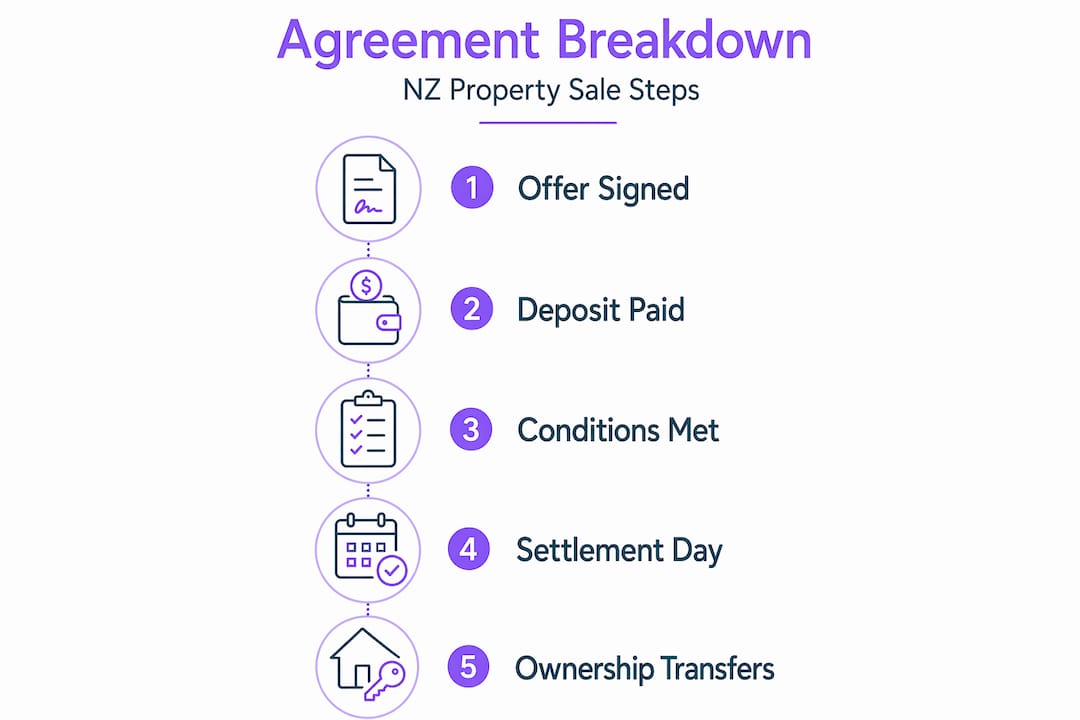
Here is how the process typically unfolds in New Zealand:
- Offer and negotiation. The buyer makes a written offer, often using a standard form provided by their real estate agent or solicitor. The seller may accept, reject, or counter.
- Agreement signed. Once both parties agree on all terms, the agreement is signed. From this point, both parties are legally bound.
- Conditional period. If contingencies are included, this period allows buyers to complete inspections, arrange finance, and conduct title searches. The NZ property sale process typically allows 10 to 15 working days for these checks.
- Going unconditional. Once all conditions are satisfied and both parties confirm in writing, the agreement becomes unconditional. Backing out after this point carries serious financial and legal consequences.
- Settlement day. The balance of the purchase price is paid, legal title transfers, and the buyer takes possession as agreed.
Real estate agents play a key role in preparing initial offer documents, but they are not solicitors. A lawyer reviews the final agreement to protect your interests and should be engaged as early as possible in the process. Understanding industry terms in NZ property sales before you reach the signing table will make every conversation with your solicitor and agent far more productive.
My take on understanding your sale agreement
I have seen more than a few property transactions fall apart, not because the buyer and seller did not want to proceed, but because a clause in the agreement was misunderstood by one party. What surprises me every time is how preventable it is.
The finance contingency is the one people mishandle most often. Buyers assume that because their bank seemed positive in an early conversation, the contingency is just a formality. Then the formal approval does not come through in time, the contingency lapses, and they find themselves in a dispute over the deposit. That outcome is avoidable if you treat every clause with the same seriousness you would give to the purchase price itself.
My experience also tells me that agreements written with clear, specific language close faster and with far fewer disputes. Generic property selling agreement templates downloaded from the internet often lack New Zealand-specific clauses, particularly around title searches and the Land Transfer Act. Customising your agreement to reflect local requirements and your specific property circumstances is not optional. It is what separates a smooth settlement from an expensive mess.
Seek proper legal advice, read every clause, and never let time pressure push you into signing something you do not fully understand. A legitimate seller or buyer will always allow you time to get legal review done.
— Aaron
Sell with confidence using Easysale
If the process of preparing, reviewing, and negotiating a property sale contract sounds like more than you want to take on right now, you are not alone. Many New Zealand homeowners, particularly those facing time pressure or a property that needs work, find the traditional process overwhelming.

Easysale offers a straightforward alternative. You receive a fast, fair cash offer with no agents, no commission fees, and no lengthy conditional periods to manage. The agreement process is clear and transparent, so you know exactly what you are signing and why. If you are thinking about selling for retirement or downsizing, Easysale works on your timeline and handles the complexity so you do not have to. Reach out to the team today to find out how simple selling your property can be.
FAQ
What is a property sale agreement in simple terms?
A property sale agreement is a legally binding written contract between a buyer and seller that records the agreed price, conditions, and terms for transferring ownership of a property.
When does a property sale agreement become binding?
The agreement becomes legally binding once both parties have signed it. From that point, both the buyer and seller have legal obligations they must fulfil.
What should be included in a property sale agreement?
A property sale agreement should include the purchase price, deposit amount, property description, closing and possession dates, contingencies such as finance and inspection, and any special conditions agreed between the parties.
Can a buyer cancel a property sale agreement?
A buyer can cancel without penalty if a valid contingency is not met within the agreed timeframe. Cancelling after the agreement goes unconditional typically results in loss of the deposit and potential legal action.
Do I need a solicitor to review a property sale agreement?
Yes. Having a solicitor review your agreement before signing is strongly recommended. Legal experts consistently advise professional review to ensure you understand all clauses and protect your financial interests.
Recommended
