
Role of lawyers in property transfer: your 2026 guide


TL;DR:Lawyers in New Zealand must oversee property transfers to ensure legal compliance and protect buyers and sellers. Engaging a qualified lawyer early in the process allows for proper review, dispute avoidance, and correct ownership structuring. Their role includes contract review, title searches, and settlement coordination, making them essential for a smooth and lawful transfer.
The role of lawyers in property transfer is to provide essential legal oversight that protects your interests from the moment you consider signing a contract through to the day ownership officially changes hands. In New Zealand, this is not optional. Legal oversight by a qualified lawyer is mandatory for title transfers and mortgage registration because there are no separately licensed conveyancers here. Every buyer and seller needs a lawyer holding an LLB qualification to complete the process lawfully. Understanding what your lawyer actually does, and when to bring them in, can save you from costly mistakes that are difficult or impossible to fix once a contract is signed.
What is the role of lawyers in property transfer?
A property lawyer manages the legal transfer of ownership from one person to another. Their work covers reviewing contracts, conducting title searches, checking council records, drafting transfer instruments, and coordinating settlement with banks and other parties. The New Zealand Law Society recommends engaging a lawyer before you sign any Sale and Purchase Agreement, not after. That single step protects your deposit and your rights before you are legally bound.
The industry term for this work is conveyancing, which refers to the full legal process of transferring property title from seller to buyer. Conveyancing in New Zealand is more involved than many buyers expect. It touches on title law, local government records, banking obligations, and sometimes family or estate law. Your lawyer sits at the centre of all of it.
Legal fees for a typical residential purchase range from $1,800 to $3,000 plus disbursements. That cost covers contract review, searches, document drafting, and full settlement coordination. Measured against the value of a property purchase, it is one of the most cost-effective protections you can buy.
What primary legal tasks do lawyers perform during a transfer?
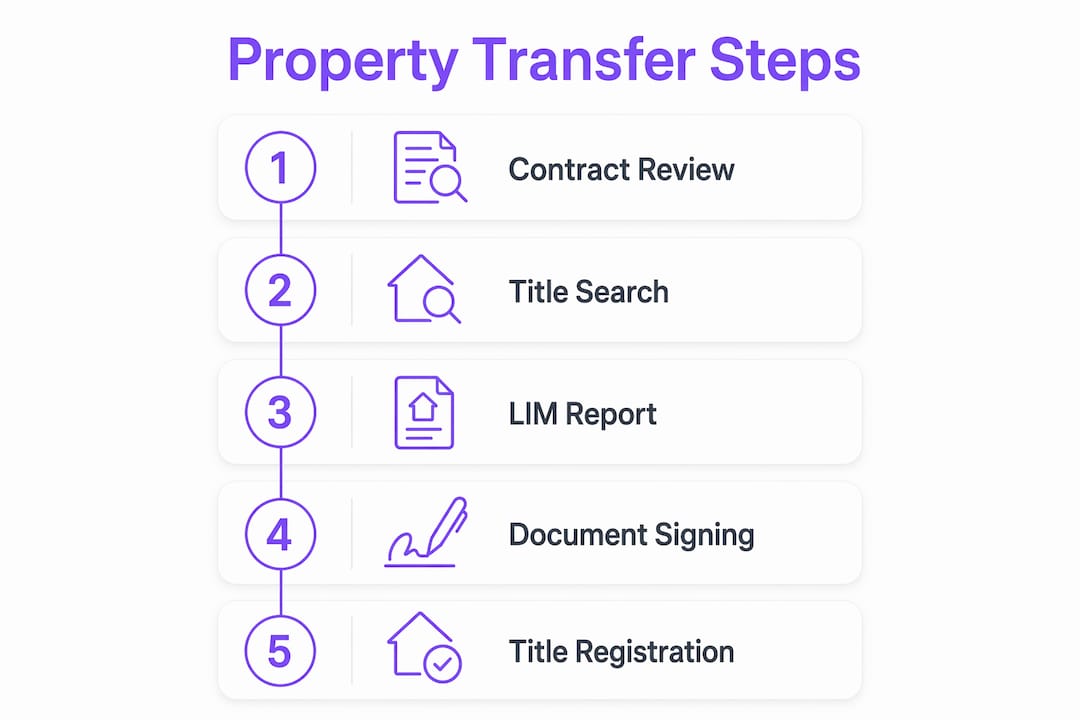
A property lawyer works through a defined sequence of tasks, each building on the last. Here is how that process typically unfolds:
- Review the Sale and Purchase Agreement before you sign. Your lawyer reads every clause, flags unfair terms, and advises on conditions that protect you.
- Insert protective conditions such as finance approval, a satisfactory building report, or a LIM report review. These give you legal exit points if something goes wrong.
- Conduct a title search to confirm the seller legally owns the property and to identify any registered interests such as easements, covenants, or caveats.
- Review the Land Information Memorandum (LIM) from the local council to check for unconsented building work, drainage issues, or hazard notices.
- Draft the legal transfer instrument and prepare all documents required to register the change of ownership with Land Information New Zealand (LINZ).
- Manage mortgage registration by coordinating with your bank to ensure funds are advanced correctly on settlement day.
- Coordinate settlement by communicating with the vendor’s lawyer, your bank, and any agents to confirm all obligations are met before keys change hands.
The property transfer process in New Zealand follows this sequence closely, and skipping or rushing any step creates real risk.
Pro Tip: Ask your lawyer to review the agreement before you make an offer, not just before you sign. That gives them time to suggest conditions that reflect your specific situation, such as a longer settlement period or a requirement for a code compliance certificate.

How do lawyers protect buyers and sellers from financial and legal risk?
Property lawyers identify risks that most buyers and sellers would never spot on their own. Missing code compliance certificates and unconsented building work are among the most common causes of settlement failure and legal disputes in New Zealand. A lawyer catches these issues early by reading the LIM and council records carefully.
Common risks and how lawyers address them:
- Problematic contract clauses. Lawyers identify terms that favour the vendor unfairly and negotiate amendments before signing.
- Unregistered interests. A title search reveals encumbrances that do not appear in the listing, such as a right of way that limits what you can build.
- Unconsented building work. Lawyers flag additions or alterations that lack council approval, which can affect insurance and resale value.
- Ownership structure errors. Choosing the wrong ownership structure between joint tenants and tenants in common has significant legal and tax consequences.
- Settlement day failures. Lawyers coordinate all parties to prevent last-minute breakdowns caused by missing documents or bank delays.
| Risk | Lawyer’s protective action |
|---|---|
| Unfair contract clause | Negotiates amendment or advises client to walk away |
| Unconsented building work | Flags via LIM review; requests remediation before settlement |
| Incorrect ownership structure | Advises on joint tenancy vs tenants in common based on client’s situation |
| Unregistered easement or caveat | Identifies via title search; advises on implications |
| Bank settlement delay | Coordinates directly with lender to confirm funds are ready |
Lawyers advise on ownership structures including joint tenants versus tenants in common, a choice that affects estate planning, relationship property rights, and tax obligations. Getting this wrong at purchase can create expensive problems years later.
Pro Tip: If you are buying with a partner or family member, ask your lawyer to explain both ownership structures before settlement. The right choice depends on your relationship, your wills, and your financial plans.
Why does early engagement of a lawyer matter so much?
The most common and costly mistake buyers make is waiting until settlement to contact a lawyer. A Sale and Purchase Agreement is legally binding once signed, and flaws in the contract cannot be easily corrected after that point. By the time a lawyer sees the document, your options are already limited.
Early legal advice allows your lawyer to draft conditions that are tailored to your circumstances. A finance condition protects your deposit if your bank declines the loan. A building report condition lets you renegotiate or withdraw if the inspection reveals structural problems. Without these clauses in place from the start, you carry the full risk.
Engaging a lawyer before you sign a Sale and Purchase Agreement is the single most effective step you can take to protect your deposit and your rights. Once the contract is signed, the legal framework is set. Conditions must be right from the beginning, not added later as an afterthought.
Legal tips for buyers and sellers consistently point to pre-contract engagement as the step most often skipped and most often regretted. The cost of a lawyer reviewing a contract before signing is a fraction of the cost of resolving a dispute after settlement falls through.
What complex situations require specialist property lawyer expertise?
Standard conveyancing covers a straightforward residential purchase with a clear title and a simple ownership structure. Many transactions in New Zealand go beyond that, and those situations require a lawyer with specialist knowledge.
Scenarios that demand specialist expertise include:
- Cross-lease titles. These involve shared ownership of land with individual leases over each dwelling. Alterations to the property can affect the lease and require legal amendment.
- Unit titles. Buying into a body corporate involves reviewing body corporate rules, levies, and minutes, which standard conveyancing services may not cover thoroughly.
- Family trusts. Purchasing or selling property held in a trust requires the trustee to act within the trust deed, and the lawyer must verify this at every step.
- Relationship property. When a property is subject to the Property (Relationships) Act 1976, specialist advice is needed to protect both parties’ interests.
- Commercial property. Due diligence for commercial deals includes lease reviews, GST implications, and resource consent checks that go well beyond residential conveyancing.
- Mortgage refinancing with complications. Switching lenders while a caveat or second mortgage is registered requires careful legal sequencing to avoid title issues.
Complex conveyancing requires specialist lawyers, especially for cross-lease, unit titles, trusts, or family property matters. A fixed-fee online service may handle a simple freehold purchase adequately, but it is not equipped for these situations. The role of trusts in real estate adds a layer of legal responsibility that only a specialist can manage safely.
The legal considerations when selling property in New Zealand also shift depending on ownership structure, so sellers with complex arrangements need the same level of specialist attention as buyers.
Key takeaways
A property lawyer is not a formality in New Zealand real estate. They are the legal mechanism that makes a safe, binding, and enforceable transfer of ownership possible.
| Point | Details |
|---|---|
| Lawyers are mandatory in NZ | No licensed conveyancers exist; a qualified lawyer must handle all title transfers and mortgage registrations. |
| Engage before signing | A Sale and Purchase Agreement is binding once signed; protective conditions must be inserted before you commit. |
| Title and LIM searches are critical | Lawyers identify encumbrances, unconsented work, and compliance gaps that buyers and sellers miss. |
| Ownership structure matters | Joint tenancy versus tenants in common has lasting legal, tax, and estate planning consequences. |
| Complex transactions need specialists | Cross-lease, trust, unit title, and commercial deals require expertise beyond standard conveyancing. |
What I have learned from watching property deals go wrong
Aaron’s perspective
After years of working alongside Kiwi homeowners through property sales, the pattern I see most often is this: people underestimate how much a lawyer does until something goes wrong. And by then, it is usually expensive to fix.
The clients who come to me most stressed are the ones who signed first and asked questions later. They assumed the contract was standard. They assumed the title was clean. They assumed settlement would sort itself out. Lawyers exist precisely because none of those assumptions are safe to make.
One thing I have noticed is that people often choose a lawyer based on price alone. That is understandable, but the cheapest option is not always the right fit for your situation. A lawyer who handles fifty straightforward purchases a week may not have the depth to spot a problematic cross-lease clause or a trust deed restriction. Ask your lawyer directly whether they have handled your type of transaction before.
The other thing worth saying plainly is this: a good lawyer communicates. They call you back. They explain things in plain language. They tell you what to expect before settlement day, not the morning of. If your lawyer is hard to reach or vague in their answers, that is a problem worth addressing early. The legal process in property transfer moves on a timeline, and delays caused by poor communication can cost you the deal.
— Aaron
Selling your home and need a clear path forward?
If you are thinking about selling your home, particularly if you are downsizing or moving into retirement, understanding the legal side of the process is the first step. The second is finding a buyer who makes the process straightforward.

Easysale works with New Zealand homeowners who want to sell without the stress of open homes, agent fees, or drawn-out negotiations. Their retirement and downsizing service is built for sellers who want a fair cash offer, a flexible settlement date, and a process that respects their timeline. You still work with your own lawyer to protect your interests. Easysale simply removes the complexity on the buyer’s side, so you can focus on what comes next.
FAQ
Do I need a lawyer to sell property in New Zealand?
Yes. Legal oversight by a qualified lawyer is mandatory for all property title transfers and mortgage registrations in New Zealand, as there are no separately licensed conveyancers.
When should I contact a property lawyer?
Contact a lawyer before you sign any Sale and Purchase Agreement. Engaging a lawyer early allows them to insert protective conditions into the contract before you are legally bound by its terms.
What does a property lawyer check during a transfer?
A property lawyer reviews the Sale and Purchase Agreement, conducts a title search, checks the LIM report for unconsented work or compliance issues, and coordinates settlement with banks and other parties.
How much do legal fees cost for a property purchase in NZ?
Legal fees for a typical residential purchase range from $1,800 to $3,000 plus disbursements, covering contract review, searches, document drafting, and settlement coordination.
What is the difference between joint tenants and tenants in common?
Joint tenants share equal ownership and the surviving owner automatically inherits the other’s share. Tenants in common can hold unequal shares and each owner can leave their share to whoever they choose in their will.


