
Tools for fast property sales in New Zealand (2026)

The fastest reliable approach for most Kiwis is to combine a time-bound selling method with a realistic price band and a tight marketing pack, then commit to your next step within 72 hours. Whether you go to auction, run a tender, or request a direct offer from a buyer like Easysale, the sellers who move quickly are the ones who decide early and prepare in parallel, not in sequence.
Here is your 72-hour action checklist to get started:
- Choose your route. Decide between auction, tender, deadline sale, or a direct-buyer option. Each suits different circumstances, which the sections below explain.
- Get a market appraisal or REINZ HPI snapshot. Contact one or two local agents for a comparative market appraisal, and cross-check regional trends using the REINZ House Price Index (HPI). This takes a morning, not a week.
- Brief your photographer and instruct a conveyancer. Book a professional photographer for the first clear day after staging is done. Instruct a property lawyer or conveyancer now, before you list, so legal steps do not stall the process after an offer arrives.
Conveyancing in New Zealand commonly adds several weeks to settlement, so the earlier you engage a lawyer, the less likely a paperwork delay will cost you a buyer. Easysale offers a direct-buyer route that bypasses agent commissions entirely and settles on a timeline that suits you, which makes it worth a no-obligation enquiry if speed is your priority.
Table of Contents
- How do you choose the right selling route and agent?
- What pricing strategy attracts quick offers?
- Which time-bound methods speed up your sale?
- What marketing tools generate quick buyer interest?
- Quick kerb-appeal and staging moves that produce faster offers
- What should you expect at inspections, and what will it cost?
- Legal disclosures and when a direct-buyer route makes sense
- Key takeaways
- The trade-off most sellers only understand after the fact
- Ready to sell fast? Easysale makes it straightforward
- Useful NZ sources and next steps
How do you choose the right selling route and agent?
The route you choose shapes everything: your timeline, your stress level, and your likely sale price. Get this decision right before you spend a dollar on marketing.
Auction, tender, deadline sale, or direct buyer?
Each method suits a different situation. Below is a plain comparison:
- Auction works best when your property has broad appeal, the local market is active, and you can tolerate an unconditional result on the day. Auctions typically run on a 3–4 week marketing campaign.
- Tender suits unique or high-value properties where buyers need time to arrange finance. Tenders invite confidential written offers by a set date, which creates urgency without the theatre of an auction room.
- Deadline sale is a hybrid: buyers submit offers before a deadline, but the seller can accept early. It suits sellers who want urgency without committing to an unconditional auction.
- Direct buyer (private treaty) is the right call when you need certainty over price, have a property in any condition, face urgent relocation, probate, or financial pressure, or simply want no open homes and no conditional offers. Easysale operates this way across New Zealand.
For a broader look at property sale types in NZ, the options and their trade-offs are worth reviewing before you commit.
Agent interview checklist
If you go the agent route, interview at least two before signing an agency agreement. Ask about:
- Availability. How many listings are they currently managing? An overloaded agent is a slow agent.
- Buyer database. Can they show you evidence of buyers they have matched to similar properties recently?
- Written marketing plan. Agents should provide a written marketing plan with an itemised budget before you pay for any advertising. If they cannot produce one, move on.
- Recent local sales. Ask for comparable sales in your suburb from the past 90 days, not just a general pitch.
- References. Two recent vendor references, not just testimonials on their website.
- Commission structure. Confirm the percentage and what it covers.
Pro Tip: Ask each agent to show you a recent campaign example, including the listing copy, photos, and how many enquiries it generated. This tells you far more about their actual buyer reach than any verbal claim.
Six questions to ask at agent interviews
- How many properties have you sold in this suburb in the past six months?
- What is your average days-to-sell for properties at this price point?
- Who writes the listing copy and briefs the photographer?
- What platforms do you use for paid promotion, and what does that cost?
- How do you handle multiple offers, and how quickly do you present them?
- What happens if the property does not sell at auction or by the tender deadline?
What pricing strategy attracts quick offers?
Price to create competition, not to leave room for negotiation. Sellers who list at an aspirational price and then reduce it two weeks later lose the best buyers, who are most active in the first seven days of a listing.
The three-price method
Before you set a number, write down three figures:
- Ecstatic price. The result that would genuinely surprise you on the upside.
- Satisfied price. The outcome you would accept without hesitation.
- Walk-away price. The minimum below which you would not proceed.
Your listing price or auction reserve should sit close to the satisfied price, informed by recent comparable sales and regional trend data. The REINZ HPI is more reliable than median sales prices for this purpose because it adjusts for property attributes, giving you a truer read on where values are moving in your region.
REINZ HPI note: The House Price Index provides a timelier, attribute-adjusted view of housing values than median prices. Use it to set a realistic pricing band, not to justify an aspirational number.
Pricing prep checklist
- Obtain a comparative market appraisal (CMA) from at least one licensed agent.
- Cross-check the CMA against REINZ HPI regional trends for the past three months.
- Decide whether you will advertise a price, a price-plus guide, or go to auction/tender with no advertised price.
- Clarify with your agent whether you will accept conditional offers and, if so, what conditions are acceptable (finance, building inspection, LIM).
Do not choose your selling method before you have an evidence-backed value range. An auction reserve set too high simply passes in, and a tender with no realistic guide price attracts fewer bids.
Which time-bound methods speed up your sale?
Time-bound methods such as auctions, tenders and deadline sales typically shorten marketing time because they create a clear deadline for bids. Buyers who might otherwise sit on the fence are forced to act or miss out.
Here is how each method compares in practice:
- Auction
- Speed: Typically 3–4 weeks of marketing, unconditional result on auction day.
- Buyer psychology: Competition in the room drives prices up when demand is strong.
- Likely buyers: Cash buyers and pre-approved borrowers; conditional buyers are excluded.
- Preparation required: Full marketing pack, LIM ordered, title clear, reserve set.
- Risk: If the property passes in, momentum is lost and you may need to renegotiate privately.
- Tender
- Speed: 3–4 weeks marketing, offers submitted by a fixed date.
- Buyer psychology: Confidential process; buyers do not know what others are offering.
- Likely buyers: Broader pool, including conditional buyers.
- Preparation required: Same as auction; vendor’s solicitor reviews all offers.
- Risk: Fewer buyers may submit if the property is not well-known or well-marketed.
- Deadline sale
- Speed: Flexible; seller can accept an early offer or wait for the deadline.
- Buyer psychology: Creates urgency without the all-or-nothing pressure of auction.
- Likely buyers: Mixed; conditional offers are common.
- Preparation required: Marketing pack, clear deadline communicated in all advertising.
- Risk: Early offers may be lower than what a full campaign would produce.
Timeline note: Allow at least two weeks before the auction or tender date for photography, listing copy, signboard installation, and online promotion to run. Rushing this window reduces buyer reach and, with it, your final price.
What marketing tools generate quick buyer interest?
Prioritise professional photography, floor plans, and a strong online premium listing by using a helpful property selling cost calculator to plan your costs and price scenarios. These three items deliver the fastest uplift in enquiries, and skimping on any one of them is the most common reason a well-priced property sits longer than it should.
Your marketing pack, in order
- Professional photography. Professional photos can cost from a modest amount and are non-negotiable for any online listing. Book on a clear day after staging is complete.
- Floor plan. Many buyers filter listings by layout before they ever look at photos. A floor plan keeps your listing in their shortlist.
- Listing copy. Brief your agent on the three features buyers in your area value most. Generic copy written without your input tends to miss the mark.
- Signboard. Street presence still drives enquiries, particularly from buyers already active in your neighbourhood.
- Printed brochure. Marketing your property well, including a printed brochure, improves the chances of a faster sale. Have it ready before the first open home.
- Premium online listing. Paid placement on Trade Me Property and realestate.co.nz puts your listing in front of more buyers in the first critical week.
Pro Tip: Book your photographer for the morning of a sunny day, after all decluttering and staging is complete. Afternoon light in many NZ homes creates shadows that flatten rooms in photos. One good shoot is worth more than two rushed ones.
For more on practical tips for a fast property sale in New Zealand, the steps above are expanded with platform-specific guidance.
Quick kerb-appeal and staging moves that produce faster offers
Small, visible improvements produce outsized buyer confidence. A freshly painted front door, a tidy garden, and neutralised interiors signal a well-maintained home before a buyer steps inside, and that first impression shapes every room they walk through afterwards.
Low-cost staging checklist
- Declutter every room. Remove at least one piece of furniture from each room to make spaces feel larger. Box personal items and store them offsite.
- Neutral paint. A single coat of a warm white or light grey over a bold feature wall costs under $100 in paint and transforms buyer perception.
- Light bulbs. Replace any dim or yellow globes with warm white LEDs. Bright, consistent lighting makes rooms photograph better and feel more welcoming.
- Soft furnishings. New cushions, a throw, and a bath mat are low-cost items that refresh tired rooms without furniture replacement.
- Garden tidy. Mow, edge, and remove dead plants. A bag of fresh mulch on garden beds costs little and reads as “cared for” to every buyer who walks up the path.
- Front door. A fresh coat of paint or a new door handle is the single highest-impact exterior fix per dollar spent.
Staging for occupied homes
You do not need to move out to stage effectively. Partial staging, mixing your existing furniture with one or two rented pieces for the key rooms (living and master bedroom), often hits the best balance of cost and buyer appeal. Professional staging for a five-week listing typically ranges from around $1,500 to $5,000 depending on size and scope, but a targeted partial approach can cost considerably less.
Pro Tip: The three staging investments that typically return the fastest buyer interest are: a neutral repaint of the main living area, professional photography (not phone photos), and a decluttered master bedroom with fresh linen. These three alone shift a property from “needs work” to “move-in ready” in most buyers’ minds.
What should you expect at inspections, and what will it cost?
Expect offers within the first 2–4 weeks if the property is priced correctly and the marketing is live from day one. Conveyancing commonly adds 8–12 weeks to settlement after an offer is accepted, so factor that into any timeline you communicate to buyers.
Inspection readiness checklist
- House clean and tidy before every open home, including garage and outdoor areas.
- LIM report ordered in advance where possible (this removes a common buyer condition).
- Title documents and any relevant consents accessible for your conveyancer to review.
- Pets removed or secured during open homes.
- All lights on and curtains open before buyers arrive.
How offers work in New Zealand
Offers in NZ are typically conditional or unconditional. A conditional offer includes clauses the buyer must satisfy before the contract becomes binding, most commonly finance approval and a satisfactory building inspection. An unconditional offer is binding immediately on acceptance.

As a seller, you can negotiate the conditions, the timeframe for satisfying them, and the settlement date. Shortening the finance condition period from 10 working days to 5 is a common lever sellers use to accelerate the process. You can also offer to provide a pre-obtained LIM or building report to remove those conditions from the buyer’s side entirely.
Engaging a property lawyer or conveyancer before listing means they are ready to review offers the day they arrive, rather than being briefed cold after you have already accepted.
| Item | Typical timing / range | Notes |
|---|---|---|
| Conveyancing (settlement) | 8–12 weeks after offer accepted | Varies by complexity and both parties’ lawyers |
| Finance condition period | 5–10 working days | Negotiable; shorter favours faster settlement |
| Building inspection condition | 5–7 working days | Seller-provided report can remove this condition |
| Buyer deposit holding | Commonly 10 working days | Held in agency trust account before release |
| Professional photography | — | Book before listing goes live |
| Staging (partial to full) | $1,500–$5,000 | Depends on property size and scope |
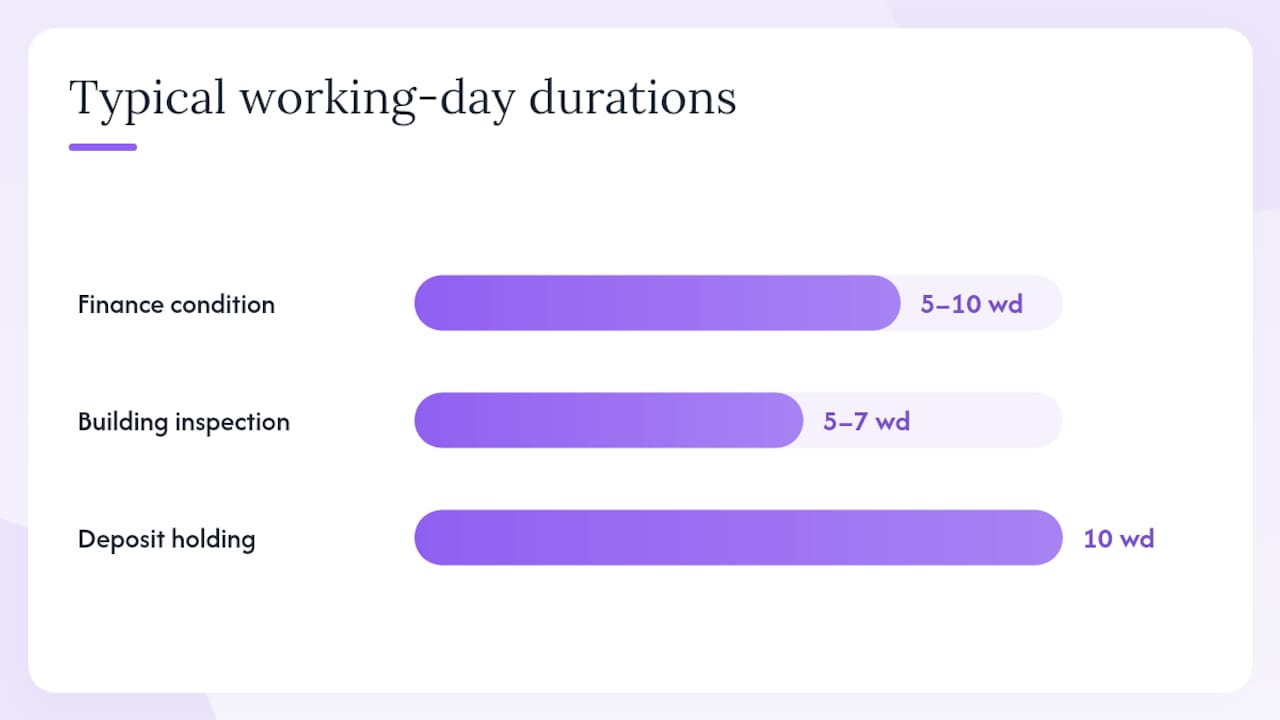
For a detailed look at compressing your sale timeline, the steps from listing to settlement are mapped out in sequence.
Legal disclosures and when a direct-buyer route makes sense
Get a conveyancer on board before you list. Legal delays after an offer is accepted are one of the most common reasons a sale falls over or drags past the buyer’s deadline, and most of those delays are avoidable with early preparation.
Legal disclosure checklist (NZ)
New Zealand sellers must disclose relevant property information including:
- Weather-tightness issues (leaky building history or risk).
- Unconsented building work.
- Boundary disputes or encroachments.
- Natural hazard damage (flood, earthquake, subsidence).
- Any known title issues or caveats.
The Real Estate Authority (REA) is the NZ regulator for real estate agents and provides guidance on your obligations as a vendor. Confirm current disclosure requirements with the REA or your conveyancer before listing, as requirements can change.
Engage your conveyancer early. Having a property lawyer review your title, check for caveats, and prepare the sale and purchase agreement template before you list removes the most common legal bottlenecks. Sellers who instruct a conveyancer after accepting an offer routinely add two to four weeks to their settlement.
Direct buyer vs agent route: a plain comparison
- Agent route
- Pros: Competitive market exposure, potential for higher sale price, professional negotiation.
- Cons: Commission fees, open homes, conditional offers, longer timeline, no certainty of sale.
- Direct buyer (e.g. Easysale)
- Pros: No agent fees, no open homes, buys in any condition, certain settlement, seller chooses timeline.
- Cons: Offer may be below open-market value; suits sellers who prioritise speed and certainty over maximum price.
The direct-buyer route is the practical choice when you face urgent relocation, a damaged or tenanted property, probate, or simply want the process finished without the uncertainty of a conditional campaign. Easysale buys residential properties across New Zealand and can provide a no-obligation offer without requiring inspections or agent involvement.
For sellers weighing up how to settle quickly in New Zealand, the legal and settlement steps are worth reviewing before you sign anything.
Key takeaways
Selling fast in New Zealand comes down to three decisions made early: the right selling route, a price that attracts offers rather than filters them out, and a marketing pack that is ready before the listing goes live.
| Point | Details |
|---|---|
| Choose your route first | Decide between auction, tender, deadline sale, or direct buyer before spending on marketing. |
| Price for competition | Use REINZ HPI regional data and a CMA to set a price band that attracts offers in the first two weeks. |
| Prepare your marketing pack | Professional photography, floor plans, and a premium online listing are the highest-impact tools for a fast sale. |
| Instruct a conveyancer early | Engage a property lawyer before listing to avoid legal delays after an offer is accepted. |
| Easysale as a direct option | Easysale buys NZ residential properties in any condition with no agent fees and a seller-chosen settlement timeline. |
The trade-off most sellers only understand after the fact
There is a version of this decision that almost every seller faces at some point: you have done the prep, you have the agent lined up, and then life changes the deadline. A job offer in another city, a family situation, a settlement date on the next property that cannot move. Suddenly the question is not “how do I get the best price?” but “how do I get this done?”
When I look at how sellers in that position tend to fare, the ones who move fastest are the ones who had already done two things: they had a conveyancer briefed and ready, and they had checked the REINZ HPI so they knew their floor price with confidence. That combination means you can accept an offer, unconditional or otherwise, without second-guessing whether you left money on the table.
The conventional wisdom says you should always go to market and let competition set the price. That is sound advice in a normal timeline. But the sellers who use a direct-buyer option are not failing to maximise their price; they are choosing certainty over uncertainty, and for many circumstances, that is the more rational trade. The key is knowing your walk-away number before you pick up the phone, so the decision is yours, not the buyer’s.
Ready to sell fast? Easysale makes it straightforward
If you need a fast, no-agent sale, Easysale offers a clear three-step process: submit your property details, receive a no-obligation cash offer, and settle on a timeline that works for you. There are no open homes, no commission fees, and no requirement for the property to be in perfect condition. Easysale buys residential properties across New Zealand, including properties with tenants, damage, or complex title situations.

Whether you are downsizing, relocating, or simply want the certainty of a confirmed sale, request a no-obligation offer from Easysale and have a number in hand before you decide which route to take. Before accepting any offer, have your conveyancer review the contract to confirm the terms suit your situation.
This article provides general information only and is not legal or financial advice. Confirm current disclosure requirements and legal obligations with a qualified property lawyer or conveyancer before listing your property.
Useful NZ sources and next steps
- REINZ House Price Index (HPI) dashboard — attribute-adjusted regional price trends; use this to set a realistic pricing band.
- Settled.govt.nz: Marketing your property — official guidance on marketing plans, agent obligations, and what sellers should expect.
- Real Estate Authority (REA) — NZ regulator for real estate agents; use for vendor disclosure obligations and agent complaint processes.
- Selling your house | New Zealand Government — primary government source for disclosure requirements and legal obligations when selling.
- Easysale: How to sell property fast in NZ — step-by-step seller guide covering timelines, preparation, and the direct-buyer option.
- Easysale: Fast-track your property sale timeline — practical guidance on compressing the listing-to-settlement timeline.
Recommended
