
Understanding the due diligence period in NZ property sales

TL;DR:The due diligence period in New Zealand property sales provides buyers a specific time to inspect and review the property before legally binding the sale. Proper preparation and prompt responses by sellers can ensure a smoother process and help avoid delays or deal collapses. Planning, transparency, and organized documentation are essential for sellers, especially under time constraints or urgent circumstances.
Selling your home in New Zealand involves more than accepting an offer and handing over the keys. One step that trips up many sellers, particularly those under financial pressure or time constraints, is the due diligence period, a formal window written into the sale and purchase agreement that gives the buyer time to investigate the property before committing fully. Misunderstanding how it works, or ignoring it altogether, can delay your sale or cause it to collapse entirely. This guide explains exactly what the due diligence period means, how it works in New Zealand, and what you can do to protect your sale when time matters most.
Table of Contents
- What is the due diligence period?
- Key steps during the due diligence window
- How long should the due diligence period be?
- Common pitfalls and how to avoid them
- An experienced perspective on due diligence for urgent property sales
- How to simplify your property sale process
- Frequently asked questions
Key Takeaways
| Point | Details |
|---|---|
| Set clear due diligence deadlines | Agree on a specific timeframe to streamline your property sale and avoid last-minute issues. |
| Prepare documents early | Ordering building reports and legal paperwork upfront makes urgent sales smoother and safer. |
| Negotiate conditions to suit your needs | You have flexibility—work with buyers and agents to fit the due diligence period to your circumstances. |
| Avoid deadline pitfalls | Missing paperwork within the window risks your sale, so stay organised from the start. |
What is the due diligence period?
In New Zealand residential property transactions, a due diligence period is an investigation window written into the sale and purchase agreement. It is often referred to as a due diligence condition, and its purpose is straightforward: it gives the buyer a set amount of time to review the property thoroughly before the agreement becomes unconditional and legally binding.
Understanding this definition matters because it shapes how you, as a seller, should prepare and respond throughout the process. Familiarity with property sales terminology makes a real difference when you are negotiating under pressure.
Here is what the due diligence period typically involves in practice:
- An agreed timeframe: Both parties agree on the length of the investigation window when the offer is made, and it is written into the agreement.
- A conditional status: Until the buyer is satisfied and waives the due diligence condition, the property is technically still “under offer” rather than sold.
- A walk-away right: If the buyer finds something they are not comfortable with during the period, they can often withdraw without penalty, depending on how the clause is written.
- A seller’s obligation to cooperate: You may be asked to provide access to the property and relevant documents during this time.
“A due diligence clause gives the buyer an opportunity to investigate thoroughly, but it also gives the seller a structure to work within, ensuring everything proceeds in an orderly and transparent way.”
The typical timeframe for a due diligence period in New Zealand sits between 10 and 15 working days, though this is not fixed. If your situation calls for urgency, such as separation, relocation, financial hardship, or an estate sale, understanding this timeline is the first step toward managing it effectively.
Key steps during the due diligence window
Defining the due diligence period is just the start. What happens during this timeframe is what truly impacts your sale, especially if you need things to move quickly and smoothly.
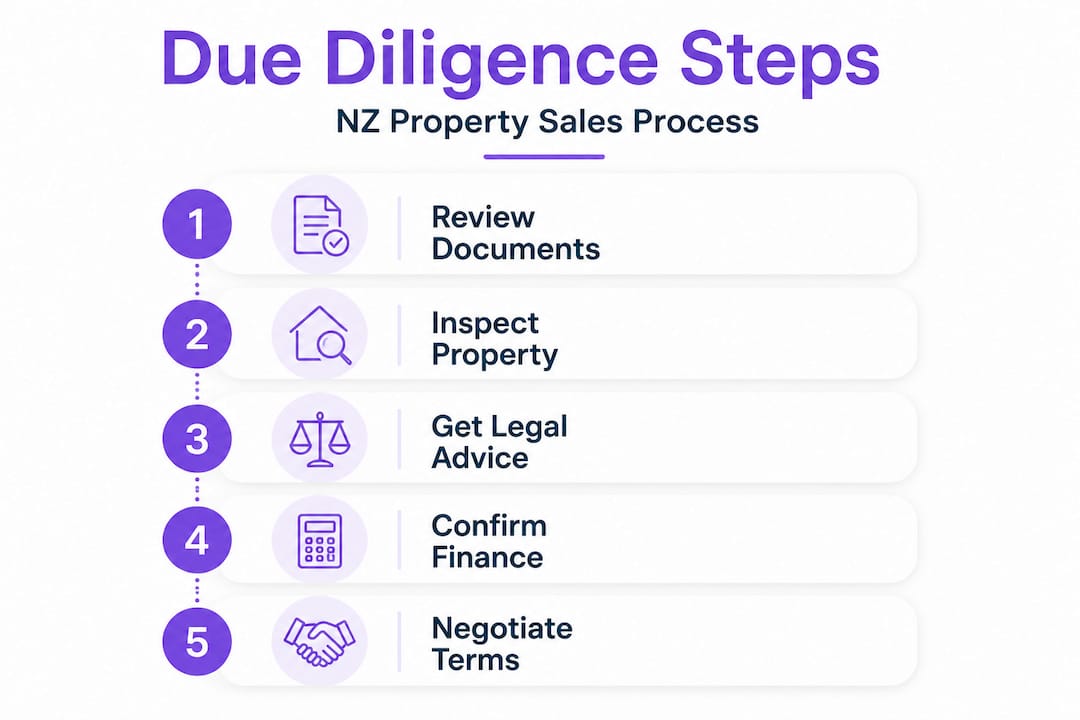
The NZ property sale process includes several checks that typically occur within the due diligence window. The Real Estate Authority of New Zealand advises that buyers arrange and review building inspections, council LIM reports and land information records, and get legal advice before the decision deadline. Each of these steps has real implications for whether your sale proceeds on time.
Here is a numbered breakdown of the key activities that occur during due diligence:
- Building inspection: A qualified inspector assesses the physical condition of the property. Issues like weathertightness problems, structural concerns, or faulty wiring can surface here. If the property has known issues, being upfront early prevents surprises that could kill the deal.
- LIM report review: A Land Information Memorandum (LIM) is a document issued by your local council that summarises everything it holds on record about the property. This includes consented building work, zoning details, drainage information, and any flood risk flags. Ordering a LIM can take up to 10 working days, so timing matters.
- Title search: The buyer’s lawyer will conduct a title search to verify there are no caveats, mortgages, or other encumbrances on the property that could complicate the transfer of ownership.
- Finance confirmation: While some buyers enter due diligence already pre-approved, others use this period to lock in their financing. Any delays with the bank can push the timeline out, which affects you as the seller.
- Legal review of the agreement: The buyer’s solicitor will go through the sale and purchase agreement in detail to ensure the terms are fair, the property matches what was described, and all conditions are clearly stated.
- Property valuation: A registered valuer may be engaged, particularly if the buyer’s lender requires an independent assessment of the home’s worth.
Pro Tip: If you know your property has had any renovations or additions, gather the relevant council consents before you list. Having these documents ready at the start of the due diligence period shows good faith and reduces delays significantly.
How does property condition and sales connect to this process? Quite directly. A property with obvious maintenance issues, unpermitted work, or unclear boundaries will attract more scrutiny during due diligence, extending the period and increasing the chance the buyer pulls out.
“A smooth due diligence process is rarely an accident. It is the result of a seller who prepared the right paperwork, answered questions promptly, and had no hidden surprises waiting to be discovered.”
How long should the due diligence period be?
Knowing what is involved, you will want to ensure the due diligence period suits your situation. Here is how timing works and what you can negotiate.
A commonly quoted timeframe for due diligence in NZ residential deals is around 10 to 15 working days, though it is negotiable and depends on the conditions included in the offer. If the buyer needs finance approval, a LIM, a building report, and a valuation, they will likely ask for closer to 15 days. If they are a cash buyer with a pre-existing inspection, a shorter window is realistic.
| Scenario | Typical timeframe | Key factors |
|---|---|---|
| Standard residential sale | 10 to 15 working days | Finance, LIM, building report |
| Cash buyer, minimal conditions | 5 to 10 working days | Inspection and legal review only |
| Complex or unique property | 15 to 25 working days | Specialist reports, title issues |
| Direct sale to a cash buyer | 3 to 7 working days | Streamlined process, fewer conditions |
What can you, as a seller, do to influence the length of the due diligence period? Quite a bit, actually.
Prepare your paperwork in advance. If you already have a recent LIM report, a current building inspection, and copies of all council consents, you can offer these to the buyer upfront. This removes the need for them to order their own reports and can halve the time required.

Be responsive. Delays often occur simply because the seller is slow to reply to requests for access or documentation. Staying available and organised keeps things moving.
Negotiate clearly. When reviewing legal considerations for sellers, it becomes clear that the due diligence period is a negotiable term like any other. You have the right to propose a shorter window, particularly if you have already provided comprehensive property information.
Pro Tip: Ask your solicitor to prepare a vendor disclosure pack before you go to market. This is a folder of all the property documents, consents, and reports that a buyer might want to review. Buyers who receive this upfront often feel more confident and ask for shorter due diligence periods.
Understanding the difference between a standard and a fast-track sale is important here. Motivated buyers, particularly investors or direct buyers, often carry out their checks faster because they know exactly what they are looking for and do not need to coordinate multiple professionals from scratch.
Common pitfalls and how to avoid them
Having set your due diligence period, it is just as important to avoid common pitfalls, especially if you are selling under pressure.
Research from mortgage specialists highlights that due diligence periods are only as useful as the deadlines and paperwork readiness you set up. If key documents like LIM reports or inspection results are ordered too late, you run out of time to satisfy conditions, and the sale is at risk.
Here are the mistakes sellers most commonly make:
- Leaving document collection to the last minute: A LIM report can take up to 10 working days. If the buyer orders it on day one of a 10-day due diligence window, it may not arrive in time.
- Not disclosing known issues upfront: Sellers who hide defects often see their sales fall through when the building inspection reveals the problem. Disclosure up front protects you legally and keeps the process honest.
- Failing to keep the property accessible: If the buyer cannot schedule their inspector because you are unavailable, every day that passes eats into the due diligence window.
- Relying on verbal agreements: Any changes to the due diligence conditions or timeframe must be in writing to be enforceable. A verbal agreement to extend the period means nothing legally.
- Overlooking unconsented work: Decks, sleepouts, and garage conversions built without council consent show up in title searches and inspections. Buyers often use unconsented work as grounds to renegotiate or withdraw.
| Common pitfall | Risk to sale | Prevention |
|---|---|---|
| Late LIM report order | Sale condition not met | Order LIM before listing |
| Undisclosed defects | Buyer withdrawal or legal action | Get a pre-sale inspection |
| Limited property access | Inspection delays | Clear your schedule during due diligence |
| Verbal condition changes | Disputes over agreement terms | Always confirm changes in writing |
| Unconsented improvements | Renegotiation or withdrawal | Retrospective consent or price adjustment |
For sellers who want practical hassle-free sales tips, the single most effective action is to prepare your property file before you accept any offer. Waiting until after an offer arrives means you are always one step behind.
Pro Tip: Contact your local council and request a property file before you list your home. This gives you a complete picture of what is on record and lets you address any surprises before they reach a buyer’s desk.
An experienced perspective on due diligence for urgent property sales
Conventional advice around due diligence tends to focus on the buyer’s rights and what they should check. That is fair, but it leaves sellers without a clear view of where they are most vulnerable.
Here is what we have observed working with New Zealand homeowners across a wide range of urgent circumstances. The sellers who struggle most during due diligence are not the ones who have problematic properties. They are the ones who have not prepared their documents and cannot respond quickly when a buyer needs information.
Negotiating a shorter due diligence period sounds like the logical solution when you are in a hurry. But in practice, a shorter window with no supporting documentation puts more pressure on everyone and is more likely to collapse the deal. A well-prepared seller who offers the buyer a complete property file on day one can move through a 10-day due diligence period faster than a rushed sale with a 5-day window and no paperwork ready.
The other lesson that rarely gets mentioned is the difference between a motivated buyer and a curious buyer. Not every offer translates to a completed sale. Buyers who ask for extended due diligence periods and then request multiple extensions are often not genuinely committed. Sellers who are aware of why accepting a fast offer from a qualified buyer can be the better path understand this intuitively.
When you are dealing with financial hardship, a relationship breakdown, or the need to relocate quickly, the last thing you need is a drawn-out due diligence process with an uncertain outcome. In these cases, working with a buyer who has already done their checks, knows New Zealand property well, and can move to an unconditional offer quickly is not a compromise. It is a smart decision.
The property market in New Zealand in 2026 rewards preparation and decisiveness. Sellers who enter the market with their documentation organised, their expectations realistic, and their timelines clearly communicated consistently achieve better outcomes, regardless of the conditions they face.
How to simplify your property sale process
If managing the due diligence period still feels overwhelming, there is a faster way to sell your property with confidence.

At easySale.co.nz, we work with New Zealand homeowners who need to sell quickly without the complications of a traditional sale. Whether you are looking at a private house sale in NZ or exploring downsizing solutions, we make the process straightforward. You submit your property details, receive a no-obligation cash offer, and settle on a timeline that works for you. No agent commissions. No waiting on lengthy due diligence conditions. No uncertainty. We buy properties in any condition across New Zealand, and our team understands the urgency that many sellers face. Reach out today and find out how we can help you move forward with clarity and confidence.
Frequently asked questions
What does the due diligence period cover in NZ property sales?
It covers time for the buyer to inspect the property, review council documents, and get legal advice before committing. The REA advises buyers to use this window for building inspections, LIM reports, and legal review before the decision deadline.
Can due diligence periods be negotiated in NZ?
Yes, the length and specific conditions are negotiable between the buyer and seller when the offer is made. A commonly quoted timeframe is 10 to 15 working days, but this can be shortened or extended by agreement.
What happens if documents or checks are not ready in time?
If a LIM report or building inspection is not completed within the agreed period, the buyer may be unable to satisfy their conditions and the sale could fall through. Ordering key documents late is one of the most common reasons due diligence conditions are not met.
Is a due diligence period required for all NZ property sales?
It is not a legal requirement, but it is a very common condition included in sale and purchase agreements to protect both parties. In NZ residential transactions, this clause gives the buyer an investigation window before the agreement becomes unconditional.
Recommended
