
What is a distressed property? A guide for NZ homeowners


TL;DR:Many New Zealand homeowners are unaware that their property can be classified as distressed without obvious signs of crisis. A distressed property is typically in poor physical condition, facing financial hardship, or involved in legal or emotional issues requiring a quick sale. Acting early and understanding the different types of distress enable homeowners to choose the most effective solution and minimize losses.
Many New Zealand homeowners are surprised to discover that their property could be classified as “distressed” without any obvious signs of crisis. A distressed property in New Zealand is typically a home in poor physical condition, facing financial distress such as mortgage default, or involved in insolvency or relationship breakdowns where the owner needs a quick, hassle-free sale. The reality is that distress can come from many directions, financial pressure, legal complications, or physical damage, and each situation has its own set of options. This guide cuts through the confusion, giving you clear definitions, practical context, and honest advice on what to expect.
Table of Contents
- What is a distressed property in New Zealand?
- Why does a property become distressed?
- Types of distressed sales and what to expect
- What happens after you sell a distressed property?
- Our perspective: Common mistakes and what actually helps NZ homeowners
- Need a fast, hassle-free sale? Here’s how we can help
- Frequently asked questions
Key Takeaways
| Point | Details |
|---|---|
| Distressed property meaning | Distressed properties are those facing serious financial, legal, or physical problems that drive urgent sales in NZ. |
| Key causes | Common triggers include mortgage default, relationship splits, building defects, or disaster damage. |
| Sale options | Homeowners can sell quickly via cash sales or enter formal processes like mortgagee sale or liquidation. |
| After sale impacts | Quick sales resolve debt and stress but may come with a lower selling price. |
| Best approach | Acting early and accepting a realistic offer usually delivers the best long-term outcome for NZ homeowners under pressure. |
What is a distressed property in New Zealand?
The term “distressed property” gets thrown around loosely, and that creates a lot of confusion. Some people assume it only applies to homes headed for bank repossession. Others think it means a rundown property with serious structural problems. The truth is broader than either of those assumptions.
In the New Zealand context, a distressed property is any home where the owner needs to sell quickly because of circumstances that make a traditional, agent-led sale impractical or too slow. This can include financial hardship, legal disputes, physical damage, or personal life changes that demand a fast resolution.
Here are some of the most common situations that classify a property as distressed:
- Missed mortgage payments leading toward default or repossession
- Relationship breakdown or divorce, where the property needs to be sold to split assets
- Meth contamination, which can make a home unsaleable through normal channels
- Leaky building syndrome, a widespread issue in New Zealand affecting homes built in the 1990s and early 2000s
- Flood or storm damage, particularly relevant after recent weather events in Auckland and Hawke’s Bay
- Inherited properties that beneficiaries cannot afford to maintain or do not wish to keep
- Unconsented renovations that complicate the title and make a standard sale difficult
- Insolvency or bankruptcy, where assets must be liquidated to repay creditors
“A distressed property in New Zealand is typically a home in poor physical condition, facing financial distress such as mortgage default, or involved in insolvency or relationship breakdowns, where owners seek quick, hassle-free sales.” — Waterstone Insolvency
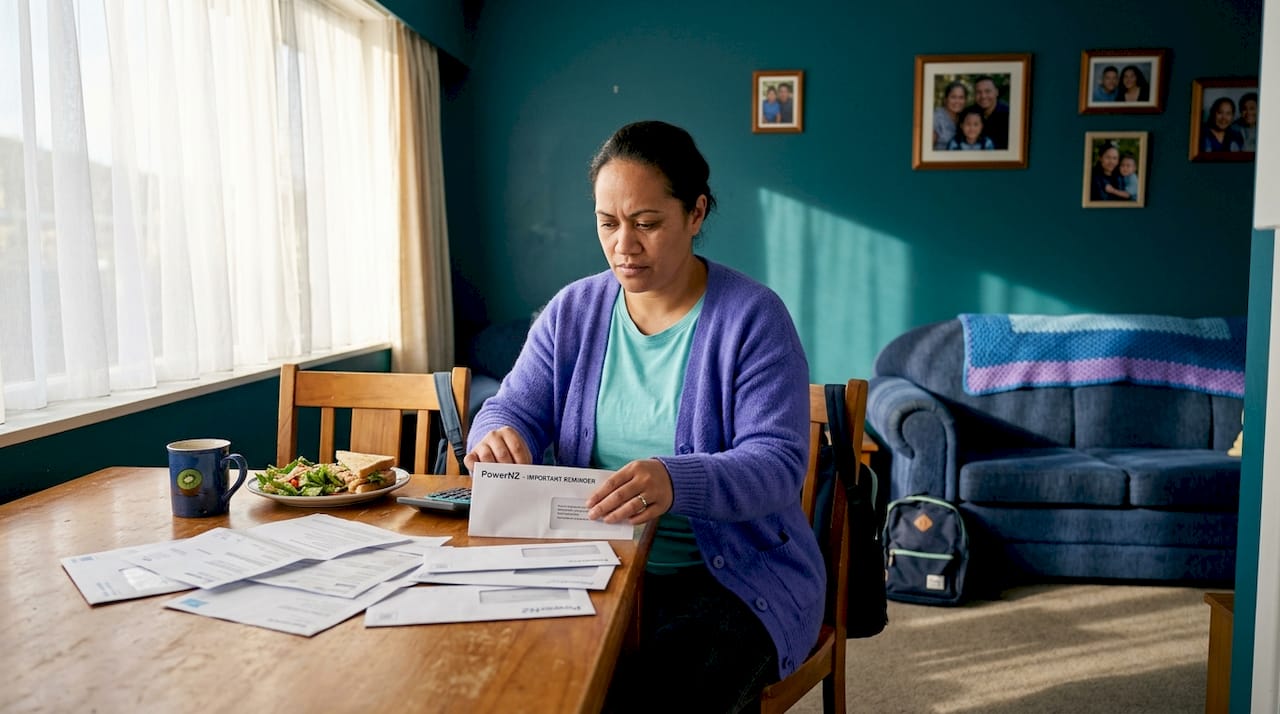
One of the most important things to understand is that distress does not always mean neglect. A well-maintained home can become distressed overnight if the owner loses their job, separates from a partner, or receives flood damage that insurance refuses to cover. Recognising the category your situation falls into is the first step toward finding the right solution. If you are exploring options for selling property quickly, understanding whether your property qualifies as distressed gives you a clearer picture of the tools available to you.
Why does a property become distressed?
With the definition clear, it is important to understand why properties become distressed, so you know which situations push homes into this category. The causes vary widely, but they tend to cluster into three main groups: financial triggers, legal complications, and physical damage.
Common distress causes and their impact
| Cause | Typical impact | Urgency level |
|---|---|---|
| Mortgage default | Bank initiates repossession process | High |
| Relationship breakdown | Court-ordered sale or forced timeline | High |
| Meth contamination | Unsaleable without remediation | High |
| Leaky building syndrome | Major repair costs, lender reluctance | Medium to high |
| Flood or storm damage | Uninsured loss, council buyout schemes | High |
| Insolvency or liquidation | Liquidator manages sale impartially | High |
| Unconsented renovations | Title complications, buyer hesitancy | Medium |
| Inherited unwanted property | Holding costs and legal estate process | Medium |
Understanding where your situation sits on this table helps you gauge how quickly you need to act and which type of sale is most appropriate.
Physical damage is one of the fastest routes to property distress. Selling a damaged property in New Zealand involves additional considerations around disclosure, remediation costs, and buyer financing, since most lenders will not approve mortgages on homes with significant structural or contamination issues. This leaves cash buyers as the most practical option in many cases.
Financial distress tends to escalate quickly. Once you miss mortgage payments, interest and penalties accumulate, and the lender’s legal rights increase over time. Acting early, before the bank initiates formal default proceedings, gives you significantly more control over the outcome.
Legal distress, such as relationship property disputes or estate complications, can be drawn out and emotionally exhausting. Insolvency and liquidation situations add another layer, where a court-appointed liquidator sells the property impartially to recover creditor debts, with little regard for the owner’s preferred price or timeline.
Weather events have also created a new category of distressed property in New Zealand. After the 2023 Auckland floods and Cyclone Gabrielle, thousands of homeowners found themselves with properties that could no longer be insured or mortgaged. Some were bought out through government and council schemes, effectively categorising them as distressed for relief purposes. These are urgent home sale reasons that many homeowners never anticipated facing.
The numbered steps below outline how financial distress typically progresses:
- Initial missed payment — the lender issues a reminder and charges a late fee
- Second or third missed payment — formal default notice is issued
- Lender issues a Property Law Act notice — this begins the formal repossession timeline
- Negotiation window — this is your best opportunity to act independently
- Mortgagee sale initiated — the bank takes control of the sale process
Pro Tip: The earlier you recognise the signs you may need to sell fast, the more options you have. Acting at step one or two preserves far more control than waiting until the bank initiates proceedings at step four or five.
Types of distressed sales and what to expect
Knowing what causes property distress, let us look at the main ways these homes are sold and why it matters which route you take. There are three primary pathways: a direct cash sale, a mortgagee sale, and a liquidation sale. Each has very different implications for you as the homeowner.
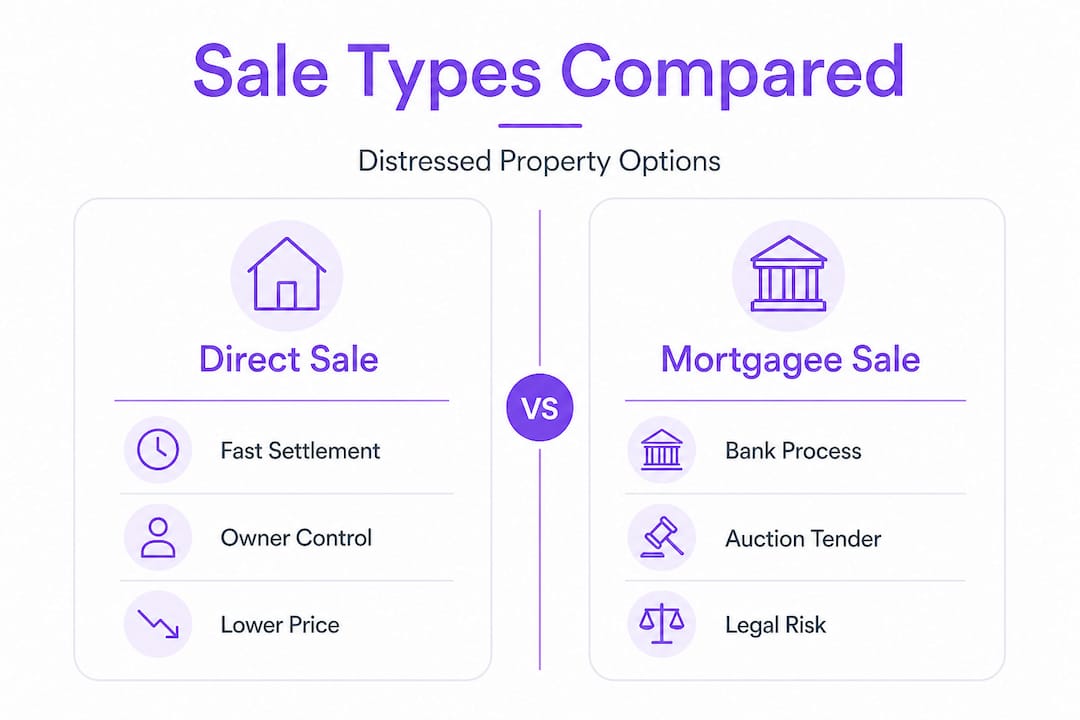
Comparison of distressed sale types
| Sale type | Speed | Owner control | Price outcome | Key risk |
|---|---|---|---|---|
| Direct cash sale | Very fast (days to weeks) | High | Below market, but fair | Accepting too low an offer |
| Mortgagee sale | Slow (months) | Very low | Often significantly below market | Bank prioritises debt recovery only |
| Liquidation sale | Variable | None | Unpredictable | Creditor claims reduce your proceeds |
Mortgagee sales are governed by the Property Law Act 2007, specifically section 119. Under this process, a lender must issue 20 working days’ notice after a default before selling the property by auction or tender “as is” with no warranties. This means the bank is not obligated to get you the best price. It is only required to recover what is owed. Any surplus goes to you, but any shortfall remains your liability.
Cash sales to direct buyers like easySale.co.nz prioritise speed and certainty. The trade-off is that the offer will typically be below market value. However, for many homeowners, the savings in agent fees, holding costs, legal delays, and emotional toll make a cash sale genuinely competitive. Understanding why properties sell below market value in distressed circumstances helps you make a realistic assessment of what each option actually puts in your pocket.
Liquidation sales apply when insolvency or court proceedings are involved. In these cases, you have minimal input. The liquidator’s job is to maximise creditor recovery, not to protect your equity or timeline preferences.
Here is a quick summary of the pros and cons of each sale type:
- Cash sale pros: Fast settlement, no agent fees, sell as-is, certainty of outcome
- Cash sale cons: Price is below market value
- Mortgagee sale pros: Bank manages the process
- Mortgagee sale cons: You lose control, timeline is slow, price recovery is unpredictable, remaining debt stays with you
- Liquidation pros: Impartial process, legal protection
- Liquidation cons: No owner control, costs reduce your return, timing is uncertain
For most homeowners who still have the ability to act independently, a direct cash sale is the option that offers the most practical certainty.
What happens after you sell a distressed property?
Selling is only part of the equation. What follows is equally important for your financial recovery. Many homeowners focus so heavily on completing the sale that they are caught off guard by what comes next.
Here is a step-by-step look at what typically happens after a distressed property sale:
- Sale proceeds are received by your solicitor or conveyancer into a trust account
- Mortgage debt is settled first, including any outstanding principal, interest, and fees
- Legal and professional fees are deducted, including conveyancing costs and any agent commission (if applicable)
- Any remaining creditor claims are addressed, particularly in insolvency or liquidation cases
- Surplus funds (if any) are returned to you, the seller
- Title is transferred to the new owner, completing the transaction
Distressed property sales in situations like insolvency, liquidation, or relationship breakdown are fundamentally about resolving obligations efficiently. The goal is a clean exit that lets you move forward financially and emotionally.
The practical reality is that in many distressed sales, the proceeds barely cover what is owed. This can feel disheartening. But it is important to recognise that completing the sale ends the ongoing financial drain of holding costs, penalties, and mounting debt. A resolved situation, even with minimal surplus, is almost always better than a prolonged one.
For complex situations involving multiple creditors or legal disputes, your solicitor plays an essential role in ensuring funds are distributed correctly and that you are protected from future claims. Reviewing the steps to sell a damaged property fast gives you a clearer picture of the full process from listing to settlement.
Pro Tip: Before you sign any sale agreement, get written confirmation from your lender or liquidator that the sale proceeds will fully discharge your obligations. A verbal agreement is not sufficient protection.
Our perspective: Common mistakes and what actually helps NZ homeowners
Here is something most guides will not tell you plainly: the biggest mistake distressed property owners make is chasing the highest possible price at the expense of time and certainty. It is an understandable instinct. Your home likely represents your most significant financial asset. But in a distressed situation, the pursuit of top dollar can cost you far more than the difference in price.
We have seen homeowners refuse a fair cash offer in April, hold out for a better result through a traditional agent, and then end up in a mortgagee sale by September with significantly less in their pocket and months of stress in between. The numbers rarely work in favour of waiting when debt is accumulating, legal fees are mounting, and your energy is being consumed by the process.
There is a phrase used in financial circles: your first loss is your best loss. In distressed property situations, this holds true more often than people expect. Accepting a certain outcome at a modest discount is frequently more valuable than holding out for an uncertain outcome at full price.
Speed and certainty have genuine financial value. When you factor in agent commissions (typically 2 to 3.5% in New Zealand), legal fees, holding costs like rates and insurance, and the interest accruing on your debt during a prolonged sales campaign, a fast cash offer that appears lower on paper can actually deliver a comparable or better net result.
This does not mean you should accept any offer without thought. It means you should evaluate your options with a realistic accounting of all costs, not just the headline price. Consider how selling investment properties quickly follows the same logic: the cost of delay often exceeds the benefit of waiting.
What actually helps NZ homeowners in distress? Acting early, seeking professional legal and financial advice promptly, and being willing to prioritise a clean, swift resolution over a marginal price improvement.
Need a fast, hassle-free sale? Here’s how we can help
If you have read this far and recognised your own situation in any of these scenarios, you are already ahead of many homeowners who wait too long to seek help. Whether you are dealing with mortgage stress, damage, a relationship breakdown, or an inherited property you cannot afford to hold, there is a practical path forward.

At easySale.co.nz, we buy properties across New Zealand in any condition, with no agent fees, no commission, and no obligation. Our process is straightforward: submit your property details, receive a fair cash offer, and settle on a timeline that works for you. Whether you are considering a private house sale or exploring options after a life change like retirement or downsizing, we are here to help you move forward with confidence and clarity. Reach out today for a confidential, no-obligation conversation about your property.
Frequently asked questions
What types of property damage make a home distressed in New Zealand?
Severe issues like leaky building syndrome, meth contamination, unconsented renovations, or flood damage can quickly make a property distressed and difficult to sell through traditional channels.
How long does a typical mortgagee sale take?
After default, a mortgagee sale requires at least 20 working days’ notice before the property is sold by auction or tender, and the full process commonly takes several months.
Can I sell my home myself if it is distressed, or must the bank or liquidator handle it?
Owners can initiate a sale independently before formal legal processes take over, which is why acting early is so important in distressed situations.
Will I always lose money if I sell distressed?
Distressed sales typically result in below-market prices, but selling swiftly often prevents far greater financial losses through accumulated debt, holding costs, and legal fees.
Is flood damage considered property distress in New Zealand?
Yes. Weather events like the Auckland floods have led to government and council buyout schemes, formally classifying affected homes as distressed properties and providing relief options for owners.


