
What is a mortgagee sale? Your 2026 NZ guide

TL;DR:A mortgagee sale is a legal process in New Zealand where lenders sell a borrower’s property to recover unpaid mortgage debt after default. Early action by borrowers can often prevent the sale, which occurs within three to six months of missed payments. Buyers should understand that these properties are sold “as is,” with limited warranties and potential liabilities.
A mortgagee sale is a legal process where a lender sells a borrower’s property to recover an outstanding mortgage debt after the borrower defaults on repayments. The lender is the mortgagee and the borrower is the mortgagor. Understanding what is mortgagee sale means, and how it affects you, is critical whether you are a homeowner facing financial difficulty or an investor eyeing a potential purchase. The Property Law Act 2007 governs this process in New Zealand, giving lenders specific rights and imposing clear obligations on all parties involved.
How does the mortgagee sale process work in New Zealand?
The mortgagee sale process follows a defined legal sequence from the first missed payment through to settlement. Knowing each stage gives you the best chance to act before it is too late.
The typical timeline runs from 3 to 6 months between a missed mortgage payment and the actual sale. That window is shorter than most borrowers expect, which is why early action matters so much.
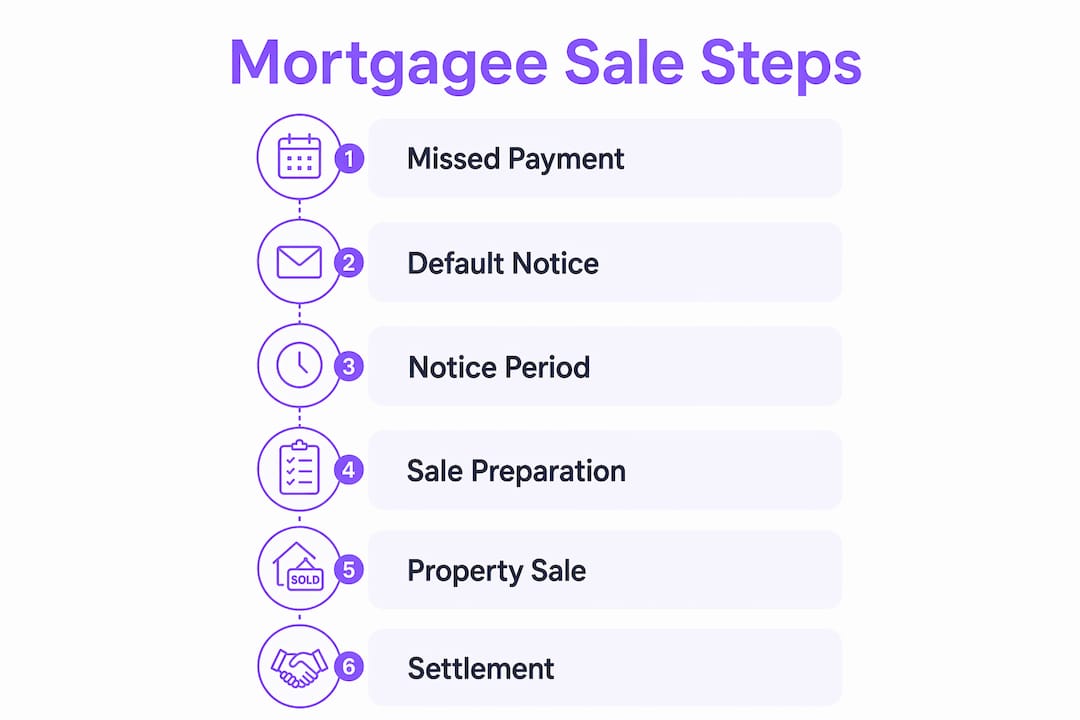
Here is how the process unfolds, step by step:
- Missed payment. The borrower misses one or more mortgage repayments. The lender records the default and begins internal review.
- Formal notice of default. The lender issues a written notice. Under the Property Law Act 2007, the lender must give the borrower at least 20 working days to remedy the default before proceeding. This is a legal minimum, not a courtesy.
- Failure to remedy. If the borrower does not pay the arrears or reach an agreement within the notice period, the lender can appoint agents to prepare the property for sale.
- Valuation and marketing. The lender engages a registered valuer and a real estate agent. Banks have a duty of good faith and must take reasonable care to obtain a fair market price, though they are not required to achieve the highest possible price.
- Sale and settlement. The property is listed and sold, usually by auction or tender. Once a buyer signs an unconditional agreement, the sale proceeds to settlement.
Borrowers retain the right to stop the sale at almost any point before settlement. Paying all arrears, default interest, and the bank’s legal costs will halt the process. The key is acting before the unconditional agreement is signed.
Pro Tip: If you receive a formal notice of default, contact your lender the same day. Lenders prefer resolving arrears early and may offer a hardship variation or repayment plan that stops the sale entirely.
What are the risks for buyers at a mortgagee sale?
Mortgagee sale properties attract buyers because they can sell below market value. That opportunity comes with real risks that require careful preparation.
- “As is, where is” condition. Mortgagee sales provide minimal warranties about property condition or legal compliance. The lender is selling to recover debt, not to guarantee the home is in good order. Any repairs, compliance issues, or defects become the buyer’s problem.
- Limited access for inspections. Pre-purchase inspections may be restricted or refused. Buyers often cannot conduct a full building inspection before committing, which increases the risk of hidden defects.
- Immediate responsibility upon signing. Buyers become responsible for the property from the moment the unconditional agreement is signed. That includes any occupants who refuse to leave, pre-existing damage, and outstanding rates or body corporate fees.
- Occupant eviction risk. If the previous owner or tenants remain in the property after settlement, the buyer must pursue separate legal action to gain possession. This adds cost and delay.
- Strict contract terms. Mortgagee sale contracts offer limited scope for negotiation. Finance conditions and due diligence clauses are often excluded or tightly restricted.
- Outstanding liabilities. Unpaid council rates, water charges, and body corporate levies can transfer to the buyer. Always obtain a rates certificate and body corporate records before bidding.
Mortgagee sales remove many standard buyer protections. That is not a reason to avoid them entirely, but it is a reason to treat due diligence as non-negotiable.
Pro Tip: Always engage a property lawyer before bidding at a mortgagee sale. Review the title, check for caveats or encumbrances, and confirm there are no outstanding rates or levies. A $500 legal review can save you tens of thousands.
What are the financial and legal implications for borrowers?
A mortgagee sale does not automatically clear a borrower’s debt. The financial consequences can follow you long after the property is sold.

Sale proceeds are applied in a specific order. The table below shows how funds are distributed:
| Priority | What it covers |
|---|---|
| First | Sale costs (agent fees, legal fees, marketing) |
| Second | Outstanding mortgage balance and accrued interest |
| Third | Other registered creditors or second mortgages |
| Fourth | Any surplus returned to the borrower |
If the sale price does not cover the full mortgage balance and costs, the shortfall remains the borrower’s personal liability. The lender can pursue the borrower through the courts to recover that amount. In serious cases, this can lead to bankruptcy proceedings.
The credit impact is significant. A mortgagee sale appears on your credit record and affects your ability to borrow for years. Lenders view it as a serious default, and mortgage applications after a mortgagee sale face much higher scrutiny.
New Zealand borrowers have legal rights under the Property Law Act 2007, including the right to receive proper notice and the right to remedy the default. If a lender fails to follow correct process, the borrower may have grounds to challenge the sale. Getting legal advice early protects those rights.
Early communication with your lender is the single most effective step you can take. Lenders prefer resolving arrears before a sale because the process is costly and time-consuming for them too.
How can borrowers and investors manage or avoid mortgagee sales?
Prevention is far less costly than recovery. Whether you are a homeowner in arrears or an investor assessing risk, these options are worth knowing.
- Contact your lender early. Proactive hardship discussions give you the best chance of a workable solution. Most banks have dedicated hardship teams and can offer repayment deferrals, reduced payments, or loan restructuring.
- Consider a voluntary sale. Selling your property yourself, before the bank forces a sale, gives you more control over the price and timeline. A voluntary sale typically achieves a better price than a mortgagee sale and avoids the legal costs the bank adds to your debt.
- Explore refinancing. If your current lender will not negotiate, another lender or a mortgage broker may offer refinancing that clears the arrears and resets your repayments. Act before the formal notice period expires.
- Look into bridging finance. Short-term bridging loans can cover arrears while you arrange a longer-term solution. These carry higher interest rates, so they work best as a temporary measure.
- Get professional advice. A financial counsellor, mortgage broker, or property lawyer can assess your specific situation and identify options you may not have considered. Borrowers often realise their options too late, which is why early expert advice is so valuable.
- Budget and plan ahead. If you are an investor, stress-test your portfolio against interest rate rises and vacancy periods. Properties that cannot cover their costs in a downturn are the ones most at risk.
Mortgagee sales can be an opportunity for buyers with strong financial readiness and a clear understanding of the risks. For borrowers, they represent a last resort that is almost always avoidable with early action.
Key takeaways
A mortgagee sale is a legal debt recovery process governed by the Property Law Act 2007, and early action by the borrower is the most reliable way to prevent it.
| Point | Details |
|---|---|
| Legal basis | The Property Law Act 2007 governs mortgagee sales and sets minimum notice requirements. |
| Notice period | Lenders must give borrowers at least 20 working days to remedy a default before proceeding. |
| Buyer risk | Mortgagee sale properties are sold “as is, where is” with minimal warranties and strict contract terms. |
| Borrower liability | If the sale price does not cover the full debt, the shortfall remains the borrower’s personal responsibility. |
| Best prevention | Early hardship discussions with your lender are the most effective way to avoid a mortgagee sale. |
My honest view on mortgagee sales after years in NZ property
The biggest mistake I see borrowers make is waiting. They receive a default notice, feel overwhelmed, and do nothing for weeks. By the time they seek advice, the bank has already engaged agents and the costs are mounting. The 20 working day notice period sounds generous until you realise how quickly it passes when you are under financial stress.
The second mistake is assuming the bank is the enemy. Lenders do not want to run a mortgagee sale. It costs them money, takes months, and rarely recovers the full debt. When borrowers contact their lender early and honestly, the outcome is almost always better than going silent.
For buyers, I have seen people walk into mortgagee sales thinking they are getting a bargain, only to discover the property has unpaid rates, a tenant who will not leave, and structural issues that were never disclosed. The “as is, where is” clause is not a formality. It is a genuine transfer of risk. Go in with a lawyer, a building inspector, and finance already approved. If you cannot do all three, you are not ready to bid.
The opportunity in mortgagee sales is real, but it rewards preparation, not optimism.
— Aaron
Facing financial pressure? Easysale can help
If you are a homeowner in financial difficulty and a mortgagee sale feels like it is closing in, a fast voluntary sale may be your best option. Selling before the bank forces the issue puts you in control of the price and the timeline.

Easysale buys residential properties across New Zealand in any condition, with no real estate agents, no commission fees, and no drawn-out negotiations. You submit your property details, receive a no-obligation cash offer, and settle on a timeline that works for you. For homeowners facing arrears or financial stress, Easysale’s as-is cash purchase model offers a clear, fair path forward without the added costs of a forced sale. Get in touch with Easysale today to find out what your property is worth.
FAQ
What is a mortgagee sale in New Zealand?
A mortgagee sale is when a lender sells a borrower’s property to recover an unpaid mortgage debt after the borrower defaults on repayments. The process is governed by the Property Law Act 2007.
How long does the mortgagee sale process take?
The typical timeline from a missed payment to sale is 3 to 6 months, including a mandatory notice period of at least 20 working days for the borrower to remedy the default.
Can a borrower stop a mortgagee sale?
Yes. A borrower can halt the sale at almost any point before settlement by paying all arrears, default interest, and the bank’s legal costs in full.
What does “as is, where is” mean for buyers?
It means the property is sold in its current condition with no warranties from the lender. The buyer takes on full responsibility for any defects, compliance issues, or outstanding liabilities from the moment the unconditional agreement is signed.
What happens if the sale price does not cover the full mortgage debt?
The shortfall remains the borrower’s personal liability. The lender can pursue the borrower through the courts to recover the remaining amount, which in serious cases can lead to bankruptcy.
Recommended
