
Leasehold property sale explained for NZ sellers

TL;DR:Selling leasehold properties in New Zealand involves unique legal and documentation challenges that can prolong the process and impact sale prices. Early preparation—such as obtaining the management pack, reviewing lease terms, and addressing potential issues—significantly improves outcomes and buyer confidence. Working with experts and considering alternative sale options like Easysale can help navigate complexities efficiently.
Selling a property in New Zealand is rarely simple, but when that property is leasehold, the process brings a whole extra layer of questions. Many homeowners reach the point of wanting to sell before they fully understand what leasehold ownership means for them as a seller. To properly explain leasehold property sale, you need to understand the ownership structure itself, the documentation involved, the legal steps, and the real risks that can slow things down or reduce your sale price. This article walks you through all of it, clearly and practically.
Table of Contents
- Key takeaways
- What is leasehold property in New Zealand
- The leasehold sale process step by step
- Challenges and risks in leasehold sales
- Preparing your leasehold property for sale in 2026
- Leasehold vs freehold sales: timeline and complexity
- My honest take on selling leasehold
- How Easysale can help you sell your leasehold property
- FAQ
Key takeaways
| Point | Details |
|---|---|
| Leasehold vs freehold | You own the building but not the land, which creates extra obligations and documentation for sellers. |
| Management pack is critical | Order this document early as it can take weeks to obtain and will delay your sale if left too late. |
| Lease length matters greatly | Leases under 80 years can limit buyer mortgage eligibility, shrinking your buyer pool significantly. |
| Sales take longer | Leasehold conveyancing takes substantially longer than freehold, so plan your timeline accordingly. |
| Early preparation pays off | Reviewing ground rent, service charges, and lease terms before listing prevents costly surprises later. |
What is leasehold property in New Zealand
Understanding leasehold ownership is the starting point for any seller. Leasehold property means you own the right to occupy a building or dwelling for a fixed period of time, but you do not own the land it sits on. The land is owned by a separate party, often called the freeholder or ground landlord. This is a fundamentally different arrangement from freehold ownership, where you own both the building and the land outright.
In New Zealand, leasehold properties appear across various dwelling types including apartments, units, and some standalone homes, particularly in areas where land is held by organisations, councils, or iwi. The lease agreement sets out the terms under which you can occupy and use the property, including how long the lease runs, what fees you pay to the landowner, and what conditions apply to selling or modifying the property.
The distinction matters enormously when you come to sell. A freehold buyer is purchasing complete, unconditional ownership. A leasehold buyer is purchasing a time-limited right to occupy, with ongoing financial obligations to a third party they have no direct relationship with yet. That changes everything about how buyers assess risk and value.
Pro Tip: Before listing your leasehold property, dig out your original lease document and make a note of the remaining term, annual ground rent, and any rent review clauses. These three factors will shape your entire sale strategy.
Leasehold vs freehold: a direct comparison
| Feature | Leasehold | Freehold |
|---|---|---|
| Land ownership | Landowner (freeholder) | Property owner |
| Typical annual costs | Ground rent plus service charges | Rates and maintenance only |
| Selling process | More complex, extra documentation | Simpler, fewer third parties |
| Buyer financing | Lenders have specific lease length requirements | Fewer lender restrictions |
| Ongoing obligations | To landowner and body corporate | To local council only |
The leasehold sale process step by step
Selling a leasehold property follows the same broad arc as any property sale, but with additional layers of documentation and third-party involvement that freehold sellers never deal with. Knowing what is required ahead of time saves you weeks of stress.
Here is the typical sequence you will work through:
- Obtain your lease documents. Your solicitor will need the original lease agreement and any deed of variation. If you cannot locate them, your solicitor can source them from Land Information New Zealand or through the managing agent.
- Order the management pack. This is the single most important document in the leasehold sale process. The management pack contains ground rent records, service charge accounts, building insurance details, details of any major works planned or completed, and information about disputes or building safety issues. It can take four to eight weeks to obtain, so order it immediately when you decide to sell.
- Engage a solicitor experienced in leasehold conveyancing. Leasehold sales involve specific legal enquiries that a general conveyancer may not handle efficiently. Choose someone with a clear track record in this area.
- Prepare your disclosure documents. You will need to provide service charge accounts for the last two to three years, ground rent receipts, building insurance certificates, and details of any planned major works or current disputes with the managing agent.
- Respond to buyer and lender enquiries. Buyers purchasing leasehold properties raise more legal questions than freehold buyers. Their solicitors will scrutinise every line of the lease and the management pack. Respond promptly and completely.
Pro Tip: Do not wait for a buyer before ordering your management pack. Order it the moment you decide to sell. A well-prepared management pack that is ready from day one tells buyers you are a serious, organised seller, and it removes one of the most common causes of sale delays.
The key documents you need ready before listing include:
- The original lease and any variation deeds
- Three years of service charge accounts
- Ground rent receipts and any rent review correspondence
- Building insurance policy documentation
- Details of any major works completed or budgeted
- Minutes from any body corporate or management committee meetings
- Confirmation of no ongoing disputes with the freeholder or managing agent
Leasehold conveyancing takes 8 to 14 weeks, compared to six to ten weeks for freehold. That gap exists almost entirely because of the time spent waiting for management packs and responding to additional legal enquiries. Getting ahead of this is the single most effective thing you can do as a seller.
Challenges and risks in leasehold sales
Leasehold property sales carry risks that freehold sellers simply do not face. Understanding these risks lets you address them before they become problems that stall your sale or chip away at your price.
The most significant issues sellers encounter include:
- Short lease terms. Mortgage lenders typically require 70 to 85 years remaining on a lease at the end of the mortgage term. A buyer taking a 25-year mortgage today would need roughly 90 to 95 years on the lease currently. If your lease falls below 80 years, your buyer pool shrinks dramatically because many lenders will not approve finance on the property at all.
- Problematic ground rent clauses. High ground rents and doubling clauses can trigger lender refusal and cause buyers to walk away. If your lease contains a clause that doubles ground rent every ten years, buyers will flag this immediately.
- Escalating service charges. Service charges rising over 50% in recent years have made buyers cautious about future affordability. If your service charge history shows dramatic increases without clear justification, buyers will either negotiate heavily or pull out entirely.
- Managing agent responsiveness. If the managing agent is slow to respond to enquiries or provide documents, your sale will stall. This is outside your direct control but still your problem to manage.
- Building safety concerns. Any unresolved building remediation issues or outstanding cladding work will create serious buyer hesitancy and make financing very difficult.
Buyers of leasehold properties are taking on obligations and costs they cannot fully predict at the time of purchase. When a seller cannot provide clear, up-to-date financial records or a transparent picture of management quality, buyers either price in the risk or walk away. Transparency is not optional. It is the foundation of a successful leasehold sale.
The practical steps to address these risks before listing are to check your remaining lease term and investigate extension options, review your last three years of service charge accounts for anything unusual, and speak with your managing agent about their process and typical response times. You can find more about common sale hurdles that affect NZ property owners more broadly.
Preparing your leasehold property for sale in 2026
Getting your leasehold property properly prepared before it goes to market is where sellers either gain an advantage or lose one. The 2026 market has seen buyers become more risk-averse about leasehold properties, making preparation more important than ever.
Start with your lease term. If you have fewer than 85 years remaining, speak to a solicitor about a lease extension before you list. Extending a lease is a legal process that takes time and costs money, but it dramatically expands your buyer pool and supports your asking price. Do this early because the process cannot happen quickly.
Next, get your service charge records in order. Pull together the last three years of accounts and check them for accuracy, any outstanding arrears, and any major works that have been billed but not yet resolved. Clearing arrears before listing removes a common negotiation trigger that buyers use to reduce their offer.
Other key preparation steps include:
- Request a draft management pack from your managing agent so you understand exactly what buyers will see
- Review your building insurance to confirm it is current and the coverage levels are appropriate
- Prepare a simple summary for buyers covering monthly costs, upcoming works, and management contact details
- Be upfront in your marketing about ground rent and service charge amounts so buyers are not surprised later
Pro Tip: Proactively sharing service charge history and details of any upcoming major works with interested buyers, before they ask, builds trust and gives you more control in negotiations. Surprises discovered late in the process are far more damaging than information shared early.
Pricing your leasehold property honestly is also part of preparation. If your lease is short or your service charges are high, price the property to reflect that reality. Overpricing and then accepting a large reduction after due diligence looks worse to buyers than a well-considered asking price from the start.
Leasehold vs freehold sales: timeline and complexity
If you are weighing up what to expect from a leasehold sale compared to a freehold one, the differences in timeline and complexity are real and worth planning for.
Leasehold sales take an average of 155 days from offer to exchange, compared to just 97 days for freehold sales. That is nearly two extra months. The fall-through rate for leasehold sales also runs higher, at 43% compared to 36% for freehold. These figures reflect the additional friction created by documentation delays, legal enquiries, and buyer uncertainty about ongoing costs.
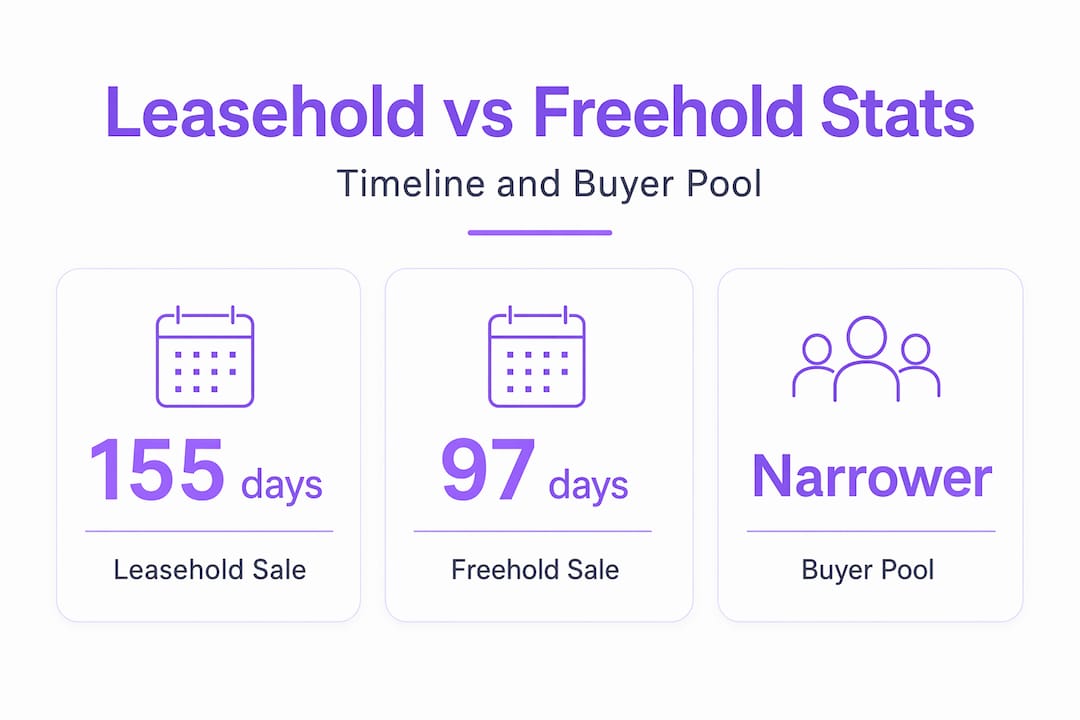
| Metric | Leasehold | Freehold |
|---|---|---|
| Average days to exchange | 155 days | 97 days |
| Fall-through rate | 43% | 36% |
| Conveyancing duration | 8 to 14 weeks | 6 to 10 weeks |
| Key additional documents | Management pack, lease, service charge accounts | Title only |
| Mortgage lender restrictions | Lease length and ground rent conditions apply | Few restrictions |
The buyer pool for leasehold properties is also narrower. Cash buyers are far less constrained than mortgage buyers, but they are also more likely to negotiate a discount. Mortgage lenders apply specific lease length and ground rent criteria that freehold properties never trigger. Understanding the full property sale process in NZ before you list helps you set realistic expectations for how your leasehold sale will differ.
My honest take on selling leasehold
I have worked with many sellers who did not realise their property was leasehold until they were already in the process of listing it. That single discovery changed their entire sale timeline and, in some cases, their expected sale price. The confusion is understandable, but it is avoidable.
What I have seen consistently is that sellers who engage with leasehold complexity early, rather than hoping buyers will not notice it, get better outcomes. Ordering the management pack before finding a buyer, understanding your lease term, and knowing your service charge history are not optional extras. They are the foundation of a sale that actually completes.
The perception that leasehold properties are unsellable is genuinely wrong. They are sellable. They just require more preparation, more transparency, and more patience. Sellers who approach them with that mindset tend to do well. Those who treat a leasehold sale like a freehold sale tend to get unpleasant surprises halfway through.
My practical advice: treat the management pack like your most important asset in the sale. Read it before your buyer does. Fix what you can fix, explain what you cannot, and price honestly. That approach removes most of the risk.
— Aaron
How Easysale can help you sell your leasehold property
If your leasehold property feels like it is too complicated, too slow, or too uncertain for the traditional market, Easysale offers a straightforward alternative for NZ homeowners.
Easysale buys properties directly, including leasehold ones, without requiring you to produce a management pack, extend your lease, or negotiate with a managing agent on your buyer’s behalf. You receive a fair cash offer with no agent commissions, no hidden fees, and no drawn-out conveyancing timeline. Whether your lease is short, your service charges are complicated, or you simply need to sell quickly and cleanly, Easysale works around your situation. Visit Easysale to submit your property details and receive a no-obligation offer on your timeline.
FAQ
What does leasehold mean in a property sale?
Leasehold means you own the right to occupy a property for a set period but do not own the land. When selling, you transfer that right to the buyer along with all the associated lease obligations.
How long does a leasehold property sale take?
Leasehold sales take significantly longer than freehold sales. Research shows leasehold transactions average 155 days from offer to exchange, compared to 97 days for freehold.
What is the management pack and why do I need it?
The management pack is a document prepared by the managing agent that contains financial, legal, and building management details. It can take four to eight weeks to obtain and is required by the buyer’s solicitor before the sale can complete.
Does a short lease affect my ability to sell?
Yes. Most mortgage lenders require a lease to have 70 to 85 years remaining at the end of the mortgage term. A short lease significantly limits your buyer pool to cash buyers only.
Is leasehold a good investment in New Zealand?
Leasehold property can be a sound investment, particularly in high-value areas where land cost makes freehold unaffordable. However, buyers must carefully review lease terms, ground rent obligations, and remaining lease length before committing, as these directly affect resale value.
Recommended
