
Settle in seven days with a property lien in NZ: check your LINZ title

A property lien is a legal claim against a home that secures a debt, and if it’s registered on the title, it can stop a sale or refinance dead in its tracks until it’s dealt with. Some liens sit on the public record; others, known as possessory liens, don’t show up on a title search at all. Either way, the debt usually has to be resolved before ownership changes hands cleanly.
TL;DR:Most liens in New Zealand are either registered charges like mortgages or statutory claims such as contractor or rates liens, each affecting property differently.A registered mortgage remains on the title until the loan is fully repaid and must be discharged before a legal sale or refinance.Unpaid contractor or council rates charges can also create liens that complicate transactions, often requiring payment or negotiation to resolve.Checking for liens involves ordering a current title search from LINZ, requesting historic records if needed, and confirming pending instruments before sale.Removing liens generally requires paying the debt and obtaining a formal release, but negotiated settlements are common if funds are limited.
EasysaleExplore a simpler way to sellEasysale helps New Zealand homeowners sell properties quickly, with a straightforward process and no real estate agent or commission fees.Visit Easysale
Table of Contents
- What is a property lien and how does it work?
- What types of property liens exist in New Zealand?
- How does a lien affect selling or refinancing your home?
- How do you check for liens on a property in NZ?
- How are property liens removed or resolved?
- What do common lien scenarios look like in practice?
- What should you do if a lien complicates a quick sale?
- How Easysale handles properties with liens or tight timelines
- Where to check the facts yourself
- Sources
- FAQ
What is a property lien and how does it work?
A lien gives a creditor a legal right against your property as security for money owed. It doesn’t hand them the keys, but it does give them leverage.
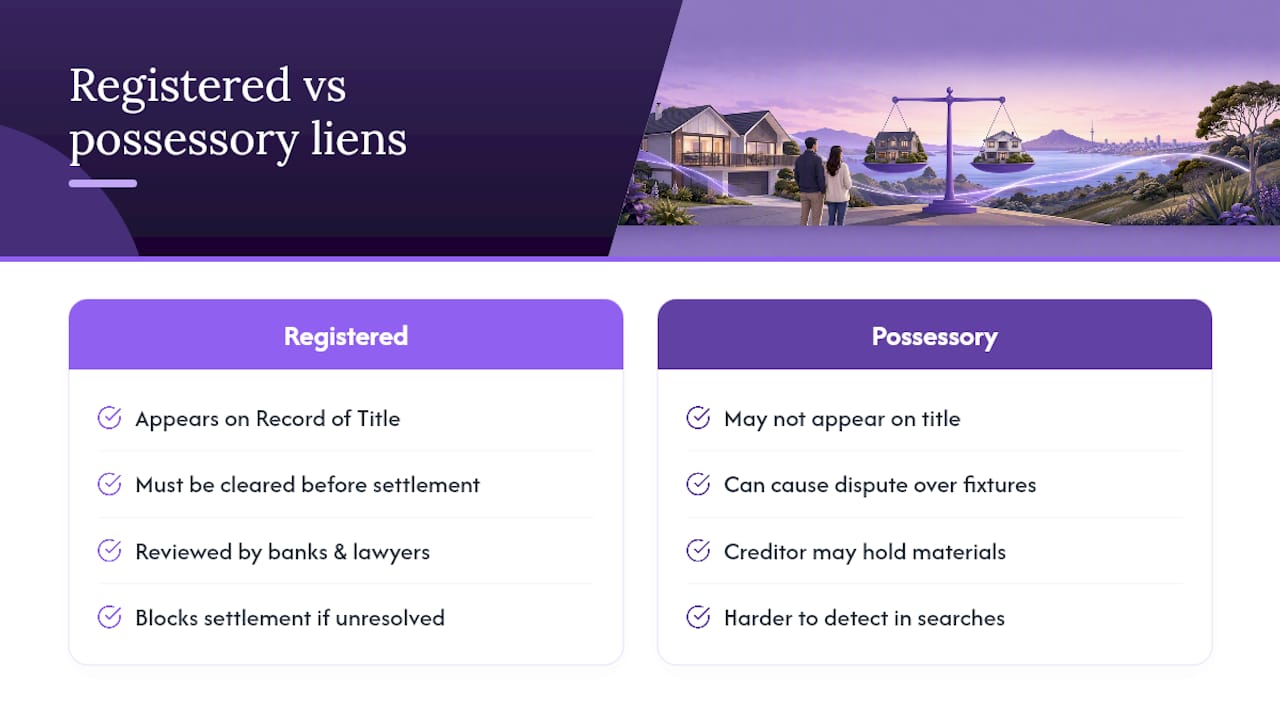
There are two broad flavours. A registered charge sits on your Record of Title at Toitū Te Whenua (LINZ) and follows the property until it’s discharged. A mortgage is the classic example. A possessory lien is different again. It’s often a right to hold onto goods (say, a car left at a mechanic’s) until payment clears, and it usually doesn’t appear on title at all, according to Sprintlaw.
Two quick examples: a bank registers a mortgage against your home the day you draw down your loan. A builder who hasn’t been paid may pursue a statutory lien claim under contractor lien legislation, separate from any mortgage already on the title.
What types of property liens exist in New Zealand?
Not every debt against you becomes a lien. The claim has to attach to the specific property or goods, and there has to be a proper legal basis, whether that’s a contract, a statute, or a court order, as Sprintlaw points out. The most common types Kiwi homeowners run into are:
- Mortgage liens. A registered charge a bank holds as security for a home loan, discharged once the loan is repaid in full.
- Contractor or mechanic’s liens. Claims from tradespeople or builders who haven’t been paid, often governed by notice and registration steps under the Wages Protection and Contractors’ Liens Act 1908.
- Rates and tax charges. Local councils and Inland Revenue can register charges against a property for unpaid rates or tax debt.
- Judgment liens. A court order allowing a creditor to register a claim against your property after winning a debt case against you.
- Contractual and common-law (possessory) liens. These arise from agreements or from someone lawfully holding your goods until paid, and they may need registration on the Personal Property Securities Register to protect the creditor’s priority.
Each type carries different rights. A registered charge affects your title directly. A possessory claim usually just means someone’s holding onto something of yours.
How does a lien affect selling or refinancing your home?
If a lien is registered on your title, most conveyancers, banks, and buyers will insist it’s cleared or negotiated before settlement happens. That’s non-negotiable in a standard transaction. Your Record of Title lists the registered owner alongside any mortgages, easements, or other instruments lodged against the property, and a buyer’s lawyer will check it closely before letting funds move.
A possessory lien is trickier. It might not appear on title at all, yet it can still cause a genuine dispute if a creditor is holding something tied to the property, like fixtures or materials from unfinished work.
If you discover a lien, don’t panic, but don’t ignore it either — getting a title search vs title insurance can clarify your options and protect your interests. Get a title search, identify exactly who holds the claim and how much is owed, and talk to a conveyancer before you list the property or sign anything with a buyer.
How do you check for liens on a property in NZ?
Your Record of Title is the definitive record. It shows the registered owner, any mortgages, easements, and other instruments lodged against the property, according to LINZ’s own Landonline guidance. Here’s how to check it yourself:
- Head to Toitū Te Whenua’s Land Record Search and search by street address, title reference, or instrument number.
- Order a PDF copy of the current Record of Title to see the registered owner and any live charges.
- If you need to see older or superseded documents, request a historic search rather than relying on the current record alone.
- For a transaction where certainty matters (like settlement), ask your conveyancer about ordering a guaranteed search, since instruments can be lodged but not yet fully registered.
Understanding what your property title actually records makes the rest of this process far less confusing.
Pro Tip: If you spot a lodged instrument that isn’t fully registered yet, don’t assume it’s settled. Ask your conveyancer to check pending dealings before you sign anything.
How are property liens removed or resolved?
Most liens disappear the same way they arrived: through payment. You pay the debt, the creditor signs a release or discharge instrument, and your conveyancer lodges it against the title. Simple, if you’ve got the funds.
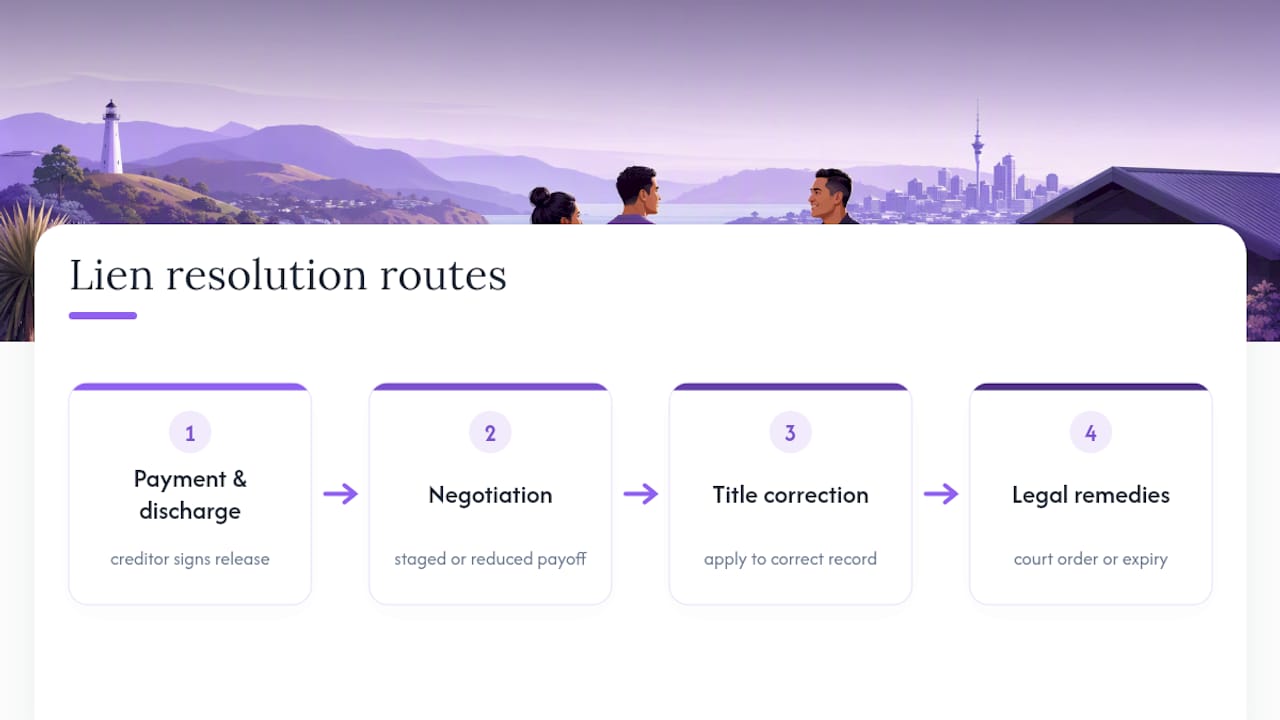
Where you don’t, negotiation is the next step. Many creditors will accept a staged payoff or a reduced settlement, particularly if a sale is already underway and they’d rather get paid than fight it out. If a lien is genuinely wrong, incorrect debtor, paid debt never released, wrong property, you can apply to correct the title record, sometimes requiring a court order if the creditor won’t cooperate voluntarily.
Rarely, older liens simply expire under statutory time limits, or an owner pursues a quiet title action to clear a stubborn, disputed claim. These routes take longer and usually need a lawyer.
What do common lien scenarios look like in practice?
A builder finishes a renovation and isn’t paid. They may pursue a formal lien claim under contractor lien law, with specific notice and registration steps required to make it stick.
A homeowner falls behind on mortgage repayments. The bank’s existing registered charge remains on title until the arrears are cleared or the loan is refinanced and discharged.
A ratepayer misses several instalments. The local council can register a charge against the property for the unpaid amount, sitting alongside any mortgage already there.
What should you do if a lien complicates a quick sale?
Registered liens slow standard sales because buyers and their lawyers want proof the claim is cleared before they’ll commit. That’s reasonable, but it can stretch a sale out for weeks while payoffs and discharges get sorted.
If you’re short on time, a direct cash buyer or private sale can be a workable option, since these routes don’t depend on a mortgage-financed buyer’s timeline. Still, get a title search and proper legal advice before agreeing to any terms, lien or not.
— Aaron
How Easysale handles properties with liens or tight timelines
Easysale exists for exactly this kind of situation: a property that’s complicated on paper but still worth something, and an owner who needs certainty more than they need the open market. We consider properties in any condition, including those with arrears, unpaid contractor claims, and rates charges, offering flexible settlement dates and no agent fees or commissions.

Before you get in touch, pull your title search and note down any instrument numbers or amounts owed. It saves time and helps us give you a genuinely fair offer, not a guess. If your situation involves a tight deadline, our sell house fast option is built for settlements as quick as seven days, and if the property itself needs work, our damaged or as-is page explains how that process works. Get in touch and find out what your property is worth to us, lien and all.
Where to check the facts yourself
For registered interests, search your title directly through Toitū Te Whenua’s Land Record Search. For contractor lien procedure, read the Wages Protection and Contractors’ Liens Act 1908 itself.
This article is general information, not a substitute for advice from a qualified lawyer. Consult a qualified legal professional about your own circumstances before acting on anything here.
Sources
- Types of property records that can be searched for | Landonline guidance — LINZ
- Land Record Search — LINZ
- What is a lien? How liens work and when they apply — Sprintlaw
- Wages Protection and Contractors’ Liens Act 1908 — New Zealand Legislation
FAQ
Do liens exist in New Zealand?
Yes. New Zealand recognises several lien types, including registered mortgages, statutory contractor liens under the Wages Protection and Contractors’ Liens Act 1908, council rates charges, and possessory liens over goods.
What is the most common type of lien on a property?
A mortgage is by far the most common lien homeowners deal with, a registered charge a bank holds as security until the loan is repaid. It appears on your Record of Title and must be formally discharged before a sale settles cleanly.
How do I remove a lien from my property?
Pay the underlying debt and get the creditor to sign a release or discharge instrument, which your conveyancer then lodges against the title. If you can’t pay in full, negotiating a settlement or staged payoff with the creditor is usually the next best route.
Can you give an example of a property lien?
A bank registering a mortgage when you draw down a home loan is one example. An unpaid builder pursuing a statutory claim for work completed under contractor lien legislation is another, and it works quite differently since it often involves separate notice and registration steps rather than a simple bank charge.
Recommended
