
Role of property title in NZ real estate: 2026 guide

TL;DR:A property title is the legal record of ownership over real estate and includes rights such as possession and use. It differs from a deed, which is the physical document transferring ownership and does not guarantee a clear title. Conducting early title searches and resolving defects prevent delays, disputes, and financial loss during property transactions.
A property title is the legal recognition of ownership over real estate, defined as an intangible bundle of rights including possession, use, lease, encumbrance, and disposal. Understanding the role of property title is not optional for buyers or sellers in New Zealand. It determines who can legally sell a property, what claims exist against it, and whether a transaction can settle without costly delays. Whether you are buying your first home or preparing to sell, getting this right from the start protects your investment and your peace of mind.
What is a property title and how does it differ from a deed?
Property title and property deed are two different things, and confusing them is one of the most common mistakes buyers make. Title is the ownership concept itself, an intangible legal status that defines who holds rights over a property. A deed is the physical document used to transfer those rights from one party to another.
Think of it this way. The deed is the paperwork. The title is what the paperwork is trying to convey. A deed can be validly executed while the underlying title remains compromised. Many buyers mistake deeds for absolute proof of ownership without recognising that a valid deed does not guarantee a cloud-free title. This distinction matters enormously when disputes arise.
The bundle of rights attached to a title typically includes:
- Possession: the right to occupy and use the property
- Use: the right to decide how the property is used within legal limits
- Lease: the right to rent the property to others
- Encumbrance: the right to use the property as security for a loan
- Disposal: the right to sell, gift, or transfer the property
Pro Tip: Before signing any sale and purchase agreement in New Zealand, ask your solicitor to confirm that the title type, whether freehold, leasehold, or cross-lease, matches what the listing states. Discrepancies here can affect your rights significantly.
Why is a clear property title essential when buying or selling?
Clear, marketable title guarantees the seller can transfer property free of claims, liens, or easements. Without it, a transaction cannot settle cleanly, and in many cases, it cannot settle at all. This is the core of property title significance in any real estate deal.

Lenders require title searches and often title insurance before approving a mortgage. They will not lend against a property with unresolved claims because they risk inheriting those debts. For sellers, a clouded title means the deal stalls or falls over entirely, often at the worst possible moment.
The consequences of a defective title are serious:
- Mortgage finance falls through. Banks and non-bank lenders in New Zealand will not advance funds against a property with unresolved encumbrances or disputed ownership.
- Settlement is delayed or cancelled. Buyers have legal grounds to withdraw if title defects are discovered before settlement.
- Future sales are blocked. Unresolved title defects can block future sales or refinancing, and records become harder to fix the longer they are left unaddressed.
- Legal liability increases. Selling a property with a known title defect without disclosure exposes the seller to legal action.
Homeowners consistently underestimate how much an unresolved title issue can impair their ability to sell or refinance later. A title problem that seems minor today can become a serious obstacle when you need to move quickly.
How do title checks and preliminary title reports protect you?
A title search examines public records to confirm who legally owns a property and what claims, if any, exist against it. Title searches prevent fraud by confirming the seller’s legal right to sell and revealing hidden issues like liens or ownership disputes. Skipping this step risks losing your entire investment if the seller lacks legal ownership.
In New Zealand, title information is held by Land Information New Zealand (LINZ). A title search through LINZ reveals the registered owner, any mortgages, caveats, easements, covenants, or other encumbrances registered against the property. Your solicitor or conveyancer will order this as a standard part of due diligence.
After receiving a preliminary title report, buyers and sellers have narrow windows to raise objections or fix defects before closing. Failing to act within those timeframes can jeopardise the entire sale.
Common title defects uncovered during a search include:
- Unpaid rates or council charges registered as a charge against the property
- Caveats lodged by a third party claiming an interest in the property
- Easements granting others rights to use part of the land
- Restrictive covenants limiting how the property can be used or developed
- Mortgages not yet discharged from a previous owner
| Title issue | What it means | Typical resolution |
|---|---|---|
| Undischarged mortgage | Previous lender still registered | Lender issues discharge on settlement |
| Caveat | Third party claims an interest | Negotiation or court order to remove |
| Unpaid rates | Council debt attached to property | Paid from sale proceeds at settlement |
| Easement | Right of way or utility access for others | Disclosed and accepted, or renegotiated |
| Restrictive covenant | Limits on use or development | Legal advice on enforceability |
Pro Tip: Order a title search early, before you make an offer if possible. Knowing what is registered against a property gives you negotiating power and prevents surprises after you are already committed.
What are common title defects and how are they resolved?
Title defects range from straightforward administrative oversights to complex legal disputes. Understanding the difference helps you respond appropriately rather than panic when one surfaces. For a broader look at property sale challenges that Kiwi homeowners face, the patterns are consistent across the country.
Inheritance disputes are among the most disruptive title defects. When a property passes through an estate and not all heirs agree, or when a will is contested, the title can become clouded for years. Unpaid tax debts or rates can also attach to a property as a statutory charge, surviving ownership changes if not cleared.
The formal legal remedy for a persistent title defect is a quiet title action. Quiet title lawsuits resolve complex title defects but can take 3 to 18 months, delaying sales significantly. That timeline has real consequences for sellers who need to move quickly or who are facing financial pressure.
| Defect type | Impact on sale | Recommended action |
|---|---|---|
| Inheritance dispute | Blocks transfer until resolved | Engage a property solicitor immediately |
| Unpaid lien or charge | Lender refuses to advance funds | Clear debt from sale proceeds or prior to listing |
| Forged or fraudulent deed | Title is void; ownership uncertain | Notify LINZ and seek urgent legal advice |
| Boundary encroachment | Neighbouring claim over land | Survey and negotiate or litigate |
Legal considerations when selling in New Zealand require sellers to disclose known defects. Attempting to conceal a title issue is not just risky. It is a legal liability.
How can you protect ownership rights through good title management?
Proactive title management is the most effective way to avoid delays, disputes, and financial loss in a property transaction. The steps are straightforward, and most can be completed well before you list or make an offer.
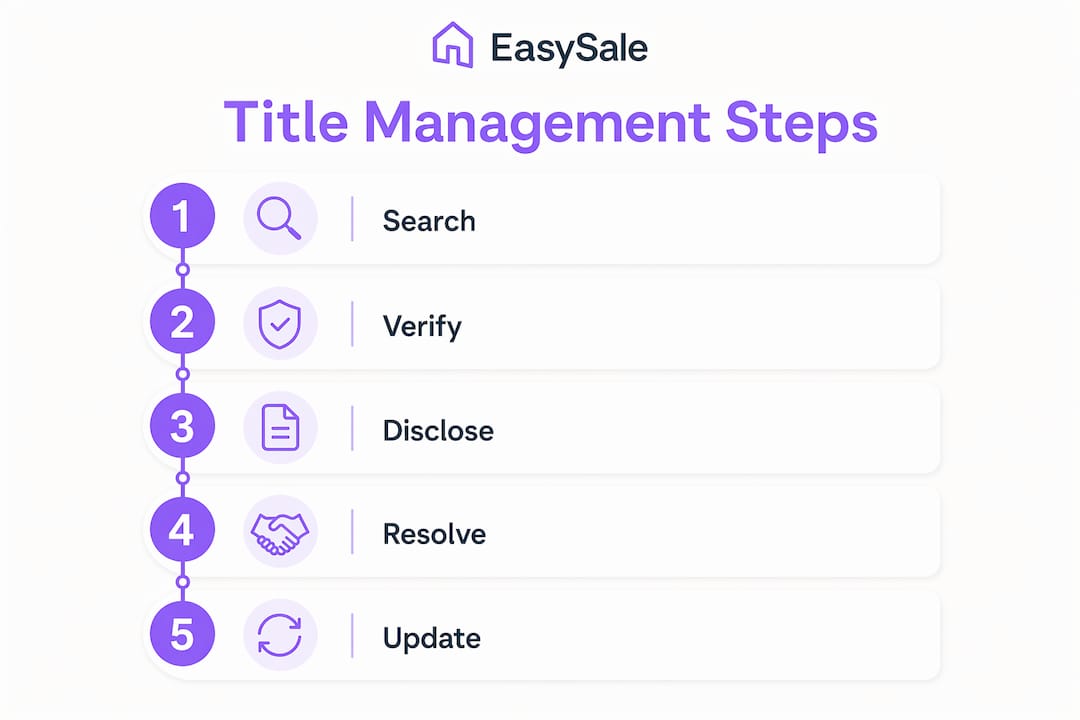
Pre-listing title searches help identify hidden municipal liens or inheritance disputes which, if undiscovered, could derail deals at the last minute. Sellers who complete this step before going to market are in a far stronger position to negotiate and settle on time.
Key steps to protect your ownership rights:
- Order a title search through LINZ before listing or making an offer. This confirms the current registered owner and all encumbrances.
- Engage a solicitor or conveyancer with experience in New Zealand property law. They will interpret the title report and advise on any issues.
- Check the chain of title. Confirm that ownership has passed correctly through each previous transfer, with no gaps or irregularities.
- Consider title insurance. Title insurance is the financial safeguard against latent title claims that may not appear in a standard search.
- Resolve clouds on title before settlement. Do not assume a minor issue will sort itself out. Address it with legal advice as soon as it is identified.
Pro Tip: If you are selling a property that has been in your family for a long time, pay particular attention to the chain of title. Older properties sometimes carry outdated easements or covenants that were never formally removed, and these can surprise buyers during due diligence.
For a full checklist of what to address before selling, the property sale checklist for NZ sellers covers title validation alongside every other key step.
Key takeaways
A clear, searchable property title is the single most important factor in completing a real estate transaction without delays, disputes, or financial loss.
| Point | Details |
|---|---|
| Title versus deed | Title is the legal ownership concept; a deed is the document that transfers it. |
| Clear title is non-negotiable | Lenders, buyers, and the law all require title free of unresolved claims before settlement. |
| Title searches reveal hidden risks | A LINZ title search uncovers liens, caveats, and encumbrances before they become deal-breakers. |
| Defects must be resolved early | Quiet title actions can take up to 18 months, so early action protects your timeline. |
| Professional advice is essential | A solicitor or conveyancer interprets title reports and guides resolution of any defects. |
Why title clarity is the one thing sellers cannot afford to skip
I have seen sellers lose deals at the eleventh hour because of a caveat they did not know existed, or a mortgage discharge that was never registered after a loan was paid off years earlier. These are not rare edge cases. They are common, and they are almost always avoidable.
The part that frustrates me most is that many of these issues surface only because no one ordered a title search early enough. Sellers wait until a buyer is under contract, and then the title report lands with a problem that takes weeks or months to fix. The buyer walks. The seller starts again, now with a property that has fallen over once, which affects buyer confidence.
My honest advice: treat a title search the same way you treat a building inspection. Do it before you commit, not after. If you are buying, do not rely on the vendor’s assurances. Order your own search. If you are selling, get ahead of any issues before you list. The role of a solicitor in property transactions is precisely to catch these things, and the cost of that advice is trivial compared to a collapsed deal.
The industry is moving toward greater transparency, and buyers in New Zealand are increasingly sophisticated. They know to ask about title. Sellers who are not prepared will find that out the hard way.
— Aaron
Selling your property without the title headaches
Title issues are one of the most common reasons property sales stall or fall over in New Zealand. If you are facing a defective title, a tight timeline, or simply want to avoid the complexity of a traditional sale, Easysale offers a direct path forward.

Easysale buys properties across New Zealand in any condition, including those with title complications that make traditional sales difficult. There are no agents, no commissions, and no drawn-out negotiations. You submit your property details, receive a fair cash offer, and settle on a timeline that works for you. Visit Easysale to get a no-obligation offer and find out how straightforward selling your property can be.
FAQ
What is a property title in New Zealand?
A property title is the legal record of ownership over a property, held by Land Information New Zealand (LINZ). It confirms who owns the property and lists any mortgages, caveats, easements, or other encumbrances registered against it.
What is the difference between a title and a deed?
A title is the intangible legal concept of ownership, while a deed is the physical document used to transfer that ownership from one party to another. A valid deed does not guarantee a clear title if underlying claims exist.
Why do lenders require a title search?
Lenders require a title search to confirm the property is free of unresolved claims before advancing mortgage funds. They will not lend against a property where ownership is disputed or where debts are registered as charges against the title.
How long does it take to fix a title defect in New Zealand?
Resolution time depends on the type of defect. Simple issues like an undischarged mortgage can be resolved at settlement, while complex disputes resolved through quiet title actions can take 3 to 18 months.
What is title insurance and do I need it in New Zealand?
Title insurance protects buyers and lenders against financial loss from title defects that were not discovered during a standard search, including fraud or errors in public records. It is not compulsory in New Zealand but is worth discussing with your solicitor before settlement.
Recommended
