
Why properties stay unsold: Avoid common pitfalls in NZ

TL;DR:Many properties in New Zealand remain unsold due to overhang and high market supply, giving buyers more leverage. Overpricing, poor condition presentation, and inadequate marketing are the main reasons homes linger on the market. Sellers needing quick results should focus on realistic pricing, immediate home improvements, targeted marketing, and consider direct sale options tailored to urgent situations.
New Zealand’s property market has shifted dramatically, and thousands of homeowners are finding their listings sit idle for weeks or even months. In a market where unsold properties reflect growing overhang, homes that have completed a full marketing campaign but remain listed for at least a month, the pressure on sellers, especially those facing financial stress or urgent life changes, is very real. If your property is stuck on the market and you need to move forward, understanding exactly why homes fail to sell is the first step toward finding a practical solution.
Table of Contents
- Understanding the market overhang
- Pricing mistakes: The number one reason homes don’t sell
- Condition and presentation: How your home shows matters
- Marketing missteps: Great homes go unsold without the right exposure
- Our take: What most guides miss about unsold homes in New Zealand
- Need to sell fast? Options for New Zealand homeowners
- Frequently asked questions
Key Takeaways
| Point | Details |
|---|---|
| Market overhang risk | A high supply of unsold homes in New Zealand gives buyers more leverage and slows down sales. |
| Price realistically | Setting the right price early is critical to avoiding suspicion and a longer sale process. |
| Presentation counts | Addressing condition issues and tidying up your home increases both speed and offer value. |
| Invest in marketing | Even quick or distressed sales attract better offers with strong marketing and exposure. |
| Get expert help fast | Working with cash buyers or specialised agents can unlock a faster, hassle-free transaction. |
Understanding the market overhang
Now that we’ve set the scene, let’s look at why so many homes are left unsold in New Zealand right now.
Market overhang is the term used to describe the volume of properties that have been actively listed and marketed, yet remain unsold after a standard campaign period. Think of it as a backlog. When overhang grows, buyers have more choices and more leverage, which means sellers need to work harder to stand out and attract serious offers.
The numbers tell a clear story. The unsold property overhang passed 26,000 at the end of November 2024, rising 4.8% compared to the same period the previous year and a significant 37.2% above November 2023 levels. That is a steep climb in a short window of time, and it signals a market where buyers are firmly in the driving seat.
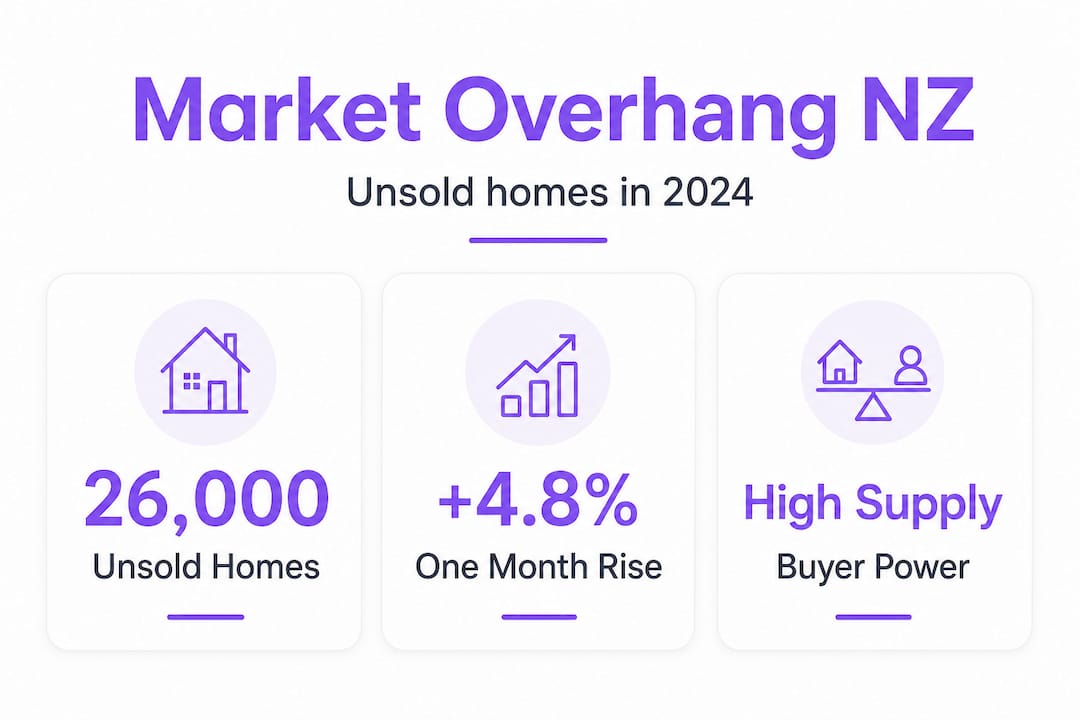
| Period | Unsold property overhang | Year-on-year change |
|---|---|---|
| November 2023 | Baseline | — |
| November 2024 | 26,000+ | +37.2% vs Nov 2023 |
| Month-on-month | Current period | +4.8% vs prior year |
When supply is this high, buyers can afford to be selective. They take longer to make decisions, they negotiate harder on price and conditions, and they walk away from anything that feels uncertain. For a seller under financial pressure or dealing with a life event like a relationship breakdown, illness, or relocation, this is an especially difficult environment.
“The risk for sellers needing a fast result is that prolonged time on market signals to buyers that something may be wrong, which invites lower offers and more difficult negotiations.”
Understanding how market value trends affect your property’s position in this high-supply environment is essential before you decide on your next move.
Pricing mistakes: The number one reason homes don’t sell
With the current market context in mind, let’s tackle the biggest factor that makes homes stick: price.
Overpricing is consistently the leading cause of unsold listings in New Zealand. When a property is listed above what buyers believe it is worth, it sits. Days turn into weeks, and weeks into months. What many sellers don’t immediately realise is that a lingering listing actively damages the final sale outcome.
Buyers treat persistent listings as a red flag. If a property is priced too high for buyer affordability, it can linger because buyers treat a persistent listing as a signal that the price and value may not match. The longer a property sits unsold, the more buyers assume something is wrong, even when the only real problem is the asking price.
Here is how the two approaches compare:
| Approach | Time on market | Likely outcome |
|---|---|---|
| Overpriced from the start | 60 to 120+ days | Price reductions, lower final offer |
| Priced to market from day one | 14 to 45 days | Stronger competition, faster settlement |
| Desperation discount (late drop) | Variable | Stigma already attached, buyers still cautious |
There is an important distinction between pricing to sell and making a desperation discount. Pricing to sell means setting a realistic, evidence-based figure from the outset, informed by comparable recent sales in your suburb. A desperation discount, applied weeks after a failed campaign, often comes too late. The listing has already picked up the stigma of being stale, and buyers who notice the price drop often use it to justify an even lower offer.
Key pricing considerations for sellers who need to move quickly include:
- Research comparable sales in your area from the past 90 days, not 12 months.
- Factor in market conditions, particularly high supply, which will naturally suppress what buyers are prepared to pay.
- Set a clear bottom line before listing so you can respond to offers quickly without second-guessing.
- Avoid round-number pricing where possible. Properties listed at $749,000 tend to attract more interest than those at $750,000.
- Consult a registered valuer if you are genuinely unsure, especially if you are facing financial pressure and cannot afford to guess.
Understanding the factors impacting sale speed in 2026 can help you calibrate your pricing strategy to current buyer behaviour rather than assumptions from previous years.
Pro Tip: If you have received an offer that feels low, consider what the cost of another three months on the market would actually be. Mortgage repayments, rates, insurance, and holding costs add up fast and can quickly exceed the difference between a low offer and your asking price.
For more practical guidance, the tips for fast property sale resource walks through specific pricing and preparation steps suited to New Zealand’s current conditions.
Condition and presentation: How your home shows matters
After pricing, the second block for quick sales is the state your property is in when buyers walk through.

Many sellers in urgent situations assume that buyers will overlook maintenance issues if the price is right. This is rarely true. Property condition and presentation can materially affect buyer decisions, and problems noticed during a viewing reduce buyer confidence and willingness to negotiate in good faith. In a high-supply market, buyers have alternatives, and they will use them.
The most common issues that put buyers off include:
- Visible water damage or staining on ceilings, walls, or floors, which raises immediate concerns about ongoing leaks or structural problems.
- Unkempt lawns and gardens that signal general neglect and reduce the property’s first impression before buyers even step inside.
- Dated or faulty fixtures, including dripping taps, broken door handles, and cracked light switches, that make buyers mentally calculate the cost of repairs.
- Strong odours, from pets, mould, or smoke, which are extremely difficult to overlook and can immediately end a buyer’s interest.
- Cluttered interiors that make rooms feel smaller and prevent buyers from visualising how their own furniture and lifestyle would fit.
- Peeling paint or flaking exterior finishes, which signal deferred maintenance and raise questions about what else may have been neglected.
- Blocked gutters or overgrown roof moss, which are visible during an inspection and prompt further investigation into drainage and weather-tightness.
Even if you are in an urgent situation, a small investment in basic improvements can produce a meaningful shift in buyer response. Spending a weekend decluttering, cleaning thoroughly, and fixing obvious minor faults costs very little but can significantly lift the perceived value of your home.
“Buyers in a well-supplied market will quickly move to the next listing if your property feels like a project. First impressions are formed within 30 seconds, and they are very difficult to reverse once set.”
Quick fixes that tend to offer the best return for minimal investment include fresh neutral paint in high-traffic areas, professional carpet cleaning, replacing dated light fittings with simple modern alternatives, and ensuring the front entrance is tidy and welcoming.
If your property has significant structural or weather-tightness issues, transparent disclosure is always the better path. Attempting to conceal problems invites legal risk and typically results in a harder negotiation when issues surface during a buyer’s due diligence or building inspection. For further detail on practical improvements, the upgrade tips for higher value resource covers fast, cost-effective strategies suited to New Zealand homes.
Pro Tip: Hire a professional cleaner for a single deep clean before your first open home. It costs between $200 and $500 depending on property size, and it immediately removes odours, lifts grime from kitchens and bathrooms, and presents a level of cleanliness that most sellers cannot achieve on their own.
Marketing missteps: Great homes go unsold without the right exposure
Once your price is sharp and presentation sorted, exposure is the final driver for a sale in any timeframe.
Excellent marketing does not guarantee a fast sale, but poor marketing almost guarantees a slow one. Marketing execution and the listing campaign matter: weak or insufficient marketing, or under-investment in assets like photography and digital targeting, can reduce qualified enquiry and lead to delayed offers. This is true even for properties in excellent condition at a competitive price.
Common marketing mistakes sellers make in New Zealand include:
- Using smartphone photos instead of professional photography. Dark, blurry, or poorly composed images reduce click-through rates dramatically on listing platforms.
- Writing vague or generic listing descriptions that fail to highlight specific features, location benefits, or recent upgrades.
- Listing on a single platform rather than using a combination of Trade Me Property, real estate agency portals, and social media targeting.
- Skipping virtual tours or floor plans, which are now expected by many buyers, particularly those relocating from other regions or overseas.
- Poor timing of open homes, scheduled at awkward times or with very short notice, which limits attendance and reduces competition among buyers.
Even for a distressed property or one in challenging condition, targeted marketing to the right buyer segment, such as investors, renovators, or developers, can generate serious interest and competitive offers. A property that suits a developer is actively attractive to that buyer, but only if the listing reaches them.
“The buyer who is willing to pay the best price for your specific property may not be actively browsing. A targeted digital campaign can reach them directly and generate enquiry that an open home listing alone would never produce.”
For practical guidance on removing complexity from the overall process, the simplifying the sale process resource is worth reviewing before you make final decisions about your campaign approach.
Our take: What most guides miss about unsold homes in New Zealand
Most articles about unsold homes focus on tactics in isolation: fix the price, clean up the garden, hire a photographer. The advice is correct, but it misses a deeper truth that we’ve seen play out repeatedly in the New Zealand market.
Many sellers in urgent situations assume that choosing a fast-sale or direct-buyer route means the fundamentals no longer apply. They believe that if a buyer is motivated and the process is streamlined, condition and pricing become secondary. This assumption leads to poor outcomes.
When supply is high, even hassle-free sellers get a better result if their pricing and presentation match the market. When they don’t, the extra friction from conditions and inspections compounds the problem and extends time on market, even in a supposedly simplified process.
Our experience shows that sellers who take even two or three days to address the most obvious pricing, condition, and marketing issues before approaching any buyer, including direct cash buyers, consistently achieve better outcomes. The effort is small. The difference in result is not.
The uncomfortable truth is that “hassle-free” describes the process, not the preparation. You still need to come to the table with realistic expectations about price, honest transparency about the property’s condition, and a clear understanding of what buyers in your area are currently paying. Ignoring market realities and hoping a fast-sale pathway will paper over the cracks rarely works, and it often results in a lower offer than you would have received with a little more preparation.
The stress-free selling guide addresses this balance directly, helping sellers understand how to prepare without overcommitting time or money before taking the next step.
Need to sell fast? Options for New Zealand homeowners
If you need to act fast, there are practical solutions designed for situations just like yours.
Whether you’re dealing with financial hardship, a property in disrepair, a relationship breakdown, or simply need to move on without the drawn-out process of a traditional sale, there are direct options available in New Zealand that do not involve agents, open homes, or waiting months for settlement.
At easySale.co.nz, we buy residential properties across New Zealand in any condition. There are no agent commissions, no expensive marketing campaigns, and no uncertainty about whether an offer will fall through at the last moment. You submit your property details, receive a no-obligation cash offer, and settle on a timeline that suits your circumstances. If you want to sell your house fast without the stress of a traditional campaign, we make that process straightforward. For those who prefer to retain more control, our sell house privately pathway offers guidance and support without the full agency experience. If you are downsizing or moving into retirement, our retirement and downsizing sale service is designed specifically for your situation.
Frequently asked questions
How long do unsold listings typically stay on the market in New Zealand?
An unsold property often remains listed for at least a month after completing a full marketing campaign, and many linger considerably longer when market supply is high and buyers have multiple options to choose from.
Does dropping the price guarantee a fast sale?
Reducing your price can attract renewed interest, but if a property has lingered due to condition or marketing issues as well, a price cut alone may not be enough to generate strong offers or close a deal quickly.
Will buyers accept homes with major problems if priced low enough?
Some investor or renovation-focused buyers will consider problem properties, but property condition can materially affect buyer decisions, and most buyers will still negotiate hard or walk away if issues are serious enough to raise doubts about habitability or weather-tightness.
Can better marketing really make a difference for a ‘problem’ home?
Strong marketing absolutely can increase enquiry and offers, even for difficult properties, because marketing execution matters in reaching the specific buyer segment, such as investors or developers, who are genuinely motivated to purchase as-is.
Recommended
