
Explain change of ownership process: NZ property guide

TL;DR:The property ownership transfer process in New Zealand requires a qualified lawyer, documentation, and registration with LINZ. It involves signing a Sale and Purchase Agreement, conducting due diligence, preparing an electronic transfer, settling finances, and registering the title, all of which must be carefully managed to avoid delays or legal issues. Costs typically range from $2,200 to $3,600, and ownership structures like joint tenancy or tenants in common significantly influence the transfer procedures.
The change of ownership process is the legal transfer of a residential property title from one party to another, and in New Zealand it requires a qualified lawyer, specific documentation, and registration with Land Information New Zealand (LINZ). This process is formally known as conveyancing, and it covers everything from signing the Sale and Purchase Agreement through to the final title update. Only lawyers admitted to the New Zealand Bar can perform conveyancing here. There are no separately licensed conveyancers as exist in some other countries. Whether you are selling, gifting, or restructuring ownership, the legal steps and registration requirements are the same.
What are the essential legal steps in the ownership transfer process?
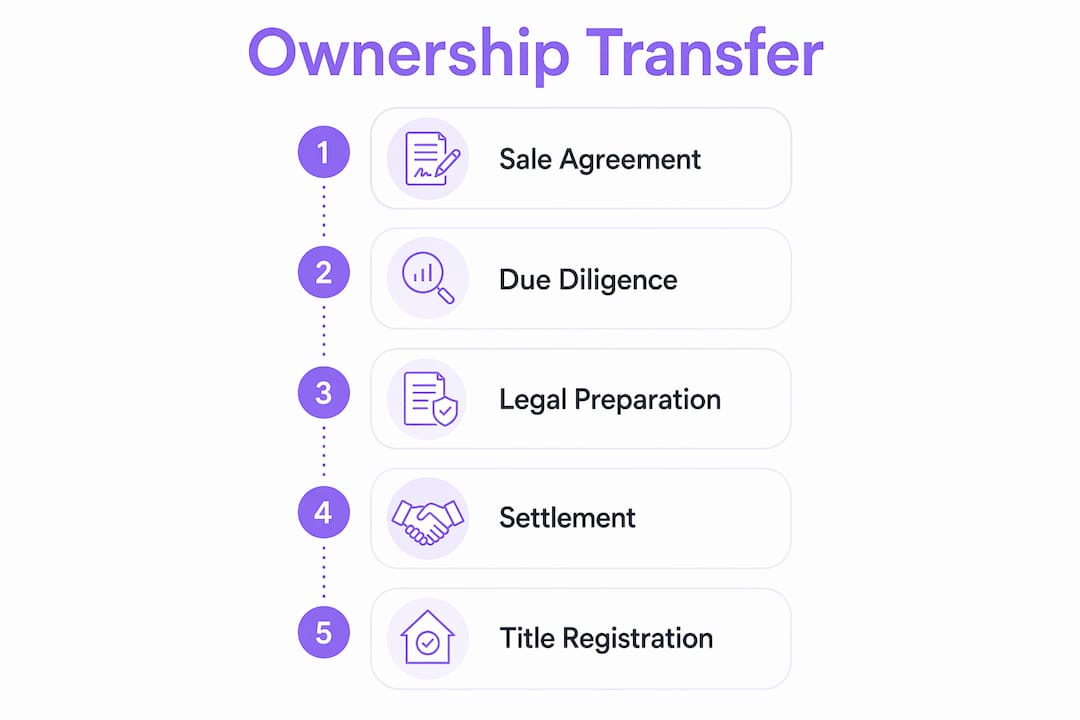
The ownership transfer procedure follows a clear sequence. Skipping or rushing any step creates delays and, in some cases, legal complications that can take months to resolve.
- Sign the Sale and Purchase Agreement. This is the binding contract between buyer and seller. Your lawyer must review it before you go unconditional. Once the agreement becomes unconditional, terms are locked and can only be changed with the other party’s written consent. Getting legal advice at this stage is the single most effective way to protect yourself.
- Conduct due diligence. Your lawyer orders a title search, reviews the Record of Title, checks for encumbrances and easements, and examines the Land Information Memorandum (LIM) report. This stage uncovers any issues that could affect the transfer or the property’s value.
- Prepare the electronic transfer instrument. Your lawyer drafts the e-dealing document through the LINZ online system. Both parties’ lawyers sign off electronically. This document formally instructs LINZ to update the title.
- Settle financial obligations. On settlement day, the buyer’s funds transfer to the seller, existing mortgages are discharged, and any outstanding rates or body corporate levies are adjusted. Both lawyers coordinate this process directly.
- Register the transfer with LINZ. Once settlement is confirmed, the electronic transfer instrument is submitted. Registration typically occurs the same day or the next business day. The title then reflects the new owner’s name.
Pro Tip: Ask your lawyer to confirm the exact settlement time at least 48 hours before settlement day. Late fund transfers are the most common cause of same-day delays.
What costs and fees should you expect during the change of ownership?
Understanding the costs upfront prevents budget surprises on settlement day. Fees vary depending on the complexity of the transaction and the property type.

Standard legal fees for a residential property transfer in New Zealand range from $1,800 to $3,000, plus disbursements of $400 to $600. That puts the total typical cost between $2,200 and $3,600. Complex property types push fees higher.
| Cost item | Typical range |
|---|---|
| Lawyer’s legal fees | $1,800–$3,000 |
| Disbursements (searches, reports) | $400–$600 |
| LINZ registration fee | $80–$200 |
| Record of Title with Diagram | $42.90 |
| Total estimate | $2,200–$3,600+ |
The LINZ registration fee sits between $80 and $200, depending on the complexity of the transfer instrument. For cross leases or unit titles, specialist legal advice is critical because errors in these structures can create costly long-term disputes. The added complexity also increases legal fees beyond the standard range. You can read more about the full breakdown of property transaction fees to plan your budget accurately.
Pro Tip: Request a written fee estimate from your lawyer before engaging them. A good lawyer will provide a clear scope of work and an estimate of disbursements upfront.
How do different ownership structures affect the change of ownership process?
The ownership structure recorded on your title directly affects how a transfer is handled. Misunderstanding ownership structures can cause disputes and unintended succession outcomes, so verifying your current structure before any transfer is non-negotiable.
The two most common structures in New Zealand residential property are joint tenancy and tenants in common. Here is how they differ and what each means for your transfer:
- Joint tenancy means all owners hold the property equally and together. If one owner dies, their share passes automatically to the surviving owner or owners. This is the survivorship right. You cannot leave your share of a jointly held property to someone else in your will.
- Tenants in common means each owner holds a defined share, which can be equal or unequal. Each share can be sold, gifted, or left to a beneficiary in a will independently of the other owners. This structure suits business partners or family members who want separate control of their portion.
- Changing the structure requires a formal legal process. You cannot simply agree verbally to switch from joint tenancy to tenants in common. Your lawyer must prepare and register a new instrument with LINZ.
- Relationship changes often trigger a review of ownership structure. Separation, marriage, or a new partnership arrangement may require a transfer of one party’s share, and the legal process is identical to a standard ownership change.
- Gifting a share to a family member still requires full legal conveyancing. Even when no money changes hands, the formal process with a qualified lawyer and LINZ registration is mandatory to achieve a clear title and address any existing mortgages.
If you are dealing with an inherited property, the process for selling inherited property in New Zealand has additional steps worth understanding before you proceed.
What are common challenges and legal pitfalls to avoid during ownership transfer?
Most ownership transfer problems are preventable. They almost always come down to late discovery of title issues or misunderstanding who represents whom in the transaction.
The biggest misconception is that the vendor’s lawyer can look after both parties. Each party must have separate legal representation to protect their own interests. The vendor’s lawyer acts for the vendor. Full stop. If you rely on them as a buyer, your interests are unprotected.
Conveyancing lawyers do more than prepare documents. They conduct title searches, raise requisitions, resolve encumbrances, and chase missing consents. Without this work, a buyer can settle on a property with unresolved legal issues attached to the title.
Other common pitfalls include:
- Title discrepancies. If the recorded title description does not match the physical property, settlement must be delayed until the discrepancy is resolved. Discovering this on settlement day is costly and stressful.
- Encumbrances found late. Mortgages, caveats, easements, or covenants attached to the title can block or complicate a transfer. Ordering a current Record of Title with Diagram for $42.90 early in the process gives you a clear picture before you commit.
- Missing signatures or consents. If a property is held in a trust or by multiple owners, all trustees or owners must sign. Missing one signature halts the process.
- Conditions not satisfied before going unconditional. Finance approval, building inspection sign-off, and LIM review must all be completed before you remove conditions. Rushing this step is one of the most expensive mistakes a buyer can make.
Understanding the property title’s role in New Zealand real estate helps you spot these issues before they become problems.
What practical steps can property owners take to ensure a smooth ownership transfer?
A smooth transfer comes down to preparation and communication. These steps apply whether you are the buyer or the seller.
- Engage a lawyer before signing anything. Your lawyer should review the Sale and Purchase Agreement before you sign, not after. Changes are far easier to negotiate before the contract is signed than after.
- Order your Record of Title early. Get the current title document and review it with your lawyer. Check the ownership structure, look for encumbrances, and confirm the legal description matches the property you expect to buy or sell.
- Satisfy all conditions before going unconditional. Finance, building inspection, and LIM review are your protection. Do not waive them under time pressure. Once you go unconditional, you are committed.
- Communicate clearly with all parties. Keep your lawyer, bank, and the other party’s lawyer informed of any changes. Settlement day involves multiple parties moving funds and documents simultaneously. Clear communication prevents last-minute failures.
- Understand settlement day procedures. Know the exact time funds need to clear, what happens if there is a delay, and what keys or access arrangements are in place. Your lawyer will guide you, but knowing the sequence yourself means you can flag problems early.
For a broader view of the property sale process in NZ, including what happens before and after settlement, it is worth reading up before you start.
Key takeaways
The change of ownership process in New Zealand requires a qualified lawyer, a signed Sale and Purchase Agreement, due diligence checks, and registration with LINZ before the title legally transfers to the new owner.
| Point | Details |
|---|---|
| Legal representation is mandatory | Each party needs their own lawyer; the vendor’s lawyer cannot act for the buyer. |
| Costs range from $2,200 to $3,600 | Budget for legal fees, disbursements, and LINZ registration before settlement. |
| Registration is fast once settled | LINZ typically updates the title the same day or next business day after settlement. |
| Ownership structure affects the process | Joint tenancy and tenants in common have different transfer rules and succession outcomes. |
| Order your title document early | A current Record of Title for $42.90 reveals encumbrances and structure before you commit. |
What I have learned from watching ownership transfers go wrong
People consistently underestimate how much the legal process protects them, right up until something goes wrong. I have seen buyers go unconditional on a property only to discover a caveat on the title that the vendor’s lawyer had not flagged. The buyer had no separate legal advice. The settlement was delayed by six weeks and cost thousands in bridging finance.
The other pattern I see regularly is owners who do not check their ownership structure before a transfer. A couple assumes they hold their property as joint tenants, but the title shows tenants in common with unequal shares from a previous arrangement. That mismatch creates real problems when one party wants to sell or when estate planning comes into play.
My honest view is that the legal fees for conveyancing are not a cost to minimise. They are the price of certainty. A $2,500 legal fee that catches a title problem before settlement is worth far more than the cost of resolving that problem after the fact. The homeowners who have the smoothest transfers are the ones who engage their lawyer early, ask questions, and do not rush the due diligence phase.
— Aaron
Selling your property without the usual complexity
If you are looking to transfer ownership without the drawn-out process of a traditional sale, Easysale offers a direct path. Easysale buys residential properties across New Zealand for cash, with a fair offer delivered within 24 hours of submitting your property details.

There are no real estate agent commissions, no open homes, and no waiting on buyer finance approvals. The ownership transfer process is handled with full legal support, and you settle on a timeline that suits your situation. Whether your property needs work, you are facing a life change, or you simply want a faster outcome, Easysale makes the process straightforward from first contact to settlement.
FAQ
What does the change of ownership process involve in NZ?
The change of ownership process involves signing a Sale and Purchase Agreement, conducting due diligence, preparing an electronic transfer instrument, settling financial obligations, and registering the new title with LINZ. A qualified lawyer must manage the conveyancing at every stage.
How long does a property ownership transfer take in NZ?
The full process typically takes four to six weeks from a signed agreement to settlement, though this varies based on conditions and complexity. Title registration with LINZ occurs the same day or next business day after settlement.
Do I need my own lawyer if the vendor already has one?
Yes. Each party in a property transfer must have separate legal representation. The vendor’s lawyer acts for the vendor and cannot protect your interests as a buyer.
What is the difference between joint tenancy and tenants in common?
Joint tenancy means ownership passes automatically to surviving owners on death, while tenants in common means each owner holds a separate share that can be sold or left in a will independently.
Is a lawyer required when gifting a property in NZ?
Yes. Even when no money changes hands, the formal legal process with a qualified lawyer and LINZ registration is mandatory to achieve a clear title and address any existing mortgages or obligations.
Recommended
