
Sell As Is Fast in New Zealand: 1–3 Week Settlement, No Repairs
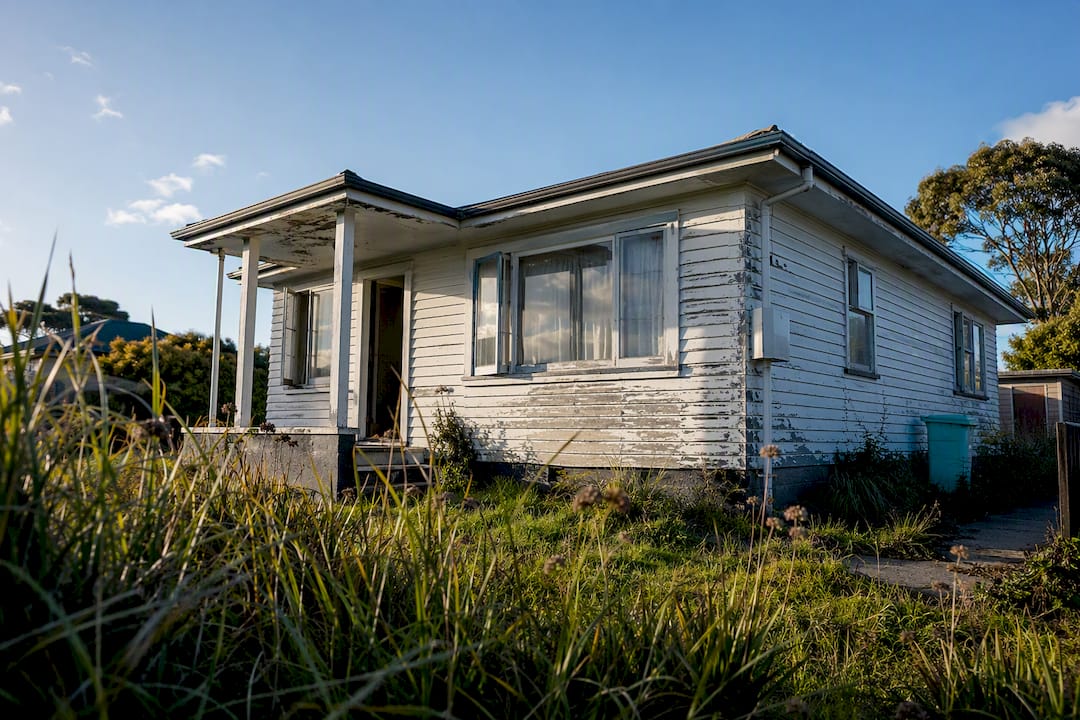
Yes, you can sell your house without doing repairs. The fastest, lowest-hassle routes are a direct cash buyer or a private sale, though both usually mean accepting a lower price for that speed and certainty. The one rule that overrides everything else: you must disclose known defects to any buyer, regardless of which route you choose.
TL;DR:Selling an as-is property usually results in a lower final price but offers faster settlement and less upfront cash for repairs.Direct-buy services provide the quickest and most certain sale, often settling within weeks, but at a lower price compared to open market or private sales.Disclosure of known defects is legally mandatory and crucial for avoiding legal disputes, regardless of the sale route.Sellers should gather all reports and legal documents before listing to prevent delays and ensure accurate, fair negotiations.Prioritizing speed and transparency over highest price benefits sellers with urgent timelines, inheritance, or repair affordability issues.
EasysaleSell Your Property Without RepairsEasysale helps New Zealand homeowners sell properties in any condition, with a straightforward process and settlement on their preferred timeline.See how Easysale works
Table of Contents
- When selling without repairs makes sense for a Kiwi homeowner
- The main ways to sell an as-is property and what each delivers
- What raises or lowers offers on an as-is home
- Protecting yourself legally and practically when selling as-is
- How to price and market an as-is home so it sells without repairs
- Seller profiles that benefit most from selling without repairs
- easySale’s take on selling without repairs
- The as-is selling timeline from listing to settlement
- Questions to ask before choosing a cash buyer
- Risks and challenges unique to selling without repairs, and how to mitigate them
- Why speed and honesty beat renovation fantasy
- A faster way to sell without the repair list
- Where to check the official rules before you commit
- Sources
When selling without repairs makes sense for a Kiwi homeowner
Selling as-is fits certain situations far better than others. If you’ve inherited a property you don’t want to manage, if you’re relocating for work on a tight timeline, or if you’re a landlord tired of holding costs on a tenanted property that needs work, skipping repairs usually makes financial sense. The same goes for anyone facing repair bills they simply can’t cover before a sale.
The trade-off is real. A smaller pool of buyers will consider a property with visible issues, and that usually translates to a lower final price than a fully renovated equivalent. What you gain is time and cash you don’t have to spend upfront.
Before committing, run through this checklist:
- How much time do you actually have before you need funds or need to move?
- What would repairs cost versus what price lift they’d realistically deliver?
- What are your holding costs (rates, insurance, mortgage) if you wait to renovate?
- Are you willing to manage tradespeople and project timelines, or would you rather avoid that entirely?
If speed and certainty outrank maximum sale price, as-is selling is worth pursuing seriously.
The main ways to sell an as-is property and what each delivers
Three routes dominate the as-is market in New Zealand, and each suits a different priority.
Open market via a real estate agent gives you the widest buyer exposure. Agents can market a property “as-is, where-is” and still attract genuine interest, particularly from renovators and investors hunting a bargain. The downside is time. Buyers on the open market often negotiate hard once inspections reveal problems, and settlement can drag out for months while conditions are worked through.
Private sale to investors cuts out agent commission and tends to move faster than a full campaign, since you’re dealing directly with buyers who already expect to take on work. You’ll still need to negotiate price and terms yourself, which is where a step-by-step overview of the as-is sale process helps sellers avoid common missteps.
Direct-buy services offer the most certainty and the fastest settlement, often within weeks rather than months. You trade some price for that speed, but you skip open homes, negotiations dragging on, and the risk of a buyer pulling out during due diligence. For comparing no-agent house sale options, this is worth weighing against a private sale.
Each route handles inspections differently. Agents typically arrange building inspections and LIM reports as part of a standard campaign. Private buyers and direct-buy services often request the same documents but move through them faster, since fewer parties are involved in the decision.

What raises or lowers offers on an as-is home
Buyers price risk into every offer, and the factors below explain most of the gap between a strong offer and a disappointing one.
Physical condition matters most. Structural issues, weather-tightness problems, and unconsented work all reduce buyer confidence and, consequently, the number they’re willing to sign. Cosmetic wear rarely moves the needle much; safety and compliance issues move it a lot.
Documentation changes the conversation. Buyers commonly request a LIM report, along with engineering or builder reports and evidence of any NHC or EQC claim outcomes before they’ll commit to a firm number. Supplying these upfront, rather than waiting to be asked, prevents delays and often keeps negotiation leverage on your side.
Market context sets the ceiling. Comparable as-is sales in your area, current interest rates, and whether investors or owner-occupiers dominate local demand all shape what’s realistic.
Sale terms move the number too. An unconditional cash offer with a flexible settlement date is worth more to most sellers than a slightly higher conditional offer that might fall through.
Pro Tip: Get a written builder’s report before you list, even if you’re not fixing anything. Knowing the real numbers stops a buyer’s inspection from derailing negotiations later.
Protecting yourself legally and practically when selling as-is
Selling without repairs doesn’t mean selling without safeguards. Follow these steps in order:
- Disclose everything you know. New Zealand guidance is unambiguous here: sellers must disclose known defects and relevant information, and an “as-is” clause does not remove that duty. Skipping this step risks legal action or a cancelled sale months down the track.
- Gather your documents before you list. A LIM report, any building or engineering reports, and evidence of NHC or EQC claim outcomes should be ready to hand over, not chased after an offer comes in.
- Engage a property lawyer or conveyancer early. Sale and purchase agreements for as-is properties need careful drafting to reflect the property’s actual condition, and a lawyer can verify clauses around risk transfer and deposit handling before you sign anything.
- Negotiate clear terms on risk and timing. Settlement dates, assignment of any existing insurance claims, and who carries risk between signing and settlement all need to be spelled out, not assumed.
Skipping the lawyer step to save a few hundred dollars is the single most common regret sellers report after an as-is sale goes wrong. Read more on property defects and what NZ sellers must know before you go to market.
How to price and market an as-is home so it sells without repairs
Base your asking price on recent as-is comparables in your area, not on what a renovated version of your home might fetch. Layer in a realistic repair estimate so buyers know what they’re taking on, rather than guessing and lowballing out of caution.
Honest marketing language works in your favour. Stating the property is being sold “as-is, where-is” and supplying available reports upfront can speed negotiations with buyers who are already prepared to accept the condition.
A few low-cost moves before photos go up:
- Tidy and declutter every room, even ones you won’t touch structurally.
- Fix any obvious safety hazards, like loose stair rails or exposed wiring.
- Highlight land size, location, or character features that repairs wouldn’t add anyway.
- Mow lawns and clear outdoor spaces to show potential buyers haven’t considered.
When offers arrive, weigh an unconditional cash offer against a conditional one honestly. A conditional offer that’s $20,000 higher isn’t worth much if it falls over during due diligence three weeks later.
Seller profiles that benefit most from selling without repairs
Some situations line up almost perfectly with as-is selling.
- Executors managing an estate usually want speed and minimal fuss above all else, and an as-is sale avoids months of renovation decisions on someone else’s behalf.
- Downsizers needing a quick, certain settlement should prioritise buyers offering flexible timing over chasing the last few thousand dollars.
- Owners facing unaffordable repairs should expect a lower sale price and put legal protection first, since disclosure gaps are the biggest risk in this group.
- Landlords exiting a difficult tenancy or ageing rental need to weigh ongoing holding costs against the certainty of a quick sale.
easySale’s take on selling without repairs
Aaron, a contributor who writes on property sale strategy, has watched the same pattern repeat across hundreds of as-is enquiries.
In practice, the process for as-is purchases starts with a quick appraisal based on the property’s real condition, not a renovated hypothetical. Offers are transparent from the first conversation, and settlement dates flex around the seller’s actual circumstances rather than a standard 6 week template. The pattern that stands out most: sellers who prepare their documentation early, even informally, tend to move through the process with far fewer surprises than those who wait to be asked.
The as-is selling timeline from listing to settlement
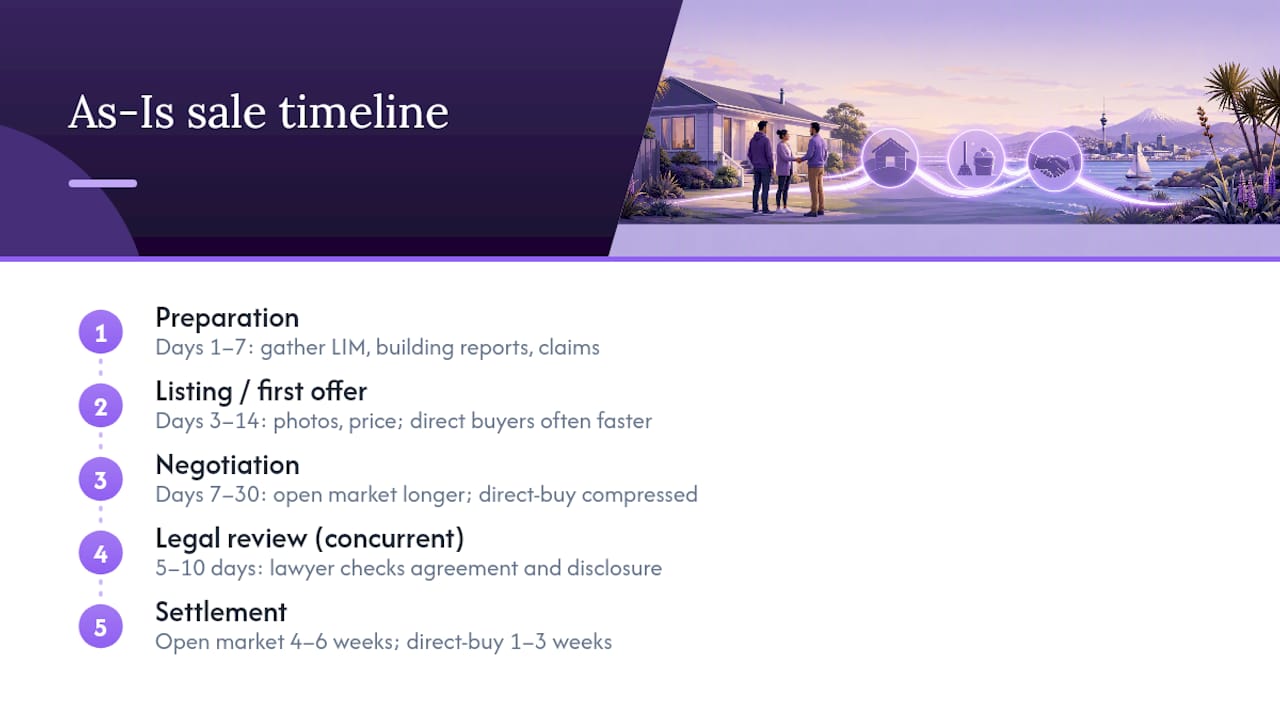
An as-is sale generally moves through five stages, though the timeline varies sharply depending on which route you choose.
Preparation (days 1 to 7): Gather your LIM report, any existing building reports, and NHC or EQC claim documentation. This stage is worth doing properly, since rushing it creates delays later.
Listing or first offer (days 3 to 14): If you’re going to open market, this is when photos, marketing copy, and price get finalised. If you’re approaching a direct buyer or investor, this stage can happen almost simultaneously with preparation, since many direct buyers will give an initial appraisal within a day or two of receiving your property details.
Negotiation (days 7 to 30): Open market sales typically see the longest negotiation window, as buyers request inspections and negotiate on the back of any issues found. Direct-buy offers usually compress this stage into a single conversation, since the offer already accounts for the property’s condition.
Legal review (concurrent, 5 to 10 days): Your lawyer reviews the sale and purchase agreement, checks disclosure wording, and confirms settlement terms. This should happen regardless of which route you’ve taken.
Settlement: Open market sales commonly settle 4 to 6 weeks after an unconditional agreement. Direct-buy sales can settle in as little as 1 to 3 weeks if that’s what the seller needs.
Questions to ask before choosing a cash buyer
Not every buyer offering to skip the agent and pay cash is equally reliable. Before signing anything, ask:
- How is the offer calculated? A buyer should be able to explain, at least broadly, how they arrived at their number based on your property’s condition and comparable sales.
- Is the offer genuinely unconditional, or does it carry hidden conditions? Some “cash offers” still include finance or due diligence clauses buried in the fine print.
- What settlement flexibility can they actually offer? Ask for a firm date range, not a vague promise.
- Do they have a track record you can verify? Look for reviews, years operating in New Zealand, and whether they’re upfront about their business model.
- Who pays legal and other costs? Clarify this before you agree to anything verbally.
- Will they put the offer in writing with no obligation to proceed? A legitimate buyer won’t pressure you to sign before you’ve had a lawyer review the terms.
Treat any buyer who resists straightforward answers to these questions as a red flag, not a shortcut.
Risks and challenges unique to selling without repairs, and how to mitigate them
As-is sales carry a specific set of risks that a fully renovated sale doesn’t.
Undisclosed defects surfacing later is the biggest legal risk. Even with an “as-is” clause, failing to disclose known issues can expose you to misrepresentation claims well after settlement. The fix is straightforward: disclose everything you know, in writing, before an offer is signed.
Buyer financing falling through happens more often with investor buyers who are juggling multiple properties. Unconditional cash offers largely remove this risk, which is part of why they’re worth prioritising even at a slightly lower price.
Underpricing out of urgency is common among sellers who need a fast sale and accept the first offer without checking comparables. A quick call with an agent or a second opinion from a direct buyer can confirm whether an offer is fair before you commit.
Contract terms that don’t reflect the property’s actual condition create disputes down the track. This is precisely why a lawyer needs to review wording around risk transfer and any assigned insurance claims before signing, not after.
Why speed and honesty beat renovation fantasy
Most advice on selling a house still defaults to the same script: fix it up, stage it, list it high, and wait for the market to reward you. That script works for plenty of sellers. It doesn’t work for someone with an inherited property, a tenant causing headaches, or a repair bill they can’t stretch to.
The gap in most guides is that they treat as-is selling as a last resort rather than a legitimate strategy with its own logic. It isn’t a fallback. It’s a trade you make deliberately: less on the settlement figure, more in the time and cash you keep in your pocket right now.
What the research and the legal guidance both point to is simple. Disclosure isn’t a formality you tick off. It’s the single factor most likely to determine whether your sale completes cleanly or turns into a dispute. Sellers who get documentation sorted early and treat their lawyer as essential, not optional, consistently have smoother sales than those chasing the highest number.
Prioritise certainty first, price second. That ordering is what makes as-is selling actually work.
— Aaron
A faster way to sell without the repair list
If the timelines and negotiation stages above sound like more hassle than you want, there’s a simpler path. Easysale buys properties directly from Kiwi homeowners in any condition, without requiring repairs, real estate commission, or an open-home campaign.

What that looks like in practice:
- No agent involved, so no commission eating into your final number.
- No repairs required before you get an offer.
- A quick appraisal based on your property as it stands today.
- Settlement dates that flex around your timeline, not a standard campaign schedule.
If you’re downsizing and need certainty on timing, the retirement and downsizing sale page walks through how that process works. For a broader look at selling your house privately with a direct cash buyer, that page explains what a fair offer looks like and how quickly you could have one in hand. Submit your property details and see what offer comes back, no obligation attached.
Where to check the official rules before you commit
A handful of official sources cover the legal side of an as-is sale properly, and they’re worth reading before you sign anything.
Settled’s guide on seller disclosure explains your disclosure duties in plain terms. The Real Estate Authority’s page on natural hazard disclosures covers how NHC and EQC claims should be handled. OCLaw’s breakdown of disclosure statements explains contract wording issues sellers commonly miss. Govt rounds out the process from a government perspective.
This article is general information, not a substitute for advice from a qualified lawyer. Consult a qualified legal professional about your own circumstances before acting on anything here.
Sources
- Disclosure for sellers | Settled
- Natural disaster damage | The Real Estate Authority
- Disclosure statements: what you need to know | OCLaw
- Govt
Recommended
