
Real estate exit strategy: your 2026 planning guide

TL;DR:A real estate exit strategy guides the sale method, timing, and tax planning to maximize returns. Planning early, 18 to 36 months before sale, helps reduce taxes and improve net proceeds. Easysale offers quick cash purchases, simplifying the process for Kiwi homeowners and investors.
An exit strategy in real estate is a predetermined plan that defines how and when you intend to sell or divest from a property to maximise returns and manage financial risk. For Kiwi homeowners and investors, understanding exit strategy in real estate is not optional. It is the difference between walking away with strong net proceeds and losing gains to avoidable taxes, poor timing, or rushed decisions. A well-structured exit plan shapes every decision you make while you still own the property, from how you manage it to when you refinance it.
What are the common real estate exit options in New Zealand?
Real estate exit options fall into several distinct categories, each suited to different financial goals and timelines. Knowing which option fits your situation is the first step in effective exit planning.

Outright sale is the most straightforward method. You sell the property on the open market or directly to a cash buyer, settle debts, pay applicable taxes, and pocket the net proceeds. This suits homeowners who need liquidity quickly or investors ready to close a chapter on a particular asset.
Instalment sales spread the purchase price across multiple payments over time. This approach can reduce your annual taxable income by distributing capital gains across several tax years, which is particularly useful for investors sitting on significant equity.
Partial sales involve selling a share of the property rather than the whole asset. This generates liquidity while retaining some exposure to future capital growth. It works well for investors who want cash flow without fully exiting a high-performing property.
Refinancing and portfolio roll-ups are not sales at all, but they are legitimate exit tools. Refinancing releases equity without triggering a taxable sale event. A portfolio roll-up consolidates multiple properties into a single structure, often to attract institutional buyers or simplify estate planning.
Like-kind exchanges (the New Zealand equivalent of the US 1031 exchange concept) allow investors to defer tax by rolling proceeds from one property into another qualifying asset. The rules differ from US legislation, so you need specific local tax advice before pursuing this path.
| Exit method | Best suited for | Tax consideration | Typical timeline |
|---|---|---|---|
| Outright sale | Liquidity needs, market peaks | Full tax event in sale year | 4–12 weeks |
| Instalment sale | High-equity investors | Spreads tax across years | 12–36 months |
| Partial sale | Cash flow with retained exposure | Partial tax event | 3–6 months |
| Refinancing | Equity release without selling | No immediate tax event | 4–8 weeks |
| Like-kind exchange | Portfolio repositioning | Tax deferral (conditions apply) | 6–18 months |
Pro Tip: Talk to a New Zealand tax adviser before choosing an exit method. The tax treatment of each option varies significantly depending on your ownership structure, how long you have held the property, and whether the bright-line test applies.
How does exit planning reduce taxes and improve net returns?
Tax is the single largest cost most investors fail to plan for. Investors often underestimate the complex stack of taxes that apply at sale, which can exceed 30% of gross gains and erode real returns if not addressed early. That figure includes income tax on profits, depreciation recapture, and any bright-line obligations under New Zealand law.
Strategic exit planning can reduce tax liability by 20–40% through methods like instalment sales, partial sales, and structured ownership transfers. That is not a marginal improvement. On a $900,000 property with $300,000 in gains, the difference between a planned and unplanned exit could be $60,000 to $120,000 in your pocket.
The key tax levers available to Kiwi investors include:
- Capital gains timing. Selling in a lower-income year reduces the effective tax rate on your proceeds.
- Expense documentation. Renovation costs, maintenance, and holding costs reduce your taxable gain when properly recorded. This requires documentation that starts years before you sell.
- Ownership structure. Selling through a trust or company can alter how gains are taxed. Restructuring after the decision to sell is usually too late.
- Bright-line test compliance. New Zealand’s bright-line rules apply to residential properties sold within a set period of purchase. Understanding your position before listing avoids unexpected obligations.
Experts recommend initiating formal exit planning 18–36 months before selling. That window gives you time to document expenses, complete value-adding improvements, and restructure ownership if needed. For a guide to property sale tax basics in New Zealand, Easysale’s blog covers the most common mistakes investors make before listing.
Pro Tip: Ask your accountant to model your net proceeds under three scenarios: sell now, sell in 12 months, and sell in 24 months. The difference in after-tax returns often makes the timing decision obvious.
When should you hold versus sell your property?
The hold-versus-sell decision is not purely about market conditions. It is about whether your property is still serving your financial goals better than the alternatives would. A net equity calculation that accounts for debt, tax, and transaction fees tells you what you would actually walk away with. Sometimes that number makes holding or refinancing the better choice.
Key factors to weigh when deciding whether to exit:
- Rental yield. If your gross yield has fallen below what comparable assets return, the property may no longer justify the capital it ties up.
- Maintenance trajectory. Older properties with rising repair costs eat into net returns. A property requiring significant capital expenditure in the next two to three years changes the hold calculation materially.
- Vacancy rates. Persistent vacancies signal either a location problem or a property condition issue. Neither improves without cost.
- Local market indicators. Rising supply, falling median prices, or softening demand in your suburb are signals worth monitoring. Exiting before a correction preserves more equity than waiting.
- Portfolio concentration. Holding too much of your wealth in a single property or suburb creates risk. Selling to diversify is a legitimate exit reason, not a sign of failure.
- Personal financial goals. Retirement, debt reduction, or a major purchase can make selling the right call even in a flat market.
A forward-looking exit roadmap governs property management and refinancing decisions to maximise sale valuation when the time comes. That means your exit strategy should influence how you manage the property today, not just what you do when you are ready to list.
What practical steps should Kiwis take to build an exit plan?
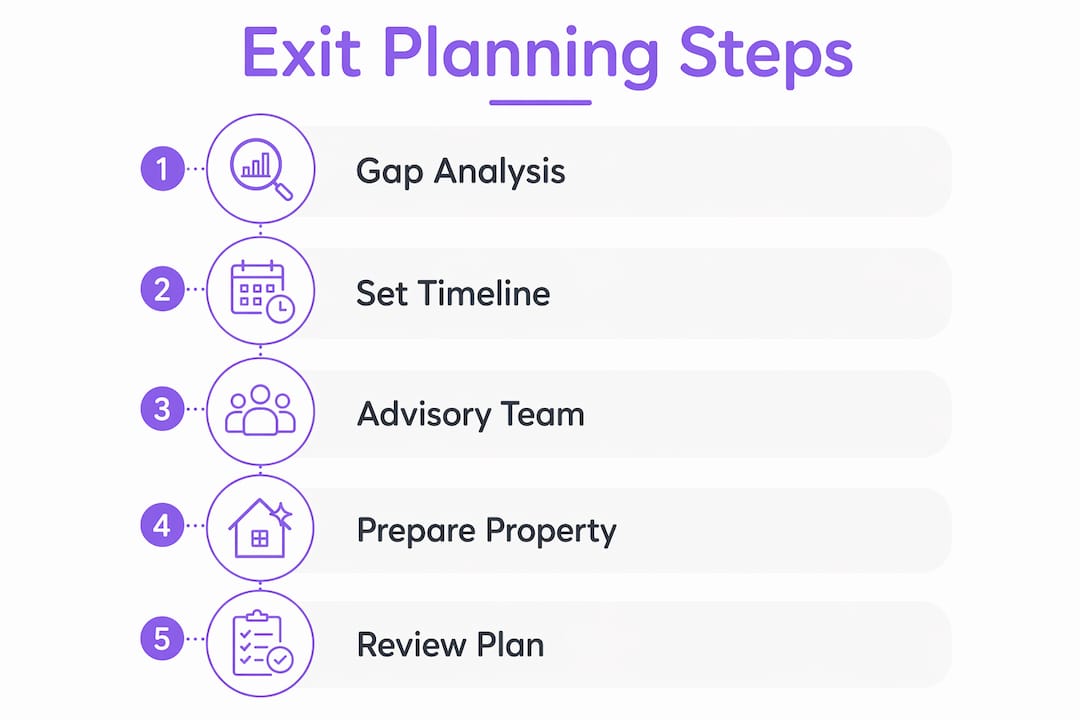
A documented exit plan is not a luxury for large-scale investors. Any homeowner or investor with a property worth selling benefits from having one. The process is straightforward when broken into clear steps.
Start with a gap analysis. Identify the difference between your property’s current value and the net proceeds you need to meet your financial goals. Early gap analysis conducted 18–36 months before your intended exit gives you time to act on what you find.
Set a clear exit timeline. Vague intentions to “sell eventually” produce poor outcomes. Commit to a 12, 24, or 36-month window and work backwards from it. Your timeline determines which tax strategies are available and how much time you have for improvements.
Assemble your advisory team. You need at minimum a property-savvy accountant, a solicitor familiar with New Zealand property law, and a real estate agent or buyer’s agent who knows your local market. Each brings a different lens to the exit decision.
Prepare the property for transaction readiness. This means completing deferred maintenance, obtaining a current valuation, gathering all compliance documentation, and identifying any improvements that would lift the sale price above their cost. Not every renovation adds value. Focus on what buyers in your market actually pay for.
Use a modular approach. Sophisticated investors blend exit methods across their portfolios, selling some properties outright, refinancing others, and using partial sales or structured transfers where the tax position warrants it. You do not have to pick one method and apply it universally.
Build in contingency plans. Markets shift. Personal circumstances change. Your exit plan should include a fallback position if your primary method becomes unavailable or unfavourable. Estate planning integration is also worth considering, particularly if the property forms a significant part of your overall wealth.
Review the plan regularly. A plan written once and filed away is not a plan. Set a calendar reminder to revisit your exit strategy every six months. Timeline flexibility is one of the most underrated advantages an investor can build into their approach.
For landlords specifically, Easysale’s guide to selling in 2026 covers the tax and timing considerations most relevant to the current market. Structured exit planning, as outlined in frameworks like those used in private equity M&A, follows the same logic at the property level: identify value drivers, set targets, and execute with discipline.
Key takeaways
A documented exit strategy, started 18–36 months before sale, is the most reliable way to protect net returns and reduce tax exposure in New Zealand property transactions.
| Point | Details |
|---|---|
| Define your exit early | Start planning 18–36 months before your intended sale to maximise tax and value options. |
| Tax stacks erode gains | Unplanned exits can lose 30% or more of gross gains to layered tax obligations. |
| Net equity is the real measure | Calculate proceeds after debt, tax, and fees before deciding whether to sell or hold. |
| Use a modular approach | Combine outright sales, partial sales, and refinancing to meet liquidity and tax goals. |
| Review your plan regularly | Revisit your exit strategy every six months as market conditions and goals change. |
Why Kiwi investors leave money on the table at exit
The most common mistake I see is investors fixating on the sale price and ignoring what actually lands in their account. A $1.2 million sale with a poorly structured ownership position and no tax planning can net less than a $1.05 million sale handled with care. The gross number feels good. The net number is what matters.
The second mistake is waiting for the market to force the decision. Investors who exit reactively, because a tenant has left, a repair bill has arrived, or prices have started falling, almost always get worse outcomes than those who exit on a schedule they chose. Reactive exits compress your timeline and remove your negotiating position.
Exit strategy is not a one-time event. It is ongoing portfolio management. The investors I have seen do this well treat their exit plan the same way they treat their mortgage review: something they revisit regularly, adjust when circumstances change, and never leave on autopilot. The tax implications of selling in New Zealand are real and specific. Getting advice early costs far less than restructuring under pressure.
Start before you think you need to. The best exit plans are the ones that feel premature when you write them.
— Aaron
How Easysale supports your property exit in New Zealand
When your exit plan calls for a fast, certain sale without the delays of traditional listings, Easysale offers a direct path forward.

Easysale buys residential properties across New Zealand for cash, with no agent commissions, no open homes, and no waiting on finance approvals. Whether you are selling privately for cash to meet a financial deadline, exiting a damaged property as-is, or downsizing for retirement, Easysale works to your timeline. The process is three steps: submit your property details, receive a no-obligation cash offer within 24 hours, and settle when it suits you. Visit Easysale to get your offer and take the next step in your exit plan.
FAQ
What is an exit strategy in real estate?
An exit strategy in real estate is a planned approach to selling or divesting from a property to achieve a specific financial outcome. It defines the method, timing, and tax structure of the sale before you are ready to list.
How early should I start planning my property exit?
Experts recommend starting formal exit planning 18–36 months before selling. This window allows time for tax structuring, property improvements, and documentation that directly affect your net proceeds.
What exit strategy options are available to Kiwi investors?
The main options include outright sale, instalment sale, partial sale, refinancing, and like-kind exchanges. Each carries different tax implications and suits different financial goals, so the right choice depends on your specific situation.
How much can strategic exit planning save in taxes?
Strategic exit planning can reduce tax liability by 20–40% through methods like instalment sales and structured ownership transfers. The actual saving depends on your property’s gain, your income level, and how early you begin planning.
Does Easysale buy properties in any condition?
Yes. Easysale purchases residential properties across New Zealand regardless of condition, including damaged or tenanted properties. Sellers receive a cash offer within 24 hours with no agent fees or open homes required.
Recommended
