
Sell your home in any condition: fast, fair NZ options

Roughly 1 in 5 NZ sales involve ‘as is’ conditions, yet many homeowners still believe they must spend thousands on repairs before listing. That belief can cost you time, money, and enormous stress, especially when life demands a fast decision. Whether you’re facing financial pressure, dealing with a damaged property, or managing an inherited home you simply can’t maintain, you have more options than you might realise. This article explains what selling ‘in any condition’ actually means in New Zealand, how the process works, and how you can move forward with confidence and clarity.
Table of Contents
- What does selling ‘in any condition’ really mean?
- How ‘as is/where is’ property sales work in New Zealand
- Why sellers choose to sell properties in any condition
- Selling via cash buyers versus the traditional agent route
- Pro tips and pitfalls: Getting the best outcome from an ‘any condition’ sale
- What to do next: Navigating an ‘any condition’ property sale
- How easySale helps you sell any home in any condition, fast
- Frequently asked questions
Key Takeaways
| Point | Details |
|---|---|
| Homes sell in any state | You can sell your property with issues, damage, or clutter directly—repairs aren’t mandatory. |
| Disclosure is essential | Sellers must reveal known faults and compliance issues for any ‘as is’ sale in New Zealand. |
| Fast cash offers available | Direct buyers can give a fair, no-obligation cash proposal in as little as 24 hours. |
| Compare net proceeds | Weigh cash offers against agent-assisted sales by looking at costs, time, and hassle. |
What does selling ‘in any condition’ really mean?
Selling ‘in any condition’ or ‘as is/where is’ means you sell your property in its current state, without making repairs or providing any guarantees about its condition. The buyer accepts the property, faults and all, after completing their own due diligence. This is a well-established approach in New Zealand, and it suits a wide range of sellers and buyers.
A common myth is that homes with serious damage or major flaws simply cannot sell. That is not true. As is/where is sales attract investors, renovators, and developers who actively seek properties needing work. These buyers price in the cost of repairs and move quickly.
Here is what sellers and buyers are agreeing to in an ‘as is’ sale:
- Seller: No repairs, no warranties on condition, full disclosure of known defects
- Buyer: Accepts the property in its current state, conducts their own building inspections
- Both parties: Agree on price reflecting the property’s current condition
- Legal requirement: Seller must disclose all known material defects under the Fair Trading Act
Selling ‘as is’ does not mean selling dishonestly. You are still legally required to disclose what you know. The difference is that you are not obligated to fix anything before settlement.
For a full breakdown of your rights and responsibilities, the why sell house as is guide covers the key legal and practical points in plain language.
How ‘as is/where is’ property sales work in New Zealand
The process follows a clear sequence. First, you disclose all known faults to potential buyers. This is not optional. Under the vendor’s disclosure obligations, hiding known issues can expose you to Fair Trading Act penalties, even in an ‘as is’ sale. Transparency protects you.
Next, the buyer arranges their own building inspection and reviews all available documentation. The sale and purchase agreement will include specific ‘as is/where is’ clauses, making it clear the buyer accepts the property in its current state. Once both parties sign, the sale proceeds to settlement.
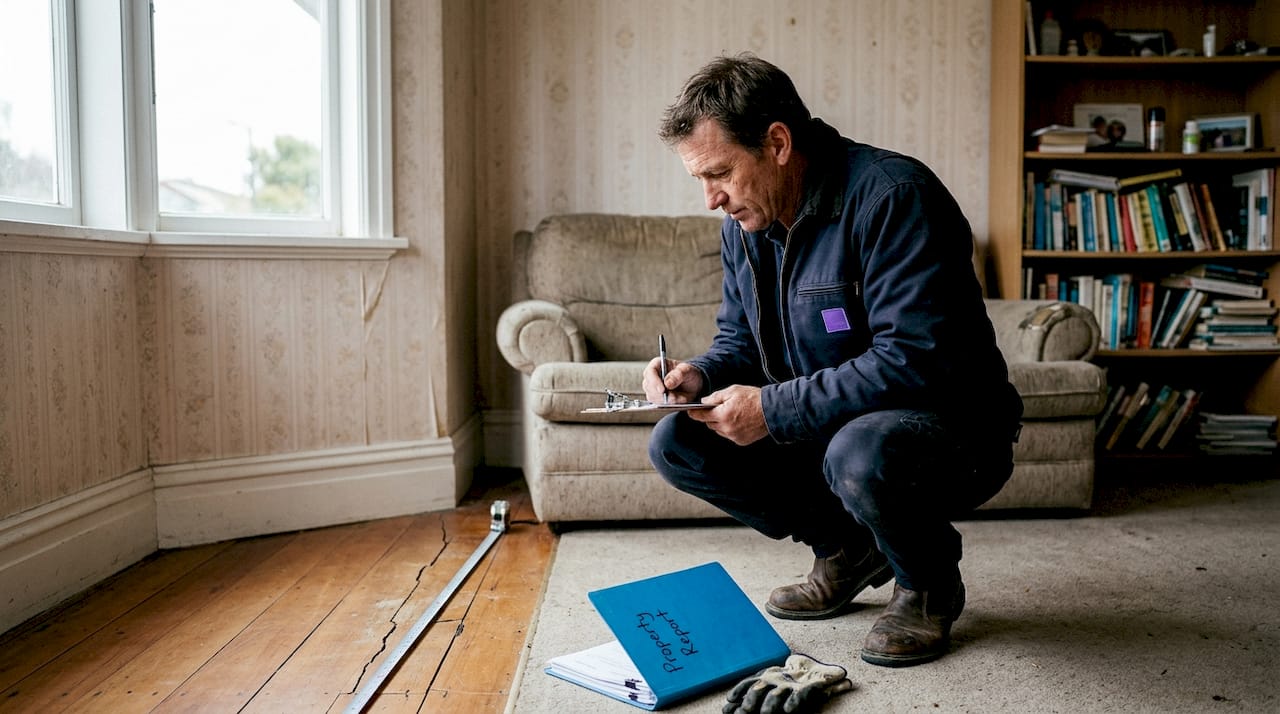
Pro Tip: Keep written records of every fault you disclose and every communication with buyers. If a dispute arises after settlement, your documentation is your best protection.
Here is a quick overview of the types of properties that commonly sell ‘as is’ in New Zealand:
| Property type | Common issues | Typical buyer |
|---|---|---|
| Earthquake-damaged | Structural cracks, foundation issues | Investors, developers |
| Fire or flood-affected | Smoke, water, or mould damage | Renovators, cash buyers |
| Unconsented work | Illegal additions, missing permits | Experienced investors |
| Dilapidated or neglected | Deferred maintenance, rot, pests | Renovators, flippers |
| Hoarder or meth-affected | Contamination, excessive clutter | Specialist buyers |
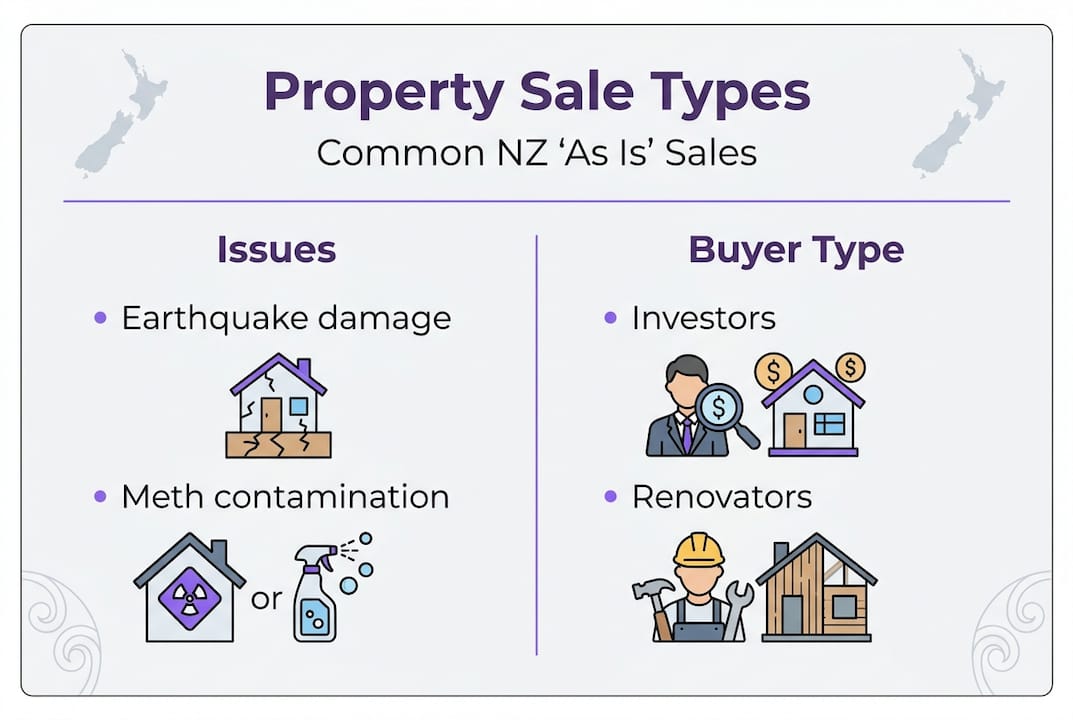
A real-world example: a Christchurch home with significant floor issues sold for $507,000 ‘as is’, demonstrating that buyers will pay fair prices for damaged properties when the situation is clearly presented. If you want practical guidance on the process, the how to sell as-is property guide walks you through each step. You can also explore options to sell property without renovation if you want to avoid the cost and delay of repairs entirely.
Why sellers choose to sell properties in any condition
There is no single reason homeowners choose this route. Life is complicated, and sometimes a fast, clean sale matters far more than squeezing out every last dollar.
The most common motivations include:
- Financial urgency: Avoiding mortgage stress, bankruptcy proceedings, or forced sale by a lender
- Major damage: Earthquake, fire, flood, or meth contamination that makes repairs impractical or unaffordable
- Inherited properties: Reducing holding costs and the burden of managing a property you did not plan to own
- Relocation: Moving quickly for work, family, or health reasons without time for a lengthy sale process
- Vacant properties: Cutting ongoing costs like rates, insurance, and maintenance on a home you are not using
For urgent situations like these, the traditional agent route can feel impossibly slow. A standard agent-led sale in New Zealand can take three to six months from listing to settlement. When you are under financial pressure or dealing with a damaged property, that timeline is simply not workable for many people.
The good news is that damaged homes at auction regularly attract competitive bidding, confirming that the market for ‘as is’ properties is real and active. Choosing fast sale services can reduce that timeline from months to days.
Selling via cash buyers versus the traditional agent route
Understanding your two main options helps you make the right call for your situation. Here is a direct comparison:
| Factor | Cash buyer | Traditional agent |
|---|---|---|
| Time to offer | 24 to 48 hours | Weeks to months |
| Repairs required | None | Often expected |
| Agent fees | None | Typically 2 to 4% |
| Marketing costs | None | Can be significant |
| Settlement timeline | Seller’s choice | Buyer-driven |
| Price achieved | Below market value | Closer to market value |
Cash buyers offer within 24 to 48 hours, settle on your preferred timeline, and bypass repairs, agents, and marketing entirely. The trade-off is a lower headline price. But when you factor in agent commissions, marketing costs, repair expenses, and months of holding costs, the net proceeds can be surprisingly close.
Here is how the cash buyer process typically works:
- Submit your property details online, including photos and a description of known issues
- The buyer evaluates the property and prepares a no-obligation cash offer
- You receive the offer, usually within 24 to 48 hours
- If you accept, you agree on a settlement date that suits your timeline
- Settlement completes and funds are transferred, often within days or a few weeks
For more detail on how offers are structured, the understanding property offers guide is worth reading. You can also compare property sale options NZ to see which route fits your circumstances. If you are weighing up whether speed is worth the price difference, why accept a fast offer breaks down the real numbers. The as-is property process also provides useful context on what buyers look for.
Pro tips and pitfalls: Getting the best outcome from an ‘any condition’ sale
Selling ‘as is’ is straightforward, but a few common mistakes can cost you money or create legal headaches.
Pro Tip: Always disclose every known issue in writing before signing any agreement. Hiding known issues is a serious legal risk even in ‘as is’ sales, and post-settlement disputes are far more costly than upfront honesty.
Here are the key pitfalls to avoid and tips to protect yourself:
- Do not overspend on preparation. A fresh coat of paint rarely changes an investor’s offer. Focus on disclosure, not cosmetics.
- Set realistic price expectations. Cash buyers and investors price based on after-repair value, not current market comparisons for renovated homes.
- Document everything. Keep written records of all disclosed faults, inspection reports, and buyer communications.
- Do not rush into the first offer. Even in urgent situations, getting two or three offers gives you a clearer picture of fair value.
- Check your disclosure obligations carefully. If you are unsure what must be disclosed, consult a property lawyer before signing anything.
For a step-by-step checklist, the steps to sell as-is property fast guide covers the process clearly. You can also find practical advice in the how to sell house in any condition resource.
What to do next: Navigating an ‘any condition’ property sale
If you are ready to move forward, a clear action plan makes the process far less overwhelming. Start with these steps:
- List your property’s known issues. Write down every fault, from structural problems to unconsented work, so you are prepared for disclosure.
- Request a no-obligation offer from a cash buyer. This costs you nothing and gives you a baseline for comparison.
- Compare net proceeds, not just headline prices. Factor in agent fees, repair costs, marketing, and holding costs when evaluating your options.
- Check references and past sales when choosing between buyers or agents. A reputable buyer will have a track record you can verify.
- Consult a property lawyer if you have any uncertainty about your legal obligations, especially for properties with complex issues like unconsented work or contamination.
The market for distressed properties is stronger than most people expect. Derelict and hoarder homes regularly attract investor offers, with one such property selling for around $400,000 despite its condition. You do not need a perfect home to achieve a fair result. The sell house in any condition fast guide can help you take the next step with confidence.
How easySale helps you sell any home in any condition, fast
If your property needs work, has a complicated history, or you simply need to sell quickly, easySale is built for exactly that situation. We are direct cash buyers who make fair cash offers for damaged houses across New Zealand, regardless of condition. No repairs, no clean-out, no agent fees, and no drawn-out negotiations.

Our process is simple: submit your property details, receive a no-obligation offer within 24 hours, and settle on a timeline that works for you. Whether you are dealing with earthquake damage, an inherited property, financial pressure, or a home that has seen better days, we can help. If you prefer to sell your house privately without the complexity of a traditional listing, we offer a straightforward path to settlement. There is no commitment required to get started, and our team is ready to discuss your options at any time.
Frequently asked questions
Is it legal to sell a damaged or unconsented property ‘as is’ in New Zealand?
Yes, it is legal as long as all known significant defects and compliance notices are fully disclosed to the buyer before the sale and purchase agreement is signed.
What kinds of properties qualify as ‘in any condition’?
Fire-damaged, earthquake-affected, unconsented, cluttered, dilapidated, or meth-affected homes can all be sold ‘as is’ provided buyers accept them after completing their own due diligence.
How quickly can I sell a home in any condition?
With a direct cash buyer, you can receive an offer within 24 hours and complete the entire sale in days or a few weeks, depending on your preferred settlement date.
Will I get less money selling ‘as is’ than renovating before selling?
You may receive a lower headline price, but when you subtract renovation costs, agent fees, and holding expenses, net proceeds after all costs can be comparable or sometimes better than a renovated sale.
Recommended
- Sell Your House Fast within 7 days | Fair Cash Buyers NZ
- How to Sell Property Fast in NZ: Easy Step-by-Step Guide
- Why Sell Fast in NZ: Key Benefits for Homeowners
- How to Sell Property Fast NZ: Step-by-Step Success
- Getting Your Home Ready to Sell - Royal Carpet Cleaning
- Preparing Home for Sale: Boost Curb Appeal and Value | Sabatalo Contracting
