
The role of conveyancing in property sales explained
TL;DR:Conveyancing is a legal process that ensures property ownership transfers are valid, secure, and enforceable. It involves preparing contracts, conducting searches, managing inquiries, and overseeing exchange and completion to protect both buyers and sellers. Early instruction and clear communication from both parties help prevent delays and legal issues during the sale.
Conveyancing is the legal process that transfers property ownership from seller to buyer, making a sale both valid and enforceable. The role of conveyancing in sales goes well beyond shuffling paperwork. It covers preparing contract documents, conducting property searches, managing enquiries, coordinating contract exchange, and overseeing completion-day payments. Conveyancers and solicitors are the specialists who handle these tasks on your behalf. Without this process, property transactions would carry serious legal and financial risks for everyone involved. Whether you are selling your first home or buying your fifth, understanding how conveyancing works gives you a real advantage.
What are the main steps in the conveyancing process during a property sale?
The conveyancing process in sales follows a clear sequence from instruction through to post-completion. Knowing each stage helps you stay prepared and avoid surprises.
- Instruction and identity checks. You appoint a conveyancer or solicitor, who then verifies your identity and confirms their authority to act on your behalf. This is a legal requirement under anti-money laundering regulations.
- Drafting the contract pack. Your conveyancer prepares a contract pack that includes the title register, title plan, property information forms, and fittings and contents lists. This pack is sent to the buyer’s conveyancer to begin their review.
- Property searches. The buyer’s conveyancer orders searches from local authorities, water authorities, and environmental agencies. These searches reveal planning history, drainage responsibilities, flood risk, and any local development proposals that could affect the property.
- Raising and answering enquiries. The buyer’s conveyancer raises questions about the property based on the contract pack and search results. Your conveyancer answers these on your behalf, often requesting additional documents like building consents or certificates.
- Mortgage offer review. If the buyer is using finance, their conveyancer reviews the mortgage conditions to confirm they align with the contract terms. Any conditions that need satisfying before exchange are addressed at this stage.
- Exchange of contracts. Once all enquiries are resolved and both parties are ready, contracts are exchanged. The buyer pays a deposit, typically around 10%, and a completion date is agreed. At this point, the sale becomes legally binding with financial penalties applying if either party withdraws.
- Completion day. Funds are transferred from the buyer’s conveyancer to yours. Once received, your mortgage is discharged, keys are released, and ownership passes to the buyer. Completion typically occurs in the early afternoon on the agreed date.
- Post-completion tasks. Your conveyancer pays any outstanding fees, discharges your mortgage with the lender, and distributes the remaining sale proceeds to you. The buyer’s conveyancer handles Land Registry registration and any applicable tax filings, which can take several weeks to finalise.
Pro Tip: Instruct your conveyancer as soon as you accept an offer, or even before you list your property. Early instruction prevents unnecessary hold-ups caused by late search requests and slow document gathering.
How does conveyancing protect sellers and buyers during a property sale?
Conveyancing is risk management, not just administration. Conveyancers identify title and contract risks before exchange to prevent problems that can derail sales or lead to costly disputes after settlement. This is one of the most underappreciated aspects of the conveyancing process in sales.
Here is how that protection works in practice for both parties:
- Title verification. Your conveyancer checks the title register to confirm you legally own the property and have the right to sell it. Any restrictions, covenants, or third-party rights are identified and disclosed upfront.
- Boundary and dispute clarification. Enquiries address boundary positions, shared access arrangements, and any known disputes with neighbours. Resolving these before exchange prevents legal challenges after the sale.
- Planning and building consent checks. If you have carried out alterations or extensions, your conveyancer confirms the relevant consents and code compliance certificates are in place. Missing documents are a frequent cause of buyer concern and can delay or kill a sale.
- Contract term negotiation. Both conveyancers negotiate the contract terms to protect their respective clients. This includes fixtures and fittings, settlement dates, and any special conditions.
- Deposit and exchange management. Proper handling of the deposit at exchange protects the seller if the buyer withdraws after contracts are signed. The exchange stage is the point of no return in a sale, and conveyancers work hard to resolve all outstanding issues before reaching it.
- Completion logistics. Your conveyancer coordinates the transfer of funds, mortgage discharge, and key release to prevent possession or payment problems on the day.
“Conveyancing is often misunderstood as mere paperwork, but it is the mechanism that prevents costly legal disputes from arising after a sale has completed.” See more on legal advice in property sales.
What are common challenges and delays in the conveyancing process?
Delays in conveyancing are common, and most are avoidable with the right preparation. Understanding where things typically go wrong helps you take steps to keep your sale on track.
The most frequent causes of hold-ups include:
- Slow search results. Local authority and environmental searches can take anywhere from a few days to several weeks depending on the council. This is often outside your conveyancer’s control, but ordering searches early reduces the impact.
- Delayed responses to enquiries. Slow responses to buyer enquiries are one of the most common causes of conveyancing delays. If you cannot locate a building consent or certificate quickly, the whole process stalls.
- Mortgage offer expiry. Mortgage offers have expiry dates. If the conveyancing process runs long, a buyer’s offer may lapse and need to be reissued, adding weeks to the timeline.
- Missing or incomplete paperwork. Sellers who cannot produce planning permissions, compliance certificates, or body corporate documents create bottlenecks that slow everything down.
- Poor communication between conveyancers. Poor communication correlates with increased risk of delays and transaction breakdowns. When conveyancers on both sides are slow to respond to each other, the whole chain suffers.
- Chain complications. If your sale is linked to other transactions, a problem in any part of the chain can hold up your settlement even when your own paperwork is in perfect order.
The good news is that sellers have real influence over several of these factors. Gathering your property documents before listing, responding to your conveyancer promptly, and choosing a communicative solicitor all make a measurable difference.
Pro Tip: Prepare documents like building consents, planning permissions, and compliance certificates before you accept an offer. Preparing required paperwork early is one of the most effective ways to shorten your conveyancing timeline. Check the property selling checklist for a full list of what to gather.
How do conveyancing roles differ between sellers and buyers?
The conveyancing roles in property sales are distinct for each party, though both conveyancers must work together to reach a successful completion. Understanding who does what helps you know what to expect from your own conveyancer and what the other side is managing.
| Responsibility | Seller’s conveyancer | Buyer’s conveyancer |
|---|---|---|
| Contract preparation | Prepares and issues the contract pack with title and property details | Reviews the contract pack and raises enquiries |
| Property searches | Not required | Orders local authority, water, and environmental searches |
| Enquiries | Answers enquiries and sources supporting documents | Raises enquiries and reviews responses |
| Mortgage handling | Arranges discharge of seller’s existing mortgage | Reviews buyer’s mortgage conditions and satisfies lender requirements |
| Exchange | Receives signed contract and confirms exchange with buyer’s conveyancer | Pays deposit and confirms exchange |
| Completion | Receives purchase funds and releases keys | Transfers funds and takes possession |
| Post-completion | Pays fees, discharges mortgage, distributes proceeds | Registers title at Land Registry and files tax returns |
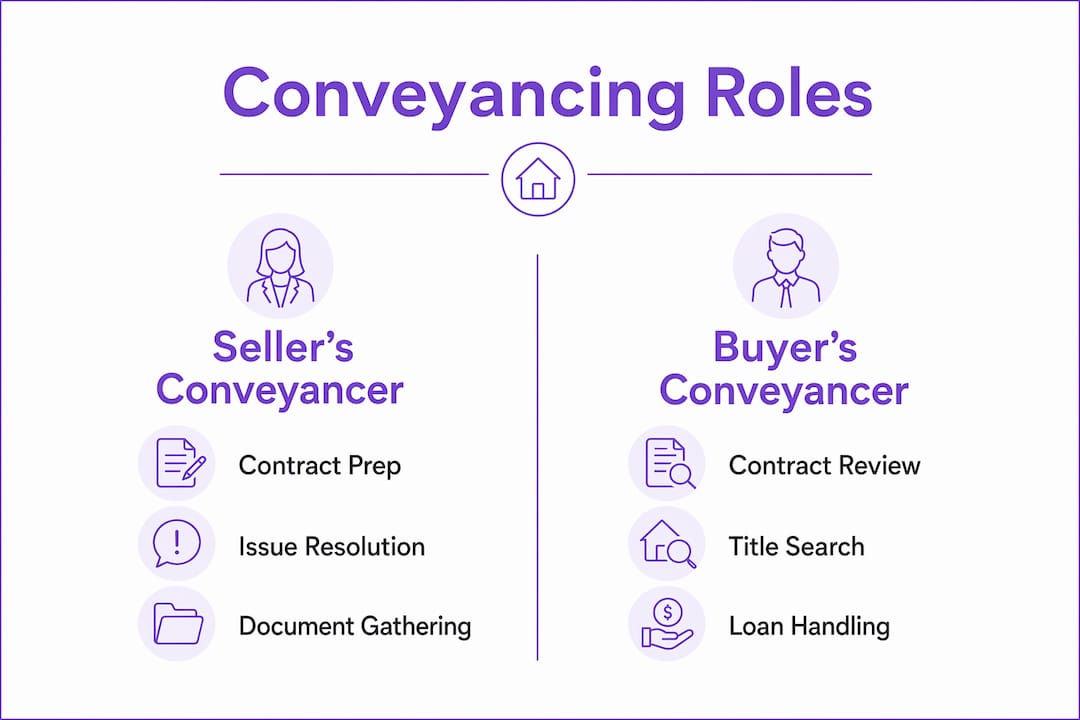
The seller’s conveyancer focuses on presenting the property clearly and resolving any issues that could prevent the buyer from proceeding. The buyer’s conveyancer takes a more investigative role, scrutinising the property’s legal and physical history before committing their client’s funds.
In leasehold or more complex transactions, both roles expand considerably. The seller’s conveyancer may need to obtain management packs from body corporates or freeholders, while the buyer’s conveyancer reviews lease terms, service charges, and any restrictions on use. Effective liaison between both conveyancers is what keeps these more complicated sales moving forward without unnecessary delays.
For a clearer picture of how timing works across the full process, the property sale timeline guide is worth reviewing before you begin.
Key takeaways
Conveyancing is the legal backbone of every property sale, protecting both parties and making the transfer of ownership valid, secure, and final.
| Point | Details |
|---|---|
| Conveyancing makes sales legal | Contract exchange and completion are the steps that make a property sale legally binding and enforceable. |
| Both parties need their own conveyancer | Sellers and buyers have distinct conveyancing responsibilities that require separate representation throughout the process. |
| Early instruction reduces delays | Appointing a conveyancer before or immediately after accepting an offer prevents hold-ups from late searches and missing documents. |
| Communication drives outcomes | Timely responses from sellers and clear communication between conveyancers directly reduce the risk of delays and chain collapse. |
| Exchange is the point of no return | Once contracts are exchanged, withdrawal carries serious financial consequences, making pre-exchange preparation the most critical phase. |
Why conveyancing deserves more respect than it gets
Most people I speak with think of conveyancing as the slow, frustrating part of selling a property. They see it as a box-ticking exercise that lawyers drag out unnecessarily. That view misses what is actually happening.
Conveyancing is where the real risk in a property transaction gets identified and resolved. A good conveyancer is not just processing forms. They are checking whether you actually have the legal right to sell, whether any consents are missing, whether the buyer’s finance is solid, and whether the contract terms genuinely protect your interests. That work prevents disputes that can cost far more than the conveyancing fee itself.
The sellers I have seen run into the most trouble are those who treat their conveyancer as a passive participant. They delay returning documents, ignore requests for information, and then wonder why the sale is taking so long. Responsiveness from your side is not optional. It is one of the biggest factors in how quickly your sale completes.
One thing that surprises people is how much the relationship between the two conveyancers matters. When both sides communicate clearly and promptly, transactions move. When one side goes quiet, the whole chain stalls. Choosing a conveyancer with a reputation for responsiveness is not a small detail. It is a decision that shapes your entire experience.
If you are selling and feeling anxious about the process, the best thing you can do is get organised early. Gather your documents, respond quickly, and ask your conveyancer to explain anything you do not understand. The process is not designed to be confusing. It is designed to protect you.
— Aaron
How Easysale can support your property sale
Understanding the conveyancing process is the first step toward a confident, well-prepared sale. Easysale is built for Kiwi homeowners who want to move forward without the stress of drawn-out legal processes or agent commissions.

If you are looking for a faster path, Easysale buys properties directly in any condition, with no agents and no fees. You receive a fair cash offer, and settlement happens on your timeline. There are no chains to worry about and no conveyancing delays holding up your plans. Visit Easysale to get a no-obligation offer and take the next step toward a straightforward sale.
FAQ
What is the role of conveyancing in a property sale?
Conveyancing is the legal process that transfers property ownership from seller to buyer, covering contract preparation, searches, enquiries, exchange, and completion. It makes the sale legally binding and protects both parties from financial and legal risks.
How long does the conveyancing process take?
The conveyancing process typically takes between six and twelve weeks from instruction to completion, though delays caused by slow searches, missing documents, or chain complications can extend this timeline.
What happens if conveyancing is not done properly?
Errors or omissions in conveyancing can result in disputed ownership, undisclosed liabilities, or an invalid sale. Both buyers and sellers can face significant financial and legal consequences if the process is not handled correctly.
Do sellers need a conveyancer as well as buyers?
Yes. Both the seller and buyer require their own conveyancer or solicitor to represent their separate legal interests throughout the transaction. The two conveyancers work together to reach exchange and completion.
What is the most important stage in the conveyancing process?
Exchange of contracts is the most critical stage. Once contracts are exchanged, the sale is legally binding and withdrawal by either party carries serious financial penalties, including potential loss of the deposit.
Recommended
