
What is a vacant property sale? A Kiwi seller's guide


TL;DR:A vacant property sale requires the seller to deliver the property free of occupants and personal belongings at settlement, ensuring the buyer can take immediate possession.Failing to meet this obligation can lead to delays, contract termination, or damages, making proper legal and physical preparation essential.
A vacant property sale is defined as a transaction where the seller must deliver the property to the buyer completely free of occupants, personal belongings, and any legal impediments at the point of settlement. In property law, this obligation is known as vacant possession, and it sits at the heart of most standard New Zealand residential sale and purchase agreements. Whether you have inherited a home, relocated for work, or simply need to sell quickly, understanding what vacant possession actually requires will save you from costly delays and legal headaches.
What is a vacant property sale and what does vacant possession mean?
Vacant possession is defined as the seller’s contractual obligation to deliver the property without occupants or excluded belongings at the time of completion. This means the buyer must be able to walk in on settlement day and use the property without interference from anyone or anything the seller has left behind. It is not simply about the property looking tidy. It is a legal standard with real consequences if it is not met.
The obligation covers three distinct areas. First, the property must be free of people. This includes the sellers themselves, any tenants, family members, squatters, or anyone else with a right or claim to occupy the premises. Second, the property must be free of personal belongings that are not included in the sale. Furniture, appliances, rubbish, and stored items all count. Third, the buyer must receive full and undisturbed enjoyment of the property from the moment of settlement.
One important nuance: courts consider whether leftover chattels substantially interfere with the buyer’s occupation, not whether the property is literally bare. A forgotten garden rake is unlikely to constitute a breach. A shed full of furniture almost certainly will. This distinction matters when you are preparing for settlement and wondering how thorough you need to be.
If you fail to deliver vacant possession, the consequences are serious. Buyers may delay completion, seek to terminate the contract, or claim financial damages depending on what the agreement says. A breach at this stage can unravel months of preparation and negotiation, so getting it right is not optional.
Pro Tip: Read your sale and purchase agreement carefully before settlement day. Look for the specific clause that confirms vacant possession is required, and note the exact time it must be achieved. Many sellers assume midday on settlement day is standard, but the contract governs.
How does a vacant sale differ from selling a tenanted property?
The core difference is straightforward. In a vacant property sale, the buyer receives the property empty and can occupy or use it immediately. In a tenanted sale, the buyer steps into the seller’s shoes as landlord, and the existing tenancy agreement transfers to them automatically.

Tenancy rights transfer to the new owner when a property is sold with tenants in place, which means the buyer cannot simply ask the tenants to leave after settlement. This affects the buyer pool significantly. Owner-occupiers who want to move in immediately will not purchase a tenanted property unless the tenancy ends before settlement. Investors, on the other hand, may actively prefer a tenanted property with rental income already flowing.
The table below summarises the key differences between the two sale types.
| Factor | Vacant property sale | Tenanted property sale |
|---|---|---|
| Buyer access at settlement | Immediate | Subject to tenancy terms |
| Buyer pool | Owner-occupiers and investors | Primarily investors |
| Contract complexity | Lower | Higher, includes tenancy details |
| Seller preparation | Clear property before settlement | Coordinate with tenants or end tenancy |
| Settlement speed | Often faster | Can be slower due to tenancy obligations |
| Risk of dispute | Lower if property is cleared | Higher if tenancy terms are unclear |
Sellers sometimes assume that having tenants in place makes a property harder to sell. That is not always true. But if your goal is a fast, certain sale to the widest possible buyer pool, a vacant property sale gives you more flexibility. The trade-off is that you carry the costs of an empty property until settlement, including rates, insurance, and potentially an empty homes premium if local policy applies. That financial pressure is real and worth factoring into your timing.
What practical steps are involved in preparing a vacant property for sale?
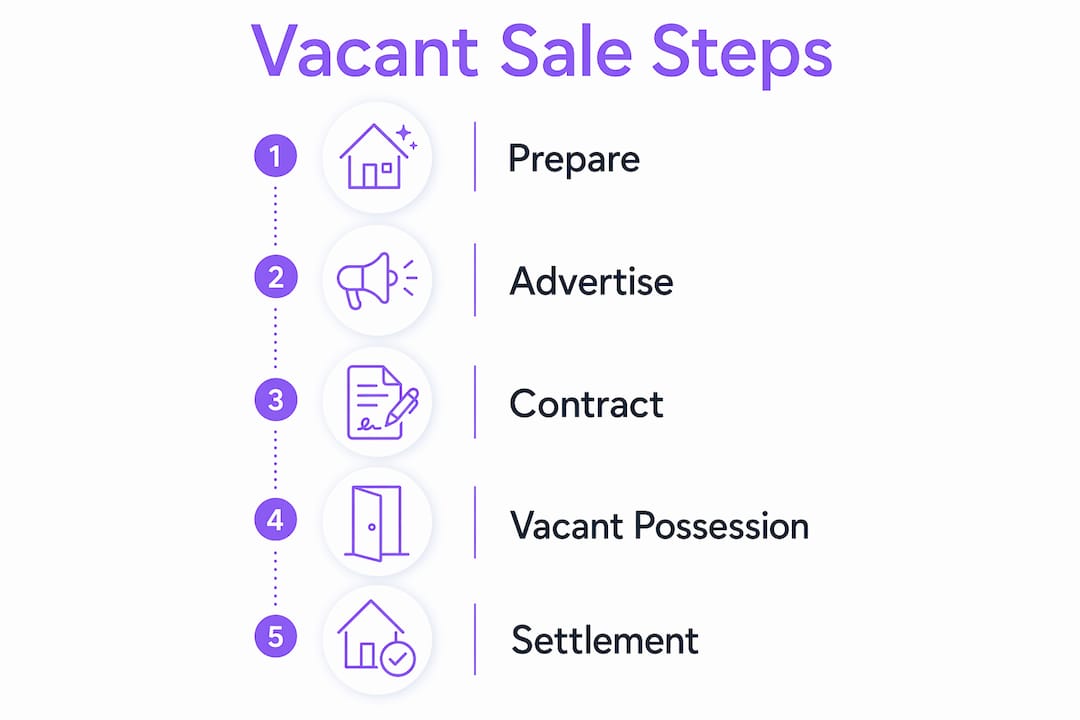
Preparing a property to meet the vacant possession standard is more involved than most sellers expect. The physical and legal steps need to run in parallel, and leaving either too late creates risk. Here is a clear sequence to follow.
- Confirm your legal authority to sell. If the property is part of an estate, confirm that probate or administration is in order before listing. Legal or administrative situations such as probate directly affect when vacant possession can be delivered, and timing your sale around that process avoids last-minute complications.
- End any tenancies lawfully. If tenants are in the property, you must follow the correct legal process under the Residential Tenancies Act to end the tenancy before settlement. Giving insufficient notice or using the wrong grounds for termination can leave you unable to deliver vacant possession on the agreed date.
- Remove all personal belongings. Work through the property room by room. Clear out furniture, appliances, garden equipment, and anything stored in garages, sheds, or under the house. Check the contract for what is included in the sale and remove everything else.
- Address any trespassers or unlawful occupants. If someone is occupying the property without legal authority, you may need a court order to remove them. Start this process early. It takes time, and settlement will not wait.
- Clean and carry out basic repairs. A clean, well-presented vacant property photographs better and attracts stronger offers. You do not need a full renovation, but selling a property as-is in good order still means removing hazards and ensuring the property is safe to inspect.
- Review your contract clauses. Work with your solicitor to confirm the vacant possession clause is clearly worded, specifying the time and standard required. Vague clauses create disputes. Precise language protects both parties.
Pro Tip: Book a final walkthrough of the property the day before settlement. Bring a checklist and confirm every room, outbuilding, and storage space is clear. This one step catches the oversights that cause settlement-day problems.
What are the benefits and challenges of selling a vacant property quickly?
Selling an unoccupied home carries genuine advantages, but it also comes with pressures that sellers need to plan for honestly.
Benefits of a vacant property sale:
- Buyers who want immediate occupation, such as families relocating or first-home buyers, can move in on settlement day. This expands your buyer pool and can support a stronger sale price.
- Settlement timelines are often shorter because there are no tenancy obligations to manage or coordinate around.
- Vacant sales reduce buyer risk and can speed completion, which appeals to buyers who want certainty.
- Disputes over possession are less likely when the property is genuinely empty and well-documented before settlement.
Challenges to be aware of:
- An empty property still costs money. Rates, insurance, and maintenance continue regardless of whether anyone is living there.
- Some jurisdictions apply financial penalties or premiums to properties that remain vacant for extended periods, creating pressure to sell or rent promptly.
- Vacant properties can be harder to insure at standard rates and may attract vandalism or unauthorised entry if left unattended for long periods.
- Every excluded item, right of occupation, or leftover chattel can cause a breach and delay completion even when the property appears empty. The legal standard is stricter than the visual impression.
The financial pressure of carrying a vacant property is often what motivates sellers to move quickly. That urgency is understandable, but rushing the preparation process without meeting the vacant possession standard creates bigger problems than a slightly longer timeline would have. Plan the clearance and legal steps first, then set your settlement date.
Key takeaways
A vacant property sale requires the seller to deliver the property legally and physically empty at settlement, and failing to meet this standard can result in contract termination, damages, or significant delays.
| Point | Details |
|---|---|
| Vacant possession is a legal obligation | The seller must deliver the property free of occupants and excluded belongings at settlement. |
| Courts apply a substantiality test | Trivial leftover items may not breach possession, but significant chattels or occupants will. |
| Vacant sales differ from tenanted sales | Vacant sales allow immediate buyer occupation; tenanted sales transfer the tenancy to the buyer. |
| Preparation requires parallel steps | Legal processes such as tenancy termination and physical clearance must run at the same time. |
| Carrying costs add financial pressure | Empty properties attract ongoing costs and potential premiums, making timely sale planning important. |
Why clear contract terms matter more than sellers realise
From my experience working with Kiwi homeowners selling vacant or uninhabitable properties, the single most common mistake is treating vacant possession as a physical task rather than a legal one. Sellers focus on clearing the house and assume that is enough. It is not.
The obligation is contractual first. Detailed contracts help avoid disputes, and I have seen settlements fall over because a seller left a chest freezer in the garage or because a family member was still storing belongings in the shed. Neither situation looked serious on the surface, but both gave the buyer grounds to delay.
My honest advice for anyone selling a vacant or inherited property: get your solicitor to review the vacant possession clause before you sign anything. Confirm the exact time possession must be achieved, not just the date. And if you are dealing with a property that has been unoccupied for a long time, check whether any unlawful occupation has occurred. Squatters and unauthorised occupants are more common in long-vacant properties than most sellers expect, and removing them takes time you may not have budgeted for.
If you are under time pressure, whether from financial stress, a relationship change, or an inherited property you simply cannot maintain, the most practical path is often a direct sale to a cash buyer. You control the timeline, you avoid the uncertainty of the open market, and you can plan your clearance and settlement date around what is actually achievable.
— Aaron
Sell your vacant property quickly with Easysale
If you are ready to move on from a vacant property without the stress of open homes, agent fees, or uncertain timelines, Easysale can help.

Easysale specialises in buying New Zealand properties as-is, including vacant, damaged, or uninhabitable homes, for a fair cash offer with no commission fees. The process is simple: submit your property details, receive a no-obligation offer, and settle on a timeline that works for you. There is no need to spend weeks clearing and preparing a property to meet traditional market standards. Whether you are dealing with an inherited home, a property in disrepair, or simply a house you need to sell fast, Easysale’s cash offer service is built for exactly that situation.
FAQ
What does vacant possession mean in a property sale?
Vacant possession means the seller must deliver the property free of occupants and personal belongings at the time of settlement, giving the buyer full and undisturbed use of the property immediately.
What happens if a seller fails to provide vacant possession?
If a seller does not deliver vacant possession, the buyer may delay settlement, seek to terminate the contract, or claim financial damages, depending on the terms of the sale and purchase agreement.
Can I sell a property with tenants still living in it?
Yes. Selling a tenanted property is legal in New Zealand, but the tenancy transfers to the buyer at settlement. This is not a vacant property sale, and the buyer cannot require tenants to leave unless the tenancy ends through the correct legal process.
Does vacant possession mean the property must be completely empty?
Not literally. Courts assess whether any leftover items substantially interfere with the buyer’s use of the property. Trivial items may be acceptable, but furniture, stored goods, or any occupants will constitute a breach.
How do I sell a vacant property quickly in New Zealand?
The fastest route is typically a direct sale to a cash buyer such as Easysale, which removes the need for open homes, agent commissions, and extended settlement timelines. You can also sell vacant land directly without an agent using a similar approach.


