
How to sell a house with tenants in NZ: a hassle-free guide

TL;DR:Selling a tenanted property in New Zealand requires strict adherence to tenancy laws to avoid delays.Different sale scenarios include transferring the tenancy, seeking vacant possession, or vacating for marketing.Using cash buyers for quick sales can bypass legal complexities and speed up the process.
Selling a rental property in New Zealand when tenants are still in place is one of the more complex property transactions you can face. Whether you’re under financial pressure, dealing with property damage, or going through a major life change, the stakes are high and the legal obligations are real. The Residential Tenancies Act sets out clear rules that protect both you and your tenants, and getting them wrong can delay your sale or land you in dispute. This guide walks you through every stage of the process, from understanding your legal position to settling the final handover, so you can sell with confidence and minimal stress.
Table of Contents
- Understand your options when selling with tenants
- Prepare your property: notices, communication, and requirements
- Execute the sale: marketing, viewings, and managing tenants
- Finalise the sale: settlement, handover, and tenant rights
- A realistic perspective: speed versus compliance for urgent NZ sales
- Sell your tenanted house fast in NZ — your next steps
- Frequently asked questions
Key Takeaways
| Point | Details |
|---|---|
| Clear legal steps | Follow New Zealand law for notice, tenant rights, and sale scenarios to avoid disputes. |
| Tenant cooperation matters | Maintaining good communication with tenants makes the process easier and faster for everyone. |
| Faster options exist | Cash buyers and as-is offers can help when urgent sale is required or dealing with property issues. |
| Plan ahead | Choosing your sale strategy early helps set expectations and avoid last-minute roadblocks. |
Understand your options when selling with tenants
The first thing to know is that you have every right to sell. Landlords in NZ can sell a tenanted property at any time under the Residential Tenancies Act, but must notify tenants in writing before listing and respect their right to quiet enjoyment. That right to sell does not disappear because someone is renting your home. What changes is the process you must follow.
The outcome you want shapes everything. If you want to sell the property with tenants remaining, that is a very different process from selling with vacant possession. Understanding why sell tenanted houses in the first place helps you choose the right path from the start.
There are three main scenarios that apply when selling with tenants in New Zealand:
- The buyer becomes the new landlord. The tenancy transfers to the new owner, and your tenants continue living there under the same terms.
- The buyer wants vacant possession. You must give 90 days’ written notice for a periodic tenancy if vacant possession is a condition of sale.
- You want the property vacant for marketing. You end the tenancy under the standard RTA rules before listing.
Here is a quick comparison to help you see which path fits your situation:
| Scenario | Tenancy type affected | Notice required | Best for |
|---|---|---|---|
| Buyer becomes new landlord | Periodic or fixed-term | Written notice before listing | Investor buyers |
| Vacant possession on sale | Periodic | 90 days | Owner-occupier buyers |
| Vacant for marketing | Periodic or fixed-term | Per RTA end-of-tenancy rules | Maximising market appeal |
Key obligations you must meet under the RTA before listing include:
- Notify tenants in writing that the property is being sold
- Confirm their right to quiet enjoyment throughout the sale process
- Agree on a viewing schedule that respects tenants’ daily routines
- Follow the correct notice periods for your tenancy type
Important: Skipping any of these steps can give your tenants grounds to apply to the Tenancy Tribunal, which can delay your sale significantly. Compliance is not optional.
Prepare your property: notices, communication, and requirements
With your scenario chosen, it is time to prepare the property and let your tenants know what is happening. How you communicate at this stage can make or break the process. Tenants who feel respected and informed are far more likely to cooperate with viewings and keep the property presentable.
Here is a step-by-step checklist to follow before you list:
- Send written notice to your tenants stating your intention to sell. Include the expected listing date and the scenario that applies (tenancy transfers, vacant possession, or property vacant before listing).
- Discuss viewing arrangements with your tenants early. Agree on suitable days and times before you commit to a marketing schedule.
- Check photo and open home consent. Access for viewings requires 48 hours’ written notice, reasonable times between 8am and 7pm, and tenant permission for photos and open homes. Tenants cannot unreasonably refuse access, but they can set conditions.
- Get the property in order. Address any maintenance items that could affect value or create friction with tenants during the campaign.
- Keep records of all communication. Every notice, text message, and email should be saved in case a dispute arises later.
For top tips on selling rental property fast in New Zealand, building goodwill with your tenants early is consistently one of the most effective strategies.

Pro Tip: Offer your tenants a small practical benefit, such as flexibility on viewing times or advance notice of any open home, in exchange for their cooperation. A goodwill gesture costs very little but can save weeks of friction.
| Task | Who is responsible | Timing |
|---|---|---|
| Written notice of intention to sell | Landlord | Before listing |
| Agree on viewing schedule | Both parties | Before marketing starts |
| 48 hours’ notice per viewing | Landlord | Each viewing |
| Photo/open home consent | Tenant must agree | Before photography |
Execute the sale: marketing, viewings, and managing tenants
With preparations complete, the next step is executing the sale while working around your tenants. This phase requires coordination, consistency, and a clear marketing plan that accounts for the realities of an occupied property.
Start by creating a tenant-friendly marketing timeline. Set out viewing windows in advance and share them with your tenants so they can plan around inspections. Avoid last-minute access requests, which can create tension and legally may not give adequate notice.
Key steps for a smooth marketing campaign:
- Schedule viewings in blocks. Grouping inspections on two or three days per week reduces disruption for tenants.
- Use professional photography early. Get tenant consent in writing before the photographer visits.
- Communicate listing details with all parties. Make sure your tenants know the listing is live so they are not caught off guard by enquiries.
- Respond to tenant concerns promptly. If a tenant raises an issue about access or marketing materials, address it quickly to avoid escalation.
Understanding your tenancy type matters enormously at this stage. Fixed-term vs periodic tenancies have different rules: a fixed-term tenancy continues to its end date unless both parties agree otherwise, while a periodic tenancy is more flexible and can be ended with 90 days’ notice when the sale includes vacant possession.
For landlords facing genuine urgency, a quick NZ sale guide outlines strategies that bypass many of the traditional marketing hurdles. If you need speed above all else, you can sell your house fast without a lengthy campaign or open homes.
Pro Tip: If your tenants are on a fixed-term agreement that does not end until after your preferred settlement date, consider negotiating a mutual agreement to end the tenancy early. A written mutual agreement is legally valid and can save months of waiting.
Statistic to note: Research consistently shows that a significant portion of NZ landlords encounter unexpected complications during a sale, particularly around tenant cooperation and access. Planning your viewing schedule and communication strategy well in advance reduces the likelihood of delays substantially.
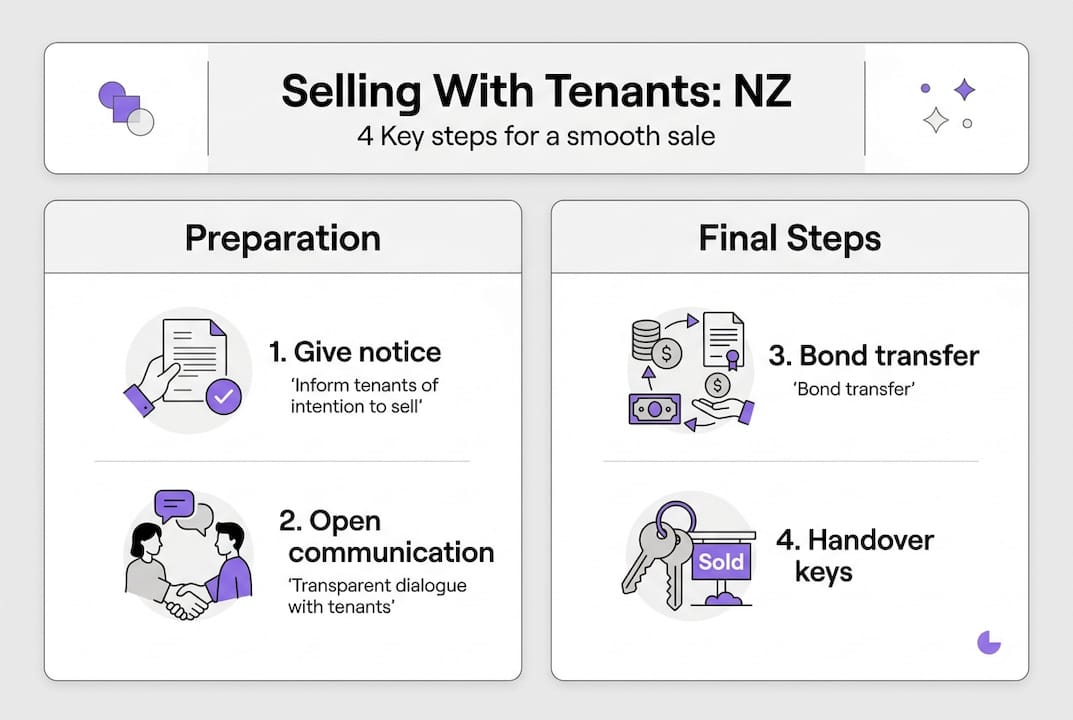
Finalise the sale: settlement, handover, and tenant rights
Once you have an accepted offer, these are the final steps to wrap up your tenanted property sale cleanly and compliantly.
Here is how to manage the settlement and handover process:
- Notify tenants of the sale outcome. As soon as you have a confirmed sale, inform your tenants in writing. Include the settlement date and confirm what happens to their tenancy.
- Provide new owner details. After settlement, the old landlord provides the new owner’s contact details to the tenant. The new landlord must also introduce themselves in writing.
- Transfer the bond. If a bond is held by Tenancy Services, both the old and new landlord must sign a bond change of landlord form. This is a critical step that many sellers overlook.
- Confirm rent payment details. Make sure tenants know where to direct future rent payments after settlement, to avoid any confusion or missed payments.
- Complete a final property inspection. Document the property condition at settlement to protect all parties.
For owners managing a property in difficult shape, knowing how to sell a house in any condition in New Zealand is valuable context before finalising your approach.
Here is a summary of your key handover obligations:
| Step | Action required | Who acts |
|---|---|---|
| Notify tenant of sale | Written notice with new owner details | Old landlord |
| Bond transfer | Both sign change of landlord form | Old and new landlord |
| Rent redirection | Advise tenant of new account details | New landlord |
| Tenancy terms | Existing terms carry over to new owner | New landlord |
Failing to transfer the bond correctly or neglecting to notify tenants of the new owner is a common source of post-sale disputes. These steps are straightforward, but they must be completed in the right order and with documentation.
A realistic perspective: speed versus compliance for urgent NZ sales
Now that you have seen the step-by-step process, here is a frank look at the real tensions NZ landlords face when urgency collides with tenancy law. The legal framework is clear and fair, but it was not designed with speed in mind. When you need to sell in weeks rather than months, the standard process can feel painfully slow.
The hardest trade-off is this: compliance takes time, but non-compliance costs more. A tenant who takes you to the Tribunal for insufficient notice can delay your settlement by months, often far longer than doing it properly from the start.
When the property is damaged, the tenancy is in dispute, or you are facing financial pressure, a traditional sale may not be realistic. Cash buyers handle as-is tenanted sales without requiring eviction, making them genuinely suitable for financial distress or urgent situations. You skip the agent fees, the open homes, the tenant negotiations, and the uncertainty of a conditional offer falling through.
For many landlords in this position, selling to investors for speed is not the last resort. It is the smartest first move.
Sell your tenanted house fast in NZ — your next steps
If you have worked through this guide and realised that the traditional route is not going to work for your situation, you are not alone. Many NZ landlords facing urgent sales, difficult tenancies, or properties in poor condition find that a direct cash offer is the most practical solution available.
At easySale.co.nz, we buy tenanted properties across New Zealand in any condition, with no agent fees, no open homes, and no lengthy negotiations. You can get a cash offer for your tenanted property today with no obligation to proceed. We work around your timeline, respect your tenants’ rights, and make the process as straightforward as possible from the first conversation.
Frequently asked questions
Can I sell my house with tenants in New Zealand?
Yes, you can sell at any time as the landlord, but you must strictly follow the notice and access requirements under the Residential Tenancies Act throughout the process.
How much notice do I need to give tenants if I want the house vacant for sale?
For periodic tenancies, you must give 90 days’ written notice when vacant possession is a condition of the sale agreement.
Do tenants have to allow open homes and photos?
Tenants must allow reasonable access with 48 hours’ written notice during reasonable hours, but they can set conditions and must separately consent to photos and open homes.
What happens with the bond when I sell my rental property?
Both the old and new landlords must sign a bond change form if the bond is held by Tenancy Services, ensuring it transfers correctly to the new owner.
Is it faster to sell my property with tenants to a cash buyer?
Yes. Cash buyers handle as-is tenanted sales without requiring eviction, which significantly reduces the timeline compared to a traditional market sale.
Recommended
