
Bridging finance explained: a clear guide for NZ homeowners

TL;DR:Bridging finance is a short-term, property-secured loan used by homeowners to manage the timing gap between buying and selling property.It is typically a manageable, temporary solution when homeowners have a clear exit plan and a confirmed sale, but delays can significantly increase costs and risk.
Many Kiwis assume bridging finance is a complicated product reserved for desperate situations or high-risk borrowers. That assumption is worth challenging. Bridging finance is actually a well-established, short-term lending solution used by everyday homeowners navigating the timing gap between buying and selling property. If you’ve ever wondered how to purchase your next home before your current one sells, or how to manage overlapping settlement dates without financial chaos, this guide is for you. We’ll cover what bridging finance is, how it works, the types available, the real risks involved, and what alternatives exist if it isn’t the right fit.
Table of Contents
- What is bridging finance and when is it used?
- How does bridging finance actually work in New Zealand?
- What types of bridging loans exist and what makes them different?
- Risks of bridging loans and how to avoid costly mistakes
- Alternatives to bridging finance for urgent property sales
- What most borrowers get wrong about bridging finance
- Need a bridging loan alternative? Sell direct for speed and certainty
- Frequently asked questions
Key Takeaways
| Point | Details |
|---|---|
| Bridging loans are temporary | They help cover financial gaps for up to 12 months while selling and buying property. |
| Sale timing is critical | Delays settling your sale can increase your interest costs and risk of holding two loans. |
| Strong exit plan needed | Lenders want proof you can repay quickly, making a solid home sale plan essential. |
| Alternatives exist | You can avoid bridging risks by considering direct sales or other quick-sale strategies. |
What is bridging finance and when is it used?
Bridging finance is a short-term loan, typically lasting up to 12 months, that is secured against property and designed to cover the financial gap when the timing of buying and selling doesn’t align perfectly. Think of it as a temporary funding arrangement rather than a permanent mortgage solution.
In New Zealand, bridging loans are most commonly used when homeowners find their ideal next property before their current home is sold. Without bridging finance, you’d either have to sell first and potentially live in temporary accommodation, or risk missing out on the new purchase entirely. Neither option is ideal when you’re under time pressure.
Here’s a quick comparison of bridging finance versus a standard mortgage:
| Feature | Bridging finance | Standard mortgage |
|---|---|---|
| Loan term | Up to 12 months | 25 to 30 years |
| Primary use | Covers transition between properties | Funds long-term property ownership |
| Repayment structure | Lump sum at settlement | Regular monthly repayments |
| Interest rates | Generally higher | Generally lower |
| Security required | Existing and/or new property | New property |
Common scenarios where bridging finance makes sense include:
- Buying a new home before your current property has sold
- Managing mismatched settlement dates between your sale and purchase
- Urgent life changes such as separation, probate, or financial hardship requiring a fast move
- Situations where property sale hurdles cause unexpected delays between transactions
- Purchasing at auction where unconditional contracts are required immediately
“Bridging finance is typically secured against property and is intended to be temporary rather than a long-term mortgage replacement.” — Personalised Mortgages NZ
The key distinction to keep in mind is that bridging finance is temporary. It is not designed to replace your primary mortgage or fund a long-term property purchase. Its sole purpose is to bridge the financial gap during a transitional period, and lenders expect a clear repayment strategy from day one.
How does bridging finance actually work in New Zealand?
Having a basic definition is a starting point, but the real-world process is what matters most when you’re facing time pressure. Here’s exactly what you can expect if you’re considering bridging finance in New Zealand.
Step 1: Application You apply for a bridging loan through a bank, non-bank lender, or mortgage broker. The lender assesses your financial position, including your income, existing mortgage, and the equity in your current property.
Step 2: Property valuation and security The lender will require a formal valuation of both your existing property and the new one you’re purchasing. Both properties typically act as security for the loan, reducing the lender’s risk.
Step 3: Approval and funds access Once approved, funds are released to complete your new property purchase. You now own both properties simultaneously and are responsible for servicing both loans during the bridging period.
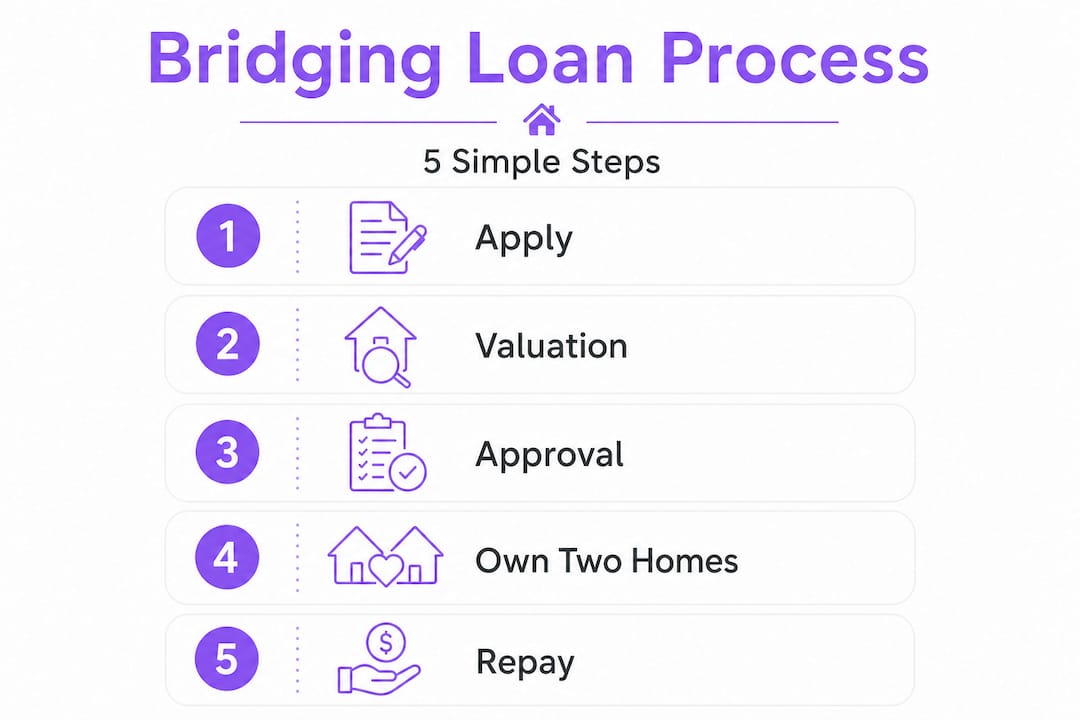
Step 4: Managing two loans This is the most financially demanding stage. You’ll be covering mortgage repayments on your existing property, repayments or interest on the bridging loan, and potentially rates and insurance on both homes.

Step 5: Repayment at settlement When your existing property sells and settlement is completed, the proceeds are used to repay the bridging loan in full. Any remaining equity transfers to your new property’s mortgage.
The property sale timelines you’re working with are critical here. According to Quick Loans NZ, residential bridging is commonly described as months rather than many years, so any delays can materially affect total interest cost. A two-month delay in your property sale could add thousands of dollars in interest charges you weren’t budgeting for.
Pro Tip: Before applying for bridging finance, map out your exit plan in detail. Know exactly how you’ll sell your existing property, at what price, and within what timeframe. Lenders will ask for this, and having a solid answer protects you from costly extensions.
The interest rate on bridging loans is typically higher than a standard home loan, which is why minimising the duration of the bridging period saves you real money.
What types of bridging loans exist and what makes them different?
Now that you know the process, it’s critical to understand the difference between bridging loan types, as this can drastically affect your cost, risk, and overall success.
There are two primary types of bridging finance in New Zealand:
Closed bridging loans A closed bridging loan is used when you’ve already signed a sale and purchase agreement on your existing property and have a confirmed settlement date. Because the lender knows exactly when you’ll receive funds from the sale, the risk is lower and terms are generally more favourable.
Open bridging loans An open bridging loan is used when you haven’t yet secured a buyer for your existing property. The settlement date for your old home is unknown, which increases the lender’s risk. Because open bridging depends on a sale that may not settle on schedule, lenders and advisers typically focus heavily on the strength of the exit plan and your ability to service overlapping debt if needed.
Here’s a comparison of the two types:
| Feature | Closed bridging | Open bridging |
|---|---|---|
| Sale contract required | Yes, confirmed date | No, sale not yet secured |
| Lender risk level | Lower | Higher |
| Interest rate | Generally lower | Generally higher |
| Approval likelihood | Higher | Requires strong financials |
| Best for | Confirmed sale, tight settlement gap | Buyers acting quickly before selling |
Key pros and cons of each:
Closed bridging:
- Lower interest rates due to reduced lender risk
- Higher approval rates for standard borrowers
- Less flexibility if your settlement dates change unexpectedly
- Can be restrictive if sale falls through at the last minute
Open bridging:
- Flexibility to purchase before confirming a buyer
- Useful when acting fast on a competitive property
- Higher interest costs due to uncertainty
- Carries real risk if your property takes longer to sell than expected
Reviewing your full range of selling options list before choosing a bridging type is a sensible step. You may find that a faster sale method reduces your need for open bridging entirely.
Pro Tip: Be honest with yourself about your sale certainty. If your property is in a slow-moving market or needs significant work, open bridging carries considerable financial risk. A realistic view of how quickly your home will sell is more valuable than optimistic assumptions.
Risks of bridging loans and how to avoid costly mistakes
You’ve heard about bridging finance types, but smart homeowners should also understand the real financial risks involved and how to sidestep classic traps.
The most common risks with bridging finance include:
- Sale delays: Your existing property takes longer to sell than anticipated, extending the bridging period and accumulating additional interest
- Interest cost blowout: Because delays materially affect total interest cost, a longer bridging period can turn a manageable situation into a stressful financial burden
- Carrying two home loans: Managing two sets of mortgage repayments, rates, and insurance simultaneously can stretch your monthly cash flow significantly
- Weak exit plan: Entering bridging finance without a confirmed buyer or realistic sale strategy is one of the most common and costly mistakes NZ homeowners make
- Market downturns: If property values fall while you’re in the bridging period, your equity position may not be enough to fully repay the loan after settlement
Practical steps to reduce your risk:
- Build a time buffer into your bridging application and don’t assume a best-case sale scenario
- Where possible, secure a confirmed buyer before drawing down on bridging funds
- Keep a cash reserve to cover at least two to three months of dual loan repayments if things run slower than expected
- Get independent legal and financial advice before signing any bridging loan agreement
- Actively review your property sale options so you know what steps you can take if your property doesn’t sell quickly
“Any delays can materially affect total interest cost.” — Quick Loans NZ
The advice above isn’t alarmist, it’s practical. Bridging finance is a useful tool, but it rewards preparation. Homeowners who enter these arrangements without a backup strategy often find themselves in a far more stressful position than when they started.
Alternatives to bridging finance for urgent property sales
If bridging finance feels risky or isn’t accessible given your financial circumstances, there are proven alternatives for New Zealand homeowners who need a rapid, low-stress property outcome.
Because bridging finance is intended as temporary and not every homeowner qualifies or can manage the dual-loan pressure, it’s worth knowing what else is available.
Here are the main alternatives and how they compare:
- Direct cash sale to a property buying company: Services like easySale.co.nz allow you to sell your property quickly without waiting for the open market. There are no agent commissions, no auction campaigns, and no conditional offer delays. This option works particularly well when you’re facing a time-sensitive situation and can’t afford to wait weeks or months for a conventional sale.
- Negotiating with your existing lender: In some cases, your current bank may allow a short-term loan top-up or mortgage extension to bridge the gap. This approach tends to be more affordable than a separate bridging loan if your lender is willing to work with you.
- Private lenders: Non-bank lenders can sometimes offer bridging products when mainstream banks won’t, though interest rates are often higher. These work best for borrowers with strong equity but unusual circumstances.
- Rent-back arrangements: After selling your property, you negotiate to rent it back from the buyer for a short period while your next purchase settles. This removes the urgency of the bridging timeline entirely.
- Short-term rental while you search: Selling first, renting temporarily, and buying with certainty later eliminates bridging finance risk altogether, though it requires two moves and additional rental costs.
When deciding between solving sale challenges with bridging finance or an alternative, consider three things: how quickly you need to act, how confident you are in selling your current property, and how much financial pressure you can comfortably sustain. Honest answers to those three questions will point you in the right direction.
What most borrowers get wrong about bridging finance
Here’s a perspective worth considering before you commit to any bridging arrangement. Most homeowners who encounter financial difficulty with bridging loans don’t run into trouble because the product is inherently flawed. They run into trouble because they overestimated how quickly their existing property would sell.
New Zealand’s property market has shifted significantly across different regions in recent years. What sold in three weeks in 2021 may now sit on the market for two months or longer. That gap matters enormously when you’re paying daily interest on a bridging loan. Reviewing property selling trends in your specific area before entering a bridging arrangement is something most borrowers skip, and it’s often the detail that determines whether the experience is smooth or stressful.
The conventional wisdom says all bridging loans are high risk. That’s an oversimplification. A closed bridging loan with a confirmed buyer, realistic settlement dates, and a three-month cash buffer is genuinely manageable for most financially stable households. The risk is real, but it’s manageable risk when you go in prepared.
Where things go wrong is when homeowners treat optimism as a plan. Assuming your property will sell at the top of its estimated range, within a short timeframe, with no complications, is not a strategy. It’s wishful thinking. The homeowners who use bridging finance successfully are those who plan for the realistic scenario and have a fallback for the slower one.
If your exit strategy isn’t firmly in place, an alternative such as a direct cash sale may genuinely save you more money and stress than a bridging loan would, even accounting for any price difference. Speed and certainty have real financial value when the alternative is months of dual mortgage repayments.
Need a bridging loan alternative? Sell direct for speed and certainty
If you’ve been weighing up bridging finance and the risks feel significant given your current situation, a direct property sale might be a more practical and immediate solution.
At easySale.co.nz, we buy residential properties across New Zealand directly from homeowners, without agents, without commissions, and without the uncertainty of the open market. Whether you’re navigating a separation, managing an inherited property, or simply need to move quickly without the stress of conditional offers, we can provide a fast, fair cash offer on your timeline. This is particularly helpful for homeowners considering a retirement or downsizing sale who need a clean, certain outcome without the cost and complexity of bridging finance. Simply submit your property details, receive your no-obligation offer, and settle when it suits you.
Frequently asked questions
How long can I have a bridging loan in New Zealand?
Most NZ bridging loans last up to 12 months but can sometimes be shorter depending on the lender and your specific property sale timeline.
What happens if my old home doesn’t sell in time with a bridging loan?
You may need to cover two loans simultaneously and could incur significant extra interest costs, as delays materially affect the total cost of a bridging arrangement.
Is bridging finance a good idea for everyone?
Bridging loans suit homeowners with a clear exit plan and financial buffer, but they’re not ideal for everyone, since open bridging depends heavily on a sale settling on schedule.
Can bridging finance be used for investment properties?
Yes, bridging loans can also be used by property investors, though secured against property terms and risks may differ from standard owner-occupied arrangements.
Recommended
