
Selling Real Estate in NZ: Choose Agent, Private Sale or Fast Cash


Most Kiwi sellers should start by getting a comparative market analysis from two or three local agents before deciding how to sell. You have three realistic routes: list with an agent for the widest buyer pool, sell privately to save on commission, or accept a fast cash offer when speed or property condition matters more than top dollar. Read your agency agreement closely before signing anything, and get a cash offer assessed if your timeline is tight or the property needs work.
TL;DR:Most sellers should first obtain a comparative market analysis from local agents to determine realistic pricing and assess offers, especially when considering cash or private sales.Preparing a home with targeted repairs, decluttering and good presentation can significantly influence buyer interest and final price, with professional photos reinforcing that impression.Setting the right price involves understanding recent local sales data, seasonal patterns, and your bottom line, while being flexible if early offers meet your minimum.Choosing between an agent or private sale depends on your timeline, property condition, and willingness to manage marketing and negotiations; each option has distinct cost implications.When speed or property condition makes traditional selling impractical, services like easySale offer quick, no-repair, no-agent options that prioritize certainty over top dollar.
EasysaleSell Your Property With Less HassleeasySale helps New Zealand homeowners receive a fast, fair cash offer, without agents or commission fees, for properties in any condition.Explore your selling options
Table of Contents
- The selling process from decision to settlement
- Preparing and presenting your home for buyers
- Getting your price and timing right
- Choosing an agent or going it alone
- Comparing offers and closing the deal safely
- What selling actually costs
- When a fast, sell-as-is sale makes more sense
- A quick way to decide your best route
- How easySale can help you sell on your terms
- Where to read more before you decide
- FAQ
The selling process from decision to settlement
Selling a house follows a fairly predictable sequence, even though the timing varies with the market and the property. Understanding each stage helps you know when to bring in professionals and when you can handle things yourself.
- Prepare: sort repairs, decluttering and paperwork, usually two to four weeks before listing.
- Price and list: set your asking price using recent comparable sales, then go live with your agent or on your own.
- Market: run open homes, online advertising and buyer inspections, typically over three to six weeks.
- Negotiate: review offers, counter where needed, and agree on price and conditions.
- Contract: sign a sale and purchase agreement and work through any conditions such as finance or building reports.
- Settlement: your conveyancer or lawyer finalises the transfer, usually four to six weeks after the contract goes unconditional.
An agent manages the marketing and negotiation, a conveyancer or solicitor handles the legal transfer, and your lender needs updated details if you’re paying out a mortgage. Buyers with their own agents or lawyers can also add time to negotiations, so building in some flexibility around your expected settlement date is wise.
Preparing and presenting your home for buyers
Small, targeted improvements tend to matter more than expensive renovations. Buyers respond to a home that looks cared for and ready to move into, not one that promises future potential.
- Fix the obvious faults first: leaking taps, cracked tiles, broken fittings and anything that signals poor maintenance.
- Skip major renovations: a new kitchen or bathroom rarely returns its full cost at sale, so spend on presentation instead.
- Declutter and neutralise: clear benchtops, pack away personal items and tone down bold colours so buyers can picture themselves living there.
- Sort the curb appeal: mow the lawn, clean the entrance and touch up any tired paintwork near the front door.
- Work room by room: open curtains for natural light, remove excess furniture, and make sure each room has an obvious purpose.
A professional photographer needs a tidy, well-lit home, so schedule the shoot after cleaning and staging, not before. Ask for wide-angle shots of every main room, the exterior, and any standout feature like a view or outdoor living area.
Pro Tip: Book your photographer for late morning or early afternoon when natural light is strongest, and open every curtain and blind beforehand.
Disclosing known defects, such as past water damage or consent issues, protects you from disputes after the contract is signed. Being upfront early tends to build buyer confidence and can reduce the risk of a deal falling over during due diligence.
Getting your price and timing right
A comparative market analysis (CMA) looks at recent sales of similar properties nearby to give you a realistic price range, adjusted for size, condition and location. Reading the comparables properly, not just the headline number, tells you what buyers have actually been willing to pay in your area recently.
- Price at market value when you want a straightforward sale without drawn-out negotiation.
- Price slightly under market value to attract more interest and potentially spark competing offers.
- Price above market value if you’re prepared to negotiate down and can afford a longer time on market.
- Watch seasonal patterns, since buyer activity in most regions tends to slow over the December to February holiday period and pick up again through autumn and spring.
Local factors, such as school zones, planned infrastructure or nearby developments, can shift buyer interest independently of the broader market. If a solid offer comes in early and meets your bottom line, taking it is often smarter than holding out for a marginally better price weeks later, especially once you weigh in extra weeks of holding costs.
Choosing an agent or going it alone
Picking the right agent, or deciding to skip one altogether, shapes your entire sale. Ask direct questions before signing anything.
- Ask for recent comparable sales the agent has personally handled in your suburb, not just general market data.
- Request a written marketing plan covering online listings, photography, signage and open home frequency.
- Clarify the fee structure upfront, including whether marketing costs are separate from commission.
- Query the expected timeline from listing to settlement based on current conditions.
When negotiating the agency agreement, discuss the commission rate, whether the listing is exclusive, and who covers marketing expenses if the property doesn’t sell. Watch for red flags like guaranteed sale price promises, vague reporting on buyer interest, or an agent with no recent evidence of sales in your area. For a private sale, you’ll need a realistic price based on your own research, a solid sale and purchase agreement template, a conveyancer engaged early, and a marketing plan covering real estate agent commission savings you can put toward better photography or online advertising instead.
Comparing offers and closing the deal safely
Not every offer is equal, even when the price looks similar on paper. Understanding the terms behind each one protects your outcome.
- Know the difference between conditional and unconditional offers. Conditional offers depend on things like finance approval or a building report, while unconditional offers are firm.
- Rank offers on total value, not just price: consider the settlement date, the conditions attached and how likely the buyer’s finance is to fall through.
- Negotiate calmly and in writing where possible, and loop in your solicitor or conveyancer once you’re close to agreeing on terms.
- Prepare for settlement day by confirming your conveyancer has the final figures, arranging removal of your belongings, and handing over keys once funds have cleared.
A sale and purchase agreement sets out your obligations as vendor, so read it carefully before signing, even under pressure to move quickly.
What selling actually costs
Agent commission in New Zealand typically runs a few percentage points of the sale price, and GST applies to that commission since agents are GST-registered businesses. On top of commission, budget for conveyancing fees, any marketing costs not covered by your agent, repairs identified during preparation, and holding costs like rates and insurance while the property is on the market.
Selling privately can meaningfully reduce your total fees, since avoiding agent commission is one of the main reasons Kiwi sellers consider going it alone, though you take on the marketing and negotiation yourself.
- Estimate net proceeds simply: sale price, minus commission and GST, minus legal and marketing costs, minus any outstanding mortgage.
- Negotiate commission with your agent, particularly if your property is likely to sell quickly or with minimal marketing.
- Compare routes before assuming a full agent listing is your only option.
When a fast, sell-as-is sale makes more sense
Not every seller has the luxury of a six-week marketing campaign. When time is short or the property needs work you can’t afford to do, a direct buyer becomes a genuinely practical option.
easySale runs a three-step process: submit your property details, receive a no-obligation cash offer, then settle on a timeline that suits you. It’s built for sellers facing situations where speed and certainty matter more than chasing the highest possible price.
- Urgent timelines, where a traditional sale’s typical weeks-long process doesn’t fit your circumstances.
- Damaged or unrenovated properties that would need costly repairs to attract agent-led buyers.
- Estate, divorce or relocation situations where a straightforward, private process reduces stress.
Pro Tip: Before accepting any cash offer, get an independent valuation or a quick agent appraisal so you know roughly how it compares to market value.
The trade-off is usually a lower sale price in exchange for speed, certainty and no repair or agent costs. Some direct buyer services highlight testimonials from sellers who valued a quick, transparent process and point to a high acceptance rate for their offers, so it’s worth weighing that against how much time and effort a traditional sale would realistically take you.
A quick way to decide your best route
Before choosing, ask yourself four things: how much time do you actually have, what condition is the property in, how much energy do you have for managing a sale, and what net figure do you need in hand at the end. If your timeline is flexible and the property is in good shape, an agent will usually get you the strongest price. If you’re stretched for time, dealing with a difficult situation, or the property needs work, get a cash offer assessed alongside an agent appraisal. Whichever path you choose, read your agency agreement carefully and get independent legal advice before signing.
— Aaron
How easySale can help you sell on your terms
If the process above feels like more than you want to take on, there are services that offer a more direct path to a sale, with no agent fees, no commission and no repairs required before you sell.
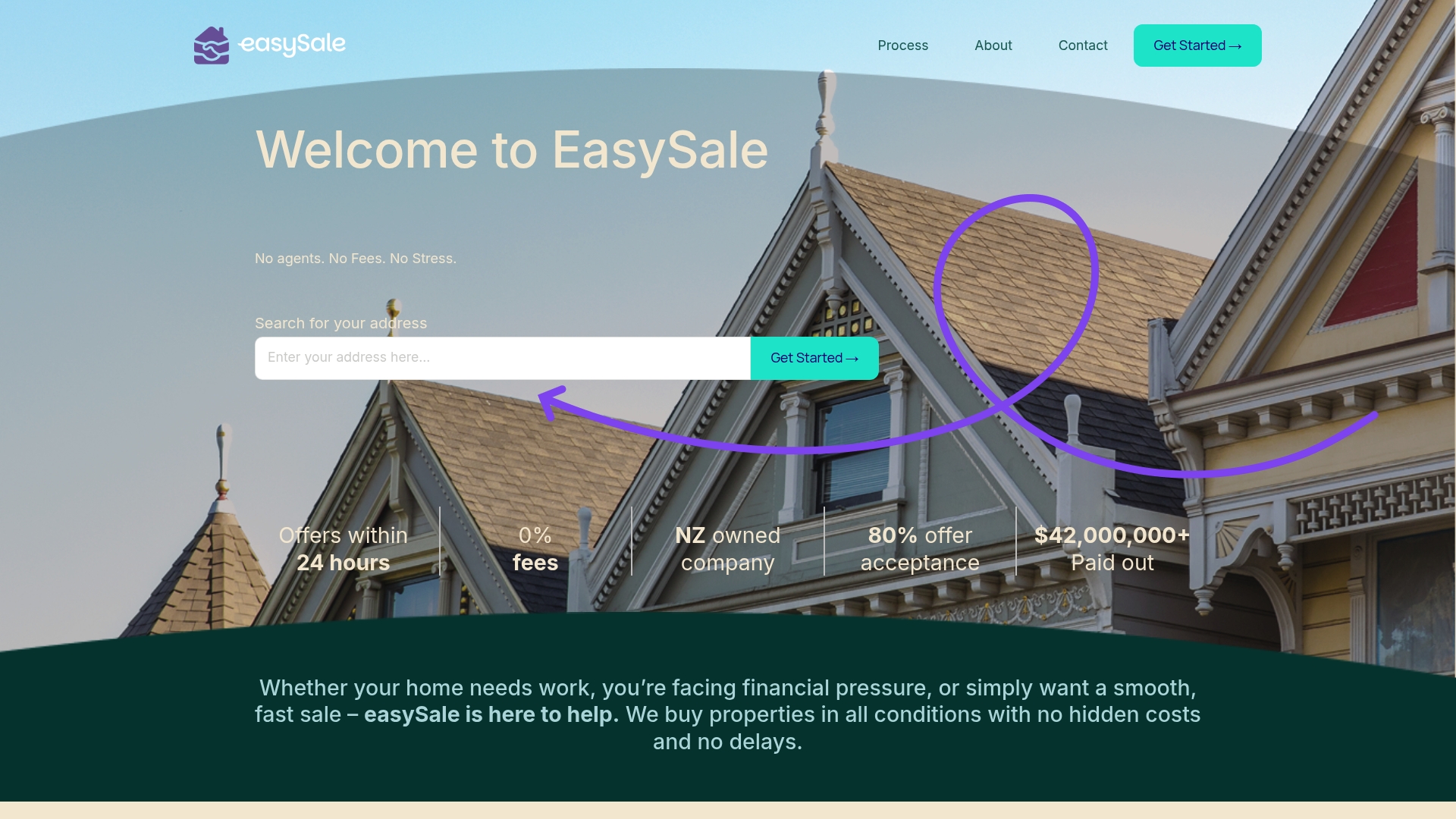
Whatever your situation, easySale has a service built around it:
- Sell Fast within 7 days, for sellers who need certainty on a tight deadline.
- Sell As-Is, for properties with damage, unconsented work or general disrepair.
- Direct Private Sale, for sellers who want to skip agents and commission altogether.
- Specialist situations, including divorce or separation, estate sales, relocation and retirement downsizing.
This route suits sellers who value speed and certainty over squeezing out the last few dollars of sale price. When you request an offer, you’ll get a no-obligation figure and can settle on a date that works for you, without waiting on a marketing campaign or buyer finance conditions. Head to the FAQ page for common questions, or start with the sell house fast page if your timeline is the main pressure point.
Where to read more before you decide
For deeper detail on fees, contracts and commission rules, see easySale’s guides on commission fees and Kiwi seller proceeds and REA rules protecting sellers.
This article is general information, not a substitute for advice from a qualified financial advisor. Consult a qualified financial professional about your own circumstances before acting on anything here.

FAQ
What is the hardest month to sell a house?
There’s no single confirmed hardest month across every region, since buyer activity depends heavily on local conditions. Many sellers find the December to February holiday stretch slower for inquiries, and picking up again through autumn and spring tends to be a more reliable pattern than any one fixed month.
How difficult is it to sell property?
Selling property involves several moving parts, including pricing, marketing, negotiation and legal steps, but it’s manageable with the right preparation and professional support. Working with an experienced agent or a direct buyer like easySale can simplify the process considerably if your timeline or the property’s condition adds pressure.
How does easySale’s offer process work?
easySale uses a three step process: you submit your property details, receive a no-obligation cash offer, then choose a settlement date that suits your circumstances. It’s designed for sellers who want a straightforward, private sale without agent commission or repair costs.
What costs should I budget for when selling?
Typical costs include agent commission plus GST if you list traditionally, conveyancing fees, marketing costs and any repairs identified during preparation. Selling privately or through a direct buyer can reduce or remove several of these costs, though it changes the trade-off between price and effort.
Should I get legal advice before signing an agency agreement or sale contract?
Yes, independent legal advice is worth getting before signing an agency agreement or a sale and purchase agreement, since both set out binding obligations. A solicitor or conveyancer can flag clauses around commission, exclusivity and settlement conditions that are easy to miss when reading on your own.


