
Selling damaged property in New Zealand: a practical tutorial
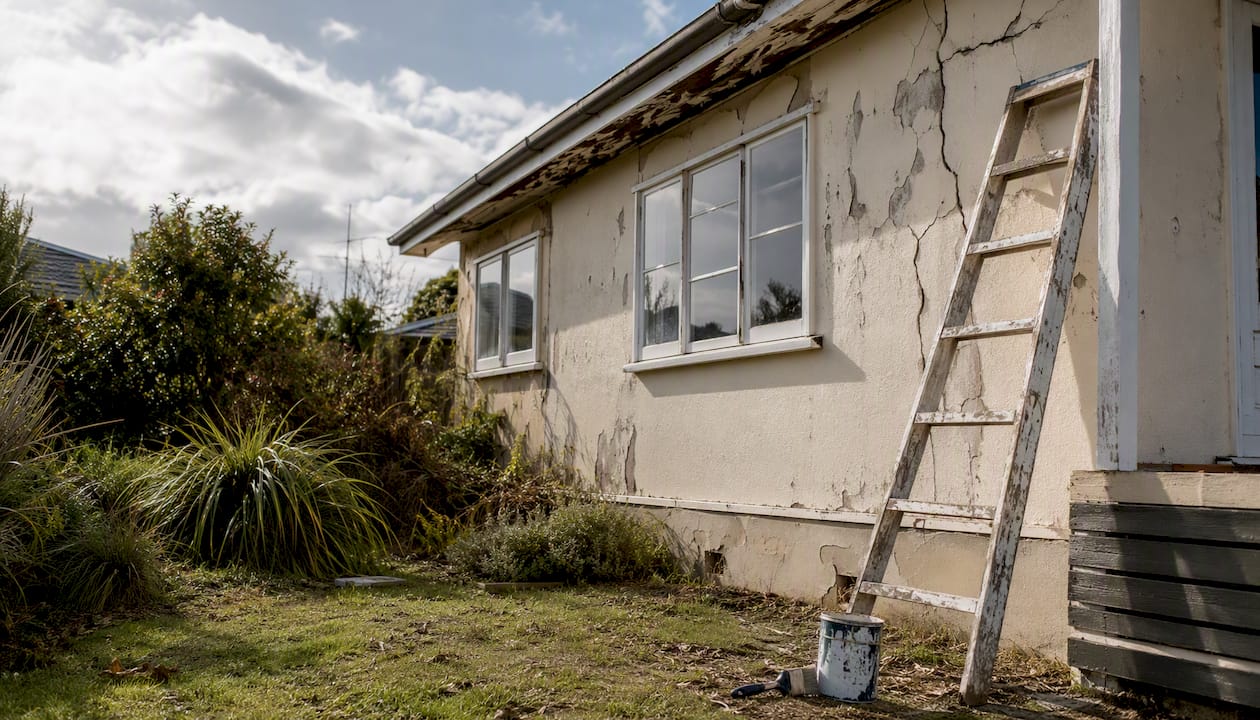
You have three lawful options when selling a damaged property in New Zealand: repair first and list at full market value, list ‘as-is, where-is’ on the open market, or sell directly to a cash buyer. The fastest route is a cash sale, typically settling in days to weeks rather than months. Repairing first usually returns the highest net price but takes the longest. Listing as-is sits in the middle on both counts. Whichever route you choose, disclosure is not optional — New Zealand law requires you to tell buyers about known defects regardless of how the property is sold.
Your 48–72 hour action checklist:
- Photograph every room, including ceilings, floors, subfloor access points, and the exterior. Use timestamps.
- Contact your insurer and check whether a Natural Hazards Commission (NHC) claim exists on the property.
- Request claim information from NHC if a claim is likely (allow some time for a response).
- Arrange a safety check if the property has structural, electrical, or gas concerns before anyone enters.
- Note every known defect in writing. This list becomes the foundation of your disclosure.
Pro Tip: Start a shared digital folder right now, labelled with the property address. Every photo, receipt, report, and correspondence goes in from day one. Buyers and their lawyers will thank you, and it shortens due diligence considerably.
Key takeaways
Selling a damaged property in New Zealand requires you to document everything, choose the route that matches your timeline and financial position, and meet your disclosure obligations before any offer is signed.
| Point | Details |
|---|---|
| Disclosure is mandatory | New Zealand law requires you to disclose known defects in all sales, including as-is transactions. |
| Three sale routes available | Repair first, list as-is, or sell to a cash buyer — each has different price, timeline, and documentation implications. |
| NHC claim info takes time | Request NHC claim information on day one; responses can take up to 20 working days. |
| Documents reduce discounts | A full vendor pack (engineer reports, consents, scopes of work) reduces the uncertainty discount buyers apply. |
| Easysale for fast sales | Easysale buys damaged properties across New Zealand with no agent fees, settling on the seller’s preferred timeline. |
Table of Contents
- Which kinds of damage affect saleability the most?
- How to assess damage and build a record buyers will accept
- How to manage NHC claims and insurance during a sale
- What are your three sale options for a damaged property?
- How does damage change your property’s value?
- What does New Zealand law require you to disclose?
- What documents should you prepare before listing?
- Step-by-step plan from decision to settlement
- How do you decide which sale route is right for you?
- How does Easysale work for damaged property sales?
- What sellers who chose the fast route say about the experience
- Ready to get a fast, fair cash offer in New Zealand?
- Sources
Which kinds of damage affect saleability the most?
Not all damage is equal in the eyes of buyers, lenders, and insurers. Some types trigger mortgage declines or insurance exclusions; others simply reduce the offer price. Knowing the difference helps you decide how much remediation is worth doing before you list.
- Structural and foundation issues are the most serious. Cracked foundations, subsidence, or earthquake damage can make a property unmortgageable with mainstream lenders, which immediately limits your buyer pool to cash purchasers or specialist lenders.
- Weather-tightness and leaky building defects carry a particular stigma in New Zealand. Properties built between roughly 1992 and 2004 with monolithic cladding are often flagged by inspectors, and remediation costs can run into the hundreds of thousands of dollars.
- Flood and water damage affects both the structure and the land. Buyers worry about repeat flooding, and lenders increasingly scrutinise flood-zone properties. Settled’s guidance on flood-affected properties recommends professional assessment before listing.
- Fire and smoke damage raises concerns about hidden structural compromise and air quality. Even cosmetically repaired fire damage can deter buyers if the repair scope is not fully documented.
- Mould and asbestos are health-related defects that require specialist assessment and, in the case of asbestos, licensed removal. Both can stall a sale if discovered during due diligence without prior disclosure.
- Unconsented work and DIY alterations are a common issue in New Zealand. Missing building consents or Code Compliance Certificates (CCCs) can prevent buyers from obtaining finance and may require council retrospective consent or demolition of the work.
Each of these categories affects your sale differently. Structural and weather-tightness issues tend to shrink the buyer pool the most. Unconsented work is often fixable through council processes, which may be worth doing before listing if the timeline allows.
How to assess damage and build a record buyers will accept
A thorough, well-organised damage record does two things: it satisfies your legal disclosure duty, and it gives buyers the confidence to make offers without lengthy back-and-forth. Sellers who skip this step often find conditional offers collapse during due diligence.
Step-by-step assessment process
- Walk through every room methodically. Start at the front door and work clockwise through each space, including the roof space, subfloor, garage, and outbuildings. Note what you see, not what you think caused it.
- Photograph everything. Take a wide shot of each room, then close-ups of every defect. Capture timestamps in the file metadata or hold a dated notepad in frame.
- Engage a licensed building inspector. A professional inspection report gives buyers an independent baseline and reduces the risk of post-sale disputes. For suspected structural issues, commission a structural engineer separately.
- Get a geotech assessment if land movement is suspected. Slippage, subsidence, or liquefaction risk requires a geotechnical engineer’s report, particularly in areas affected by recent earthquakes or heavy rainfall.
- Collect builder quotes for all identified defects. Even if you are not planning to repair, a written scope of works and cost estimate tells buyers exactly what they are taking on. This reduces the discount they apply for unknown risk.
- Gather all existing documentation. Pull together prior inspection reports, council consents, CCCs, warranties, and any correspondence with insurers or NHC.
Documents to collect before listing
- Licensed building inspection report
- Structural engineer’s report (if applicable)
- Geotech report (if land issues are suspected)
- Builder quotes and scopes of work for all defects
- Council building consents and CCCs for all work done on the property
- NHC claim documents and correspondence
- Insurance policy and claims history
- Receipts for any repairs already completed
Pro Tip: Label every PDF with the property address, document type, and date — for example, “123MainSt_EngineerReport_March2026.pdf”. Buyers’ lawyers and lenders process dozens of files; clear naming gets yours reviewed faster.
How to manage NHC claims and insurance during a sale
Insurance and NHC claim status can make or break a damaged property sale. Sorting this out early prevents last-minute settlement collapses, which are more common than most sellers expect.
Checking NHC claim status
NHC confirms that anyone can request claim information on a property, not just the current owner. Submit a request to NHC (Toka Tū Ake) as early as possible, because responses can take up to 20 working days. The information you receive will show whether a claim exists, its status, and any settlement details.
What your claim status means for saleability
- Cash settlement received, no work done: The buyer needs to know the settlement amount and what it was intended to cover. You may need to disclose this and potentially reduce the price accordingly.
- Repairs completed under NHC: Gather all completion certificates and scope-of-works documents. Buyers and lenders want evidence the work was done properly.
- Unsettled or ongoing claim: This is the most complex scenario. You can still sell, but the claim’s future value needs to be addressed, usually through a Deed of Assignment.
Using a Deed of Assignment
A Deed of Assignment (DOA) transfers the benefit of an existing NHC or insurance claim from the seller to the buyer. It typically includes the property address, relevant claim numbers, and signatures from both parties. Settled recommends assigning outstanding claims to buyers where possible and gathering all supporting documents before listing.
Assigning claims early reduces buyer uncertainty and helps cash buyers or lenders understand future insurance entitlements. The paperwork and insurer rules vary, so legal review is standard practice.
Get legal advice before you sign anything related to an NHC claim transfer. Assigning a claim incorrectly, or selling without addressing an unsettled claim, can leave you exposed to liability after settlement. Your lawyer or conveyancer should review the DOA and any relevant sale and purchase agreement clauses before you proceed.
Pro Tip: Contact your insurer at the same time you contact NHC. Some policies have notification clauses that require you to inform the insurer when you intend to sell a property with an active claim. Missing this step can affect coverage.
What are your three sale options for a damaged property?
The three primary pathways for selling a damaged home are repair before listing, list as-is on the open market, and sell to a cash buyer. Each suits a different set of circumstances.
Repair first, then list
You fix identified defects, obtain the necessary consents, and list the property at or near full market value. This route attracts the widest buyer pool, including those using mainstream mortgage finance.

Pros: Highest likely sale price, broader buyer pool, fewer financing obstacles for buyers. Cons: Upfront repair costs, longer timeline (months, not weeks), risk that repairs uncover further problems, and the need to manage contractors while potentially still living in the property.
Typical timeline: 3–9 months from decision to settlement, depending on the scope of repairs and council consent processing times.
List as-is, where-is on the open market
You disclose all known defects, price accordingly, and market the property to buyers who can accept its condition. This often means investors, developers, or buyers with cash or specialist finance. Selling as-is does not remove your disclosure obligations — it only describes the property’s state at sale.

Pros: No repair costs, faster than the repair route, and you retain access to the open market. Cons: Smaller buyer pool, lower offers, longer marketing period than a cash sale, and buyers may still apply significant discounts for unknown risk. As-is sales typically yield a net price below full market value because buyers factor in repair risk and lending constraints.
Typical timeline: 6–16 weeks from listing to settlement, depending on buyer demand and due diligence complexity.
Sell directly to a cash buyer
You approach a property buying service or investor who purchases the property in its current condition, without requiring repairs or a traditional marketing campaign.
Pros: Fastest route to settlement, no agent commissions, no open homes, no repair costs, and settlement timing is often flexible. Cons: Price will be below open market value. This is the right trade-off for some sellers and the wrong one for others. Understanding which defects cash buyers commonly accept helps you set realistic expectations before you approach one.
Typical timeline: Days to a few weeks from initial contact to settlement.
Quick comparison
- Repair first: Highest price, longest timeline, highest upfront cost.
- As-is open market: Mid-range price, moderate timeline, low upfront cost but documentation-heavy.
- Cash buyer: Lowest price, fastest timeline, minimal documentation burden.
When repairs are worth doing: if the estimated repair cost is less than the price uplift it creates, and you have the time and funds to manage the work, repairing first usually makes financial sense. When they are not: if repair costs approach or exceed the likely uplift, or if your timeline is tight, selling as-is or to a cash buyer is the more practical choice.
How does damage change your property’s value?
Damage affects value in two ways: the direct cost of repairs, and the discount buyers apply for uncertainty and risk. Both need to be factored into your pricing.
How valuers and buyers approach damaged properties
Valuers typically start with the property’s estimated value in undamaged condition, then deduct the cost of remediation plus a risk margin. The risk margin accounts for the possibility that repairs uncover further problems, that council processes take longer than expected, or that lending constraints reduce the buyer pool. Having a full set of professional reports reduces this uncertainty discount because buyers can see exactly what they are taking on.
A worked example helps illustrate the maths. Suppose your property has an undamaged market value of $750,000. A structural engineer identifies foundation repairs costing $80,000. If you complete the repairs and obtain the necessary consents, you might recover most of that gap, net of the $80,000 outlay, depending on how the market responds.
A note on percentage discounts: the figures above are illustrative only. Actual discounts vary significantly by damage type, location, buyer demand, and how well-documented the defects are. Get a registered valuer’s opinion for your specific property before setting a price.
Pricing strategies for damaged properties
- Auction: Works best when there is genuine buyer competition and the damage is well-documented. Sets a market-clearing price but carries risk if buyer pool is thin.
- Deadline sale (tender): Gives buyers time to do due diligence while creating a defined end point. Suits properties with complex damage where buyers need time to assess.
- Private treaty (negotiated sale): Most flexible. Allows you to negotiate directly with interested parties, including cash buyers, without the pressure of a public campaign.
For damaged properties, deadline sales and private treaty tend to work better than auctions, because buyers need time to review reports and arrange specialist finance.
Valuation inputs checklist
- Registered valuer’s assessment (current market value and post-repair estimate)
- Builder’s scope of works and cost estimate for all defects
- Engineer’s or inspector’s report
- Comparable sales in the area, adjusted for condition
- NHC claim settlement amounts (if applicable)
What does New Zealand law require you to disclose?
Under New Zealand law, sellers must disclose known defects and relevant information about a property’s physical condition to prospective buyers. Failing to disclose can lead to legal action and may invalidate a sale. This obligation applies to all transactions, including as-is, where-is sales.
The phrase ‘as-is, where-is’ is a description of the property’s condition at sale. It is not a legal shield against disclosure obligations. Sellers who use this term without disclosing known defects remain legally exposed.
What counts as a material fact you must disclose
- Weather-tightness issues, including any history of leaks, moisture ingress, or leaky building claims.
- Unconsented building work, including additions, alterations, or conversions done without council consent.
- Natural hazard damage, including earthquake, flood, landslip, or storm damage, whether repaired or not.
- NHC and insurance claim history, including the status of any current or past claims.
- Structural defects identified in any report you hold or are aware of.
- Mould, asbestos, or contamination that you know about.
How to disclose properly
- Disclose in writing, before the buyer signs a sale and purchase agreement.
- Provide copies of all relevant reports and documents.
- Keep a record of what was disclosed, when, and to whom.
- If you are using an agent, REA guidance requires the agent to disclose material information and to document those decisions. An agent who is instructed not to disclose a known defect must stop acting for the vendor.
- If a defect is complex or disputed, pause the campaign and get legal advice before proceeding.
For detailed guidance on what counts as a property defect under NZ law, the REA’s disclosure principles are the authoritative starting point.
What documents should you prepare before listing?
A well-prepared vendor pack shortens the marketing window and reduces renegotiation after conditional offers. Buyers and their lawyers work through due diligence faster when documents are ready on day one.
Your vendor pack checklist
- Land Information Memorandum (LIM): Request this from your local council. It shows rates, consents, and any known hazards or notices on the property.
- Title search: Confirms ownership, easements, covenants, and any encumbrances.
- Building inspection report: An independent assessment of the property’s condition.
- Structural engineer’s report: Required if structural issues are known or suspected.
- Builder’s scope of works and quotes: For every identified defect, even if you are not repairing before sale.
- Council building consents and CCCs: For all work done on the property. If CCCs are missing, note this explicitly.
- NHC claim documents: Claim numbers, correspondence, settlement details, and any Deed of Assignment.
- Insurance paperwork: Current policy, claims history, and any insurer correspondence about the property’s condition.
- Warranties: For any completed repairs, appliances, or building products.
- Geotech report: If land movement, liquefaction, or slope instability is a factor.
How to organise and present these documents
Store everything as clearly labelled PDFs in a single shared folder. Group documents by category: council, insurance/NHC, reports, and legal. When you share the folder with agents, lawyers, or buyers, include a one-page index listing each document and what it covers. This small step saves hours of back-and-forth during due diligence.
Pro Tip: Request your LIM as early as possible. Council processing times vary, and a delayed LIM is one of the most common reasons a marketing campaign stalls before it starts.
Step-by-step plan from decision to settlement
The process of selling a damaged property fast in New Zealand follows a logical sequence regardless of which route you choose. The timelines differ, but the steps are largely the same.
The full checklist
- Decide to sell and choose your initial preferred route (repair, as-is, or cash buyer).
- Document all damage with photographs and written notes.
- Contact your insurer and request NHC claim information (allow up to 20 working days).
- Engage a licensed building inspector and, where needed, a structural engineer or geotech.
- Collect builder quotes and scopes of work for all defects.
- Gather all council documents: LIM, consents, CCCs.
- Prepare your vendor pack and organise files.
- Engage a lawyer or conveyancer to review disclosure obligations and any claim assignment.
- Choose your sale method (agent, private sale, or cash buyer) and begin marketing or approach buyers.
- Receive and review offers, negotiate conditions, and accept.
- Satisfy conditions (finance, due diligence, building reports).
- Sign the sale and purchase agreement and proceed to settlement.
Two conditional timelines
Route 1: Repair first, then list
- Weeks 1–2: Damage assessment, professional reports, builder quotes.
- Weeks 3–12 (or longer): Repairs completed, consents obtained, CCCs issued.
- Weeks 13–16: Property listed, marketing campaign runs.
- Weeks 17–22: Offers received, conditions satisfied, settlement.
- Total: 5–9 months is common; complex repairs can take longer.
Route 2: Sell as-is or to a cash buyer
- Days 1–5: Damage documented, insurer and NHC contacted, vendor pack started.
- Week 1–2: Professional reports commissioned (or waived by cash buyer).
- Week 2–4: Property listed or cash buyer approached, offer received.
- Week 4–8: Conditions satisfied (or waived), settlement.
- Total: 4–10 weeks is realistic for a cash sale; open-market as-is sales typically take 6–16 weeks.
Reducing delays at common choke points
- NHC claim response: Submit your information request on day one. The 20-working-day window runs from receipt of your request, not from when you decide to sell.
- Council consents: If CCCs are missing, get legal advice early on whether retrospective consent is feasible and how long it will take.
- Finance approvals: As-is properties with structural issues often require specialist lenders. Flagging this to buyers early helps them arrange the right finance before going unconditional.
How do you decide which sale route is right for you?
The right route depends on your timeline, financial position, and appetite for complexity. Work through these questions honestly before committing.
Decision questions
- How quickly do you need to sell? If settlement within 6–8 weeks is a hard requirement, the repair-first route is almost certainly off the table.
- Can you fund repairs upfront? Repair costs need to be paid before you receive sale proceeds. If cash is tight, this may not be feasible.
- Is the property mortgaged? Your lender may have requirements about the property’s condition during a sale. Check with them early.
- Is the damage insured? Uninsured structural damage significantly reduces your options and your buyer pool.
- Are there unsettled NHC claims? These add complexity to any sale and require legal and insurer involvement.
- Are there missing consents or CCCs? This affects mortgage lending for buyers and may require council action before the property can be sold to a financed buyer.
- What is your emotional bandwidth? Managing repairs, contractors, and a marketing campaign while dealing with the stress of property damage is a real burden. A faster sale at a lower price is a legitimate choice.
Red flags that push toward a faster route
- Major structural damage with no insurance cover.
- Unsettled NHC claims with no clear resolution timeline.
- Missing consents for significant building work.
- Mainstream lenders declining to mortgage the property.
- Personal financial pressure requiring fast access to equity.
When any of these apply, speak to a lawyer, your insurer, and a financial adviser before signing anything. Understanding why sellers choose a fast sale can also help you feel confident in the decision rather than second-guessing it later.
How does Easysale work for damaged property sales?
For sellers who need speed and certainty, Easysale’s cash-buyer service for damaged properties offers a straightforward alternative to the open market. The process has three steps: submit your property details, receive a no-obligation cash offer, and settle on a timeline that suits you.
When Easysale’s approach makes sense
- You need to sell quickly due to financial pressure, a relationship change, or relocation.
- The remedial scope is large and you cannot fund or manage repairs.
- The property has structural issues, missing consents, or an unsettled NHC claim that makes open-market finance difficult.
- You want to avoid agent commissions, open homes, and extended marketing campaigns.
When it may not be the right fit
If maximising sale price is your primary goal and you have the time and funds to repair and list on the open market, a cash buyer will generally offer less than what the open market would return. That is a straightforward trade-off, not a hidden catch.
What to expect during the Easysale process
- Submit your details: Provide the property address, a description of the damage, and any documents you have. The more information you share upfront, the faster the assessment.
- Receive a cash offer: Easysale assesses the property and provides a no-obligation offer. You are not committed to accepting.
- Settle on your timeline: If you accept, settlement timing is agreed between you and Easysale. There are no agent fees and no commissions.
Pro Tip: Even when selling to a cash buyer, get independent legal advice before signing the sale and purchase agreement. Your lawyer should review any claim assignment clauses and confirm the settlement terms protect your interests.
You can read more about the benefits of selling your house as-is in New Zealand to weigh up whether this route fits your situation.
What sellers who chose the fast route say about the experience
Sellers who choose a cash or as-is sale often describe the same pattern: relief at the speed, acceptance of a lower price, and genuine appreciation for having clear documentation in place. The paperwork that felt like a burden at the start, the photos, the engineer’s report, the NHC correspondence, turned out to be what made the process smooth. Buyers and their representatives moved quickly because the answers were already there.
The caution that comes up consistently is this: check the assignment of any NHC or insurance claims before you sign. Sellers who assumed the claim would sort itself out after settlement sometimes found it did not. Get your lawyer to review the DOA and confirm with your insurer that the transfer is valid. That one step protects you from a problem that can surface months after you have moved on.
Ready to get a fast, fair cash offer in New Zealand?
If your property has damage and you need a clear path forward without the delays of a traditional sale, Easysale buys damaged homes across New Zealand in any condition, with no agent fees and no commissions.

The process is simple: submit your property details, receive a no-obligation cash offer, and settle when it suits you. There is no pressure to accept, and the offer costs you nothing to receive. Before you sign, confirm your legal and insurance obligations with your lawyer, particularly if there are NHC claims to assign. When you are ready to find out what your property is worth as-is, request a cash offer from Easysale and get a clear answer fast.
Sources
These official and high-authority resources cover the rules, processes, and practical guidance referenced throughout this article.
- Selling your house | New Zealand Government
- What if a house I’m looking to buy or sell may have been affected by flooding? | Settled
- Buying or selling a home with previous claims :: Natural Hazards Commission Toka Tū Ake
- Principles of disclosure | The Real Estate Authority
- Ultimate Guide to Selling Your Property | Your Property Solutions (as-is where-is)
Request your NHC claim information as early as possible in the process. For complex cases involving unsettled claims, missing consents, or disputed defects, consult a lawyer before listing or accepting any offer.
This article provides general information about selling damaged property in New Zealand and is not a substitute for legal, insurance, or financial advice. Confirm current rules and your specific obligations with a qualified professional before proceeding.
Recommended
