
Selling investment property in NZ: your 2026 guide

TL;DR:Selling an investment property in New Zealand involves understanding legal notice requirements, tax implications, and choosing between selling with tenants or vacant. Proper planning around tenancy timelines and the bright-line test helps avoid costly delays and tax bills. Early communication with tenants and professional advisors enhances sale confidence and maximizes returns.
Selling an investment property is defined by three core obligations: legal notice periods for tenants, tax liability under the bright-line test, and the strategic choice between selling tenanted or with vacant possession. New Zealand’s property market in 2026 operates under updated tenancy laws and Inland Revenue rules that directly affect how you plan and execute a sale. Get these fundamentals wrong and you risk costly delays, unexpected tax bills, or disputes with tenants. This selling investment property guide walks you through each step so you can sell with confidence and maximise your return.
What legal notice periods apply when selling a tenanted investment property?
The notice period you must give tenants depends on the type of tenancy and your timing. For a periodic tenancy, you have two main options. If you want to sell with vacant possession, you can issue 90 days’ written notice to end the tenancy before you even list the property. Alternatively, once you have an unconditional sale agreement requiring vacant possession, 42 days’ written notice applies. This 42-day rule replaced the previous 63-day period as of 2026, giving sellers a faster path to settlement.
Fixed-term tenancies work differently. You cannot end a fixed-term tenancy early without the tenant’s agreement, except in limited circumstances. If the fixed term expires before your planned settlement date, you can issue the appropriate notice before the term ends. Plan your listing timeline around the tenancy end date to avoid being locked into a longer hold period.
Tenant cooperation during the marketing phase matters as much as the legal notice itself. Transparent, early communication with tenants prevents “difficult tenant” scenarios that slow down open homes and cost you time. Tenants must consent to open homes and photography sessions, so a good relationship directly affects your sale timeline.
| Scenario | Notice required | Best use |
|---|---|---|
| Periodic tenancy, vacant possession after unconditional sale | 42 days | Fast settlement after offer accepted |
| Periodic tenancy, vacate before listing | 90 days | Maximum marketing flexibility |
| Fixed-term tenancy, term ending before settlement | Notice before term expires | Plan listing around expiry date |
| Selling with tenants in place | No notice required | Investor buyers, immediate rental income |
Pro Tip: Start the conversation with your tenants well before you list. Explain your plans, answer their questions honestly, and give them as much certainty as you can. Tenants who feel respected are far more likely to keep the property tidy and accommodate viewings.
How does the bright-line test affect your investment property sale?
The bright-line test is the most significant tax rule for New Zealand property investors selling residential property. Under the current rules, properties sold within 2 years of ownership attract income tax on the profit at your marginal rate, up to 39%. This applies to properties where the bright-line period started on or after 1 July 2024. Properties bought before 27 March 2021 may still fall under the older 10-year bright-line test, so check your purchase date carefully.
Two dates matter most. The bright-line period starts on the date of title transfer to you. It ends on the date you sign the binding sale agreement, not the settlement date. Mistiming this end date is a common and expensive error. If you sign an agreement one month too early, you trigger a tax liability you could have avoided.

Tax does not stop at the bright-line test. Sales outside the bright-line period can still be taxable if Inland Revenue determines you bought the property with the intention to resell. IRD examines objective evidence including your buying and selling patterns and your professional background. Property dealers, developers, and builders face additional scrutiny under “tainting” rules, where even indirect associations with development activity can trigger tax on sale proceeds regardless of how long you held the property.
Record-keeping is your best defence. Documented capital improvements increase your property’s cost base and reduce taxable gains under the bright-line test. Verbal recollections do not qualify. Keep formal receipts for every renovation, repair, and improvement you make.
| Ownership period | Tax rule | Exemptions |
|---|---|---|
| Under 2 years (post 1 July 2024) | Bright-line tax at marginal rate up to 39% | Main home, inherited property |
| Over 2 years (post 1 July 2024) | No bright-line tax | Subject to intention and tainting rules |
| Pre-27 March 2021 purchase | 10-year bright-line may apply | Check purchase date with tax adviser |
| Any period, intent to resell | Taxable regardless of holding period | Seek specialist advice |
Pro Tip: If you are approaching the 2-year mark, hold on. Selling at 25 months instead of 23 months can save a significant tax bill. The bright-line timing difference of two months is worth far more than the cost of a short extension.
Selling tenanted vs vacant possession: which approach suits you?
The right approach depends entirely on who your likely buyer is. Selling with tenants in place appeals to investor buyers who want immediate rental income from day one. It avoids a vacancy period and keeps your cash flow intact during the marketing campaign. High-yield units in areas with strong rental demand are natural candidates for this approach.
Selling with vacant possession targets owner-occupiers, who often pay a premium because they can move in or renovate immediately. Vacant possession can increase your sale price by 5–7% on average. That premium reflects the emotional value owner-occupiers place on immediate control of the property. The trade-off is the cost of vacancy during the marketing period and the notice period required to achieve it.
Your target buyer pool should drive the decision. Assessing whether investors or owner-occupiers dominate your local market is the starting point for any property disposition strategy. A three-bedroom family home in a suburban area will attract more owner-occupiers. A studio apartment near a university will attract more investors.
Key considerations when choosing your approach:
- Property type and location: High-yield rentals in investor-heavy suburbs suit tenanted sales.
- Current tenancy terms: A long fixed-term tenancy makes vacant possession difficult or costly.
- Your cash flow position: Vacancy costs money. If you need income during the campaign, selling tenanted protects you.
- Property condition: Vacant properties are easier to stage and present for photography.
- Settlement timeline: Investor buyers often accept longer settlements; owner-occupiers may want speed.
Pro Tip: Offer your tenants a rent reduction during marketing, such as $50 per week, in exchange for keeping the property presentation-ready and accommodating viewings. This small cost often pays for itself through a faster, higher-priced sale.
What are the practical steps to sell your investment property quickly?
Speed and price both depend on preparation. Rushing to market without completing the basics costs you time and money at the other end.
- Review your tenancy documents. Confirm the tenancy type, term dates, and bond details. Check compliance with the Residential Tenancies Amendment Act 2024, including any Pet Bond arrangements.
- Consult your tax adviser. Confirm your bright-line position and any other tax obligations before you commit to a sale timeline. Do this before you sign anything.
- Complete repairs and maintenance. Address deferred maintenance now. Buyers and their building inspectors will find issues. Fixing them upfront avoids price negotiations later.
- Prepare for photography and marketing. Coordinate with your tenants on timing. A well-presented property sells faster. Consider using a reno estimate calculator to assess whether minor improvements will add more value than they cost.
- Set a realistic price. Overpricing extends your days on market and signals desperation when you eventually reduce. Research comparable sales in your area and price to attract genuine buyers.
- Communicate with your property manager and agent. Align everyone on the tenant situation, notice periods, and marketing strategy before the listing goes live.
- Notify Inland Revenue. Report the sale correctly and on time. Late or incorrect reporting attracts penalties.
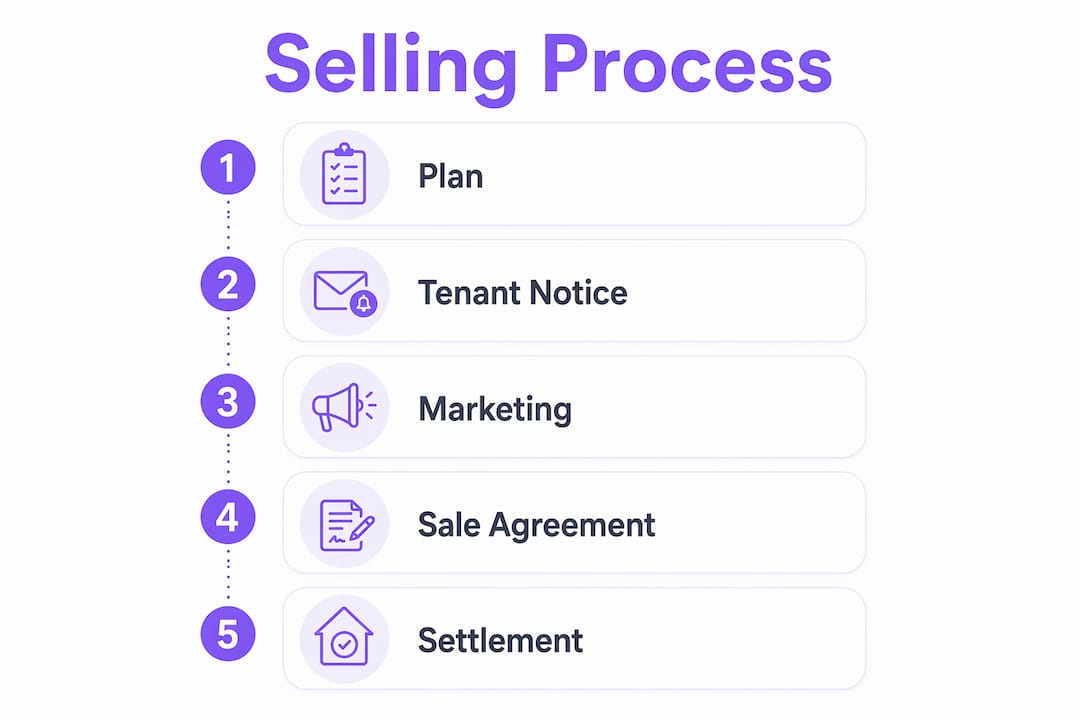
Common mistakes to avoid: poor communication with tenants that leads to cancelled viewings, misunderstanding your bright-line end date, and failing to document capital improvements before sale. Each of these is avoidable with early planning. For a full step-by-step selling process, preparation is the single biggest factor separating fast sales from drawn-out ones.
Key takeaways
Selling an investment property in New Zealand requires early tax planning, clear tenant communication, and a deliberate choice between tenanted and vacant possession based on your target buyer.
| Point | Details |
|---|---|
| Know your notice periods | Periodic tenancies require 42 days after unconditional sale or 90 days to vacate before listing. |
| Check your bright-line dates | The period ends on signing date, not settlement; mistiming triggers avoidable tax. |
| Document all improvements | Keep formal receipts for capital works to reduce taxable gains under the bright-line test. |
| Choose your buyer type first | Decide tenanted vs vacant based on whether investors or owner-occupiers dominate your market. |
| Build your advisory team early | A property manager, real estate agent, and tax adviser working together prevents costly mistakes. |
What I have learned from watching investors sell in New Zealand
The sellers who get the best outcomes are rarely the ones with the most expensive properties. They are the ones who treat the sale as a project with a team behind it, not a transaction they manage alone.
The human element with tenants is consistently underestimated. I have seen sales fall apart because a landlord served notice without a conversation first. The tenant felt blindsided, became uncooperative, and the property looked terrible at every open home. A five-minute phone call before the formal notice would have changed everything. Good tenant relationships are not just good manners. They are good business.
The tax piece catches people off guard more than anything else. The bright-line test sounds simple until you realise the end date is the signing date, not settlement. I have seen investors sign agreements one month too early and face a tax bill they had not budgeted for. Get your tax adviser involved before you set a timeline, not after you have already committed to one.
The other thing I would say is this: do not let the complexity of the process push you into a rushed decision. Selling too quickly to avoid a difficult tenant or because the market feels uncertain often costs more than taking the extra few weeks to prepare properly. The legal considerations around selling are manageable when you plan ahead. They become expensive when you react.
— Aaron
How Easysale can help you sell your investment property faster
If you want to skip the agent fees, the open homes, and the uncertainty of a traditional sale, Easysale offers a direct path. Easysale buys residential properties across New Zealand in any condition, with no commission fees and no drawn-out negotiations.
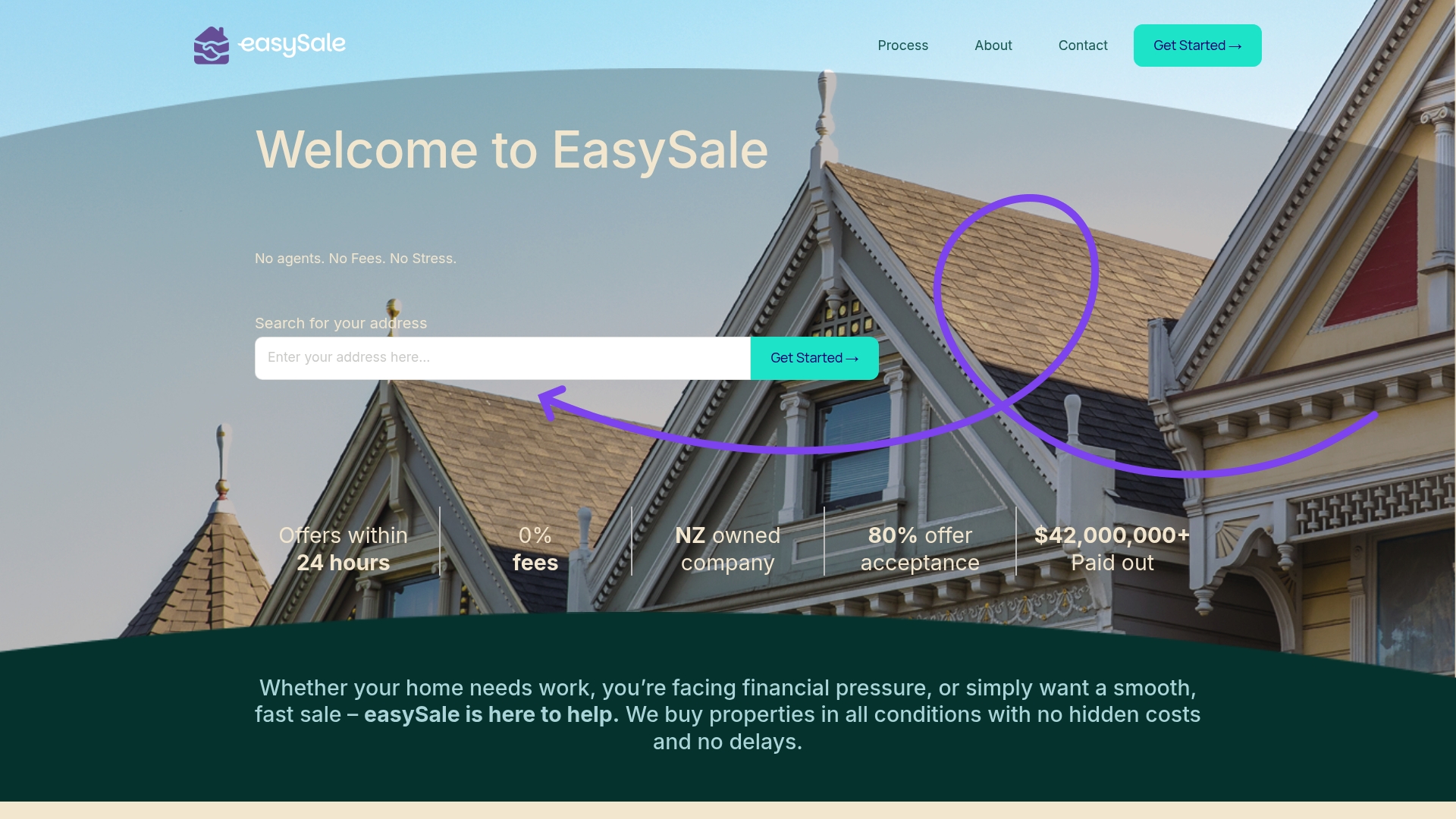
The process is straightforward. You submit your property details, receive a no-obligation cash offer, and settle on a timeline that suits you. Whether your property is tenanted, vacant, or in need of repair, Easysale works with your situation rather than against it. For investors who need a fast, certain outcome, this is a practical alternative to the traditional market. Visit Easysale to get your no-obligation offer today.
FAQ
What notice must I give tenants when selling my rental property?
For a periodic tenancy, you must give 42 days’ written notice after an unconditional sale agreement requiring vacant possession, or 90 days’ notice to end the tenancy before listing. Fixed-term tenancies cannot be ended early without the tenant’s agreement.
When does the bright-line period end for tax purposes?
The bright-line period ends on the date you sign the binding sale agreement, not the settlement date. Signing even one month inside the 2-year window triggers income tax on your profit at your marginal rate.
Can I still owe tax if I sell outside the bright-line period?
Yes. Inland Revenue can tax your sale proceeds if you bought the property with the intention to resell, or if you are a property dealer, developer, or builder. The tainting rules can also apply if you have indirect associations with development activity.
Is it better to sell my investment property tenanted or vacant?
It depends on your target buyer. Selling tenanted suits investor buyers who want immediate rental income. Selling vacant attracts owner-occupiers and can increase your sale price by 5–7% on average, but you carry vacancy costs during the marketing period.
What records should I keep to reduce my tax bill on an investment property sale?
Keep formal receipts for all capital improvements, renovations, and selling costs. These increase your property’s cost base and reduce taxable gains under the bright-line test. Verbal recollections or informal notes do not qualify as evidence with Inland Revenue.
Recommended
