
The role of property negotiations in NZ home sales


TL;DR:Property negotiation involves structured offers and counteroffers that determine the sale’s success or failure.Assessing offers holistically, including terms and contingencies, often outweighs focusing solely on price.Using flexible deal structures and clear negotiation limits can resolve stalemates and streamline the sale process.
Property negotiation is the process by which a seller and buyer agree on price, terms, and timing through structured offers and counteroffers, and it determines whether your sale succeeds or stalls. For Kiwi homeowners, understanding the role of property negotiations is the difference between walking away satisfied and leaving money on the table. Every offer you receive opens a dialogue, and how you manage that dialogue shapes your final outcome. This article covers the mechanics of negotiation, how to assess offers beyond price, and what to expect from inspection through to closing, so you can sell with confidence and less stress.
What is the role of property negotiations in a sale?
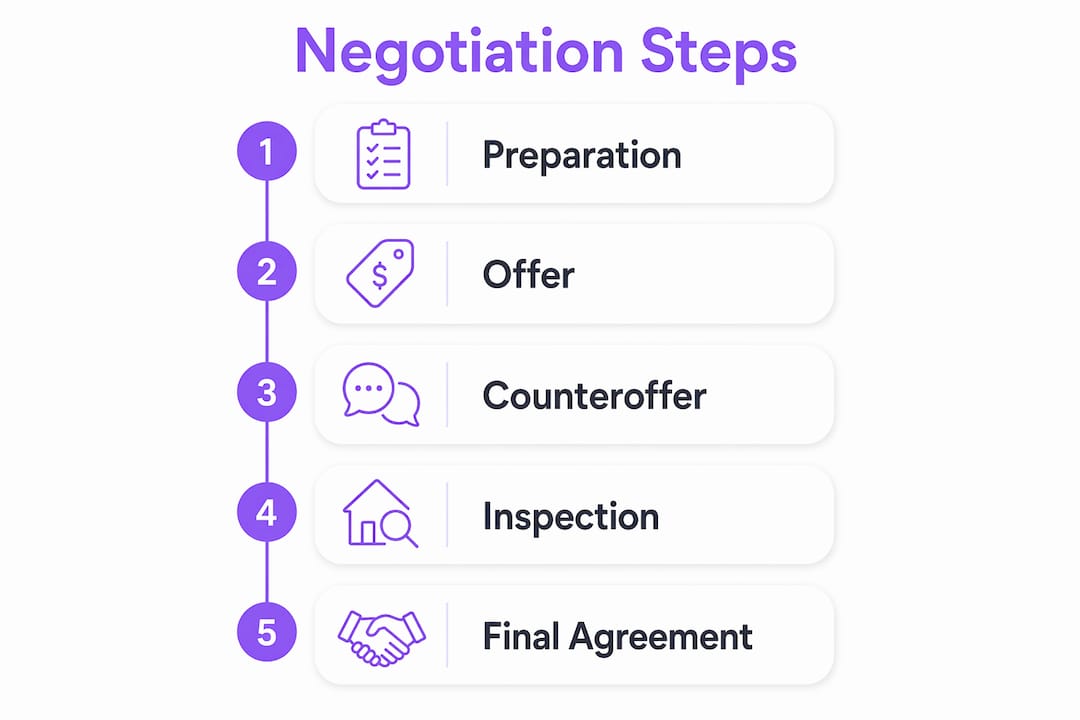
Negotiation is the heart of a real estate transaction, defining price, terms, and timing through a back-and-forth process that ends when both parties sign a legally binding preliminary sales contract. It is not a single conversation. It is a structured phase where offers, counteroffers, and written agreements build toward a deal that works for both sides.

The importance of property negotiations goes well beyond the sale price. You are also agreeing on payment conditions, what stays with the property, repair obligations, and the settlement date. Each of these variables carries real financial weight. A buyer who offers $20,000 above asking price but requests a 90-day settlement and a long list of conditions may actually deliver less value than a buyer offering $10,000 less with a clean, 30-day close.
Real estate agents play a central role in managing this process. They communicate between parties, interpret market data, and help you avoid emotional decisions that can derail a deal. If you are selling without an agent, you need to understand these mechanics yourself. Knowing what you are negotiating, not just what price you want, is the foundation of every effective sale.
How does negotiation shape price, terms, and timing?
Negotiation mechanics work through a cycle of offers and counteroffers, and multiple rounds are common before both parties reach agreement. Each round narrows the gap on price, conditions, and settlement timing until a preliminary contract is signed. Understanding this cycle helps you stay patient and strategic rather than reactive.
The key variables you are negotiating include:
- Sale price — your opening position, informed by comparable sales (market comps) in your area
- Payment terms — whether the buyer is paying cash or relying on finance approval
- Inclusions — chattels such as whiteware, light fittings, or heat pumps that may be included or excluded
- Repair obligations — what you agree to fix before settlement, if anything
- Settlement date — the timeline that suits both parties
Understanding property valuations is critical here. If your asking price is grounded in recent comparable sales, you have a defensible position in every counteroffer. If it is not, buyers and their agents will use that gap against you. Review recent sales data in your suburb before you list, and revisit it if your property sits on the market for more than three weeks.
Pro Tip: If a buyer’s first offer is well below your asking price, do not reject it outright. Counter with your price and a brief written explanation referencing comparable sales. This keeps the dialogue open and signals that you are a serious, informed seller.
Why assessing offers holistically matters more than chasing price
Sellers should evaluate offers holistically, weighing financing type, deposit size, contingencies, and closing timeline alongside the headline number. This is one of the most overlooked property negotiation strategies among first-time sellers. A higher offer with more conditions is not automatically better.
The table below shows how two offers with different structures can compare in real terms:
| Factor | Offer A | Offer B |
|---|---|---|
| Sale price | $750,000 | $730,000 |
| Finance condition | Yes, 15 days | No (cash buyer) |
| Inspection condition | Yes, 10 days | No |
| Settlement period | 90 days | 30 days |
| Risk of deal falling over | Higher | Lower |
Offer B is $20,000 lower but carries significantly less risk. Cleaner offers with fewer contingencies reduce the chance of deal breakdowns during appraisal or financing, and that certainty has genuine value. If you are under time pressure or have already committed to purchasing another property, a clean offer at a slightly lower price can be the smarter choice.
During the inspection phase, you will also face a choice between offering repair credits or completing repairs yourself. Credits give buyers flexibility and reduce your workload, but they can open the door to further price negotiation. Repairs completed before settlement remove that lever from the buyer’s hands. Neither approach is universally better. Your decision should depend on the repair scope, your timeline, and how motivated the buyer appears.
Pro Tip: Ask your real estate agent or solicitor to prepare a net proceeds estimate for each offer you receive. This converts every offer into a comparable dollar figure after costs, making the comparison straightforward.
How to negotiate property deals with flexible deal structuring
Effective negotiation in real estate requires knowing your limits before talks begin. The concept of BATNA (Best Alternative to a Negotiated Agreement) and your reservation price, the lowest outcome you will accept, define your zone of possible agreement. Sellers who know these numbers negotiate from a position of clarity rather than anxiety.
When negotiations stall, flexible deal structuring can break the impasse. Here are four approaches that experienced sellers use:
- Permit continued marketing with a breakup fee. British-style loose deal structures allow sellers to keep receiving offers after accepting a conditional one, with a fee payable if the original buyer is displaced. This maintains seller leverage up to closing.
- Shift from price to other variables. Once a price is agreed, negotiations commonly shift to repair scope, credits, timelines, and inclusions. Offering a longer settlement in exchange for a higher price is a common and effective trade.
- Set a clear walk-away point. Effective negotiators plan walk-away points and keep their goals clear as negotiations unfold. Knowing when to walk away prevents you from accepting terms that do not serve your interests.
- Move from positional to interest-based negotiation. Rather than anchoring on a number, interest-based negotiation explores what each party actually needs. A buyer who needs a fast settlement may accept a higher price. A buyer who needs certainty on repairs may accept a lower credit in exchange for written guarantees.
You can explore more practical approaches in this overview of house sale negotiation tips tailored for NZ sellers.
What happens during the inspection and closing phases?
The inspection period is one of the most stressful phases of any sale, and it is also one of the most negotiable. Inspection negotiations typically occur within 2 to 10 days after contract signing, covering repairs versus credits, with written addenda required to formalise any agreed outcomes before the contingency window closes.
The key actions during this phase are:
- Respond promptly to inspection reports. Delays signal uncertainty and give buyers time to reconsider.
- Get all agreed changes in writing. A verbal agreement to fix the hot water cylinder means nothing without a signed addendum to the contract.
- Separate cosmetic issues from structural ones. Buyers sometimes use minor findings to reopen price negotiations. You are not obligated to address cosmetic wear and tear.
- Know your legal obligations. In New Zealand, sellers must disclose known defects. Your solicitor can clarify what falls within your disclosure obligations and what does not.
Closing involves the final legal and financial steps: title transfer, settlement funds, and key handover. At this stage, inspection negotiation functions as a contract management phase requiring formal written resolutions to prevent delay or disputes. Any unresolved issues from the inspection period can delay settlement, so clear communication and written documentation are non-negotiable. Understanding property selling terminology before you reach this stage will help you follow the legal process without confusion.
Key takeaways
Effective property negotiation requires sellers to evaluate every offer on price, terms, contingencies, and timing, not price alone.
| Point | Details |
|---|---|
| Negotiation covers more than price | Settlement date, repairs, inclusions, and contingencies all affect your net proceeds. |
| Holistic offer assessment reduces risk | A lower offer with fewer conditions often delivers more certainty and less stress than a higher conditional one. |
| Know your walk-away point | Define your reservation price before negotiations begin so you negotiate from clarity, not pressure. |
| Inspection phase requires written agreements | All repair or credit outcomes must be documented in a signed addendum before the contingency window closes. |
| Flexible deal structures break impasses | Shifting negotiation to timelines, credits, or inclusions can resolve stalemates when price alone cannot. |
What I have learned about negotiating property sales
I have seen sellers lose good deals not because the price was wrong, but because they treated negotiation as a battle rather than a problem to solve together. The most common mistake is fixating on the headline number while ignoring the variables that actually determine whether the deal closes.
The sellers who do best are the ones who come prepared. They know their comparable sales, they have a clear bottom line, and they are willing to trade on settlement dates or inclusions when the price conversation stalls. They also stay calm during the inspection phase, which is where deals most often unravel. A buyer who finds a leaking roof is not necessarily trying to renegotiate unfairly. They are managing their own risk, and your job is to respond with facts and written solutions, not frustration.
One thing that surprises many sellers is how much leverage you have when you understand the buyer’s constraints. A buyer who has already sold their home and needs a 30-day settlement will trade on price to get that timeline. A buyer using KiwiSaver funds may need a longer settlement regardless of what they offer. When you understand what the other party actually needs, you can structure a deal that works for both sides without giving away more than you need to.
The uncomfortable truth is that most sellers negotiate reactively. They wait for an offer, react to it, and hope for the best. The sellers who consistently achieve strong outcomes plan their negotiation strategy before the first offer arrives, and they treat every counteroffer as an opportunity to move closer to their goals.
— Aaron
Sell without the negotiation stress with Easysale
If the prospect of managing offers, inspection renegotiations, and contract addenda feels like more than you want to take on, Easysale offers a straightforward alternative for Kiwi homeowners.

Easysale buys damaged houses as-is across New Zealand, providing a fast, fair cash offer with no agent commissions, no open homes, and no drawn-out contingency negotiations. You submit your property details, receive a no-obligation offer, and settle on a timeline that suits you. For sellers facing financial pressure, a damaged property, or a life change that requires a quick resolution, this removes the complexity of traditional negotiation entirely. Find out how cash buyers compare to agents to decide which path suits your situation.
FAQ
What is the role of property negotiations in a sale?
Property negotiation is the process where a seller and buyer agree on price, terms, contingencies, and settlement timing through structured offers and counteroffers. It is the phase that determines the final conditions of the sale contract.
How many rounds of negotiation are typical in a property sale?
Multiple counteroffers are common before both parties reach agreement. The number of rounds depends on how far apart the initial positions are and how motivated each party is to close.
Should I accept the highest offer I receive?
Not necessarily. Offers should be assessed holistically, considering financing type, contingencies, and settlement timeline alongside price. A lower offer with fewer conditions can deliver better certainty and a smoother path to settlement.
What happens if the buyer renegotiates after the inspection?
Inspection renegotiations are common and typically occur within 2 to 10 days of contract signing. Any agreed changes to price, repairs, or credits must be documented in a written addendum before the contingency period closes to be legally binding.
Can I sell without going through a traditional negotiation process?
Yes. Services like Easysale provide direct cash offers on properties in any condition, removing the need for open homes, agent commissions, and multi-round negotiations. This is a practical option for sellers who prioritise speed and certainty over maximising the final sale price.


