
Types of property damage Kiwi homeowners face and when EQC or insurers pay
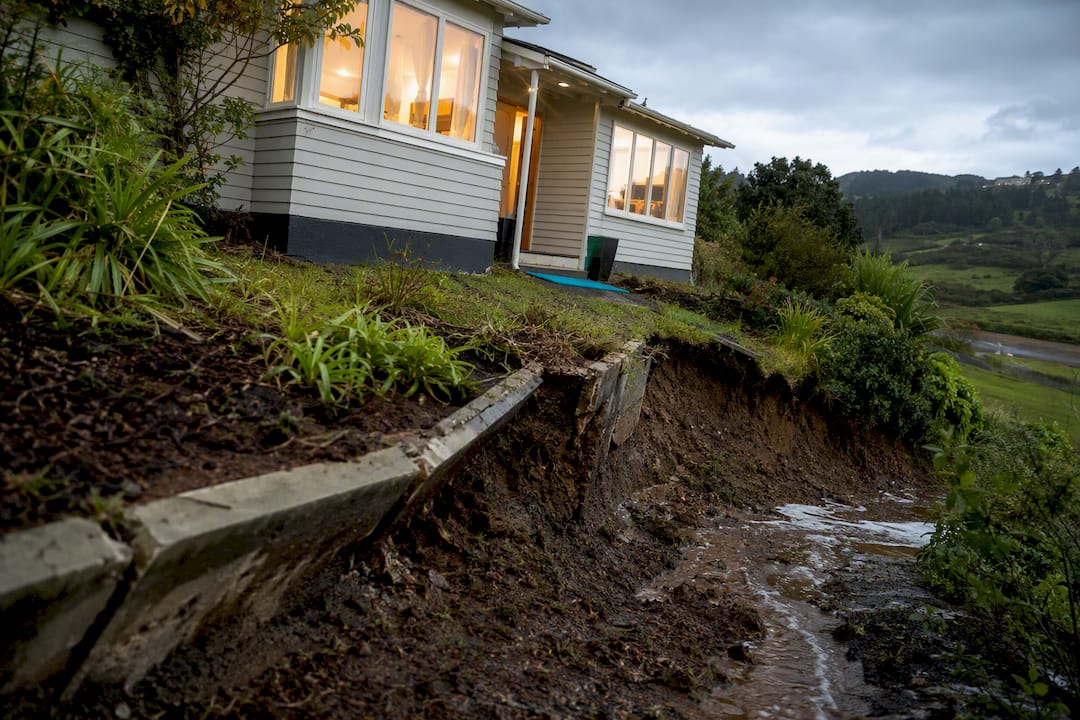
Property damage falls into two broad buckets: physical damage to the structure or contents, and loss of use, where the property is unliveable even if the damage itself looks minor. Within those buckets sit the categories you’ll deal with in real life: natural hazards, water damage, fire, theft, vandalism, structural defects, mould, and tenant-related damage. Each one triggers different insurance rules, different evidence requirements, and different timelines, which is exactly what the rest of this guide breaks down.
TL;DR:Water damage is the most common claim, often caused by burst pipes, leaks, or storms, and is less likely to be covered if it results from neglect.Damage caused by natural hazards like earthquakes or floods is covered separately by EQC or NHCover, but land and land-slip claims often require extensive reports and take longer to settle.Tenant-caused damage is limited to accidental or fair wear and tear, with intentional damage being fully liable and requiring thorough documentation to support claims.Property value and resale price are significantly affected by visible damage, especially structural issues and undisclosed repairs, which can erode buyer trust.Selling damaged properties as-is for cash can be a practical alternative when repair costs outweigh benefits or claims are complicated and prolonged.
Table of Contents
- What are the main types of property damage?
- How insurers treat different damage types
- Tenant, guest and owner-caused damage: who pays?
- Natural hazards and EQC/NHCover essentials
- How damage is assessed and what evidence actually helps
- Claim timelines and why settlements get reduced
- How property damage affects value and resale
- Legal responsibilities you can’t ignore
- Residential vs commercial: how the damage picture changes
- Practical perspective: repair, claim, or sell?
- Sell your damaged property without the repair headache
- Sources
What are the main types of property damage?
Most damage claims in New Zealand fall into a handful of recognisable categories, each with its own quirks when it comes to insurance and repair.
- Fire and lightning cause structural loss, contents damage, and often smoke damage that lingers long after the flames are out. Firefighting itself can soak a property, adding water damage on top of the burn.
- Water damage is the most common claim type. Burst pipes, slow leaks under sinks, overflowing washing machines, and rain getting in after a storm strips roofing all sit under this umbrella.
- Storm, wind, hail, and impact damage covers lost roofing iron, smashed glazing, and trees coming down on fences or roofs during a southerly blow.
- Flood damage hits land and buildings differently. Private insurers typically cover flood damage to buildings, while EQC/NHCover treats storm and flood largely as land cover, which surprises a lot of homeowners at claim time.
- Earthquake, landslip, volcanic activity, and tsunami cause ground movement, liquefaction, and foundation cracking, the hazards New Zealand’s state-backed schemes were built around.
- Vandalism and theft show up as broken windows, graffiti, and stolen fixtures such as hot water cylinders or copper piping.
- Mould and damp stem from persistent moisture, whether that’s a leaking roof, poor ventilation, or rising damp, and they carry both health risks and structural decay if left unchecked.
- Structural and construction defects include subsidence, shoddy workmanship, and unconsented alterations that surface years after the original build.
- Tenant and accidental damage ranges from a guest’s spilt red wine on carpet to a pet-scratched door or an accidental overflow that floods a bathroom.
- Loss of use applies when the property can’t be lived in during repairs, triggering costs for temporary accommodation and moving contents.
How insurers treat different damage types
Insurers draw a firm line between sudden, accidental events and gradual deterioration. A pipe that bursts overnight is usually covered. A pipe that’s been slowly weeping under a vanity for two years, causing rot, usually isn’t, because that falls under maintenance neglect rather than an insurable event.
Common exclusions worth knowing before you assume you’re covered:
- Wear and tear on roofing, paint, and fittings
- Gradual water ingress from unmaintained guttering or flashing
- Storm and flood sub-limits, particularly for land movement
- Deliberate damage or damage linked to illegal activity
Undervaluation is the quiet claim-killer. If your sum insured hasn’t kept pace with rebuilding costs, you can be significantly short at settlement, which is why insurers recommend annual policy reviews and accurate rebuilding estimates. Excesses and sub-limits also chip away at payouts. A $2,500 excess on a $15,000 repair matters, and sub-limits on items like jewellery or landscaping can leave you covering the gap yourself.
Tenant, guest and owner-caused damage: who pays?
Tenancy disputes over damage almost always come down to one question: was it intentional, careless, or fair wear and tear? The Residential Tenancies Act treats each differently.
- Fair wear and tear is the natural, expected deterioration from ordinary living, faded curtains, worn carpet in high-traffic areas. Landlords generally can’t claim for this.
- Careless (accidental) damage, like a dropped iron burning carpet, is capped. A tenant’s liability is limited to whichever is lower: the landlord’s insurance excess or four weeks’ rent.
- Intentional damage, such as punched-in walls, has no cap at all.
Detailed ingoing and outgoing inspection reports are the single strongest piece of evidence in these disputes, and Tenancy Tribunal decisions consistently favour landlords who documented the property’s condition properly. If you’re a landlord dealing with tenant-caused damage right now, it’s worth reading through options for selling a tenant-damaged rental before committing to lengthy repairs.
Natural hazards and EQC/NHCover essentials
EQC/NHCover exists specifically for natural hazard events, and the scope catches a lot of homeowners off guard. The scheme covers earthquake, landslip, volcanic activity, hydrothermal activity, and tsunami damage to residential buildings and land. Storm and flood cover under the scheme, though, typically applies to land only, with your private insurer carrying the building cover for those events.
There’s also the concept of “imminent damage,” where land is at risk of damage even before it physically fails, which NHCover treats as its own category with its own assessment process. Cover under NHCover applies strictly to direct physical loss or damage caused by a natural hazard, not consequential losses beyond that.
Items commonly missed by homeowners assuming blanket cover:
- Trees, gardens, and general landscaping
- Paving, driveways, and some outbuildings
- Fencing beyond specified limits
Pro Tip: Work with your private insurer first for any natural hazard claim. They generally manage the whole process, including the EQC or NHCover component, so you’re not juggling two separate claims at once.
Land and landslip claims run longer than standard repairs, often needing geotechnical reports and registered valuers before a settlement figure is even proposed.
How damage is assessed and what evidence actually helps
Get the property safe first, then start documenting straight away.
- Secure the site. Turn off water or power if there’s an active leak or electrical risk, and don’t attempt structural repairs until it’s been assessed.
- Photograph everything. Take wide shots showing the whole room or area, then close-up detail shots of the specific damage, all timestamped.
- Film a walkthrough video. This captures context that still photos miss, particularly for water or storm damage that affects multiple rooms.
- Gather receipts and maintenance records. Proof of recent servicing (roof, plumbing) helps rebut any suggestion the damage was due to neglect.
- Pull prior condition reports. If you have a pre-purchase building report or previous inspection records, they establish a baseline.
- Get repair estimates where it’s safe to do so. A written quote from a licensed tradesperson gives the assessor a concrete figure to work against.
Depending on the damage, you might deal with a loss adjuster for standard claims, a structural or geotechnical engineer for foundation and land issues, or a registered valuer for high-value settlement disputes. Keep every original document, back up photos and videos to the cloud, and log the date and name of everyone you speak to at the insurer. If repairs are on the cards rather than a claim, a detailed water damage repair guide is a useful reference before you call a contractor.
Claim timelines and why settlements get reduced
A straightforward contents claim, like a stolen television, can settle in days. Land and landslip claims are a different story entirely, often running for many months because they need multi-disciplinary sign-off before anyone agrees on a number.
Settlements are calculated against replacement cost, market value, or a capped amount depending on your policy and any EQC involvement, with your excess deducted at the end. The most frequent reasons claims come back reduced or denied:
- Insufficient photographic or receipt evidence
- Pre-existing damage the insurer argues wasn’t caused by the claimed event
- Maintenance neglect disguised as sudden failure
- Non-disclosure of prior claims or known issues at policy start
- Damage falling under a specific policy exclusion
How property damage affects value and resale
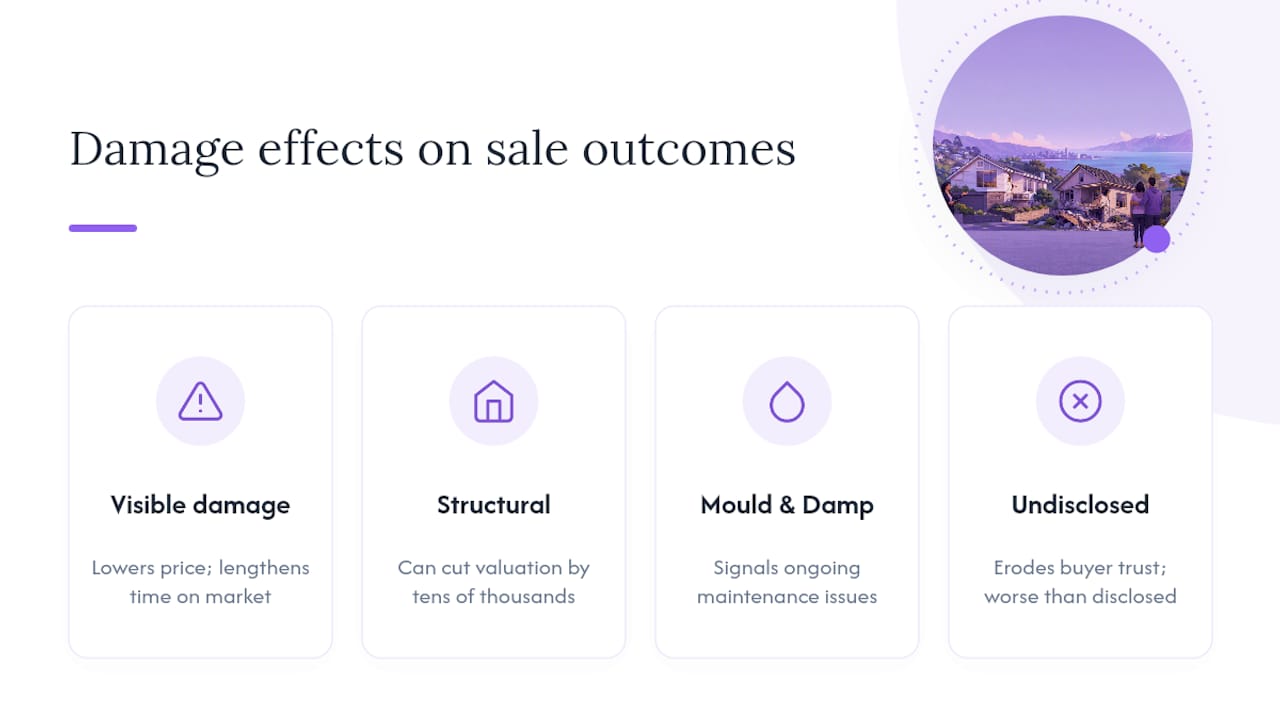
Buyers and valuers treat visible damage as a red flag long before they price in the actual repair cost. A property with a history of water damage, even fully repaired, often carries a stigma that shows up as a lower sale price or a longer time on market, simply because buyers assume there’s more they can’t see.
Structural issues hit value hardest. Foundation cracking, subsidence, or unconsented alterations can knock tens of thousands off a valuation, and some buyers walk away entirely once a builder’s report flags anything structural. Mould and damp are close behind, partly because they signal ongoing maintenance problems rather than a one-off event.
Undisclosed damage is worse than disclosed damage. A seller who’s upfront about a repaired leak with documentation tends to fare better than one who’s discovered to have hidden it, because the second scenario erodes buyer trust in everything else in the listing. If you’re weighing whether repairing first is worth it, this breakdown of how damage affects sale outcomes is worth a look before you commit to a full renovation.
Legal responsibilities you can’t ignore
Property damage carries legal weight beyond the insurance claim itself. Sellers in New Zealand have disclosure obligations, and knowingly hiding known damage, like a leaky roof or an unconsented deck, from a buyer can expose you to a claim after settlement.
Landlords carry separate obligations under the Residential Tenancies Act around habitability. A rental with unresolved mould or structural issues isn’t just a maintenance problem, it can breach the landlord’s obligations to provide a property that’s reasonably fit to live in. On the flip side, tenants who cause intentional damage face uncapped liability, while careless damage remains capped as outlined earlier.
Unconsented building work is its own legal headache. Alterations done without council consent can affect insurance validity, resale value, and in some cases require retrospective consent before a sale can even proceed. If damage relates to construction defects or consent issues, getting written legal or council advice early avoids bigger costs down the track.
Residential vs commercial: how the damage picture changes
Residential and commercial properties face overlapping hazards, but the practical differences in cover and risk are significant. Commercial “material damage” policies typically bundle structural cover with stock, plant, and machinery, meaning a burst pipe in a warehouse doesn’t just damage the building, it can destroy inventory worth far more than the repair bill.
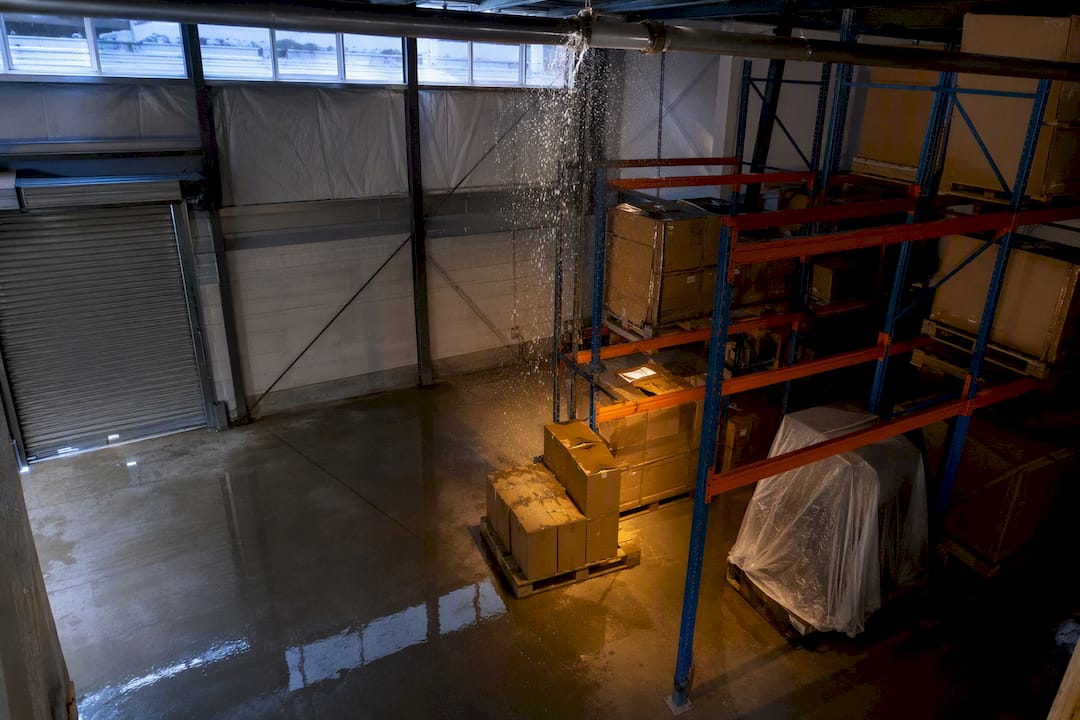
Business interruption is the piece residential policies simply don’t have. Government guidance notes that business interruption cover is separate and depends on a covered physical damage event first occurring, so a fire that shuts a shop for three months creates a second claim on top of the physical repair claim.
Commercial sums insured also need more careful tailoring. A retail unit’s stock value swings seasonally, and plant and machinery often need separate valuations from the building itself, which makes annual reviews even more important than for a standard residential policy.
Practical perspective: repair, claim, or sell?
Weigh safety first, then insurance cover, cost to repair versus expected payout, and how much time you can realistically give the process. When repairs are uneconomic, cover is patchy, or a tenancy dispute has dragged on, an as-is cash sale is often the least stressful path. Our guide to selling a damaged property walks through the next steps.
— Aaron
Sell your damaged property without the repair headache
This service provides an alternative to months of repair quotes and insurance back-and-forth by buying homes in any condition, including fire, water, mould, or structural damage, with no agent involved and no commission to pay. You receive a cash offer, choose the settlement date, and the whole process remains private.

- When it helps: you’re facing a slow land or landslip claim, repair costs that outweigh the payout, or a tenancy dispute that’s made the property hard to manage.
- Where to start: get a fair cash offer within 24 hours and settle on your own timeline, damage and all.
This article is general information, not a substitute for advice from a qualified financial advisor. Consult a qualified financial professional about your own circumstances before acting on anything here.
Sources
- Harcourts – Understanding the Residential Tenancies Act 1986
- EQC guide to natural hazards cover
- NHCover insurers’ guide – July 2024
- QBE – Commercial property insurance (New Zealand)
Recommended
