
Selling your property in New Zealand: a complete guide

Selling a residential property in New Zealand involves eight core steps, and knowing them upfront saves you time, money, and legal headaches. Here is the checklist you can follow yourself or hand straight to your lawyer:
- Plan and prepare — set your goals, timeline, and finances
- Engage a property lawyer or conveyancer — before you list, not after
- Decide: licensed agent or private sale — weigh cost, reach, and your own capacity
- Choose a sale method — private treaty, auction, tender, or deadline sale
- Prepare the property and marketing — staging, photography, and listing channels
- Prepare the contract and disclosures — LIM, title, chattels, and known defects
- Receive offers, negotiate, and go unconditional — understand what that commits you to
- Settlement and handover — transfer title, discharge mortgage, hand over keys
The New Zealand Government’s selling guide covers each of these stages in detail. The sections below unpack every step so you know exactly what to do and when. If you need to sell quickly, jump to the fast-sale section near the end.
Key takeaways
Selling your property in New Zealand follows a clear eight-step process, and engaging a property lawyer before you list is the single most effective way to avoid costly delays.
| Point | Details |
|---|---|
| Engage a lawyer early | Instruct a property lawyer before listing to review title, LIM, and disclosure obligations. |
| Know your sale method | Private treaty, auction, tender, and deadline sale each suit different market conditions and seller goals. |
| Disclose everything known | Failing to disclose material issues can void a sale or result in a compensation claim after settlement. |
| Get commission in writing | Agents must provide a written dollar estimate of commission — use it to compare agents fairly. |
| Easysale for speed | Easysale offers a three-step direct purchase with no agent fees, suitable for sellers who need certainty quickly. |
Table of Contents
- How to sell your property: planning before you list
- Should you use a licensed agent or sell privately?
- Which sale method suits your property and goals?
- Preparing your property and marketing it effectively
- What goes into the sale contract and what must you disclose?
- How do you set a realistic asking price or reserve?
- How do offers, counter-offers, and going unconditional work?
- What happens on settlement day?
- Costs to expect and New Zealand tax considerations
- What are you legally required to disclose to buyers?
- What does the selling timeline actually look like?
- If you need to sell quickly: how cash buyers and fast-offer services work
- What sellers consistently get wrong (and how to avoid it)
- Easysale: a straightforward option when speed matters
- Sources
How to sell your property: planning before you list
Good preparation before you list is what separates a smooth sale from a stressful one. Start by getting clear on two things: your timeline and your financial position.
Ask yourself whether you need a fast sale or maximum price. Those two goals often pull in opposite directions, and your answer shapes every decision that follows, from sale method to marketing spend. Check your mortgage documents for early-repayment penalties, and confirm with your bank how the proceeds will be applied. If you are buying another property at the same time, talk to your lender about bridging finance options early.
Documents to gather before you instruct anyone:
- Certificate of title (your lawyer can pull this)
- Land Information Memorandum (LIM) from your local council
- Building consents and code compliance certificates for any work done
- Warranties and guarantees for appliances, roofing, or structural work
- Body corporate records, if the property is a unit or apartment
- Photo ID and proof of address for anti-money-laundering checks
Your lawyer or conveyancer should review the title and LIM before you list. Unconsented work flagged at this stage can be resolved quietly; flagged by a buyer’s solicitor mid-negotiation, it can kill a deal. The New Zealand Law Society recommends engaging a property lawyer before you list so they can advise on sale method, tax timing, and vendor due diligence.
Pro Tip: Small, low-cost fixes — a fresh coat of neutral paint, re-caulked bathroom tiles, and a tidy garden — consistently lift buyer perception without requiring a renovation budget. Spend an afternoon walking through the property as a buyer would, and fix the three things that catch your eye first.
Should you use a licensed agent or sell privately?
The honest answer is that most Kiwi sellers use a licensed agent, and for good reason: agents bring a buyer database, negotiation experience, and marketing reach that is hard to replicate privately. That said, private sales are legal and can work well for sellers with a ready buyer or strong local knowledge.
Pros of using a licensed agent:
- Access to established buyer databases and listing platforms
- Professional negotiation on your behalf
- Guidance on pricing, presentation, and sale method
- Managed open homes and buyer communications
Cons of using a licensed agent:
- Commission fees (typically a percentage of the sale price, paid from proceeds)
- Less direct control over buyer conversations
- Locked into an agency agreement for a set period
Pros of selling privately:
- No agent commission
- Direct communication with buyers
- Full control over the process
Cons of selling privately:
- Smaller buyer reach unless you invest in paid listings
- You handle all negotiations, paperwork, and open homes
- Legal obligations remain exactly the same as with an agent
If you go with an agent, Settled getting a written estimate of the expected sale price and a clear explanation of how commission is calculated before you sign anything. Ask each agent you interview:
- What is your estimated sale price, and can you put that in writing?
- What is your marketing plan and what does it cost?
- What is your commission, and what is the dollar amount on your estimated price?
- What is the agency agreement term, and what are the cancellation conditions?
- Do you have any conflicts of interest with this property?
The agency agreement is a legally binding contract. Have your lawyer review it before you sign. The Real Estate Authority (REA) publishes independent guidance on what a fair agency agreement looks like and what agents are required to disclose.
For sellers considering the private route, a step-by-step guide to selling privately in NZ walks through the paperwork and process in plain language.
Which sale method suits your property and goals?
New Zealand sellers have four main sale methods to choose from. Each suits a different market condition and seller priority.
Private treaty (advertised price): You set an asking price and negotiate directly with interested buyers. Conditions are common. This method suits sellers who want price certainty and a straightforward process, and it works well in stable or slower markets.
Auction: The property is marketed without a price, and buyers bid on the day. The highest bid above your confidential reserve wins, and the contract is unconditional immediately. Auctions work best in competitive markets with strong buyer demand. Because the contract is unconditional on the day, your lawyer must review all terms beforehand and you must complete all due diligence in advance.
Tender: Buyers submit sealed written offers by a deadline. You review all offers privately and can accept, reject, or negotiate. Tenders suit unique or high-value properties where competition among buyers is likely but you want control over the outcome.
Deadline sale: Similar to tender, but buyers can also make pre-deadline offers. This creates urgency while giving you flexibility to accept early if the right offer arrives.
| Sale method | Buyer pool | Price certainty | Conditions allowed | Best for |
|---|---|---|---|---|
| Private treaty | Broad | High (set price) | Yes | Stable markets, straightforward sales |
| Auction | Competitive | Variable (reserve) | No (unconditional) | Hot markets, high-demand properties |
| Tender | Selective | Variable | Sometimes | Unique or premium properties |
| Deadline sale | Broad | Variable | Sometimes | Sellers wanting speed with flexibility |
For a plain-language breakdown of each method’s trade-offs, the property sale options guide is worth reading before you decide.
Preparing your property and marketing it effectively
Presentation drives price. Buyers form an impression within seconds of seeing a listing photo or walking through the front door, so the work you do before going live matters.
Property preparation checklist:
- Declutter every room, including wardrobes and garages
- Deep clean, including windows, skirting boards, and light fittings
- Complete minor repairs: dripping taps, sticking doors, cracked tiles
- Tidy the garden, mow lawns, and trim hedges
- Depersonalise: remove family photos and personal collections
- Neutralise strong odours (pets, cooking, dampness)
Professional photography is non-negotiable. Listings with quality photos attract significantly more enquiries, and most agents include photography in their marketing package. If you are selling privately, budget for a professional photographer. Floorplans are also worth including, particularly for larger homes, as buyers use them to assess furniture placement before inspecting.
Marketing channels to use:
- Trade Me Property — New Zealand’s largest property listing platform
- OneRoof — strong for market data and buyer reach
- Agent’s own database and social media channels
- Street signage — still effective for local buyer traffic
Pro Tip: Schedule your first open home for a Saturday morning, and time your listing to go live mid-week so buyers have several days to plan their visit. Spring and early autumn tend to attract the strongest buyer turnout in most New Zealand markets.
What goes into the sale contract and what must you disclose?
The sale and purchase agreement is the legal document that binds both parties once signed. According to the REA’s sale and purchase agreement guide, the agreement must include:
- Full names of the vendor and purchaser
- Property description (legal description and address)
- Sale price and deposit amount
- List of chattels included in the sale
- Settlement date
- Any conditions (finance, LIM, building inspection)
Your agent typically prepares the agreement using a standard REINZ/ADLS form, but your lawyer should review it before you sign or present it to buyers. Never sign a sale and purchase agreement without legal advice.
Documents to give your lawyer before listing:
- Title search (your lawyer can obtain this)
- LIM from your local council
- Building consents and code compliance certificates
- Warranties for any work completed
- Body corporate records (if applicable)
Disclosure obligations are not optional. You must disclose known material issues, including unconsented building work, weather-tightness problems, boundary disputes, and natural hazard exposure. Failing to disclose a known issue is not just a legal risk — it can cause the sale to fall over entirely or result in a compensation claim after settlement. The legal considerations guide sets out what sellers are required to tell buyers in plain terms.
The most common cause of delayed settlements in New Zealand is incomplete vendor disclosure — unconsented work, LIM issues, or missing body corporate records that surface during the buyer’s due diligence period. Resolving these with your lawyer before listing avoids that outcome.
How do you set a realistic asking price or reserve?
Pricing a property accurately is one of the most consequential decisions in the sale process. Set it too high and you lose buyer interest; too low and you leave money on the table.
Ways to establish a realistic price:
- Written agent appraisal: Ask two or three agents for a written estimate of likely sale price. Agents must provide this in writing, and Settled.govt.nz recommends using it to compare agents rather than simply choosing the one with the highest estimate.
- Registered valuation: A registered valuer provides a formal, independent assessment. Lenders often require this, and it gives you a defensible price anchor.
- Online estimates: Tools on OneRoof and Trade Me’s sold data give a useful market cross-check, though they are estimates rather than valuations.
- Recent comparable sales: Look at what similar properties in your suburb sold for in the past three to six months.
In a seller’s market, pricing slightly below comparable sales can generate competing offers and push the final price higher. In a buyer’s market, a realistic asking price from the outset tends to outperform an aspirational one that sits unsold and attracts price reductions.
Illustrative commission example:
Note: Commission structures vary by agency and are negotiable. Always ask for a written dollar estimate.
For auction and tender, your reserve or guide price is confidential but should be set with your lawyer and agent based on the same evidence. For private treaty and deadline sale, you can choose to advertise a price or leave it open as “by negotiation.”
How do offers, counter-offers, and going unconditional work?
Under private treaty and deadline sale, buyers typically submit conditional offers. Common conditions include finance approval, a satisfactory LIM report, a building inspection, and sometimes the sale of the buyer’s existing property. Each condition has a timeframe, usually 5–15 working days, during which the buyer must either satisfy or waive it.
The negotiation flow looks like this:
- Buyer submits a written offer via the sale and purchase agreement
- You review the offer with your agent or lawyer
- You accept, reject, or submit a counter-offer (changing price, settlement date, or conditions)
- Buyer accepts the counter-offer or responds again
- Both parties sign an agreed contract
- Conditions are worked through during the conditional period
- Buyer confirms all conditions are satisfied or waived
- Contract goes unconditional — both parties are legally bound to complete
Going unconditional is the point of no return. Once the contract is unconditional, withdrawing exposes you to legal liability. Make sure you are comfortable with every term before that point.
At auction, the contract is unconditional the moment the hammer falls. There is no conditional period, which is why buyers at auction must complete all due diligence beforehand. As a vendor, your lawyer should check the auction terms before the auction day.
Pro Tip: When negotiating, the settlement date and deposit amount are often as negotiable as the price. Confirm in writing who holds the deposit (usually the agent’s trust account) and the conditions under which it can be released.
What happens on settlement day?
Settlement is the day ownership legally transfers from you to the buyer. Your lawyer handles most of the mechanics, but there are practical things you need to do.
Seller’s settlement checklist:
- Vacate the property by the agreed time (usually noon unless otherwise specified)
- Leave all chattels listed in the agreement
- Hand keys, garage remotes, alarm codes, and any manuals to your lawyer or agent
- Confirm your mortgage has been discharged with your bank
- Arrange final meter readings and notify utilities providers
- Provide your lawyer with your bank account details for the net proceeds
On settlement day, the buyer’s lawyer transfers the purchase funds to your lawyer’s trust account. Your lawyer pays out your mortgage, deducts their fees, and transfers the balance to you. Title transfers electronically through Toitū Te Whenua Land Information New Zealand.
The timeline from unconditional contract to settlement is typically 2–6 weeks, depending on what was agreed in the contract. Tenanted properties, cross-border buyers, or complex finance arrangements can extend this. Your lawyer will keep you updated on progress and flag any issues before settlement day arrives.

Costs to expect and New Zealand tax considerations
Selling a property in New Zealand involves several costs that come out of the sale proceeds. Knowing them upfront helps you calculate your net position accurately.
Typical seller costs:
- Agent commission: Varies by agency and is negotiable. A tiered structure (e.g. a higher percentage on the first portion of the sale price, lower on the balance) is common.
- Marketing fees: Photography, online listings, print advertising, and signage. These are sometimes included in the commission and sometimes charged separately.
- Legal and conveyancing fees: Your lawyer’s fees for reviewing contracts, managing settlement, and discharging your mortgage.
- LIM report: Ordered from your local council, typically costing a few hundred dollars.
- Auctioneer fees: If you sell by auction, there may be a separate auctioneer fee on top of commission.
Tax considerations:
The New Zealand Government’s property tax guidance makes clear that tax may apply to your sale depending on your circumstances. The main rules to be aware of:
- Bright-line rule: If you sell a residential property within the bright-line period (check the current IRD guidance for the applicable timeframe, as this has changed), the profit may be taxable as income. Your lawyer can advise on whether this applies to your property and timing.
- GST: Most residential sales are not subject to GST. However, if you are a GST-registered vendor and the property has been used for business purposes, GST implications need to be checked with your accountant.
- Property trader rules: If Inland Revenue considers you a property trader or developer, different tax rules apply.
Use the Ird to check your position before you list. If there is any doubt, get advice from a tax accountant or your property lawyer before signing anything.
What are you legally required to disclose to buyers?
Disclosure is not just good practice — it is a legal obligation, and getting it wrong can be costly. Both you and your agent are required to disclose material information that could affect a buyer’s decision.
Items you must disclose:
- Any building work carried out without a consent or code compliance certificate
- Known weather-tightness or leaky building issues
- Boundary disputes or encroachments
- Natural hazard exposure (flood zones, liquefaction risk, coastal erosion)
- Body corporate levies, disputes, or special assessments (if applicable)
- Any known defects that affect the property’s value or habitability
Common red flags buyers investigate:
- LIM findings that contradict what the vendor has said
- Unconsented alterations visible on inspection but absent from council records
- Gaps between building consents and code compliance certificates
- Structural reports flagging deferred maintenance
Failing to disclose a known issue does not make it go away. If a buyer discovers a material defect after settlement that you knew about and did not disclose, they can pursue a compensation claim. In serious cases, a court can void the sale. Settled.govt.nz is explicit on this: agents and vendors share the same disclosure obligations, and the code of conduct requires full transparency.
Resolve any known issues with your lawyer before listing. It is far cheaper to address them upfront than to manage a collapsed sale or a post-settlement dispute.
What does the selling timeline actually look like?
Most New Zealand residential property sales take 6–12 weeks from the decision to sell through to settlement, though this varies considerably depending on sale method, market conditions, and the complexity of your property.
Typical timeline:
- Weeks 1–2: Engage lawyer, gather documents, instruct agent, obtain LIM, complete property preparation
- Weeks 2–3: Professional photography, listing goes live, first open homes
- Weeks 3–5: Offer period (private treaty/deadline) or auction/tender date
- Weeks 5–7: Conditional period (buyer satisfies finance, LIM, and building inspection conditions)
- Week 7 onwards: Contract goes unconditional; settlement date approached (typically 2–6 weeks after unconditional)
Who is responsible at each stage:
- Agent: Marketing, open homes, managing buyer enquiries, presenting offers
- Seller: Preparing the property, providing documents, making decisions on offers
- Buyer’s lawyer: Due diligence, finance, and satisfying conditions
- Seller’s lawyer: Reviewing contract, managing settlement, discharging mortgage
Tenanted properties add complexity because tenants have rights under the Residential Tenancies Act, including notice periods before inspections and before vacant possession. Factor this into your timeline if your property is tenanted. For a more detailed breakdown of the process, the property sale process guide covers each stage with practical checkpoints.
If you need to sell quickly: how cash buyers and fast-offer services work
Fast-offer services, sometimes called cash buyers or quick-sale buyers, offer a different path for sellers who need speed, certainty, or the ability to sell a property in any condition. Understanding how they work helps you decide whether the trade-offs suit your situation.
How the process typically works:
- You submit your property details online or by phone
- The buyer assesses the property (sometimes remotely, sometimes with a visit) and provides a written offer, usually within a few days
- You agree on a settlement date that suits your timeline, which can be as short as a few weeks
The Easysale quick-sale process follows this three-step model: express valuation, written offer, and agreed settlement. There are no agent commissions, and the property can be sold as-is without repairs or staging.
Pros of a fast-offer sale:
- Speed and certainty — you know the outcome quickly
- No open homes, no marketing period, no conditional period
- Sell in any condition, including properties with damage or deferred maintenance
- No agent commission
Cons of a fast-offer sale:
- The offer price is typically lower than what you might achieve on the open market. Fast-offer buyers price in a discount for the certainty and convenience they provide.
- Less negotiation leverage than a competitive open-market campaign
- You still need a lawyer to review the contract before signing
Questions to ask any fast-offer buyer:
- How is the offer price calculated, and what comparable sales are you using?
- Who holds the deposit, and under what conditions can it be released?
- What costs does the vendor still pay (legal fees, rates adjustments)?
- Is the offer conditional on anything, and if so, what?
For sellers who want to understand the full range of options before deciding, services like AAS Home Buyers also explain how cash buyer negotiations typically work. Always get your lawyer to review any quick-sale contract before you sign, regardless of how straightforward it appears.
What sellers consistently get wrong (and how to avoid it)
Most sellers who run into trouble do so at one of two points: before they list, or the moment they receive their first offer.
Before listing, the most common mistake is skipping the lawyer until after the contract is signed. By that point, your lawyer is managing damage rather than preventing it. Unconsented work, a LIM that flags a flood risk, or a body corporate with unresolved levies are all far easier to handle before a buyer’s solicitor finds them. Engage your lawyer at the planning stage, not the signing stage.
The second mistake is treating the first offer as the final one. Sellers who accept the first offer without testing it against the market, or without understanding what the conditions actually mean, sometimes find themselves locked into a deal that falls over during the conditional period. A counter-offer costs nothing. Understanding what each condition requires of the buyer, and what happens if they cannot satisfy it, is worth a 20-minute conversation with your lawyer.
One habit that genuinely improves outcomes: hold your first open home before you decide on a price. Buyer feedback from that first weekend tells you more about how the market perceives your property than any appraisal. If you get strong attendance and multiple enquiries, you have room to hold firm. If attendance is thin, you have useful information before you have committed to a price publicly.
Easysale: a straightforward option when speed matters
If you have read through this guide and realised that a traditional sale campaign does not fit your timeline, your property’s condition, or your current circumstances, Easysale offers a direct alternative.
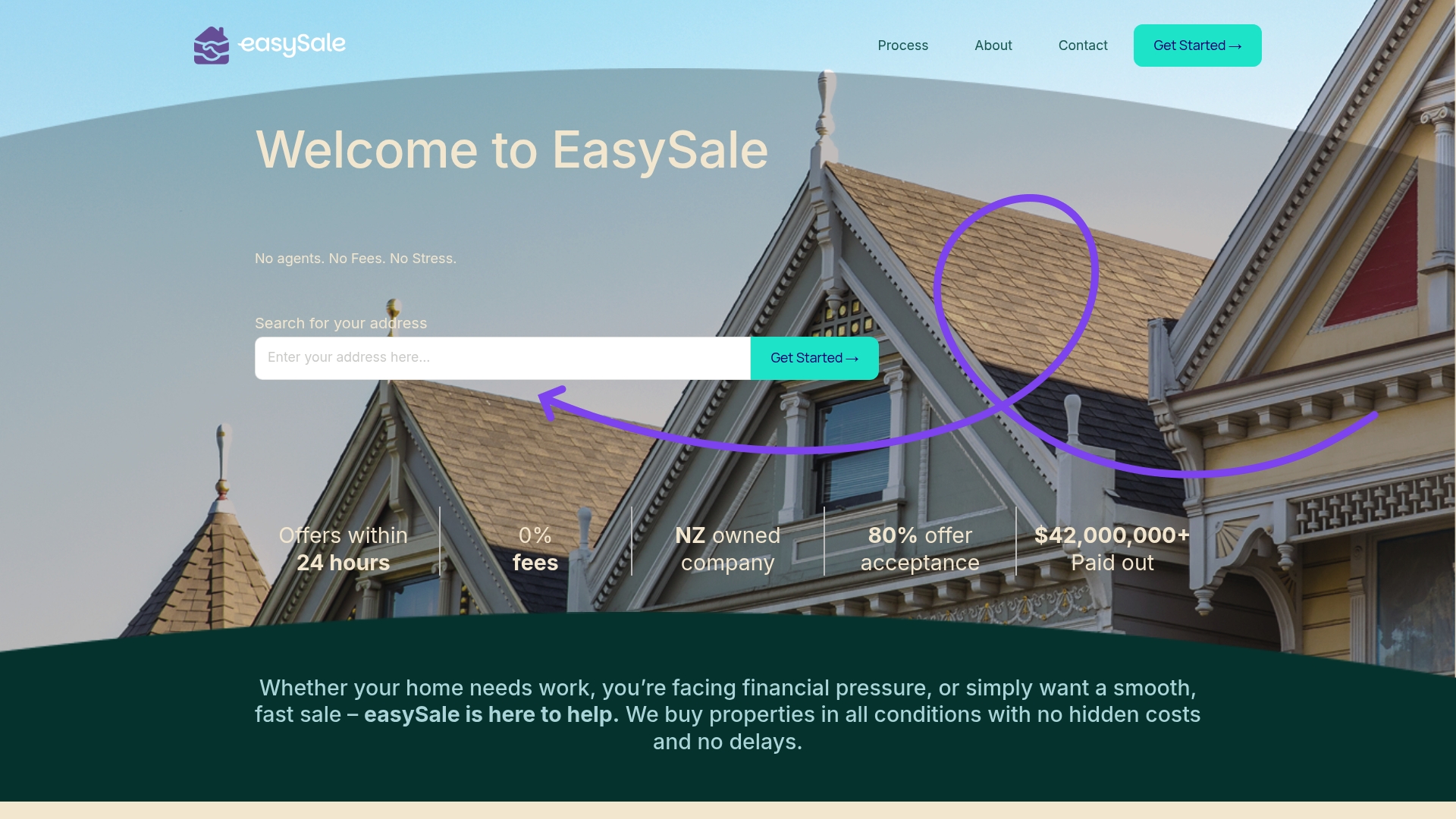
Easysale buys residential properties across New Zealand directly, with no agent commissions, no open homes, and no drawn-out conditional periods. The process works in three steps: you submit your property details, receive a written cash offer (usually within days), and agree on a settlement date that works for you. Properties are purchased in any condition, which means you do not need to spend on repairs or staging before you sell.
This suits sellers who need certainty quickly, whether that is because of a life change, financial pressure, a tenanted property, or simply a preference for a clean, straightforward transaction. For sellers considering retirement or downsizing, Easysale’s direct-buyer approach removes the uncertainty of a market campaign at a time when certainty matters most.

Before accepting any offer, including one from Easysale, have your lawyer review the contract. That step protects you regardless of the sale route you choose. To find out what your property could be worth as a direct sale, visit Easysale and request a no-obligation offer.
Sources
These are the resources worth bookmarking as you work through your sale:
- Selling your house | New Zealand Government
- Settled
- Guidance for home buyers and sellers | The Real Estate Authority
- Selling a house in NZ: a step-by-step guide | Trade Me
This article is general information, not a substitute for advice from a qualified lawyer. Consult a qualified legal professional about your own circumstances before acting on anything here.
Recommended
