
How to sell your home discreetly in NZ: A guide

TL;DR:Discreet home sales avoid public listings, open homes, and neighbour scrutiny, suitable for urgent or sensitive situations.Preparing key documents and choosing the right sale method, like direct cash buyers, ensures a quick, private transaction.Privacy and certainty often outweigh price concerns, making off-market sales ideal for homeowners facing distress.
When financial pressure mounts or personal circumstances shift suddenly, the last thing you want is neighbours, colleagues, or family scrutinising your property sale. For many New Zealand homeowners, privacy is not a luxury but a genuine necessity. Whether you are facing debt, divorce, or an urgent relocation, a discreet property sale can protect your dignity and deliver results fast. This guide walks you through every practical step, from understanding your options to settling on your own timeline, so you can move forward with confidence and minimal stress.
Table of Contents
- Understanding discreet home sales in New Zealand
- Preparing for a discreet property sale
- Choosing the right selling method for maximum discretion
- Executing a discreet sale: Step-by-step process and common pitfalls
- Why discretion often matters more than price for urgent sellers
- Next steps: Connect with trusted cash buyers for a discreet sale
- Frequently asked questions
Key Takeaways
| Point | Details |
|---|---|
| Privacy-first selling | Off-market and private sales are ideal for urgent or personal circumstances where discretion is essential. |
| Paperwork preparation | Gather key documents like LIM, title, and consents privately and engage a lawyer early to streamline the process. |
| Cash buyer advantages | Direct cash buyer routes provide rapid offers, as-is sales, and minimal hassle, but may be below market value. |
| Legal and disclosure requirements | Even in private sales, full disclosure and legal review are mandatory to protect both seller and buyer interests. |
| Quick process benchmarks | A discreet sale can be completed within 7–28 days, significantly faster than traditional methods. |
Understanding discreet home sales in New Zealand
A discreet home sale means selling your property without the public exposure of traditional listings, open homes, or signage on your front lawn. Discreet home selling in New Zealand primarily involves off-market or private sales to avoid public listings, open homes, and neighbour scrutiny, making it ideal for urgent financial or personal issues.
So who actually needs this approach? More people than you might expect. Common situations include:
- Financial hardship or debt: Selling quietly avoids signalling distress to creditors or neighbours.
- Divorce or separation: Keeps sensitive family matters out of the public eye.
- Sudden relocation: A job transfer or family emergency that demands a fast, clean exit.
- Estate or probate sales: Where families want to avoid public attention during a difficult time.
- Tenanted properties: Where landlords prefer not to disrupt or alarm current tenants.
Traditional real estate sales involve public listings on platforms like Trade Me Property, open homes, and weeks of negotiation. This process is not designed for speed or privacy. Over one third of NZ sellers now seek private or off-market options, and for good reason: traditional sales take three to six months on average, while quick sales can settle in as little as seven to twenty-eight days.
“Choosing an off-market or private sale is not about hiding something. It is about protecting your circumstances while still achieving a fair and legal outcome.”
Public listings expose you to unsolicited opinions, lowball offers from curious neighbours, and the emotional toll of repeated inspections. There are ways to sell property without hassle that bypass all of this entirely. If speed and privacy matter to you, exploring private sale options is a logical and increasingly popular choice.
Having set the stage for why discreet sales are uniquely suited to urgent or sensitive situations, let’s explore what you need to start.
Preparing for a discreet property sale
Good preparation is what separates a smooth, fast sale from a drawn-out, stressful one. Even in a private or off-market context, you need the right documents ready before any offer is made.
Key documents to gather include:
- LIM report (Land Information Memorandum): Outlines council records, zoning, and any known issues with the property.
- Certificate of Title: Confirms ownership and any encumbrances such as mortgages or easements.
- Building consents: Evidence that any additions or alterations were approved by the local council.
- Insurance records: Particularly relevant if the property has sustained any damage.
Assessing your reasons and preparing documents privately using Settled.govt.nz guidelines is a practical first step that keeps the process orderly and confidential.
Here is a quick overview of preparation steps and their purpose:
| Preparation step | Why it matters |
|---|---|
| Obtain LIM report | Reveals council issues early |
| Confirm title and ownership | Prevents legal delays at settlement |
| Gather building consents | Avoids buyer concerns post-offer |
| Review insurance history | Required for as-is or damaged sales |
| Engage a solicitor early | Ensures AML compliance and trust deposits |
Special cases require extra attention. If your property is tenanted, insurance-damaged, or has known structural issues, as-is or problem homes still require LIM and builder disclosure even in a private sale. Skipping this step creates legal exposure for you as the seller. For more on this, see our guide on selling damaged properties and the reasons homeowners choose to sell damaged property.

Avoid holding open inspections. Instead, arrange private viewings with pre-qualified buyers only. This keeps your sale confidential and reduces foot traffic through your home.
Pro Tip: Engage your lawyer before you accept any offer. They can set up a trust account for the deposit and verify Anti-Money Laundering (AML) identification requirements, which apply to all property transactions in New Zealand regardless of how the sale is structured.
With your preparation covered, you’re ready to select the optimal method for discreet selling.
Choosing the right selling method for maximum discretion
Not all private sales are equal. The method you choose will determine how fast you settle, how much exposure you face, and what you ultimately receive for your property.
Here are the three main options:
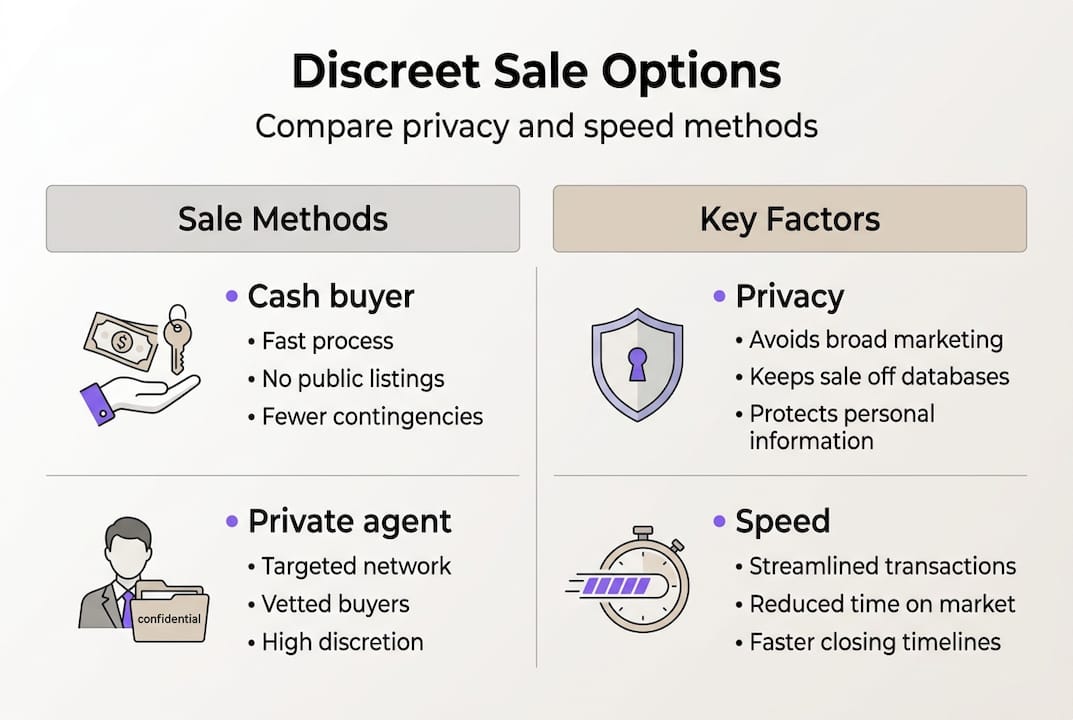
- Direct cash buyers: Companies or investors who purchase your home outright, often as-is, with no public listing required. Cash offers typically arrive within 24 to 48 hours, and settlement can happen in as little as seven days.
- Agent-facilitated off-market sale: A real estate agent quietly approaches their database of qualified buyers without listing publicly. This provides a wider buyer pool but involves some third-party exposure.
- Self-managed private sale: You market the property yourself to known contacts or through limited channels. This requires the most effort and carries the highest risk of incomplete legal processes.
Here is how each method compares:
| Method | Speed | Privacy | Cost | Effort |
|---|---|---|---|---|
| Direct cash buyer | 7 to 28 days | Very high | No commissions | Low |
| Agent off-market | 4 to 10 weeks | Moderate | 2 to 4% commission | Medium |
| Self-managed private | Variable | High | Low cost | High |
Cash buyer sales involve no repairs, no fees, and flexible settlement, making them particularly well suited to financial distress, divorce, or relocation situations. You save the standard 2 to 4% agent commission, which on a $700,000 property amounts to $14,000 to $28,000.
However, it is important to be realistic. Cash buyers offer speed and privacy but offers may sit 10 to 20% below market value, while private sales save commissions but require seller effort and marketing. Agent-facilitated sales provide a wider buyer pool but reduce discretion. Understanding this trade-off helps you make a clear-eyed decision.
For more detail on this approach, see our guides on quick home sales with cash buyers, the role of cash buyers in NZ property sales, and the cash home buying process in New Zealand.
Pro Tip: If urgency and discretion are your top priorities, a direct cash buyer is almost always the most practical choice. The price trade-off is often worth the certainty, speed, and peace of mind.
Now you know which selling method fits your needs, let’s walk through the discreet sales process step-by-step.
Executing a discreet sale: Step-by-step process and common pitfalls
Once you have chosen your method, execution is straightforward if you follow the right sequence. Here is the process for a direct cash buyer sale:
- Contact the cash buyer: Submit your property details online or by phone. Reputable buyers ask for basic information about the property’s condition, size, and location.
- Receive your offer: A cash offer typically arrives within 24 to 48 hours, with no obligation to accept.
- Gather your documents: Have your LIM report, title, and consents ready for the buyer’s review.
- Legal review: Your solicitor reviews the sale and purchase agreement. Do not skip this step, even for a straightforward sale.
- Settlement: Agree on a settlement date that suits your timeline. Settlement can occur in as little as seven to twenty-eight days for cash transactions.
Common mistakes that slow down or derail discreet sales include:
- Delaying legal engagement until after the offer is accepted.
- Failing to disclose known defects, which creates liability after settlement.
- Not having documents ready, which causes unnecessary delays.
- Accepting a verbal offer without a written sale and purchase agreement.
Important: Full disclosure of all known defects and issues is legally mandatory in New Zealand, even in private or as-is sales. Failing to disclose can expose you to legal claims after settlement, regardless of how the sale was structured. Engaging your lawyer early and ensuring full disclosure protects you from this risk entirely.
For properties with existing damage or complications, our guide on how to sell a damaged house fast in New Zealand covers the specific steps and disclosures required.
Once your sale is underway, it is wise to reflect on broader lessons and realities from this process.
Why discretion often matters more than price for urgent sellers
Most homeowners assume that getting the highest possible price should always be the primary goal. In our experience, this thinking does not hold up when circumstances are urgent or sensitive.
When you are dealing with debt, divorce, or a sudden life change, the emotional and practical cost of a prolonged, public sale can far outweigh a modest reduction in sale price. Weeks of open homes, public scrutiny, and uncertain timelines add stress that compounds an already difficult situation.
Off-market sales are increasingly popular, representing up to 75% of transactions in some agencies, driven by what industry professionals call the “Three D’s”: debt, divorce, and death, alongside a growing preference for privacy and reduced fatigue from the traditional sales process.
The shift is real and it is accelerating. Choosing a discreet sale is not settling for less. It is making a clear-headed decision that values certainty and wellbeing alongside financial outcome. For many sellers, selling without hassle is not just a preference but a genuine necessity.
Next steps: Connect with trusted cash buyers for a discreet sale
If you are ready to explore a discreet, fast property sale, you do not need to navigate it alone. At easySale, we work with New Zealand homeowners in exactly the kinds of situations described in this guide. Our process is straightforward, respectful, and built around your timeline.
We buy properties in any condition across New Zealand, with no agent commissions, no open homes, and no pressure. You can request a fair cash offer with no obligation, and we will work with you to settle at a time that suits your circumstances. Whether you are dealing with financial hardship, a tenanted property, or simply need a fast and private exit, we are here to help you take the next step with confidence.
Frequently asked questions
Can I sell my home in New Zealand without listing it publicly?
Yes, you can use off-market or private sale methods to sell directly to cash buyers or select agents, avoiding public listings and open homes. Discreet selling in New Zealand is specifically designed to keep your sale away from neighbour scrutiny and public platforms.
How fast can a discreet home sale be completed?
Cash buyer sales can settle in as little as seven to twenty-eight days, with offers made within twenty-four to forty-eight hours. Traditional sales average three to six months, making cash sales significantly faster for urgent situations.
Do I still need to disclose property issues in a private sale?
Yes, full disclosure of defects or issues is legally required even in private or as-is sales. Failing to disclose can expose you to legal liability after settlement, regardless of the sale method used.
Will I get market value with a discreet, cash sale?
Cash sales prioritise speed and privacy, and offers are often 10 to 20% below market value compared to traditional sales. For many urgent sellers, the certainty and speed more than compensate for this difference.
Recommended
