
Property appraisals in NZ: Your guide to a stress-free sale

TL;DR:A property appraisal is a free, informal estimate to set a realistic selling price.Registered valuations are formal, legally recognized documents used for mortgage and legal purposes.Using the correct estimate can save time and money when selling urgently.
Many homeowners in New Zealand use the words “appraisal” and “valuation” as if they mean the same thing. They don’t, and mixing them up can cost you time, money, and a sale you badly need. If you’re facing financial pressure, a sudden life change, or a property that needs serious repairs, knowing the difference is one of the most practical things you can do before you list. This guide breaks down exactly what a property appraisal is, how it differs from a registered valuation, when you need each one, and how to use your appraisal results to sell quickly and confidently.
Table of Contents
- What is a property appraisal?
- Appraisal vs registered valuation: What’s the key difference?
- How agents calculate your property’s appraised value
- When should you get a property appraisal?
- How to make your appraisal work for a fast and fair house sale
- Our perspective: The real hidden risk of confusing appraisals and valuations
- Need a fast, fair sale? We can help
- Frequently asked questions
Key Takeaways
| Point | Details |
|---|---|
| Appraisal vs valuation | A property appraisal is an agent’s estimate while a registered valuation is required for legal or financial use. |
| Quick sale tool | Appraisals provide fast, free value guides for urgent or as-is property sales. |
| Calculation factors | Agents use recent sales and local market trends to set your appraisal figure. |
| Right choice matters | Choosing the wrong value method can delay or increase the cost of your sale. |
| Apply appraisal insights | Use appraisal results to price competitively and attract quick offers. |
What is a property appraisal?
A property appraisal is a free, informal estimate of your home’s likely selling price. It’s provided by a licensed real estate agent and is designed to help you understand what your property might fetch on the open market. It is not a legal document and it is not binding. Think of it as a starting point for your selling journey, not the final word on what your home is worth.
A property appraisal gives you directional guidance, not a certified figure. Its primary purpose is to help you and your agent set a realistic asking price before you begin marketing your home.
Appraisals are one of the most misunderstood tools in the property sale process. Many sellers assume an appraisal carries legal weight or that it locks in a price with buyers. Neither is true. The figure an agent gives you reflects their professional opinion based on current market activity. It is intended to inform your marketing strategy, not to satisfy legal or lending requirements.
Understanding the difference between an appraisal and a formal valuation is essential, especially when you need to move fast. As property valuations work explains, appraisals are agent-provided estimates (often optimistic for selling), while formal valuations are carried out by registered valuers for lending or legal purposes using structured methods such as comparable sales analysis with an onsite inspection.
It also pays to get familiar with the broader property selling terms used in New Zealand, as well as key property sale industry terms that come up during the process. Knowing this language gives you confidence when speaking with agents and buyers alike.
Key things an appraisal typically covers include:
- Estimated selling price range based on current market conditions
- Recent comparable sales in your suburb or street
- An overview of your property’s strengths and weaknesses relative to current buyer demand
- Recommended listing strategy, including method of sale (auction, tender, or price by negotiation)
Pro Tip: When an agent presents their appraisal, ask them which specific comparable sales they used and whether those properties were in similar condition to yours. Agents can sometimes use optimistic comparisons to win your listing.
Appraisal vs registered valuation: What’s the key difference?
After defining appraisals, it’s worth seeing how they compare directly to registered valuations. The two serve very different purposes, and choosing the wrong one for your situation can slow down a sale or waste hundreds of dollars.
A registered valuation is carried out by a certified property valuer who is a member of the New Zealand Institute of Valuers (NZIV). It is a formal, legally recognised document used for mortgage applications, insurance claims, legal disputes, and estate settlements. It involves an onsite inspection, detailed written analysis, and references to at least five to six recent comparable sales within the last six months. The registered valuation process produces a defensible market value opinion under the Valuers Act 1948, meaning it can be used in court or presented to a bank.
An appraisal, by contrast, is free, fast, and informal. It is not suitable for legal or lending use, but it is precisely what you need to set a sale price and start marketing.
Here is a direct comparison to help you decide which one applies to your situation:
| Feature | Property appraisal | Registered valuation |
|---|---|---|
| Cost | Free | $500 to $1,500+ |
| Timeframe | 1 to 3 days | 5 to 10 business days |
| Provider | Licensed real estate agent | Certified valuer (NZIV member) |
| Legal standing | Not legally binding | Legally recognised document |
| Used for | Setting asking price | Mortgage, insurance, legal use |
| Depth of analysis | Moderate | Highly detailed |
When you’re weighing up selling below market value versus waiting for the best price, the appraisal is usually your first tool. For any valuation for legal or mortgage process, you will need the registered version.
Here’s a simple way to decide which one you need:
- If you’re preparing to market and sell your home, start with a free appraisal from at least two agents.
- If your bank requires a valuation before approving a loan, order a registered valuation from an NZIV-certified professional.
- If you’re going through a legal process such as divorce, estate settlement, or relationship property split, only a registered valuation will satisfy legal requirements.
- If you’re selling as-is or under financial pressure, a free appraisal is all you need to move forward quickly.
The most important thing to remember is that the formal valuation process is more rigorous and costly. For urgent sales, spending $1,000 on a registered valuation before you’ve even listed is rarely the best use of your money.
How agents calculate your property’s appraised value
With the differences clear, let’s look at how agents actually reach your property’s appraised value. The process is more systematic than many sellers expect, but it still involves a degree of judgement.

The primary method agents use is comparable sales analysis, which looks at similar properties that have sold nearby within the past six months. Agents examine sale prices, property size, condition, number of bedrooms and bathrooms, and the time properties spent on the market. This data forms the foundation of their estimate.
As market value factors highlight, a property’s appraised value reflects not just its physical features but also the economic environment around it. Supply and demand, interest rate movements, and buyer confidence all feed into how an agent interprets recent sales data.
Here is the type of data an agent typically analyses when preparing your appraisal:
| Data point | Why it matters |
|---|---|
| Recent sale prices in your suburb | Establishes a price baseline for similar homes |
| Days on market for comparable homes | Indicates whether buyers are active or cautious |
| Property size (land and floor area) | Allows like-for-like comparison |
| Condition and renovations | Adjusts for upgrades or deferred maintenance |
| Street appeal and location | Accounts for proximity to schools, transport, and amenities |
Agents also factor in elements that don’t show up in raw data. These include property-specific factors such as current market trends, unique property features, and recent improvements you’ve made.
Other key factors that influence a property’s appraised value include:
- Recent renovations, such as a new kitchen, bathroom, or roof
- Location attributes, including school zones and proximity to public transport
- Current buyer demand in your specific suburb or region
- Property condition, particularly if deferred maintenance is visible
- Seasonal market trends, as spring typically sees higher buyer activity in New Zealand
One important consideration: agents have a professional interest in winning your listing. Some may provide a higher appraisal figure to stand out from competing agents. This is sometimes called “buying the listing.” Before committing to any one agent, it pays to review the NZ property sale process in detail and use property selling tips to stay informed and protect your interests.
When should you get a property appraisal?
Now that you know how appraisals are calculated, it’s worth considering when you actually need one. For many homeowners in urgent situations, the timing of your appraisal can be just as important as the figure itself.
The most common situations where a property appraisal is genuinely valuable include:
- Financial stress or mortgage arrears: If you’re behind on payments and need to sell before the bank acts, a fast appraisal helps you understand your options and set a realistic price without delay.
- Property damage: Whether from flooding, fire, or years of deferred maintenance, an appraisal tells you what your property is worth as-is so you can decide whether to repair or sell immediately.
- Divorce or separation: When couples separate and need to divide assets quickly, an appraisal gives both parties a shared understanding of the property’s current market value.
- Relocation for work or family: If you need to move interstate or overseas on short notice, an appraisal is the fastest way to understand your equity position and plan your exit.
- Estate and inheritance situations: When a property is passed down and beneficiaries need to sell, an appraisal provides an accessible starting point before a formal valuation is ordered if legally required.
As property valuations work confirms, appraisals are essential for setting realistic expectations in urgent or non-standard sale scenarios. They allow you to move forward with confidence without the expense and delay of a formal valuation.
For sellers weighing up quick sale options or considering private sale processes, the appraisal is typically the first step before any marketing or negotiation begins.
Pro Tip: Get your appraisal before committing to any sale method. If the sale doesn’t proceed, you haven’t spent a cent. In contrast, a registered valuation costs real money and may not be needed if you’re selling directly to a cash buyer.
How to make your appraisal work for a fast and fair house sale
Once you have your appraisal, here’s how to use it to sell your property quickly and without unnecessary delays or complications.
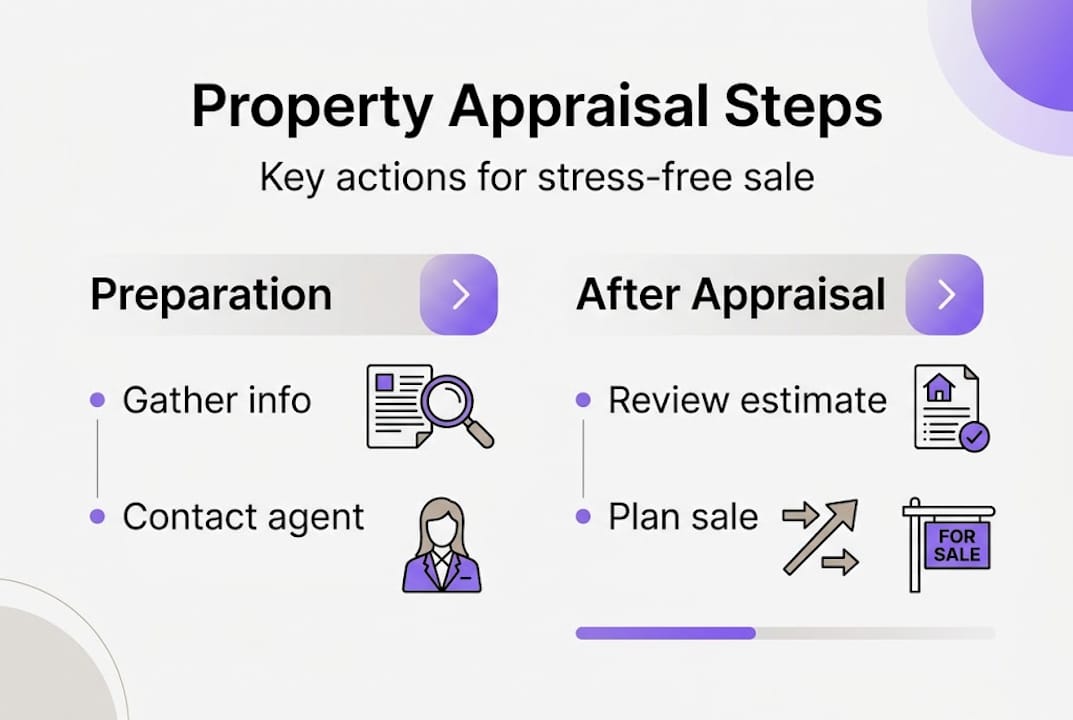
The key is to treat the appraisal figure as a strategic tool, not just a number. A well-used appraisal can reduce your time on the market, attract serious buyers faster, and help you avoid the back-and-forth of unrealistic price expectations.
As property valuations work notes, appraisals are especially valuable for sellers who want a fast, no-fuss process and are open to direct selling or as-is offers. Here’s how to put that into practice:
- Set your price just below the upper end of the appraisal range. Buyers respond well to properties priced to sell rather than properties priced to negotiate. A slightly lower listing price often generates more enquiries and faster offers.
- Decide early whether you’ll sell as-is or make repairs. If your appraisal includes deductions for property condition, get a quote for the key repairs. If the repair cost is more than the likely price gain, sell as-is and price accordingly.
- Use agent insights from the appraisal to shape your marketing. Agents highlight your property’s strongest features during appraisal. Make sure those same features are front and centre in your listing photos and description.
- Don’t wait for the perfect buyer. In urgent sales, the first genuine offer within your appraisal range is often worth taking. Holding out for a better price can cost you weeks or months.
- Explore fast fair sale options such as direct buyer services, which can settle on your timeline without agent commissions or marketing delays.
While you’re waiting for buyer interest to build, use that time productively. Gather your LIM report, title documents, and property file. These are things buyers will ask for and having them ready reduces delays when an offer does come in. Learning how to sell property fast in New Zealand means being prepared before the enquiries arrive.
Our perspective: The real hidden risk of confusing appraisals and valuations
Here’s something most agents won’t tell you directly: the majority of sellers in urgent situations don’t need a registered valuation at all. Yet many spend $700 to $1,200 on one because they believe it will make their sale more credible or help them negotiate from a stronger position. In most cases, it does neither.
The real risk isn’t just financial waste. It’s the delay. A registered valuation can take up to two weeks to organise and receive. If you’re facing mortgage pressure or need to relocate quickly, that’s two weeks you don’t have. Meanwhile, the market continues to move.
We’ve also seen sellers become anchored to their valuation figure, refusing offers that sit below it even when those offers reflect genuine current buyer demand. The valuation was accurate the day it was written. Markets shift. Buyers operate in the present.
The most honest question you can ask yourself before ordering any kind of valuation is: “Why do I actually need this number?” If your answer is to sell your home quickly and move on, a free appraisal from a trusted agent or a direct cash offer is almost always the more practical path. Understanding NZ market value risks helps you approach this with clear eyes rather than false certainty.
Need a fast, fair sale? We can help
If your appraisal has confirmed you’re ready to sell but the traditional route feels too slow, too expensive, or too uncertain, there’s a simpler path available to you.

At easySale, we buy residential properties across New Zealand in any condition, with no agent commissions, no marketing costs, and no drawn-out negotiations. Whether you’re downsizing in retirement and need a clean exit, or you’re holding a property that needs significant work and want to sell a damaged house fast, we can provide a no-obligation cash offer and settle on your preferred timeline. Submit your property details today and take the first step towards a stress-free sale.
Frequently asked questions
Is a property appraisal free in New Zealand?
Yes, property appraisals are normally free and provided by real estate agents as an estimate of your home’s value. Unlike formal valuations, appraisals are agent-provided estimates with no upfront cost to you.
What information do I need to provide for a property appraisal?
Generally, you’ll need to share details about your home’s features, any improvements you’ve made, and recent sales nearby to help the agent assess its value. Agents base their estimates on comparable sales and property specifics, so the more context you provide, the more accurate their figure will be.
When do I need a registered valuation instead of an appraisal?
You need a registered valuation for legal purposes such as mortgage applications, insurance claims, or estate settlements. The formal registered valuation process produces a legally defensible market value opinion under the Valuers Act 1948, which an appraisal cannot provide.
How long does a property appraisal take?
A typical property appraisal can be completed within one to three days, depending on agent availability and the time needed to research recent comparable sales in your area.
Will my property appraisal match the final sale price?
Not always. Appraisals are agent estimates based on comparable sales and current market conditions, but your final sale price may be higher or lower depending on buyer competition and overall demand at the time of sale.
Recommended
